
Design
I pour a coating of salt on the table
and make a circle in it with my finger.
This is the cycle of life
I say to no one.
This is the wheel of fortune,
the Arctic Circle.
This is the ring of Kerry
and the white rose of Tralee
I say to the ghosts of my family,
the dead fathers,
the aunt who drowned,
my unborn brothers and sisters,
my unborn children.
This is the sun with its glittering spokes
and the bitter moon.
This is the absolute circle of geometry
I say to the crack in the wall,
to the birds who cross the window.
This is the wheel I just invented
to roll through the rest of my life
I say
touching my finger to my tongue.
by Billy Collins
from Sailing Alone Around the Room
Random House 2002
Enjoying the content on 3QD? Help keep us going by donating now.
 In March 2026, three prominent thinkers died within a day of each other. Lavish obituaries immediately marked the deaths of the
 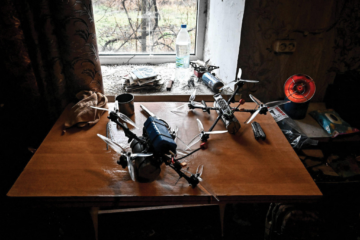 The drones had been trained using AI to recognize Tu-95 “Bear” bombers based on photographs taken of a decommissioned version in a Ukrainian air museum and to recognize the weakest point of the bombers, often the fuel tanks in the wings. This allowed the drones,
 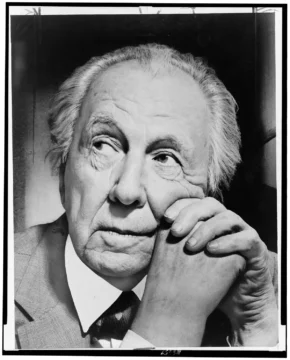 I was 10 when Frank Lloyd Wright first entered my consciousness. I was sitting crosslegged on the beige carpet of my bedroom in a tract house in Melbourne, Florida, watching a Ken Burns documentary about Wright on PBS. Both my parents were schoolteachers, interested in history and travel; for them, the world of architecture belonged to another planet entirely: buildings were background texture. But I noticed the scalloped sink in my parents’ bathroom. I noticed that the façade my house shared with so many on our cul-de-sac looked strangely better in its mirrored version across the street – or perhaps it was only that their landscaping added the faintest sense of intention to a place otherwise void of character. And then there was Wright, whose buildings felt impossibly different from anything I’d seen. His rooms were not rectangles to be filled but worlds unto themselves – shadows, stone, light pouring in sideways. His spaces, at once intimate and vast, were shaped by ideas I had no words for, yet immediately recognised. His work reached backwards and forwards simultaneously: primitive shelter reimagined with an aesthetic that felt both timeless and unmistakably American.
 T
T
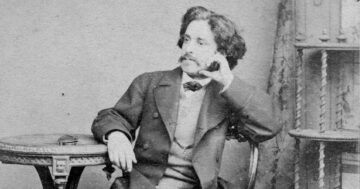 During Lafargue’s own lifetime, the nature of work was undergoing a traumatic transformation. The seismic effect of the first and second industrial revolutions, as well as the quickening pace of globalization, proved an extinction event for traditional forms of production. “The gods and kings of the past,” declared the historian Eric Hobsbawm, “were powerless before the businessmen and steam engines of the present.” As factory workers and unskilled laborers replaced ateliers and artisans, the former struggled to organize themselves, a struggle into which Lafargue threw himself body and soul.
 “Telescopic altruism” is a supposed tendency for some people to ignore those close to them in favor of those further away. Like its cousin “virtue signaling”, it usually gets used to own the libs. Some lib cares about people in Gaza – why? Shouldn’t she be thinking about her friends and neighbors instead? The only possible explanation is that she’s an evil person who hates everyone around her, but manages to feel superior to decent people by pretending to “care” about foreigners who she’ll never meet.
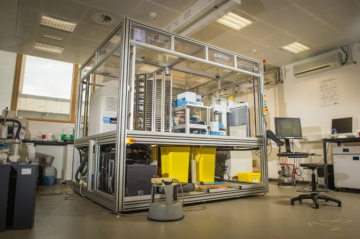 Measuring 5 metres square by 3 metres high, Eve takes up at least half of the floor space in the laboratory it now calls home.
 G
G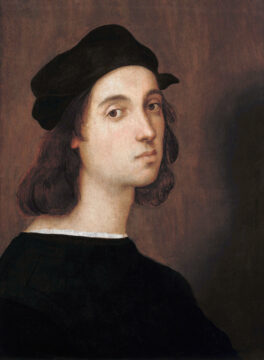 “Nature created him as a gift to the world,” wrote Giorgio Vasari of Raphael in the 16th-century compendium
  Worldwide, more than 330 million people have