Alex Abramovich at The New Yorker:
 When Willie Nelson performs in and around New York, he parks his bus in Weehawken, New Jersey. While the band sleeps at a hotel in midtown Manhattan, he stays on board, playing dominoes, napping. Nelson keeps musician’s hours. For exercise, he does sit-ups, arm rolls, and leg lifts. He jogs in place. “I’m in pretty good shape, physically, for ninety-two,” he told me recently. “Woke up again this morning, so that’s good.”
On September 12th, Nelson drove down to the Freedom Mortgage Pavilion, in Camden. His band, a four-piece, was dressed all in black; Nelson wore black boots, black jeans, and a Bobby Bare T-shirt. His hair, which is thicker and darker than it appears under stage lights, hung in two braids to his waist. A scrim masked the front of the stage, and he walked out unseen, holding a straw cowboy hat. Annie, his wife of thirty-four years, rubbed his back and shoulders. A few friends watched from the wings: members of Sheryl Crow’s band, which had opened for him, and John Doe, the old punk musician, who had flown in from Austin. (At the next show, in Holmdel, Bruce Springsteen showed up.) Out front, big screens played the video for Nelson’s 1986 single “Living in the Promiseland.”
more here.
Enjoying the content on 3QD? Help keep us going by donating now.

 John J. Lennon is, at the moment, probably this country’s foremost imprisoned journalist. This title won’t be taken from him any time soon, not because there aren’t many talented and inquisitive people in prison but because the barriers to entry are so nearly impassible. A journalist’s life is a daunting prospect these days even to a person with freedom of movement, a real computer, the ability to make phone calls in private. Lennon’s new book, The Tragedy of True Crime, concludes with an author’s note that describes the makeshifts that he and his supporters have had to adopt so he can fulfill the most basic parts of an author’s job:
 In January this year, an announcement from China rocked the world of artificial intelligence. The firm DeepSeek released its
 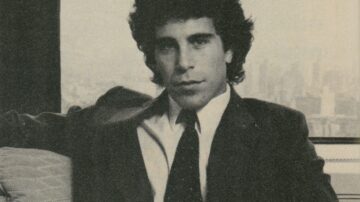 One evening in early 1976, a bushy-haired Jeffrey Epstein showed up for an event at an art gallery in Midtown Manhattan. Epstein was a math and physics teacher at the city’s prestigious Dalton School, and the father of one of his students had invited him. Epstein initially demurred, saying he didn’t go out much, but eventually relented. It would turn out to be one of the best decisions he ever made.
 In the winter
  On a cool evening in October, six weeks after Charlie Kirk was assassinated in full view of thousands at Utah Valley University, I joined
  In 1714, and in an enlarged edition in 1723, Mandeville published the prose volume that made him infamous: The Fable of the Bees: Or, Private Vices, Public Benefits. The original poem was reprinted with a series of commentary essays in which Mandeville expanded upon his provocative arguments that human beings are self-interested, governed by their passions rather than their reason, and he offered an explanation of the origin of morality based solely on human sensitivity to praise and fear of shame through a rhapsody of social vignettes. Mandeville confronted his contemporaries with the disturbing fact that passions and habits commonly denounced as vices actually generate the welfare of a society.
 How many times during the past month have you gone to the dictionary, or if not the dictionary then to your computer, to look up a word? I go to mine with some frequency. Here are some of the words within recent weeks I’ve felt the need to look up: “algolagnia,” “orthoepist,” “cromulent,” “himation,” “cosplaying,” and “collocation.” The last word I half-sensed I knew but was less than certain about. I also looked up “despise” and “loath,” to be sure about the difference, if any, between them, and then had to check the difference between the latter when it has an “e” at its end and when it doesn’t. Over the years I must have looked up the word “fiduciary” at least half a dozen times, though I have never used it in print or conversation. I hope to look it up at least six more times before departing the planet. Working with words, it seems, is never done.
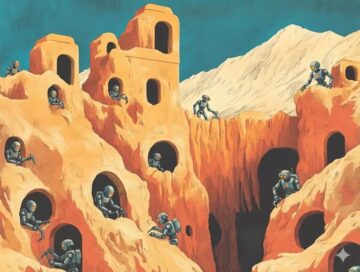 Here’s a threshold AI may be approaching: it may soon be the first technology to be more adaptable than we are. It’s not there yet, but you can see it coming – the range of problems to which early adopters are successfully applying AI is simply exploding. Past inventions had limited impact, because they could only be adapted to some uses. But AI may (eventually) adapt itself to any task. When technology makes one job obsolete, people move into another – one that hasn’t been automated yet. But at some point, AI could be retraining faster than people can.
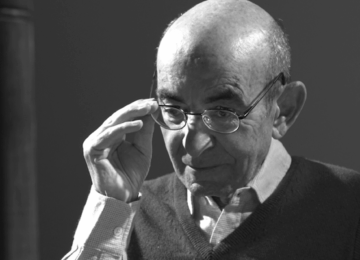 The writer, lawyer and human rights activist Raja Shehadeh, who is 74, has spent most of his life living in Ramallah, a city in the Israeli-occupied West Bank. This is where his Palestinian Christian family ended up after fleeing Jaffa, now part of greater Tel Aviv, in 1948, as Jewish paramilitary forces bombed the city. Since he was a much younger man, Shehadeh has been doggedly documenting the experience of living under Israeli occupation — recording what has been lost and what remains.
 In oncology we return, again and again, to first principles. The cell is our unit of life and of medicine. When a normal cell becomes malignant, it does not merely divide faster; it eats differently. It hoards glucose, reroutes amino acids, siphons lipids, and improvises when a pathway is blocked. We have learned to poison its DNA, to derail its signaling, to enlist T cells as sentinels. We have been slower to ask a simpler question that sits at the cell’s kitchen table: What if we change what a tumor can eat?
 As a teenager, growing up in New Jersey during the 1960s, the pianist Donald Fagen routinely took a bus into Manhattan to hear his jazz heroes in the flesh. The ecstatic improvisational rough-and-tumble of Charles Mingus, Thelonious Monk, Bill Evans, and Willie “The Lion” Smith stayed hardwired inside his brain, and soon Fagen landed at Bard College, where one day in 1967 he overheard a fellow student, Walter Becker from Queens, playing the blues on his guitar in a campus coffee shop. Fagen introduced himself and told Becker how impressed he was by his clean-cut technique. The pair struck up an immediate friendship, then five years later founded Steely Dan, a band that would become one of the defining rock groups of the 1970s.
 ‘Tis the season for overindulgence. But for people with allergies, holiday feasting can be strewn with landmines.