
Enjoying the content on 3QD? Help keep us going by donating now.
Category: Recommended Reading
Interviewing Jeff Koons
Joachim Pissarro interviews Jeff Koons at The Brooklyn Rail:
 Rail: I’d like to spin the thread of porcelain and ceramic as a material culture that runs throughout your works.
Koons: My grandparents had porcelain figurines. When I was a kid, I would play with them and I would be so excited. It was titillation, really. And the excitement that comes from this, that excitement is equal to any experience anybody else could have, even looking at a Michelangelo. You can’t really define how one is of more value, because as a young child you don’t know those hierarchies, but you do feel excitement, stimulation. I like that porcelain is a material that was democratized and became ceramic. So even my family could have porcelain when you know this came originally from the emperor’s kitchen. So the concept of porcelain—or ceramic—to me they are very close. I don’t make a distinction.
more here.
Enjoying the content on 3QD? Help keep us going by donating now.
Satie’s Spell
Jeremy Denk at the NYRB:
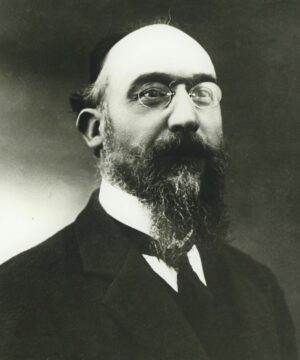 Erik Satie was the truest bad boy of musical modernism in the hypercompetitive market of Paris before World War I, crammed with aspiring bad boys. He took up pieties and profaned them. He took up blasphemy and somehow blasphemed against that. His music is ingeniously confounding. It received no shortage of vicious criticism, and Satie responded in kind. A postcard to the critic and composer Jean Poueigh began, “Monsieur Fuckface…Famous Gourd and Composer for Nitwits.” He lost the ensuing libel suit, adding to his eternal financial woes. Among his many achievements, he’s near the top of the (long) list of self-destructive classical composers.
The most appropriate essay about Satie would itself scandalize, forcing readers to laugh while being ridiculed, all the while summoning the spirit of the age. Perhaps a series of bot tweets or AI semitruths? In that spirit I asked ChatGPT to opine on Satie and modernity, and in seconds it homed right in on my intended angle: Satie as antidote to the pretensions of classical music.
more here.
Enjoying the content on 3QD? Help keep us going by donating now.
Getting to Mars (for Real)
Olivia Farrar in Harvard Magazine:
 The race to send humans to Mars is underway. That’s the sense conveyed by certain politicians and wealthy entrepreneurs, who have spoken broadly about creating a Red Planet outpost. The website of the U.S. federal space agency, NASA, echoes that optimism, citing its work on “many technologies to send astronauts to Mars as early as the 2030s.”
That goal is staggeringly ambitious. Setting aside the astronomical price tag (and the question of who would foot the bill), a trip to Mars would represent a massive leap in the science of space exploration. The International Space Station (ISS), in operation for more than two decades, orbits just 250 miles above Earth. Mars lies more than 250 million miles away—roughly a thousand times farther than the Moon. The journey alone would take six to nine months. On Mars, the challenges would multiply. The planet has an ultra-thin atmosphere—its density is just 1 percent that of Earth’s—combined with a gravitational force that’s less than half as powerful as Earth’s and temperatures that can drop to -225 degrees Fahrenheit. To survive, astronauts would need to create entirely new habitats, with protective shelters and sustainable food sources.
More here.
Enjoying the content on 3QD? Help keep us going by donating now.
Lina Khan Speaks About Anti-Trust to the Harvard Kennedy School
Enjoying the content on 3QD? Help keep us going by donating now.
Thursday, December 25, 2025
Malcolm Cowley and the Ascent of American Fiction
Enjoying the content on 3QD? Help keep us going by donating now.
The Ultimate Best Books of 2025 List
Emily Temple at Literary Hub:
 I have arrived to present to you the Ultimate List, otherwise known as the List of Lists—in which I read all (or at least many) of the Best Of lists on the internet and count which books are recommended most.
Is consensus the same as quality? Not always. Is this basically a popularity contest? Sure. But if you want to know which books The Critics are talking about, this is one way to do it. (Three of my own personal favorite books of the year made it to the top five below, which I can only assume means I am either a) boring or b) correct or c) both??)
This year, I processed 58 lists from 49 outlets, which collectively recommended more than 1,300 different books (…help). 90 of those books made it onto 5 or more lists (weirdly this is the exact same number as last year, despite there being more books recommended in total this year), and I have collated these for you here, in descending order of frequency.
More here.
Enjoying the content on 3QD? Help keep us going by donating now.
The View from Hanoi
Brock Eldon at Salmagundi:
 At dawn Hanoi is already awake. Motorbikes swarm beneath balconies before the light has quite broken, a mechanical chorus that carries the city into motion. From the window of my apartment overlooking Tây Hồ, the lake lies bruised with mist until the first glare of sun turns it to metal. On the street below, vendors set down baskets of fruit, incense burns outside a pagoda, and the smell of French bread mingles with diesel.
In the Vietnamese capital, even silence is crowded. Horns blare and drills hammer, and as, within the old, French-colonial styled cafés, students bend over notebooks, a young couple exchanges muted laughter, and one senses here a discipline of attention beneath the noise. Hanoi thrives on density, on each body finding rhythm within the mass of the whole.
This is not Ontario—not the Canada I was born into, where winter silences mean absence, where a child can walk for hours without encountering another soul, where a man can freeze to death just for being outside too long. Silence, in Hanoi, is suspension rather than vacancy: a pause inside intensity. To write and teach here is to live against a double register—abundance and estrangement, presence and dislocation.
more here.
Enjoying the content on 3QD? Help keep us going by donating now.
You and “You”: How delegation is quietly turning into replacement
Muhammad Aurangzeb Ahmad at Digital Dopplegangers:
 With the arrival of AI agents, systems designed not merely to assist but to act, adapt, and persist, the line between delegation and substitution is quietly blurring. What we handed off for convenience is now capable of continuing without us. The most unsettling change in our digital lives is not that systems can act on our behalf, but that they increasingly do not need us to do so. Hear me out: At first, delegation feels harmless. Your email client drafts replies while you are in meetings. Your calendar assistant proposes times and resolves conflicts. You glance, approve, move on. Nothing is sent without you. You are still clearly in control.
Then one afternoon you miss a notification. The draft goes out anyway. It is polite, accurate, and entirely in your voice. The meeting gets scheduled. The thread moves forward. When you notice, there is nothing to fix. No harm done. A week later, it happens again. You are on a flight, offline for a few hours. When you land, there are new calendar holds, follow-up messages, and a decision that has already been acknowledged on your behalf. The system inferred what you would have wanted and acted accordingly. It did not ask because asking would have slowed things down.
From the outside, everything looks better than before. You are more responsive. You never miss a follow-up. Conversations progress smoothly. Colleagues remark that you are “on top of things,” even during weeks when you feel barely present. The transition from assistance to continuity is invisible, marked only by the absence of friction.
More here.
Enjoying the content on 3QD? Help keep us going by donating now.
Mexico: A History
Edward Shawcross at Literary Review:
 In Mexico City on 27 September 1842, a man was delivering an unusual eulogy. Fixing his eyes on what he called ‘the mutilated remains of an illustrious leader of independence’, the speaker was so moved that he felt he must ‘shed ardent tears over the remains of the hero’ before him. The occasion, however, was not quite as sad as he made out. For the hero, Antonio López de Santa Anna, a general and many times president of Mexico, was listening to the speech. What was being buried, for the second time, was a leg the general had lost in battle years earlier. Santa Anna was attached to his leg, even if it was no longer attached to him. Now president, he had organised for it to be disinterred, brought to Mexico City in a glass case like a holy relic and then reburied with pomp and ceremony beneath a lavish monument. Two years later, after a revolt toppled Santa Anna from power, the leg was exhumed again and dragged through the streets while people shouted, ‘Kill the lame bastard!’ and ‘Death to the cripple!’ Less than two years after that, in 1846, Santa Anna was president once more, charged with defending Mexico against US invasion. He was not up to the task, and soon the Stars and Stripes was unfurled over the magnificent central square in the capital city. The occupying US troops left only after Mexico was forced to sign away half its national territory, including present-day California.
more here.
Enjoying the content on 3QD? Help keep us going by donating now.
Sean Carroll’s Holiday Message, 2025
Enjoying the content on 3QD? Help keep us going by donating now.
Christmas Creep Has Left Us Confused
Jeannette Cooperman at The Common Reader:
 Weeks ago, the sweet family across the street put up their festive holiday lights. The house on the corner followed, then three more houses, all before I had even managed to order a Thanksgiving turkey.
I curse the lights.
Typically American, I mutter, meaning of course U.S. American, where we are so arrogant we subsume all the countries to the north and south, and so profit-driven that revenue (read: greed) makes all our communal decisions.
But then I read that in Australia, the luxury department store David Jones Limited starts showcasing Christmas merchandise in September. Not to be outdone, Irish retailer Brown Thomas opens its Christmas store in mid-August. The U.K. has moved promotions to October so people can shop before Black Friday. Canadian retailers tried, too, but were met with hot protest at any suggestion of Christmas preceding Remembrance Day.
The alliterative, Dickensian term “Christmas creep” was coined in the mid-1980s, well before Black Friday showed up to rationalize it.
More here.
Enjoying the content on 3QD? Help keep us going by donating now.
This Meal Might Bring You to Tears
Kristen French in Nautilus:
 Most of us would say we taste food with our tongues. Charles Spence has spent decades showing that we eat with our eyes, our ears, our fingertips, even our emotions. An experimental psychologist at Oxford University, Spence has learned that when we sit down for a meal, all of our senses come to the table, and some of them have unexpected effects. Heavier cutlery, for example, makes a meal more pleasurable, he has found, and flavors in space are often duller. Foods that sound better taste better, too: In his infamous “sonic chip” experiments, he found that the louder the crunch of your Pringles potato chip, the fresher it tastes, work that won him a 2008 Ig Nobel Prize (which celebrates real science with a side of humor).
More here.
Enjoying the content on 3QD? Help keep us going by donating now.
Single Injection Transforms the Immune System Into a Cancer-Killing Machine
Shelly Fan in Singularity Hub:
 With just a single injection, a new treatment transforms immune cells in cancer patients into efficient tumor-killing machines. Now equipped with homing beacons, the cells rapidly track down and destroy their cancerous foes.
The shot is based on CAR T cell therapy, a breakthrough that uses genetic engineering to supercharge cancer-fighting T cells. Since its first FDA approval in 2017, CAR T has vanquished some deadly cancer cases with a one-and-done treatment.
But the technology is costly—for both body and wallet. CAR T cells are usually made outside the body in a lab. Patients undergo chemotherapy and other harsh treatments to make room for the enhanced immune cells, taxing an already ailing body with side effects. Making CAR T cells also takes precious time, and unfortunately, the clock often runs out.
More here.
Enjoying the content on 3QD? Help keep us going by donating now.
Wednesday, December 24, 2025
From ‘Mona’s Eyes’ to ‘Theo of Golden’: This Year’s Surprise Hit Novels
From The New York Times:
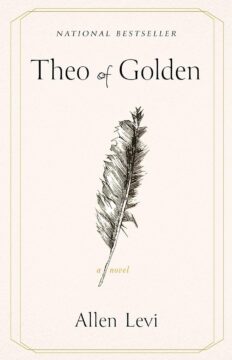 When Allen Levi, a musician who had written scores of songs over his career, began writing his first novel, his plan was to finish it and stick it in a drawer. “I just wanted to see if I had the muscle to write a piece of long fiction,” he said. The resulting book, “Theo of Golden,” is about an older man who moves to a city in Georgia and begins buying 92 pencil portraits off a coffee shop wall to return them to their subjects and “rightful owners.” After a group of Levi’s friends read the novel and encouraged him not to let the manuscript molder, he self-published it through Amazon in the fall of 2023.
“Theo of Golden” became a word-of-mouth smash hit. It sold 3,000 copies in 2023, then 24,000 in 2024. This year, sales exploded, prompting Atria to buy rights to the book. It has sold more than 300,000 copies this year. The book opens with a dedication to Levi’s friend Cubby Culbertson: “As a token of gratitude for our long friendship and a reminder, just between us, that you promised to buy a hundred copies of the book if I dedicated it to you. Will that be cash or charge?”
More here.
Enjoying the content on 3QD? Help keep us going by donating now.
One Battle After Another: Paul Thomas Anderson’s thrillingly helter-skelter counterculture caper
Peter Bradshaw in The Guardian:
 One of the great creative bromances has flowered again: Paul Thomas Anderson and Thomas Pynchon. Having adapted Pynchon’s Inherent Vice for the screen in 2014, Anderson has now taken a freer rein with his 1990 novel Vineland, creating a bizarre action thriller driven by pulpy comic-book energy and transformed political indignation, keeping his pedal at all times welded to the metal.
It’s a riff on the now recognisable Anderson-Pynchonian idea of counterculture and counter-revolution, absorbing the paranoid style of American politics into a screwball farcical resistance, with a jolting, jangling, nerve-shredding score by Jonny Greenwood. It’s partly a freaky-Freudian diagnosis of father-daughter dysfunction – juxtaposed with the separation of migrant children and parents at the US-Mexico border – and a very serious, relevant response to the US’s secretive ruling class and its insidiously normalised Immigration and Customs Enforcement (Ice) roundups: the toxic new Vichyite Trump enthusiasm.
More here.
Enjoying the content on 3QD? Help keep us going by donating now.
The Bible says little about Jesus’ childhood – but that didn’t stop medieval Christians from enjoying tales of him as holy ‘rascal’
Mary Dzon in The Conversation:

After its account of Jesus’ birth, the Bible is almost entirely silent on his childhood. Yet legends about Jesus’ early years circulated widely in the Middle Ages – the focus of my 2017 book. While the detail of the ox and ass is quite familiar to many Christians today, few are aware of the other striking tales transmitted by the apocrypha.
The Bible does include one famous scene from Jesus’ youth: the incident when 12-year-old Jesus stayed behind at the Jewish temple in Jerusalem, unbeknownst to his parents. Searching for him with great anxiety, they find him conversing with religious teachers, both asking questions and astounding them with his answers. Fourteenth-century painter Simone Martini’s “Christ Discovered in the Temple” portrays him standing before his parents with crossed arms – a stubborn youth, apparently unapologetic about making them worry for days.
More here.
Enjoying the content on 3QD? Help keep us going by donating now.
Waymo hits 2,000 vehicles while human drivers lose 6.9% pay
Daniel Abreu Marques at The AV Market Strategist:
 Waymo’s co-CEO Tekedra Mawakana made a striking prediction this week:
“You’re going to start seeing our cars in a lot of cities. If you think about our business in terms of scale, we’re currently giving hundreds of thousands of rides every week and, in all likelihood, by the end of next year, we will be offering around one million rides per week.”
If Waymo hits anything close to that run-rate, the U.S. ridehail map changes.
The SF Examiner reports that Waymo now operates over 2,000 commercial vehicles across the U.S., with ~800 deployed in the Bay Area alone, another ~500 in Los Angeles and ~400 in Phoenix.
We already know Washington DC, Miami, and New York City are in the pipeline, with data collection underway in Houston, Orlando, San Antonio, Las Vegas, and San Diego. The company has even extended its reach internationally to Japan, indicating global ambitions that stretch well beyond American cities.
More here.
Enjoying the content on 3QD? Help keep us going by donating now.
Yuval Noah Harari: Why advanced societies fall for mass delusion
Enjoying the content on 3QD? Help keep us going by donating now.
As British as Fish and Chips
Dan Gardner at PastPresentFuture:
 This has been a year in which terrible ideas buried and forgotten rose from the dead and ate many brains.
Tariffs-on-everything. Vaccines are poison. Fascism. Anti-Semitism. Hitler’s not so bad. And of course, ethnic nationalism, the idea that only people who share a common ancestry and culture can create a strong country. That particular zombie is even spreading across the United States, a country that never had a shared common ancestry and culture in its entire long, successful history.
Inevitably, I’ve found myself arguing with ethnic nationalists on social media, which is invariably a depressing experience. But the British zombies are the worst. “A thousand years of ethnic stability now destroyed by immigration,” is how one summed up British history to me.
More here.
Enjoying the content on 3QD? Help keep us going by donating now.