Frederick Sanger, Two-Time Nobel-Winning Scientist, Dies at 95

Denise Gellene in the New York Times:

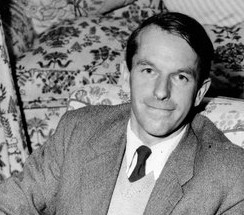
ScreenHunter_407 Nov. 20 21.13Frederick Sanger, a British biochemist whose discoveries about the chemistry of life led to the decoding of the human genome and to the development of new drugs like human growth hormone and earned him two Nobel Prizes, a distinction held by only three other scientists, died on Tuesday in Cambridge, England. He was 95.

His death was confirmed by Adrian Penrose, communications manager at the Medical Research Council in Cambridge. Dr. Sanger, who died at Addenbrooke’s Hospital in Cambridge, had lived in a nearby village called Swaffham Bulbeck.

Dr. Sanger won his first Nobel Prize, in chemistry, in 1958 for showing how amino acids link together to form insulin, a discovery that gave scientists the tools to analyze any protein in the body.

In 1980 he received his second Nobel, also in chemistry, for inventing a method of “reading” the molecular letters that make up the genetic code. This discovery was crucial to the development of biotechnology drugs and provided the basic tool kit for decoding the entire human genome two decades later.

Dr. Sanger spent his entire career working in a laboratory, which is unusual for someone of his stature. Long after receiving his first Nobel, he continued to perform many experiments himself instead of assigning them to a junior researcher, as is typical in modern science labs.

More here. [Thanks to Ruchira Paul.]

the love of the ocean

ManholdingshipSimon Winchester at Lapham's Quarterly:

I suppose it to be a peculiarly English thing, this intense, near-painful fondness for the ocean that surrounds us. Certainly I had always wanted to be a sailor, and as for many, it was the fine romance of an ocean life that provided the earliest motivation. My preparatory school sat by the sea, and when the nuns took us out for Saturday walks, I liked to stand on the Dorset cliff edges and gaze across the waves toward the lines of great ships far out on the horizon, all of them beating slowly to westward against the wind. The sisters—though their own familiarity with matters maritime tended to be circumscribed by Noah, his ark, and the length of a cubit—helped anneal the notion with the reading of ocean poetry. There was a lot of John Masefield. I must go down to the seas again, of course, but Quinquireme of Nineveh and Stately Spanish galleon, too, though there on the Channel coast we mostly saw those dirty British coasters with their salt-caked smokestacks, butting into the gales with their cargos of Tyne coal,/Road rails, pig lead,/Firewood, ironware, and cheap tin trays, the final three words we scallywags always yelling out cheerfully in schoolboy unison.

more here.

the thomas nagel debate

UrlJohn H. Zammito at The Hedgehog Review:

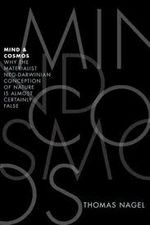
“If there were a philosophical Vatican, the book would be a good candidate for going onto the Index.” It was a philosopher’s joke, the philosopher in this instance being the respected Cambridge scholar Simon Blackburn. But its swipe at a slim volume produced by fellow philosopher Thomas Nagel summed up a sentiment shared far less lightheartedly by many of today’s leading thinkers and scientists—so many, in fact, that The Guardian named it the “Most Despised Science Book of 2012.” And for what reason?

Well, most likely for claims such as this: “The dominance of materialist naturalism is nearing its end.” Or for the equally defiant assertion that materialist naturalism, so called, “will come to seem laughable in a generation or two.” Such jabs capture both the pious wish and the incendiary intent behind Nagel’s Mind and Cosmos: Why the Materialist Neo-Darwinian Conception of Nature Is Almost Certainly False. But what exactly did Nagel intend, and what exactly has he unleashed? Was his book addressed primarily to experts—philosophical or scientific—concerning the legitimate frontiers of inquiry, or was it composed explicitly with an eye to broader political-cultural agitation?

more here.

Notes from a town on fire

JO_GOLBE_CENTR_AP_001Stefany Anne Golberg at The Smart Set:

It was a sunny Valentine’s Day in 1981 when 12-year-old Todd Domboski fell into the fire. He had been in his grandmother’s backyard and noticed a plume of smoke. Such sights had become commonplace in Centralia ever since an abandoned coal mine caught fire beneath the town in 1962. A whole labyrinth of forgotten mines snaked below Centralia, which had slowly filled with fire. Clouds of wretched vapors surfaced all over Centralia, smoke from burning trash and from coal. The trees started to die; the air got harder to breathe. At first they tried to put the fires down, but the flames raged on. Nineteen years went by, and people just kind of got used to it. There were about a thousand residents of Centralia, Pennsylvania in 1981—most had lived there all their lives. Centralians learned to step over the fire and cross to the other side of the street and patch up the fissures that sprang up in their yards as best they could.

The ground opened up beneath Todd Domboski and swallowed him up to his chest. Later, Todd told reporters that the sinkhole smelled of rotten eggs. It was 150 feet deep. Todd’s screams were heard by his cousin Erik, who managed to pull him out of the hole. But it got a lot harder after that to pretend everything was okay. Centralia was no longer a small town with an innocuous fire. The town was becoming its own funeral pyre.

more here.

Wednesday Poem

Bird of Paradise

At dawn my mother stands on the hill
behind our house
and invokes the sun to rise
then she goes to the outdoor kitchen
and prepares tortillas and cocotea for our breakfast

My mother sells fruits and flowers in the market
stuff she grows with her own hands
she does not solicit customers
they come to her of their own volition
and at the end of each day
her items are all sold out

Now at age 42 my mother decides to stop having children
but not because her blood has ceased
“I have peopled the world with the numerous men
and women that my body has birthed,” she says
“now it's time for me to birth other things”

Read more »

The Scientific Study of Positive Emotion

June Gruber in Edge:

Picture-2112-1382982224What I'm really interested in is the science of human emotion. In particular, what's captivated my field and my interest the most is trying to understand positive emotions. Not only the ways in which perhaps we think they're beneficial for us or confer some sort of adaptive value, but actually the ways in which they may signal dysfunction and may not actually, in all circumstances and in all intensities, be good for us.

I thought I'd first start briefly with a tale of positive emotion. It's a really interesting state because in many ways it's one of the most powerful things that evolution has built for us. If we look at early writings of Charles Darwin, he prominently features these feelings of love, admiration, laughter. So early on we see observations of them, and have some sense that they're really critical for our survival, but when you look at the subsequent scientific study of emotion, it lagged far behind. Indeed, most of the research in human emotion really began with studying negative emotions, trying to build taxonomies, understand cognitive appraisals, physiological signatures, and things like anger, and fear, and disgust. For good reason, we wanted to understand human suffering and hopefully try to ameliorate it.
More here.

Chilly lab mice skew cancer studies

Heidi Ledford in Nature:

MiceStandard temperatures for housing laboratory mice affect the experimental results that often form the foundation for cancer-drug development. International guidelines call for laboratory mice to be kept at room temperature. Yet the rodents find that range — 20–26 °C — uncomfortably chilly, says immunologist Elizabeth Repasky of the Roswell Park Cancer Institute in Buffalo, New York. Mice, she notes, lose body heat more rapidly than humans, and, when given a choice, prefer to reside at a balmy 30 °C. At stake might be more than just creature comforts. In a study published today by Proceedings of the National Academy of Sciences1, Repasky and her colleagues report that in mice housed at room temperature, tumour growth was faster than in those housed at 30 °C, and immune responses to cancer were suppressed.

For physiologist Ajay Chawla of the University of California, San Francisco, the results cause little surprise. Mice living at room temperature have to work overtime to maintain their body temperature, and have high heart and metabolic rates, he says. “This study addresses an important issue that I think most of us have ignored,” says Chawla. “I tell my colleagues, 'You’re modelling human disease and pathology in an organism that is like somebody who is on speed'.”

Nore here.

Tuesday, November 19, 2013

reviewing jared diamond’s new book

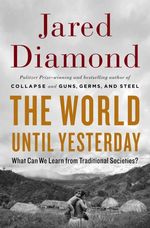
9780670024810_custom-b3591917da92ff0caa7cd6a26012bdf93091465b-s6-c30James C. Scott at The London Review of Books:

What were our ancestors like before the domestication of plants and animals, before sedentary village life, before the earliest towns and states? That is the question Diamond sets himself to answer. In doing so, he faces nearly insurmountable obstacles. Until quite recently, archaeology recorded our history as a species in relation to the concentration of debris (middens, building rubble, traces of irrigation canals, walls, fossilised faeces etc) we left behind. Hunter-gatherers were typically mobile and spread their largely biodegradable debris widely; we don’t often find their temporary habitats, which were often in caves or beside rivers or the sea, and the vast majority of such sites have been lost to history. When we do find them, they can tell us something about their inhabitants’ diet, cooking methods, bodily adornment, trade goods, weapons, diseases, local climate and occasionally even causes of death, but not much else. How to infer from this scant evidence our ancestors’ family structure and social organisation, their patterns of co-operation and conflict, let alone their ethics and cosmology.

It is here that Diamond makes his fundamental mistake. He imagines he can triangulate his way to the deep past by assuming that contemporary hunter-gatherer societies are ‘our living ancestors’, that they show what we were like before we discovered crops, towns and government. This assumption rests on the indefensible premise that contemporary hunter-gatherer societies are survivals, museum exhibits of the way life was lived for the entirety of human history ‘until yesterday’ – preserved in amber for our examination.
more here.

doris lessing interview

Doris-Lessing-in-largean interveiw with Doris Lessing at Paris Review:

I did take mescaline once. I’m glad I did, but I’ll never do it again. I did it under very bad auspices. The two people who got me the mescaline were much too responsible! They sat there the whole time, and that meant, for one thing, that I only discovered the “hostess” aspect of my personality, because what I was doing was presenting the damn experience to them the whole time! Partly in order to protect what I was really feeling. What should have happened was for them to let me alone. I suppose they were afraid I was going to jump out of a window. I am not the kind of person who would do such a thing! And then I wept most of the time. Which was of no importance, and they were terribly upset by this, which irritated me. So the whole thing could have been better. I wouldn’t do it again. Chiefly because I’ve known people who had such bad trips. I have a friend who took mescaline once. The whole experience was a nightmare that kept on being a nightmare—people’s heads came rolling off their shoulders for months. Awful! I don’t want that.

more here.

The Insanity of Our Food Policy

Joseph E. Stiglitz in the New York Times:

17GREATDIVIDE-blog427American food policy has long been rife with head-scratching illogic. We spend billions every year on farm subsidies, many of which help wealthy commercial operations to plant more crops than we need. The glut depresses world crop prices, harming farmers in developing countries. Meanwhile, millions of Americans live tenuously close to hunger, which is barely kept at bay by a food stamp program that gives most beneficiaries just a little more than $4 a day.

So it’s almost too absurd to believe that House Republicans are asking for a farm bill that would make all of these problems worse. For the putative purpose of balancing the country’s books, the measures that the House Republican caucus is pushing for in negotiations with the Senate, as Congress attempts to pass a long-stalled extension of the farm bill, would cut back the meager aid to our country’s most vulnerable and use the proceeds to continue fattening up a small number of wealthy American farmers.

The House has proposed cutting food stamp benefits by $40 billion over 10 years — that’s on top of $5 billion in cuts that already came into effect this month with the expiration of increases to the food stamp program that were included in the 2009 stimulus law. Meanwhile, House Republicans appear satisfied to allow farm subsidies, which totaled some $14.9 billion last year, to continue apace.

More here.

‘Scientism’ wars: there’s an elephant in the room, and its name is Sam Harris

Oliver Burkeman in his blog at The Guardian:

Sam-Harris-008Science: has it gone too far? This sounds like one of those vox-pop questions from The Day Today (readers who don't know what I'm talking about should click here). But if you follow these matters, you'll know that it's been the topic of a fractious recent debate among scientists and philosophers. The accusation – made, for example, in Curtis White's book The Science Delusion, and elsewhere – is that we're living in an era of rampant “scientism”. This is a vague term that refers, broadly, to scientists overstepping their boundaries, applying scientific forms of thinking where they don’t apply.

The opposing case got a major boost this month from Steven Pinker's essay in The New Republic, entitled Science Is Not Your Enemy; scientism, he argued, was “more of a boo-word than a label for any coherent doctrine”. The whole concept, he strongly implies, is a straw man, “equated with lunatic positions, such as that 'science is all that matters' or that 'scientists should be entrusted to solve all problems'. Nobody really thinks science can tell us how to live. (“When I hear people accused of scientism, they’re not trying to determine the moral law with particle accelerators,” adds Scott Alexander at Slate Star Codex, echoing this point.) The reliably, um … forthright Chicago University evolutionary biologist Jerry Coyne calls scientism a “canard” – as evidenced by “the failure of 'scientism' critics to give examples of the sin.”

I don't intend to wade into this debate too far. (My colleague Steven Poole wrote an excellent response to it all at the weekend.) But one point does need adding. Scientism may well not be a particularly widespread problem, and I agree with Sean Carroll's argument that it's probably an unhelpfully blurry word. But to imply that it's pure invention is demonstrably wrong. We should acknowledge that there's an elephant in the room. The elephant's name is Sam Harris.

More here.

The tao of modern physics

Shivaji Sondhi in The Indian Express:

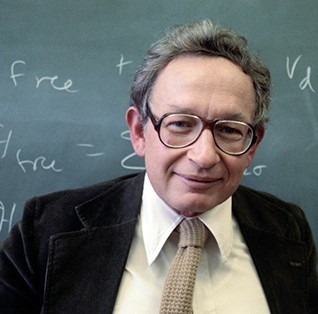
ScreenHunter_406 Nov. 19 13.39In the bulk of the commentary on the discovery of the Higgs particle at CERN and the recent award of the Nobel prize to Peter Higgs and François Englert, one astonishing aspect has been largely overlooked. This discovery points to one of the most central aspects of postwar physics — its unity across domains at distances (or energies) separated by vast gulfs that have allowed ideas to jump between very different physical problems. In the case of the Higgs particle, its discovery at an energy of one hundred billion electron volts in a complicated special purpose machine is, in a mathematical sense, a precise analogue of a well-understood phenomenon in ordinary metals at an energy of a thousandth of an electron volt — one hundred trillion times lower!

Indeed, this analogy is how the puzzle underlying the Higgs particle was first solved by Philip Anderson in 1963, a year before the papers by Higgs and Englert and Robert Brout that were honoured with the Nobel. Anderson, now 89, is widely regarded as the greatest living condensed matter physicist, a maestro of the part of physics that tries to understand how the small set of subatomic forces and particles can lead to the infinite variety of the matter we see around us. He has led a spectacular career during which he picked up a Nobel in 1977 for completely different work, and could have collected at least two more.

More here. [Photo shows Philip Anderson.]

David Byrne: The Concert for the Philippines

UPDATE: By the way, I was at the original “Here Lies Love” concert at Carnegie Hall six years ago. You can read my account of that thrilling experience here.

David Byrne by email:
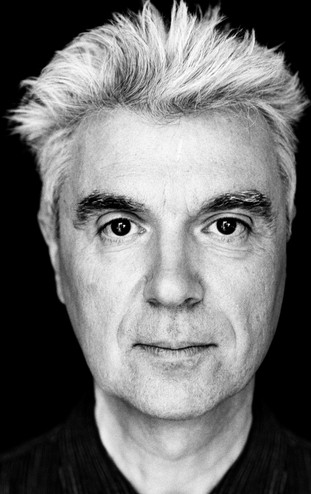
ScreenHunter_405 Nov. 19 12.53About a week ago, on November 7th, Super Typhoon Yolanda (as Typhoon Haiyan is known in the Philippines) made landfall. It was the strongest tropical cyclone to make landfall on record. Ever. The full extent of damage and the death toll have yet to be assessed, but it's unimaginably catastrophic. The city of Tacloban on the island of Leyte has been almost wiped off the face of the earth. No place could have withstood this storm.

This past spring and summer, a musical I had been working on for years called Here Lies Love ran at The Public Theater here in NY. It takes place in the Philippines, and it follows the rise and fall of Imelda Marcos, the former first lady of the Philippines. The first song sung by Imelda begins with the words “When I was a young girl in Leyte.” The show is about the resiliency of the Philippine people—that sentiment couldn't be more timely.

Upon hearing about this tragedy, the cast contacted me about doing a show to raise money for relief efforts. Most of our cast is Filipino, and all of us feel the same way. It's personal for all of us. We all dropped whatever we were doing and this concert version of the show will happen in one week—Monday, November 25th, 8PM, at Terminal 5 here in New York.

You can get tickets here.

All proceeds will go to recovery efforts that Doctors Without Borders/Médecins Sans Frontières are doing in the Philippines.

We'll be doing a concert version of the show—this won't be the same immersive, interactive experience as the theatrical version. But we'll do EVERY song, in order, with the original cast and costumes—plus I’ll be helping out and singing as well. The show is wall-to-wall songs. If you didn't see or hear the production, now is your chance to hear it and at the same time to do something for the survivors in the Philippines. Wear comfortable shoes!

We've pulled this together incredibly quickly. Thanks, of course, to the cast and crew, The Public Theater, Bowery Presents (who have graciously donated this venue), Todomundo and The Philippine Embassy.

Doris Lessing: a model for every writer coming from the back of beyond

Margaret Atwood in The Guardian:

British-novelist-Doris-Le-008Wonderful Doris Lessing has died. You never expect such rock-solid features of the literary landscape to simply vanish. It's a shock. I first encountered Lessing on a park bench in Paris in 1963. I was a student, living on baguettes, oranges and cheese, as one did, and suffering from a stomach ailment, as one did. My pal Alison Cunningham and I had been barred from our hostel during the day, so Alison was soothing my prostrate self by reading from The Golden Notebook, which was all the rage among such as us. Who knew we were reading a book that was soon to become iconic?

Just as we were getting to a crucial moment in the life of Anna Wulf, along came a policeman to tell us that lying down on park benches was against the law, so we decamped for a bistro and another interesting washroom experience. (Footnote: this was before second-wave feminism. It was before widespread birth control. It was before mini-skirts. So Anna Wulf was a considerable eye-opener: she was doing things and thinking things that had not been much discussed at the Toronto dinner tables of our adolescence, and therefore seemed pretty daring.) The other woman we were sneakily reading in 1963 was Simone de Beauvoir, but the childhoods of little-girl colonials such as ourselves lacked starched petticoats and were not very French. We had more in common with a remote-places-of-the-Empire parvenue such as Doris Lessing: born in Iran in 1919, growing up on a bush farm in Rhodesia (now Zimbabwe); then, after two failed marriages, running away to England with scant prospects, which was where we colonials with scant prospects ran away to then.

Picture: 'If there were a Mount Rushmore of 20th-century authors, Lessing would be carved on it.'

More here.

Tuesday Poem

Trochees and Dactyls

He met her at the reception.
She was exceptionally beautiful
and spoke with a thick accent

as she talked about her native
tongue. Popping an appetizer
(some sort of crustacean)

into her mouth, she airily
waved the tiny spear
of a tasseled toothpick in the air

as he waited for her to chew
and to swallow. “In my native
tongue,” she told him, giving

her upper lip a last fluid lick,
and gesturing with the toothpick
which came down on each word

like a conductor's baton
or a tool for poetic scansion,
“the first syllable always carries

the stress. No exceptions. Like love
at first sight, phonetically speaking.
The words are all trochees and dactyls.”

He nodded his understanding
and she went on, “Nevertheless,
our Slavic liquids,” and here she

aimed the lucky tip of the toothpick
at her mouth, nearly touching it,
“are difficult for you foreigners

to pronounce.” And she rolled
a consonant cluster with an r inside
right off he tongue, to demonstrate–

a dark grape wrapped in its native
mist, which he expertly caught
in his own mouth, and without bursting it,

gave back to her, whole.

by Paul Hostovsky

A Cold War Fought by Women

John Tierney in The New York Times:

WomenThe existence of female competition may seem obvious to anyone who has been in a high-school cafeteria or a singles bar, but analyzing it has been difficult because it tends be more subtle and indirect (and a lot less violent) than the male variety. Now that researchers have been looking more closely, they say that this “intrasexual competition” is the most important factor explaining the pressures that young women feel to meet standards of sexual conduct and physical appearance. The old doubts about female competitiveness derived partly from an evolutionary analysis of the reproductive odds in ancient polygynous societies in which some men were left single because dominant males had multiple wives. So men had to compete to have a chance of reproducing, whereas virtually all women were assured of it. But even in those societies, women were not passive trophies for victorious males. They had their own incentives to compete with one another for more desirable partners and more resources for their children. And now that most people live in monogamous societies, most women face the same odds as men. In fact, they face tougher odds in some places, like the many college campuses with more women than men.

To see how female students react to a rival, researchers brought pairs of them into a laboratory at McMaster University for what was ostensibly a discussion about female friendships. But the real experiment began when another young woman entered the room asking where to find one of the researchers. This woman had been chosen by the researchers, Tracy Vaillancourt and Aanchal Sharma, because she “embodied qualities considered attractive from an evolutionary perspective,” meaning a “low waist-to-hip ratio, clear skin, large breasts.” Sometimes, she wore a T-shirt and jeans, other times a tightfitting, low-cut blouse and short skirt. In jeans, she attracted little notice and no negative comments from the students, whose reactions were being secretly recorded during the encounter and after the woman left the room. But when she wore the other outfit, virtually all the students reacted with hostility. They stared at her, looked her up and down, rolled their eyes and sometimes showed outright anger. One asked her in disgust, “What the [expletive] is that?”

More here.

Monday, November 18, 2013

Free Exclusive Invitation For 3 Quarks Readers to Attend a Lecture and Lunch with Daniel C. Dennett entitled “What can cognitive science tell us about free will?”

THE ELEVENTH HARVEY PREISLER MEMORIAL SYMPOSIUM

Saturday, November 23, 2013

International House

500 Riverside Drive
New York, NY 10027

www.ihouse-nyc.org

RSVP in the comments area of this post to be put on the guest list.

Let us know if you will be bringing guests and, if so, how many.

10:00 am: Welcome and Tribute to Harvey Preisler by Sheherzad Raza Preisler

10:15 am: Introduction of Dr. Dennett by Azra Raza

10:30 am: Dr. Daniel C. Dennett: “What can cognitive science tell us about free will?”

11:30 am: Q/A session moderated by Dr. Raza

12:00 pm: Light lunch

Screenhunter_1_9

Harvey David Preisler, M.D., Director of Rush Cancer Institute and the Samuel G. Taylor III Professor of Medicine at Rush University, Chicago, died on May 19th 2002. The cause of death was lymphoma. Dr. Preisler grew up in Brooklyn, New York, and trained in Medicine at New York Hospitals, Cornell Medical Center, and in Medical Oncology at the National Cancer Institute and Columbia Presbyterian Hospital in NYC. At the time of his death, he was the Principal Investigator of a ten million dollar grant from the National Cancer Institute in addition to several other large grants which funded his independent research laboratory with approximately 25 scientists. He was married to Azra Raza, M.D.

http://3quarksdaily.blogs.com/3quarksdaily/2006/05/rx_harvey_david.html

http://images.ted.com/images/ted/1469_254x191.jpgDaniel Clement “Dan” Dennett III is an American philosopher, writer and cognitive scientist whose research centers on the philosophy of mind, philosophy of science and philosophy of biology, particularly as those fields relate to evolutionary biology and cognitive science. He is best known for his concept of intentional systems, and his multiple drafts model of human consciousness, which sketches a computational architecture for realizing the stream of consciousness in the massively parallel cerebral cortex. Professor Dennett is an atheist and a secularist, a member of the Secular Coalition for America advisory board. His first book, Content and Consciousness, appeared in 1969, followed by Brainstorms, Elbow Room, The Intentional Stance, Consciousness Explained, Darwin's Dangerous Idea, Kinds of Minds, Brainchildren: A Collection of Essays 1984-1996 and Sweet Dreams: Philosophical Obstacles to a Science of Consciousness. He co-edited The Mind's I with Douglas Hofstadter in 1981. He is the author of over four hundred scholarly articles on various aspects of the mind, published in journals ranging from Artificial Intelligence and Behavioral and Brain Sciences to Poetics Today and the Journal of Aesthetics and Art Criticism. His most recent publication is Intuition Pumps and Other Tools for Thinking ( 2013). Professor Dennett is the recipient of multiple national and international awards and is the Co-director of the Center for Cognitive Studies, the Austin B. Fletcher Professor of Philosophy, and University Professor at Tufts University in Boston.