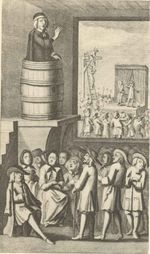
One and Many: The pluralistic expressions In Sufi poetry

Raheel Lakhani in Aaj News:
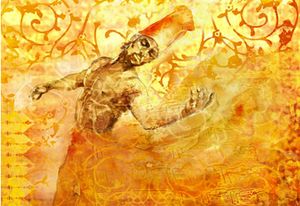
RumiiiOut beyond ideas of wrongdoing and rightdoing,

there is a field; I’ll meet you there.

When the soul lies down in that grass,

the world is too full to talk about.

-Rumi

When one reads the Persian mystic Rumi allegorically, it feels as if both the creator and the created are speaking. As if Truth is saying that He dwells beyond the fields of paradise and hell, essentially everywhere and the creation shows readiness to indulge in love and praise of HIM. If this talk of sacredness is outside the measures of right and wrong then Rumi here is inviting us to embrace pluralism while appreciating God’s creation.

…A poet from Sub-continent who refers Rumi repeatedly is Shah Abdul Latif Bhitai. He was a Sindhi mystic saint, poet, and musician. His collected poems were compiled as Shah Jo Risalo. Hossein Nasr described Shah Latif as a direct emanation of Rumi’s spirituality in the Indian world (Nasr, 1974).

The whole creation seeks Him,

He is the Fount of Beauty, thus Rumi says:

If you but unlock yourself, you will see Him

More here.
Saturday Poem

A Crow

In a vast expanse of field
a crow with the sun on its back
flying vigorously
suddenly died.
It fell straight down from the high sky.
And at the same time
its huge shadow
dashed into its dead body
at lightning speed
from the horizon of the crimson field.
Having cast a great shadow on this earth
the crow’s heart quit.

by Shinjiro Kurahara
from Iwana
publisher: Dowaya, Tokyo, 2010
translation: 2010, Mariko Kurahara, William I. Elliott, Katsumasa Nishihara

Friday, November 15, 2013

WHY PAKISTAN LIONIZES ITS TORMENTERS

Mohammed Hanif in The New Yorker:

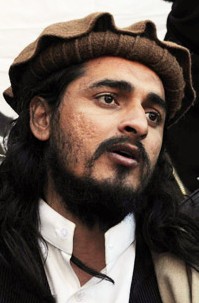
ScreenHunter_399 Nov. 15 15.35During his four years as the head of the T.T.P., Mehsud raised the Taliban game in Pakistan. No longer were they just tribal men fighting to preserve their way of life; they started dreaming they could convert everyone to it. Mehsud consolidated a number of small but ruthless militant and sectarian groups into close-knit fighting units that seemed able to strike anywhere at will. He ordered attacks on Pakistan’s military bases, organized a couple of spectacular jailbreaks, and sent an endless stream of suicide bombers after politicians and religious scholars who didn’t meet his exacting standards. After his men kidnapped an Army colonel, Mehsud delivered a short speech, and then shot him in front of a video camera.

Yet the state seems to have lost the will to fight its old foe, Fazlullah, and his followers. When Mehsud was killed, instead of celebrating or letting out quiet sighs of relief, politicians and journalists reacted as if they had lost a favorite son. He had killed many of us, but we weren’t craving vengeance; we were ready to make up and cuddle.

Why does Pakistan’s political and military élite celebrate the very people it is fighting?

More here.

The Roots of Good and Evil: Sam Harris interviews Paul Bloom

From Sam Harris's blog:

Harris: What are the greatest misconceptions people have about the origins of morality?

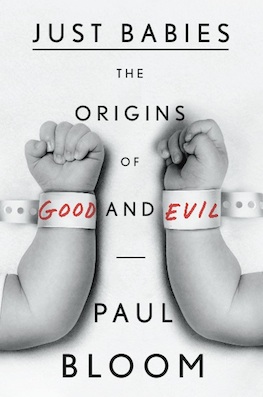
Just_babies_4_30Bloom: The most common misconception is that morality is a human invention. It’s like agriculture and writing, something that humans invented at some point in history. From this perspective, babies start off as entirely self-interested beings—little psychopaths—and only gradually come to appreciate, through exposure to parents and schools and church and television, moral notions such as the wrongness of harming another person.

Now, this perspective is not entirely wrong. Certainly some morality is learned; this has to be the case because moral ideals differ across societies. Nobody is born with the belief that sexism is wrong (a moral belief that you and I share) or that blasphemy should be punished by death (a moral belief that you and I reject). Such views are the product of culture and society. They aren’t in the genes.

But the argument I make in Just Babies is that there also exist hardwired moral universals—moral principles that we all possess. And even those aspects of morality—such as the evils of sexism—that vary across cultures are ultimately grounded in these moral foundations.

A very different misconception sometimes arises, often stemming from a religious or spiritual outlook. It’s that we start off as Noble Savages, as fundamentally good and moral beings. From this perspective, society and government and culture are corrupting influences, blotting out and overriding our natural and innate kindness.

This, too, is mistaken. We do have a moral core, but it is limited—Hobbes was closer to the truth than Rousseau. Relative to an adult, your typical toddler is selfish, parochial, and bigoted. I like the way Kingsley Amis once put it: “It was no wonder that people were so horrible when they started life as children.” Morality begins with the genes, but it doesn’t end there.

More here.

Is our universe fine-tuned for the existence of life – or does it just look that way from where we’re sitting?

Tim Maudlin in Aeon:

Cassini-saturn-rings-earthCan it be mere chance that there are galaxies at all, or that the nuclear reactions inside stars eventually produce the chemical building blocks of life from hydrogen and helium? According to some theories, the processes behind these phenomena depend on finely calibrated initial conditions or unlikely coincidences involving the constants of nature. One could always write them off to fortuitous accident, but many cosmologists have found that unsatisfying, and have tried to find physical mechanisms that could produce life under a wide range of circumstances.

Ever since the 1920s when Edwin Hubble discovered that all visible galaxies are receding from one another, cosmologists have embraced a general theory of the history of the visible universe. In this view, the visible universe originated from an unimaginably compact and hot state. Prior to 1980, the standard Big Bang models had the universe expanding in size and cooling at a steady pace from the beginning of time until now. These models were adjusted to fit observed data by selecting initial conditions, but some began to worry about how precise and special those initial conditions had to be.

More here.

Watch Piotr Dumala’s Wonderful Animations of Literary Works by Kafka and Dostoevsky

There’s a certain irony to Polish animator Piotr Dumala’s innovative style, a stop-motion technique in which he scratches an image into painted plaster, then paints it over again immediately and scratches the next. Called “destructive animation,” Dumala devised the method while studying art conservation at the Warsaw Academy of Fine Arts.

Trained as a sculptor as well as an animator, Dumala’s award-winning films present strikingly expressionistic textures emerging from pitch black and receding again. The 1991 film Kafka (top) begins with the reclusive writer shrouded in darkness and isolation. He coughs once, and we are transported to Prague, 1883. Each frame of Kafka resembles a woodcut, and the sound design is as spare as the extremely high-contrast animation.

More here. [Thanks to Jim Culleny.]

camus at 100

1342563665Robert Zaretsky at the LA Review of Books:

To gaze at Camus’ own modest gravestone in the southern French village of Lourmarin, the inscription “1913–1960” delivers a similar shock. When he left us, Camus was younger than many of us are now; what his father left his son, his son has left us: a profound silence that surges through his remarkable writings and life.

This silence is neither poetic nor mere rhetoric: it was a brute fact of Camus’s life. Not just the absent father, but also the present, yet mute mother. An illiterate cleaning woman, Catherine Camus spoke with difficulty — a handicap perhaps due to the shock of her husband’s death. The young Camus would sometimes find his mother “huddled in a chair, gazing in front of her” in the small apartment they shared with his illiterate grandmother and partly mute uncle in a working class neighborhood of Algiers. Her muteness, he recalled, seemed “irredeemably desolate.”

The silent mother haunts Camus’s writings: it is the dark matter toward which everything else is pulled. In The Stranger, it is the death of Meursault’s mother that begins the unmaking of his life; it is the mostly wordless presence of Dr. Rieux’s mother in The Plague that prevents the unmaking of a world swept by disease.

more here.

Was Norman Mailer the last tough guy?

201345mailerDanieal Swift at The New Statesman:

Mailer lived his life in order to gather material. He was 19 when the US entered the Second World War and he wondered whether a better novel could be written about the Pacific campaigns or the war in Europe; he started planning his war novel before he was called up in March 1944. During basic training, he took notes “on the sex lives of the other soldiers”. He fought in the Philippines and listed the names of the soldiers he met; they turn up in The Naked and the Dead.

This hunger – to get life into literature –was a constant. He followed The Naked and the Dead with two more novels but soon became frustrated with the restrictions of fiction. In the late 1950s, after an unhappy period in Hollywood trying to write screenplays, he turned to journalism and non-fiction. The so-called New Journalists of the 1960s –Gay Talese, Tom Wolfe, Joan Didion –made their pursuit of the story part of the story and wrote themselves into their reports. Mailer’s innovation was an extreme version of this.

more here.

a tribute to laziness

0811218740.01.MZZZZZZZAnna Della Subin at The Millions:

Fasten a mast to the bed, let the sheets catch the wind. It is possible that, if you drift long enough on the waves of sleep, you will awaken into a world that has changed — though who can say for the better? The Greeks told of the boy Epimenides, who was searching for his father’s stray sheep when he stopped for a noonday nap in a cave. When he awoke, fifty-seven years later, everything that he once knew had vanished. Across Crete, news spread that Epimenides must be particularly loved by the gods to have slept so long. For Aristotle, he was proof of the impossibility of the passage of time without the occurrence of change.

Christian martyrs have dozed longer still. The eighteenth chapter of the Quran — and an earlier Syriac legend — tells of a group of young Christian men who, fleeing the persecution of a Roman Emperor, escaped into a cave, where they slumbered for three hundred and nine years. Rising from their long sleep, they found their beards had grown long, Christ’s name was openly spoken, and all of their loved ones were dead. In 1933, the Egyptian playwright Tawfiq al-Hakim dramatized their swim through the oceanic night in The People of the Cave. Awakening into a world where they are hailed as saints, the stiff-limbed sleepers find they cannot live in this strange, undreamt future. “We are like fish, whose water has changed from sweet to salty,” the saints protest, as they retreat into their cave.

Languishing in a French prison in 1883, Paul Lafargue observed that a strange mania had lately gripped mankind.

more here.

Out of the Wild: A Conversation between William Cronon and Michael Pollan

From Orion Magazine:

What is wild? What is cultivated? And what can these ideas teach us about our relationship to landscape? Questions like these have been a lifelong passion for William Cronon and Michael Pollan, both of whom have written deeply on the blurry boundary between nature and culture. Michael’s first book on the subject was Second Nature: A Gardener’s Education; he has gone on to write about food in all its forms in books such as The Omnivore’s Dilemma and the recent Cooked. Bill’s exploration of the wild and the cultivated has emerged from a historical perspective; his first book, Changes in the Land: Indians, Colonists, and the Ecology of New England, traced the history of human alteration to landscape and pioneered an argument against the idea of pristine wilderness. Recognizing the interplay between their ideas, Orion asked Bill and Michael if they would have a conversation that could be shared with Orion’s readers. They met in Berkeley, California, where they talked about ecology and storytelling, nature and artifice, and the promise and challenge of finding meaning in the natural world.

***

Bill: The chapter “Nature Abhors a Garden” in Second Nature is still one of the best things anybody’s ever written on the boundary between wild and cultivated. Part of what’s brilliant about that piece, I think, is your deployment of humor. What is it about humor that you find so compelling in terms of writing about nature

Michael:“Nature Abhors a Garden” is a comic piece about my war with a woodchuck, and there’s a lot of Bill Murray from Caddyshack in there. There’s a point in the essay at which I describe pouring gasoline down a woodchuck burrow and lighting it on fire, and when I tell that story, especially to young people today, they’re amazed and often upset with me—there’s an assumption that an environmentalist would never do something like that. But working out that conflict between the cultural baggage that we carry into nature and the practical necessity of getting ourselves something to eat—I think that’s a pretty good microcosm of many of the issues we face.

More here.

Electron appears spherical, squashing hopes for new physics theories

Clara Moskowitz in Nature:

ElectronScientists are unanimous that their current theory of physics is incomplete. Yet every effort to expose a deeper theory has so far disappointed. Now the most sensitive test yet of the shape of an electron — a property that could expose underlying 'new physics' — has failed to find hints of anything novel. The finding rules out a number of favoured ideas for extending physics, including some versions of a popular idea called supersymmetry. The result came from a search for the so-called electric dipole moment in the electron. A familiar example of a dipole is a bar magnet, which is shaped like a dumbbell with a north and a south pole. Electrons are traditionally thought of as spherical, but if they had dipole moments, they would be slightly squashed. “It’s a question of: Does the electron look the same no matter which way you look at it?” explains physicist Jony Hudson of Imperial College London. “The dipole moment is physicists’ technical way to describe if it’s symmetric or not.”

The Standard Model of particle physics, which describes all the known particles in the Universe, predicts a practically zero electric dipole moment for the electron. Yet theories that include additional, yet-to-be-detected particles predict a much larger dipole moment. Physicists have been searching for this dipole moment for 50 years. Now a group called the ACME collaboration, led by David DeMille of Yale University and John Doyle and Gerald Gabrielse of Harvard University, has performed a test 10 times more sensitive than previous experiments, and still found no signs of an electric dipole moment in the electron. The electron appears to be spherical to within 0.00000000000000000000000000001 centimeter, according to ACME’s results, which were posted on the preprint site arXiv. “It’s a surprise,” says Ed Hinds, also of Imperial College London, who worked with Hudson on the previous best limit, set in 2011. “Why on Earth is it still zero?”

More here.

Friday Poem

Dalai Lama

The Dalai Lama continues to laugh
addressing
a large audience.

The interpreter is super-serious
has no time for laughter
The English was like a net
the Tibetan words butterflies,
flew from the flower-petal lips of the Dalai Lama
sometimes to sit on the ears of the Tibetan kids
sometimes on the gold-flecked robes,
maybe the wedding dresses
of the Tibetan women
taken out only on special occasions
but worn away at the hems
this bit of sparkle left
like the trace of light in aged eyes.

The Dalai Lama was expounding
the Four Noble Truths of Buddhism
He raised his arm and
like three little dots of ‘therefore’
there were the marks of childhood vaccination
peeping through his ochre robe.
They whispered:
Aha, someone is talking about such high principles
but is from this very world
this very epoch
and he’s just a man.

Right in front of me, rapt, a grandfather
on his shoulder a chubby little boy and his gurgling bottle
wiping his running nose
on grandpa’s sweater —
He must have been like that —
the Dalai Lama
What do we know of Tibet —
Rahul Sanknityayan or Rinpoches
monasteries and chow mein
cheap sweaters and sandals, China,
snow, lost eyes, round faces and faithful Lhasa Apso pups.

How do those noble truths
connect with
such random bits,
the ignoble truths of life?

Does truth too have hierarchies?
A caste system? —
Brahmin truths at the top
and then the Shudra truths at the bottom?

Hunger and
thirst
heat and cold
attachment and cruelties
Love and hate —
are these truths really lower?

Dalai Lama, you tell me, please:
if the truth is like these mountain ranges —
high and low.
I prefer living in the deep cave of a small truth
occasionally coming to you
to learn the nobler truths of life.

by Anamika
from Khurduri Hatheliyan
publisher: Radhakrishna Prakashan, Delhi, 2005
translation: 2006, Arlene Zide and Anamika

Thursday, November 14, 2013

Iran’s Plutonium Game

Jeremy Bernstein in the New York Review of Books:

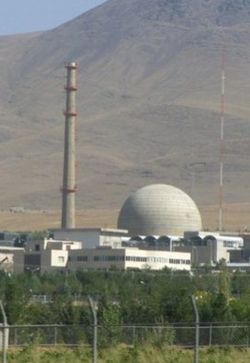
ScreenHunter_396 Nov. 14 16.42There have been conflicting reports about why the much-watched negotiations in Geneva failed to produce an interim agreement about Iran’s nuclear program. On Monday, senior US officials said that the Iranian delegation was not ready to sign on to a draft agreement, which called for a six-month freeze in Iran’s uranium enrichment activity to allow time to produce a comprehensive accord. But over the weekend, French officials gave another reason: the French government is concerned about the continuing construction of a heavy-water nuclear reactor at Arak.

In fact, to anyone who has been following the Iranian nuclear program, it was almost a forgone conclusion that negotiations with Iran would hit a road block when it came to the so-called IR-40 reactor located in Arak. The “40” here refers to the projected power output of forty megawatts of thermal power. To convert this into electric power involves a cumbersome process. The thermal power, which is generated in the form of energetic fission fragments in the reactor, must be converted into steam to run inefficient steam turbines. Thus much of the original reactor generated energy is dissipated; something like only a third of this power could be converted into electricity. And since one large building alone can use several megawatts of power, it is hard to imagine generating much electricity from a forty-megawatt reactor. Whatever the IR-40’s intended use, it is not to produce electric power. A reactor designed for that purpose—such as the one at Bushehr—produces billions of watts.

Moreover, there is nothing about the reactor’s declared purpose that would require it to be a heavy water reactor. According to the Iranian government, the IR-40 reactor is supposed to make medical isotopes. But a light water reactor would have served the stated purpose just as well—and generate the same amount of power.

What makes the Arak reactor suspicious, then, is the design. To understand this we need to understand how a heavy water reactor works.

More here.

Upper-caste India’s debt to Ambedkar

Namit Arora in Caravan:

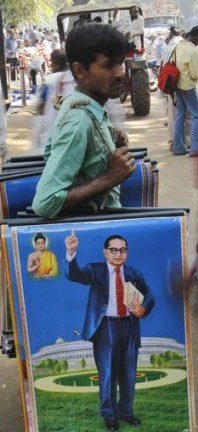
ScreenHunter_395 Nov. 14 16.30Turn in any direction you like, caste is the monster that crosses your path,” wrote Bhimrao Ramji Ambedkar, India’s foremost crusader for dignity and civil rights. That monster has always haunted Ambedkar’s legacy, polarising it along caste lines. On the one hand is his godlike presence in Dalit communities, who, out of affection and admiration, have built countless statues of him, usually dressed in a Western suit and tie, with a fat book under his arm, and in whose folk songs, poems, and calendar art he has long held pride of place. For generations, his bold, secular, and emancipatory ideas inspired many low-caste activists and writers, many of whom recall their lives in “before-and-after Ambedkar” phases. When Omprakash Valmiki, the author of the memoir Joothan: A Dalit’s Life, first read about Ambedkar’s life and work, he “spent many days and nights in great turmoil.” He grew more restless; his “stone-like silence” began to melt, and “an anti-establishment consciousness became strong” in him. Ambedkar gave voice to his muteness, Valmiki wrote, and raised his moral outrage and self-confidence.

On the other hand, there remains a longstanding apathy for Ambedkar among caste Hindus. What respect he does get from India’s elites is usually limited to his role as the architect of the constitution—important, but arguably among the least revolutionary aspects of his legacy. The social scientist and educationist Narendra Jadhav, interviewed in the Times of India earlier this year, described Ambedkar as the “social conscience of modern India”, and lamented that he has been reduced to being “just a leader of Dalits and a legal luminary.” Indeed, even thoughtful, liberal elite Indians are commonly ignorant about Ambedkar’s life and social impact, both in his lifetime and in the decades since—as the scholar Sharmila Rege noted in Against the Madness of Manu: BR Ambedkar’s writings on Brahmanical Patriarchy, not only lay readers, but Indian post-graduates and academics in the social sciences, humanities, and women’s studies are also unlikely to have read him. What explains this severe disjunction in how Ambedkar is received in India?

More here.

The Math Trick Behind MP3s, JPEGs, and Homer Simpson’s Face

Aatish Bhatia in Nautilus:

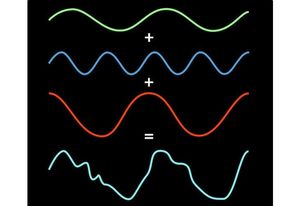
1620_806beafe154032a5b818e97b4420ad98Nine years ago, I was sitting in a college math physics course and my professor spelt out an idea that kind of blew my mind. I think it isn’t a stretch to say that this is one of the most widely applicable mathematical discoveries, with applications ranging from optics to quantum physics, radio astronomy, MP3 and JPEG compression, X-ray crystallography, voice recognition, and PET or MRI scans. This mathematical tool—named the Fourier transform, after 18th-century French physicist and mathematician Joseph Fourier—was even used by James Watson and Francis Crick to decode the double helix structure of DNA from the X-ray patterns produced by Rosalind Franklin. (Crick was an expert in Fourier transforms, and joked about writing a paper called, “Fourier Transforms for birdwatchers,” to explain the math to Watson, an avid birder.)

You probably use a descendant of Fourier’s idea every day, whether you’re playing an MP3, viewing an image on the web, asking Siri a question, or tuning in to a radio station. (Fourier, by the way, was no slacker. In addition to his work in theoretical physics and math, he was also the first to discover the greenhouse effect [pdf].)

So what was Fourier’s discovery, and why is it useful?

More here.

How did ancient Greek music sound?

Armand D'Angour at the BBC:

_70644615_010083090-1Suppose that 2,500 years from now all that survived of the Beatles songs were a few of the lyrics, and all that remained of Mozart and Verdi's operas were the words and not the music.

Imagine if we could then reconstruct the music, rediscover the instruments that played them, and hear the words once again in their proper setting, how exciting that would be.

This is about to happen with the classic texts of ancient Greece.

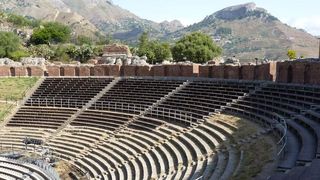
It is often forgotten that the writings at the root of Western literature – the epics of Homer, the love-poems of Sappho, the tragedies of Sophocles and Euripides – were all, originally, music.

Dating from around 750 to 400 BC, they were composed to be sung in whole or part to the accompaniment of the lyre, reed-pipes, and percussion instruments.

More here.

on a new translation of Herodotus

Fec64d26-4c72-11e3-_384297hEdith Hall at the Times Literary Supplement:

The Hellenist John Herington once called Herodotus a literary “centaur”, because from the front he looks like a rational intellectual, but his rear parts belong to a primitive creature of the wild. Herodotus’ pioneering prose treatise sought to explain the nature of the world he inhabited, in the mid-fifth century BC, from the events that had taken place across the Mediterranean and Black Sea regions during the reigns of four Persian kings – Cyrus, Cambyses, Darius and Xerxes. These culminated in the victory of Greece over Persia in 480–479 BC. Herodotus, the “father of history”, often uses rational explanations, backed up by evidence. But he also includes many traditional stories and legends, with patently fantastic elements, derived from poems, fables and oral tradition. Herodotus therefore needs a versatile translator who appreciates his hybridity. Enter Tom Holland, a distinguished and highly readable author of both historical non-fiction dealing with ancient empires (Persian Fire, Rubicon,Millennium, The Shadow of the Sword) and popular fantasy novels. He knows more than most of us about how to evoke both real and imagined scenarios with economy, elegance and gusto. Although there is no shortage of rival translations on the market, the Herodotus of Holland has therefore been eagerly awaited.

more here.

Augustan Satire Reconsidered

Tale-stagesBrooke Allen at The Hudson Review:

And what riches they are! How tempting are obscure titles like the Earl of Rochester’sSeigneur Dildoe! Or David Garrick’s Shakespearean parody Ragandjaw, in spite of the fact that according to Marshall it “provides little more than sophomoric humor and coarse entertainment.” It makes us wonder which of our own topical satires will stand the test of a couple of hundred years. Perhaps as few as comprise the standard Restoration and Augustan canon; for of all the literary modes in existence, satire is the most “purposive,” to use academic jargon—the most dependent on events of the moment. South Park, screamingly funny now, will probably be incomprehensible to viewers a century hence, while some of Stephen Colbert’s apparently topical rants might prove to be for all time: his classic “Truthiness” episode is as universally applicable as some of the masterpieces of his spiritual forebear, Jonathan Swift. Dr. Strangelove, which would seem to be deeply inscribed in the context of Cold War paranoia, still speaks to us as strongly as ever and will probably do so for many decades to come. Scholars and common readers of the future will determine the late twentieth- and early twenty-first-century canon, but it is probably safe to say that, as has been the case with the Augustans, the works that will last are those that deal with human nature itself rather than mere current events.

more here.

the Least Known Masterpiece of European Literature

Leopardi,_Giacomo_(1798-1837)_-_ritr._A_Ferrazzi,_Recanati,_casa_LeopardiAdam Kirsch at The New Republic:

Leopardi found his way to an idea that troubled all the major Romantic poets and thinkers. What sets him apart is that, while most Romantics saw the disenchantment and alienation of the modern world as a problem to be solved (M. H. Abrams’s Natural Supernaturalism is the classic account of the attempted solutions), Leopardi saw it as a fate to be endured. Scientific reason, to Leopardi, was a curse not because it falsified the world but precisely because it showed the world truly: a place devoid of purpose, meaning, and providence. “Reason … recognizes how unimportant all things are,” he remarks. Where Wordsworth taught his readers to cultivate joy and trust in nature, Leopardi told his, in “Broom,” that nature, “the truly guilty,” is man’s wicked stepmother, responsible for all our unhappiness.

If reason tells us an unbearable truth, then our only salvation is ignorance: “There is no other remedy for the ills of modern philosophy than forgetting.” Yet Leopardi does not really believe that forgetting is possible. Ignorance, like paradise, cannot be regained once it is lost, and the man who knows the truth has no recourse but to envy those who do not know—such as children, whose instincts remain strong because they live in a world full of nourishing illusions. “Children find everything in nothing, men find nothing in everything,” as he puts it at one of the rare moments when the flow of his thoughts condenses into aphorism.

more here.