Mark Zuckerberg and Yuri Milner announced new $3 million Breakthrough Prize in Mathematics

From PR Newswire:

4F07FBD3-ED5C-4D4E-9D25-234CF814A34C_w640_r1_s_cx0_cy2_cw0“Scientists should be celebrated as heroes, and we are honored to be part of today's celebration of the newest winners of the Breakthrough Prize in Life Sciences and the Fundamental Physics Prize,” said Anne Wojcicki and Sergey Brin.

The prize ceremony was hosted by actor Kevin Spacey, and awards were presented by the Prize sponsors and by celebrities including Conan O'Brien, Glenn Close, Rob Lowe and Michael C. Hall. The event was organized in cooperation with Vanity Fair and produced and directed by Don Mischer, the producer and director of the Academy Awards, among other television and live events. Grammy-nominated singer Lana Del Ray performed live for the guests of the ceremony.

The event will be televised by the Science Channel, one of the Discovery networks; it will be broadcast at 9pm on January 27th.

At the end of the ceremony, Mark Zuckerberg and Yuri Milner announced the launch of a new $3 million Breakthrough Prize in Mathematics. The details of the new prize will be announced at a later date.

“The Breakthrough Prize is our effort to put the spotlight on these amazing heroes. Their work in physics and genetics, cosmology, neurology and mathematics will change lives for generations and we are excited to celebrate them,” commented Mark Zuckerberg.

More here. Peter Woit hates the idea though.
Religion’s Quandary

Kenan Malik in the New York Times:

Contributors-images-slide-RPHF-articleInlineThey call it the Francis effect: the impact of Pope Francis in galvanizing the Catholic faithful. Since he arrived at the Vatican, church attendance has surged across the world, while in his homeland of Argentina, the number of people defining themselves as believers has risen by a reported 12 percent.

Not just Catholics but those of other faiths, and of no faith, have fallen under Francis’ spell. “Even atheists should be praying for Pope Francis,” as the Guardian columnist Jonathan Freedland put it recently.

Yet how much has really changed? Francis may be transforming the perception of the church and its mission, but not its core doctrines. He has called for a church more welcoming to gay people and women, but he will not challenge the idea that homosexual acts are sinful, refuses to embrace the possibility of same-sex marriage and insists that the ordination of women as priests is not “open to discussion.”

None of this should be surprising. Religious institutions necessarily spurn the modern and the fashionable, in favor of the traditional and the sacred. But it points up the dilemma in which religion finds itself in the modern world. If religious institutions do not change, they risk becoming obsolete. If they do change, they may imperil their authority. This quandary is faced not just by the Catholic Church but by all religious institutions today.

More here.

Breyten Breytenbach’s 2008 letter to Nelson Mandela

12APPhoto-LynneSladky-Harpers-400Breyten Breytenbach at Harper's Magazine:

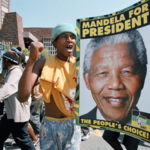
In due time there will probably be an assessment of your political career and the impact you had as president of the country — and you were nothing if not a consummate politician. Your being the historical vector for controlled compromise and change may ultimately be equated with statesmanship. Already we know you saved us from civil war. This should be remembered as your single most important legacy, and we must never forget how lucky we were. Some will say you could only do so by aborting the revolution.

But my own unease, now, is of a slightly different kind. I wish to express my deep affection for you. You are in so many ways like my late father — stubborn to the point of obstinacy, proud, upright, authoritarian, straight, but with deep resources of love and intense loyalty and probably with a sense of the absurd comedy of life as well. A cad also, when tactical considerations made it necessary. I think I’ve told you this.

more here.

Robert Bellah: In Memoriam (1927-2013)

Bellah_15_3Richard Madsen at Hedgehog Review:

Bellah’s richly informed vision of the varieties of transcendent yearnings found brilliant expression in his final masterpiece,Religion in Human Evolution: From the Paleolithic to the Axial Age (2011). The book culminates in long, detailed chapters on the religious civilizations of ancient Israel, Greece, China, and India. In Bellah’s telling, Hebrew monotheism, Greek philosophy, Indian Buddhism, and Chinese Confucianism are each unique, the product of many historical contingencies. What unites them is not the sharing of some common essence of “religion” but their connection to a “deep past,” to a common historical story that extends all the way back to the Big Bang.

The epigraph to that book is from the Chinese sage Mencius: “When one reads the poems and the writings of the ancients, how could it be right not to know something about them as men? Hence one should try to understand the age in which they have lived. This can be described as ‘looking for friends in history.’” For Bellah, thinkers such as Confucius and Mencius were not simply creators of systems of thought; they were friends in history, conversation partners. The same was true of Socrates and Plato, Isaiah and Jeremiah, the Buddha, and more recent thinkers like Kant and Hegel, Weber and Durkheim. Bellah did not simply study about them. He argued and searched together with them for answers to the great questions of how we ought to live and how we think about how to live.

more here.

the soviet project to create entirely new sounds

ImageColin McSwiggen at n+1:

From roughly the mid-1910s until the end of the 1930s, a handful of Russian engineers and artists took it upon themselves to remake the practice of music in the image of a revolutionary utopia. In contrast to the better-remembered Prokofiev and Shostakovich, these inventors were mostly outsiders to formal musical traditions, and they believed that the future of music lay not in new compositional styles, but in new technologies for the production of sound.

What they created was astonishing, not only in its novelty but in its quantity and scale. Many of their more outlandish ideas never saw fruition: an organ powered by an entire factory, an electro-acoustic orchestra mounted on a fleet of airplanes. But they successfully fashioned a great number of unprecedented devices, from synthesizers to proto-samplers, with technology that predated magnetic tape let alone the integrated circuit. Many of their conceptual developments—methods for synthesizing speech, models of the physics of musical instruments, theoretical descriptions of the idiosyncrasies of live performers—would have been at home in the technological landscape of the ’80s, ’90s, and ’00s.

more here.

Made in the U.S.A: Fiction and critique of American society

Adam Kirsch in Harvard Magazine:

BookThe phrase “The Great American Novel” means something more than the sum of its parts. There are plenty of great American novels that are not Great American Novels: Henry James’s Portrait of a Lady doesn’t qualify, and neither does Ernest Hemingway’s The Sun Also Rises, or Willa Cather’s The Lost Lady, even though everyone acknowledges them as classics. No, the Great American Novel—always capitalized, like the United States of America itself—has to be a book that contains and explains the whole country, that makes sense of a place that remains, after 230-odd years, a mystery to itself. If other countries don’t fetishize their novels in quite this way—if the French don’t sit around waiting for someone to write the Great French Novel—it may be because no country is so much in need of explanation.

Hardly anyone talks about the Great American Novel without a tincture of irony these days. But as Lawrence Buell shows in The Dream of the Great American Novel, his comprehensive and illuminating new study, that is nothing new: American writers have always held the phrase at arm’s length, recognizing in it a kind of hubris, if not mere boosterism. Almost as soon as the concept of the Great American Novel was invented, in the nation-building years after the Civil War, Buell finds it being mocked, noting that one observer dryly put it into the same category as “other great American things such as the great American sewing-machine, the great American public school, and the great American sleeping-car.” It was enough of a cliché by 1880 for Henry James to refer to it with the acronym “GAN,” which Buell employs throughout his book. Yet Buell warns us against taking all this dismissal at face value: “critical pissiness suggests the persistence of some sort of hydrant,” as he puts it. Even today, in our endlessly self-conscious literary era, novelists are still writing candidates for the GAN. What else are Jonathan Franzen’s Freedom, or Philip Roth’s American Pastoral, or Don DeLillo’s Underworld, if not attempts to capture the essence of American modernity between two covers?

More here.

Learning From the History of Vitamins

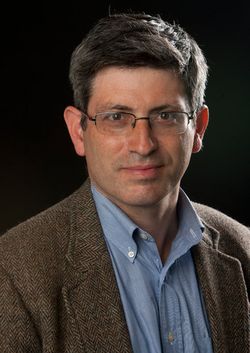
Carl Zimmer in The New York Times:

Zimmer-headshot-popup-v2Our health depends on vitamins, and to understand that dependency, it helps to understand the history of vitamins. As I wrote in an article in Science Times this week, our ancestors have probably needed vitamins for billions of years. By studying how we and other species make vitamins, scientists hope to find new ways to keep us healthy — perhaps even by using vitamins as a weapon against our enemies. There are two ways of getting those vitamins: making them or eating them. Our microbial ancestors probably made many of their vitamins, but later much of that ability was lost. Our primate ancestors lost the ability to make their own vitamin C about 60 million years ago. Those ancestors didn’t need to make vitamin C, however, because they regularly ate fruit. More recently, our hunter-gatherer ancestors got an abundant supply of vitamins from the game they killed and the plants they collected. But with the rise of agriculture, people began to eat more vitamin-poor starches like wheat and corn. And as we’ve transformed our diet even further, we’ve put ourselves at risk of vitamin-related diseases.

In the mid-1800s, for example, manufacturers began processing rice in steam-powered mills, which stripped off their vitamin-rich outer layer. As white rice became increasingly common, so did a disease called beriberi, which causes people to lose the feeling in their legs and begin to have trouble walking. Beriberi baffled scientists for decades. In the 1880s, a scientist named Christiaan Eijkman found that chickens could develop a beriberi-like condition and started studying them to find the cause of the disease. For years he was convinced some kind of bacteria was to blame. But then he discovered that a flock of sick chickens suddenly recovered from beriberi-like symptoms. It turned out that the chickens had initially been fed on leftover rice from the military hospital in the Netherlands where Dr. Eijkman did his research. “Then the cook was replaced and his successor refused to allow military rice to be taken for civilian chickens,” Dr. Eijkman later explained when he accepted the 1929 Nobel Prize in Physiology or Medicine for his research.

More here.

Tuesday Poem

at the rowing course, ghent

see how my father sets out on the water in a small boat
he rows with steady strokes and in between

is silence, he stirs the water with his oars
making waves that reach the banks later

there where I’ve left already, I’m cycling along the waterside
I call out that his speed is seven and a half knots per hour

he’s got his back to my view, he sees
where we were, I see what’s ahead, he’s wearing

a kyrgyz hat, not a real one but something made of
faded cotton, for the wind is too strong, he says

too strong for a hat, and on his feet he’s wearing
galoshes that belonged to his father-in-law

they stay in place, he says, in case he ends up
in the deep-end after all, he loved the water, the way he

loved my mother for in the middle of the sea
she was the only thing missing, he let slip

one day, and what about us, I thought and waved
goodbye, he couldn’t wave back, I called

but he couldn’t hear me, he was rowing and it looked
so effortless for him, slowly he fulfilled

his earthly duties while looking at me, on the shore,
now and then, he was moved, perhaps, but from here

I couldn’t tell, it may just as well have been
a game whose rules I didn’t know

and I thought I could leave him there, the water
understood him and carried him back to front

back to the shore

Miriam Van hee
from ook hier valt het licht
(translation by Judith Wilkinson)

Monday, December 16, 2013

Torasophy: A Biblical Humanism (Part I)

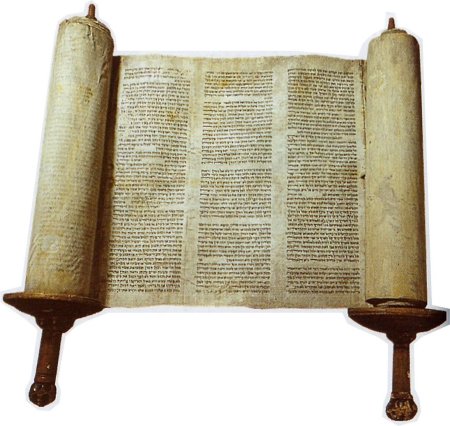
by Josh Yarden Torah-scroll

Prequel to the world as they knew it

Reading the Hebrew Bible is a bit like entering a time machine to travel back a few millennia. Imagine people wearing sandals and clothes somewhat unlike yours, but strip away the styles and the trends, and you see that they are concerned in their own ways with the same issues that concern people in your day and in your town: place, property, power, privilege, position, passion, poverty and all the games people still play today. Even when the text as we know it was being compiled and edited, it was already an attempt to recall an ancestral time. These were the stories the ancient Israelites told of the primordial world and of their ascendence to their present day. Fast forward, and even with all of the advances in technology and science, we are still concerned with many of the same essential themes and questions.

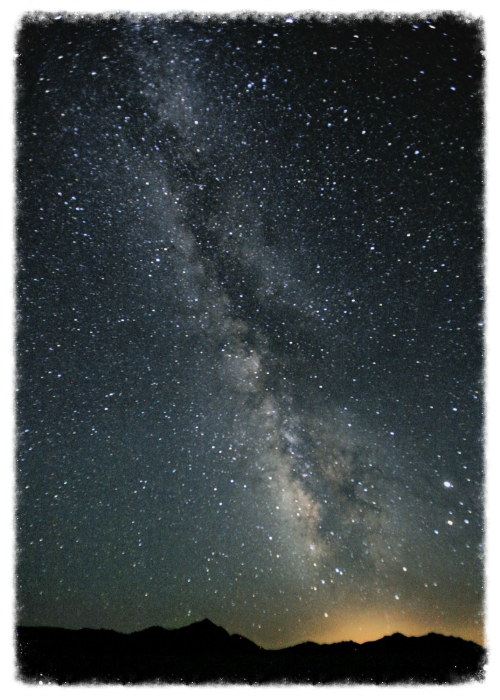
Milky_Way_Night_Sky_Black_Rock_Desert_Nevada The Torah, as the first five books of the Bible are known in Hebrew, opens with a dreamlike inception of time and space. After a brief introduction to light and matter come the profiles of archetypal characters. The story quickly moves from the Big Bang to Mesopotamia to Canaan, from Adam to Noah to Terah. Everything in the history of the world leads to Abraham becoming the first Hebrew. There is a lot of traveling down to Egypt and back up to Canaan, and along the way the focus on Abraham and his children is further narrowed to the descendants of his grandson, Jacob. Some sections read like a genealogical archive of heroes and their arch-enemies, but the lists of dry details give way to compellingly detailed accounts of some exemplary human beings and their deplorable human failings. Oppression, emancipation, liberation, and the epic journey comes to fruition with People of Israel on the threshold of the Land of Israel.

That is the story as painted in a sweeping arc with one long stroke of a broad brush. At first there is nothing but an empty canvas. Then there is light, and soon after that the world is full of everything good. Humanity appears early on in the biblical narrative, when the clear skies—having just recently been separated from the water—are still carefree. It is a beautiful day and the reader can imagine Adam and Eve wishing it would never end. Look more closely and you can see a great deal of detail along the route from Eden Garden to the River Jordan—intrigue regarding all matters of personal, inter-personal and political relationships. These are the three areas of investigation in the biblical narrative. Adam is at first free to roam about the garden, naming everything he sees. He is then suddenly faced with rules, choices and dilemmas. The scene begins filling with moral ambiguity as the creator-spirit rumbles into the garden on a late afternoon breeze. The story grows dark.

Read more »

Sunday, December 15, 2013

The Most Mysterious Subject

Cathleen Schine reviews Levels of Life by Julian Barnes, in the New York Review of Books:

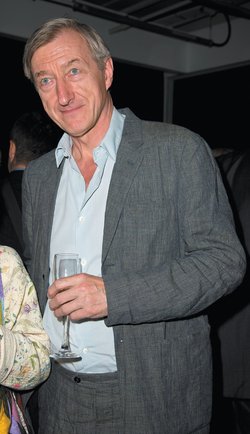
Schine_1-121913_jpg_250x1634_q85Julian Barnes was married for thirty years to a woman he loved, the literary agent Pat Kavanagh. Levels of Life is an examination of the void she left behind when she died in 2008. The book is short, crisp, measured, and deeply felt. Not a grief memoir so much as a grief meditation, it is divided into three improbable parts: an appealing discussion of ballooning; a touching short story about the fictional romance of a real English adventurer named Fred Burnaby and the celebrated actress Sarah Bernhardt; and a thoughtful consideration of grief. In The Sense of an Ending, his novel that won the Man Booker Prize in 2011, Barnes’s celebrated literary playfulness and skill sometimes came off almost as affectation. The artifice in the new book, in contrast, is essential. Levels of Life is a far stranger and more original work.

It is, not surprisingly, a marvel of flickering Barnesian leitmotifs, none of them subtle, all of them subtly and unexpectedly intertwined. Barnes’s language is even more disciplined than usual. He has managed to tenderly expose the grief of mourning in all its naked, writhing confusion, without exposing himself, something of a miracle of restraint.

More here.

Remembering the Foolish and Brilliant Christopher Hitchens

The Hitch died two years ago today and we miss him. I am reposting Morgan's remembrance which was published here soon after Christopher Hitchens died:

by Morgan Meis

Item0.rendition.slideshowWideVertical.christopher-hitchens-life-in-pictures-ss01At the moment, I'm angry with Christopher Hitchens. Not because he died. A man dies. And angry is not really the correct word, nor the correct emotion. I'm frustrated with Christopher Hitchens, troubled by him, moved by him, enamored of him and then repelled at the attraction.

The first time I met Christopher Hitchens was at a Harper's Magazine Christmas party just before the start of the Iraq War. Bloomberg had recently banned smoking in New York City and the intellectuals were pissed. In those days, Harper's parties happened down in the basement at Pravda. It was all very arch. Smoking ban be damned. Lewis Lapham and his band of merry lit boys were going to light up the smokes anyway. Hitch had a Scotch in one hand and a cigarette in the other. But you've seen him like that a thousand times, in person, in pictures, on TV. I stood in line to speak with him. The line was moving smoothly until a woman in a red dress half a size too small for all her stuff gummed up the works. You could hear the collective groan all along the line as she stepped up to the Hitch. This was going to take a while.

I gave him a copy of a review a friend and I had written about his recently published book, Letters to a Young Contrarian. The book is not very good, a fact he readily acknowledged. Really, my friend and I wrote the review to attack him for his abandonment of the Left. He didn't care that we felt abandoned. Speaking with him, I came to understand that he really didn’t care. All the same, he appreciated the review, which was pretty smart. Hitch appreciated smart. Always.

More here.

Scott Aaronson on Philosophical Progress

Luke Muehlhauser at the Machine Intelligence Research Institute:

Luke Muehlhauser: Though you’re best known for your work in theoretical computer science, you’ve also produced some pretty interesting philosophical work, e.g. in Quantum Computing Since Democritus, “Why Philosophers Should Care About Computational Complexity,” and “The Ghost in the Quantum Turing Machine.” You also taught a fall 2011 MIT class on Philosophy and Theoretical Computer Science.

Why are you so interested in philosophy? And what is the social value of philosophy, from your perspective?

Aaronson_w150Scott Aaronson: I’ve always been reflexively drawn to the biggest, most general questions that it seemed possible to ask. You know, like are we living in a computer simulation? if not, could we upload our consciousnesses into one? are there discrete “pixels” of spacetime? why does it seem impossible to change the past? could there be different laws of physics where 2+2 equaled 5? are there objective facts about morality? what does it mean to be rational? is there an explanation for why I’m alive right now, rather than some other time? What are explanations, anyway? In fact, what really perplexes me is when I meet a smart, inquisitive person—let’s say a mathematician or scientist—who claims NOT to be obsessed with these huge issues! I suspect many MIRI readers might feel drawn to such questions the same way I am, in which case there’s no need to belabor the point.

From my perspective, then, the best way to frame the question is not: “why be interested in philosophy?” Rather it’s: “why be interested in anything else?”

But I think the latter question has an excellent answer. A crucial thing humans learned, starting around Galileo’s time, is that even if you’re interested in the biggest questions, usually the only way to make progress on them is to pick off smaller subquestions: ideally, subquestions that you can attack using math, empirical observation, or both.

More here.

Nobel winner declares boycott of top science journals

Ian Sample in The Guardian:

Randy-Schekman-008Leading academic journals are distorting the scientific process and represent a “tyranny” that must be broken, according to a Nobel prize winner who has declared a boycott on the publications.

Randy Schekman, a US biologist who won the Nobel prize in physiology or medicine this year and receives his prize in Stockholm on Tuesday, said his lab would no longer send research papers to the top-tier journals, Nature, Cell and Science.

Schekman said pressure to publish in “luxury” journals encouraged researchers to cut corners and pursue trendy fields of science instead of doing more important work. The problem was exacerbated, he said, by editors who were not active scientists but professionals who favoured studies that were likely to make a splash.

The prestige of appearing in the major journals has led the Chinese Academy of Sciences to pay successful authors the equivalent of $30,000 (£18,000). Some researchers made half of their income through such “bribes”, Schekman said in an interview.

Writing in the Guardian, Schekman raises serious concerns over the journals' practices and calls on others in the scientific community to take action.

“I have published in the big brands, including papers that won me a Nobel prize. But no longer,” he writes. “Just as Wall Street needs to break the hold of bonus culture, so science must break the tyranny of the luxury journals.”

More here.

Sunday Poem

Reading List

Later on, after the dishwasher is filled,
dog walked, mail posted, magazines sorted,
bed/some semblance of sense/a few calls made:

………………………….doctor, chimney guy, Blue Cross Blue Shield

I’ll free up a spare moment to add
The Goldfinch by Donna Tartt to the list
of books read I’ve kept these past few years
a satisfying snap for every entry
like biting down on a marrow bone like

………………………….breaking a seized nut with an offset wrench.

I will resist the urge to record my
college textbooks, titles long forgotten
save for orphaned words such as Issues and
Contemporary. I won’t include those
T.V. Guides with their Byzantine layout
and Lilliput font or the stack of Hardy
adventures wolfed down like salty snacks.

………………………….Christ the Readers Digests’ alone would

require their own special section,
back issues from 1961
moldering swollen during those sultry
Tennessee summers, a sage piece by
Art Linkletter or Laughter Is The Best
Medicine to while away the still
afternoon’s, relieved only by the bleat
of the front porch swing and the X-ray buzz
of cicadas.

………………………….Maybe the laundry and the fallen leaves

won’t mind if I take five minutes to add
Franklin E. Meyer’s Me and Caleb and
The Borrowers, by Mary Norton
reminding me, how could I forget? of
E.B. White, Mark Twain and Marvel Comics
not to mention countless cereal
boxes, album jackets and the liner
notes concealed within. But reading the dogs
face, a forlorn sphinx haunting an empty
bowl, I think I’d best add her name first

………………………….hoping to avoid a bloody awful

savaging when she writes her memoirs.
.

by Dave Hardin
from Scrum, December 2013

Can Bees Be Trained to Sniff Out Cancer?

From Smithsonian:

Bees-detecting-cancerU.K.-based product designer Susana Soares has created a simple, elegant way of harnessing bees to screen for a number of diseases, including cancers, like tumors of the lung and ovaries. Her glass apparatus, called “Bee’s,” features a large chamber and a smaller connected chamber housed within it. After training the bees to associate a specific chemical odor with a food reward, such as sugar, the insects are released into the diagnostic device through an opening. Patients would simply blow into the smaller compartment and wait to see if a swarm gathers toward something alarming in the person’s breath.

The project, part of her master’s thesis at London’s Royal College of Art, began in 2007 when Soares came across research on bees and their phenomenal olfactory abilities. After talking to researchers in the field, she learned that certain diseases, such as lung cancer, noticeably alter the composition of bodily fluids, producing odorous compounds that show up in urine and sometimes blood. Some investigators have even been experimenting with various sensory methods to home in on these “biomarkers.” In Philadelphia, for instance, scientists have trained mice to identify the scent of lung cancer. Trained dogs have also been used to sniff out ovarian cancer. Others have focused on replicating these animal abilities in electronic nose devices that are calibrated to pick up these biomarkers undetectable to human noses.

More here.