
The Errand
’On you go now! Run, son, like the devil
And tell your mother to try
To find me a bubble for the spirit level
And a new knot for this tie.’But still he was glad, I know, when I stood my ground,
Putting it up to him
With a smile that trumped his smile and his fool’s
errand,
Waiting for the next move in the game.
.
.
by Seamus Heaney
from The Spirit Level
Faber and Faber, 1996
Category: Recommended Reading
Danish rap poet Yahya Hassan faces racism charge for knocking Muslims
Liz Bury in The Guardian:

His collection, titled Yahya Hassan, has sold 80,000 copies since October and is expected to have topped 100,000 by Christmas, according to publisher Gyldendal. He has won fans among the Danish middle-class for his work, which slams what he sees as hypocrisy among the immigrant Muslim community in Denmark, and accuses them of a raft of negative behaviours, including bad parenting and social security fraud. His poetry has tapped into a rumbling public debate about Islam in Denmark, which erupted in 2005 when the daily newspaper Jyllands-Posten published a depiction of the prophet Muhammad with a bomb as his turban. The paper later apologised for publishing the cartoons, saying that they had caused “serious misunderstandings”. The country has a strong pro-free speech lobby, which is open to hijacking by racists. Hassan was brought up in the deprived area of Gellerup in Aarhus, with a disciplinarian father. He is vociferous in his criticism of his parents' generation of Muslims, and slams the attitudes of his peer group. He has been subject to death threats, and was assaulted in November at Copenhagen Central Station, by 24-year-old Isaac Meyer, also of Palestinian descent, who has previously served a jail term for his part in a failed terrorist plot. The racism charge was brought this week by local politician Mohamed Suleban, who told Politiken newspaper: “He says that everybody in the ghettos like Vollsmose and Gellerup steal, don't pay taxes and cheat themselves to pensions. Those are highly generalising statements and they offend me and many other people.” Novelist Liz Jensen, who lives in Denmark, said: “Denmark is obsessed with him. He's a bright, angry young man, talented and very charismatic. He deserves attention because his poetry, born of rap, is raw and urgent and has huge flair. Its observational qualities, along with its mix of Danish street-slang and sophisticated word-play has real literary merit. But would he get so much coverage if he weren't criticizing the Muslim ghetto community he comes from? I suspect not.”
More here.
China’s Terracotta Warriors inspired by ancient Greek art
Owen Jarus (Live Science) via MSNBC News:

“It is perfectly possible and actually likely that the sculptures of the First Emperor are the result of early contact between Greece and China,” writes Lukas Nickel, a reader with the School of Oriental and African Studies at the University of London, in the most recent edition of the journal Bulletin of the School of Oriental and African Studies. (A reader is a position comparable to an associate or full professor in the American system.) Nickel's evidence includes newly translated ancient records that tell a fantastic tale of giant statues that “appeared” in the far west, inspiring the first emperor of China to duplicate them in front of his palace. This story offers evidence of early contact between China and the West, contacts that Nickel says inspired the First Emperor (which is what Qin Shi Huangdi called himself) to not only duplicate the 12 giant statues but to build the massive Terracotta Army along with other life-size sculptures.
More here.
Thursday, December 12, 2013
Shakespeare the collaborator
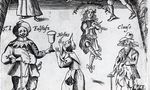
The chief key to this interplay between Shakespeare and his company is, of course, his leading man, the great tragedian Richard Burbage. As with all great actors there is something unknowable about Burbage. The reputed self-portrait at Dulwich (he is documented as a painter as well as an actor) has a withdrawn, austere aura which is only partly due to the current conventions of portraiture, and the numerous elegies written after his death in 1619 tell us little about the man, though much about his charismastic presence in the tragic roles Shakespeare wrote for him: “None can draw / So truly to the life this map of woe”, wrote one elegist, possibly John Fletcher. Van Es writes eloquently of Burbage’s Hamlet as an unprecedented presentation of self-doubt which was also a “moment of professional self-definition” for both author and actor. The part depends on an intricately layered performance which can persuade the audience of the Prince’s interior life – “I have that within which passes show” – and of their privileged glimpses into it. Van Es cautions wisely against foisting “an ahistorical ‘realism’” onto Burbage’s acting style, though “realism” seems to be what Webster had in mind when he said of Burbage, “What we see him personate we think truly done before us”. And it is surely the case that Hamlet’s splendid advice to the Player – “Speak the speech, I pray you, as I pronounced it to you, trippingly upon the tongue . . . nor do not saw the air too much with your hand”, and so on – must to some extent describe the style of the actor who speaks the lines.
more here.
Norman Rockwell’s Vision

Seventy years after the appearance of the Four Freedoms sequence, among Norman Rockwell’s best-known works, the artist continues to be derided as an assembly-line purveyor of sentimental kitsch, a victim of his own popularity and of the changing tastes of the late twentieth century.
But that judgment isn’t damning. An American Art Museum exhibition recently featured his paintings from the collections of George Lucas and Stephen Spielberg. And on December 4, seven of his paintings went on the block at Sotheby’s, where his Saying Grace netted $46 million, tripling the previous record for a Rockwell sale.
Today viewers can admire Rockwell’s humor and eye for detail while dismissing the end result as saccharine and self-consciously folksy, embodying a mid-century patriotism and optimism that most Americans no longer feel or even recognize. For instance, nearly all of the figures in his pre-1960s work were white. His masters at the Saturday Evening Post, the magazine whose covers he illustrated from 1916 until 1963, refused to let him depict African Americans in anything but subservient roles.
It was a situation Rockwell attempted to remedy with his most influential and perhaps greatest work, The Problem We All Live With.
more here.
Mark Morris’ love for the basic truths of the body

“Dance? Dance is pretty much just people dancing.” The choreographer Mark Morris is responding to a question from one of fifty or so earnest music lovers gathered for a performance of his work. It is the second night of the Ojai Music Festival, held in the bucolic hippy enclave of Ojai, California, about a two-hour drive northeast from LA. Morris is looking very pleased with himself, in rumpled cargo shorts, a red polo shirt, matching red socks and Franciscan-style sandals. With his broad chest and even broader belly, a scraggly beard, leonine head of graying hair and gleaming greenish eyes, he looks like a Welsh poet, a mischievous Buddha, a disheveled and possibly disreputable emperor. In his right hand he daintily clasps a tartan umbrella angled to protect his eyes from the waning sun. Something about the arrangement of his limbs as he perches on a stool—the extreme angle of his knees, perhaps—reveals the uncanny flexibility of a former dancer. “I was a fabulously good dancer,” he tells me later, and it’s true, too. I’ve seen the tapes.
more here.
Umberto Eco and Why We Still Dream of Utopia
John Gray reviews Umberto Eco's The Book of Legendary Lands in New Statesman:
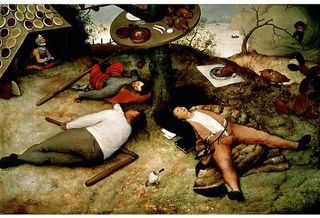
Eco thinks it is not too difficult to explain why humankind is so drawn to legendary places: “It seems that every culture – because the world of everyday reality is cruel and hard to live in – dreams of a happy land to which men once belonged, and may one day return.” Nowadays everyone believes that the ability to envision alternate worlds is one of humankind’s most precious gifts, a view Eco seems to endorse when, at the end of his journey through legendary lands, he describes these visions as “a truthful part of the reality of our imagination”. Yet Eco highlights a darker side of these visions when he describes how the Nazis drew inspiration from legends of ancient peoples, variously situated in ultima Thule (“a land of fire and ice where the sun never set”), Atlantis and the polar regions, who spoke languages that were “racially pure”. Himmler was obsessed with ancient Nordic runes, while in an interview after the war the commander of the SS in Rome claimed that when Hitler ordered him to kidnap Pope Pius XII so he could be interned in Germany, he also ordered the Pope to take from the Vatican library “certain runic manuscripts that evidently had esoteric value for him”.
The Nazi adoption of the swastika began with the Thule Society, a secret racist organisation founded in 1918. Legends of lost lands fed the ideology of Aryan supremacy. In 1907, Jörg Lanz founded the Order of the New Temple, preaching that “inferior races” should be subjected to castration, sterilisation, deportation to Madagascar and incineration – ideas, Eco notes, that “were later to be applied by the Nazis”. Legendary lands are idylls from which minorities, outsiders and other disturbing elements have been banished. When these fantasies of harmony enter politics, a process of exclusion is set in motion whose end point is mass murder and genocide.
More here.
Toys in Everyday Science
Via brainiac.
Rationally Speaking
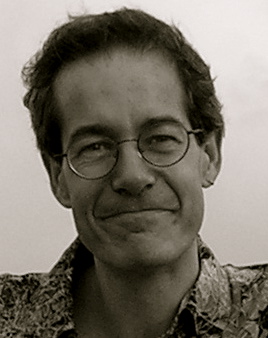
Richard Marshall interviews Massimo Pigliucci in 3:AM Magazine:
3:AM: Philosophy of science is a big interest for you. Science vs religion has been making headlines but you’ve recently written about the demarcation problem – the issue about how we make the distinction between science and pseudo-science, and this strikes me as being as equally problematic and important as the atheist vs believer dispute. This is something Karl Popper discussed and Larry Laudan more recently too. Before saying why aren’t they the last word for you can you briefly introduce us to how they tackled the issue?
MP: The term “demarcation problem” was introduced by Popper, and it refers to the issue of what, epistemically, separates science from non-science and pseudoscience. Popper was interested in it because of his concept of falsificationism – the idea that the reason science makes progress is not (as popularly believed) because certain theories are confirmed to be true, but rather because some theories are falsified (and permanently discarded) when they fail the empirical test. For Popper, that is, real science advances not by accumulating truths, but by eliminating falsehoods. So, for instance, Popper thought that Einstein’s theory of relativity was good science (it could be shown to be wrong, in principle), while Marxist theories of history, or much of psychoanalysis, is not (since the “theory” can be constantly adjusted by its supporters to fit whatever data may come in).
Laudan, in a very influential paper published in the early ’80s, pointed out that philosophers of science had long abandoned simple falsificationism (it doesn’t work as neatly as Popper thought, because of something called the Duhem-Quine thesis – more on this another time?). Laudan further argued that it is pointless and dangerous for philosophers to engage in demarcation projects. Pointless because it is not possible to come up with a sharp definition of science (or pseudoscience), dangerous because making public pronouncements about the rationality or irrationality of a given belief or practice has serious social consequences.
More here.
India’s Post-Ideological Politician
Thomas Crowley in Jacobin:
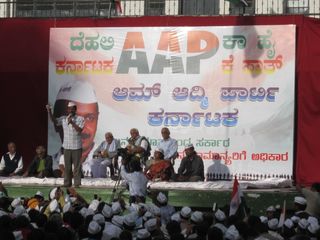
[T]he website arvindkejriwal.net.in (clearly run by a fan of Kejriwal, not the man himself) proudly proclaims that Kejriwal is a “popular socialist.” And while the Delhi manifesto of Kejriwal’s Aam Aadmi (“Common Man”) Party is far from revolutionary, it is filled with proposals that tilt leftward: fighting the privatization of water in Delhi, building more government schools and imposing an upper limit for private school fees, breaking the stranglehold of monopoly capital in the electricity sector, replacing contract labor with permanent labor as much as possible, and empowering workers in the unorganized sector.
This manifesto was prepared for the Delhi Assembly elections, the first big test for the fledgling Aam Aadmi Party (commonly known as the AAP). The election results, announced on December 8, stunned the political class, though they came as no surprise to the party’s supporters. In an impressive showing for such a young party, the AAP won 28 of 70 seats in the Delhi Assembly (the equivalent of a state legislature, except that as the national capital, Delhi, much like Washington, DC, is not quite a full state).
Delhi’s ruling party — the dynastic, dithering Congress — got walloped, winning a measly 8 seats, as voters expressed their discontent with rising food prices and a series of embarrassing political scandals. Congress’s perennial opponent, the business-friendly, upper caste-dominated, Hindu fundamentalist Bharatiya Janata Party (BJP), gained the most from the anti-incumbency mood, taking 31 seats.
But Kejriwal himself scored the most telling victory, soundly defeating Congress’s Sheila Dikshit, who has served as Delhi’s Chief Minister (the state-level equivalent of Prime Minister) for the past fifteen years. Dikshit and Kejriwal were fighting to represent New Delhi, home to the nation’s top politicians. The lopsided nature of the contest was stunning: Kejriwal won by more than 30 percent. Post-election analysis revealed that much of Kejriwal’s support came from slums in the area; the working class residents of these slums, many of whom work in the service sector that supports the lavish lifestyles of politicians, had come to recognize the hollowness of Congress’s promises.
With this kind of support base, why does Kejriwal eschew the leftist label? After all, in India, unlike the United States, the words “communist” and “socialist” are not merely epithets used to tar political opponents. But perhaps “left” is becoming a dirty word among India’s political class.
More here.
Where It Begins: Knitting as creation story
Barbara Kingsolver in Orion Magazine:

It starts with a craving to fill the long evening downslant. There will be whole wide days of watching winter drag her skirts across the mud-yard from east to west, going nowhere. You will want to nail down all these wadded handfuls of time, to stick-pin them to the blocking board, frame them on a twenty-four-stitch gauge. Ten to the inch, ten rows to the hour, straggling trellises of days held fast in the acreage of a shawl. Time by this means will be domesticated and cannot run away. You pick up sticks because time is just asking for it, already lost before it arrives, scattering trails of leavings. The frightful movie your family has chosen for Friday night, just for instance. They insist it will be watched, and so with just the one lamp turned on at the end of the sofa you can be there too, keeping your hands busy and your eyeshades half drawn. Yes, people will be murdered, cars will be wrecked, and you will come through in one piece, plus a pair of mittens.
More here.
Intellectuals on a Mission: ‘The Unbelievers’ Chronicles Road Tripping Scientists Promoting Reason
Dennis Overbye in The New York Times:

The Bing Crosby and Bob Hope of this road movie — alas, there is no Dorothy Lamour — are Richard Dawkins, an evolutionary biologist, recently retired from the post of professor of public understanding of science at Oxford University, and Lawrence Krauss, a cosmologist at Arizona State University. They are among the most outspoken of the “new atheists”: scientists and other intellectuals who have tired of having sand kicked in their faces by the priests and mullahs of the world. So the scientists are indeed mobbed like rock stars at glamorous sites like the Sydney Opera House. Inside, they sometimes encounter clueless moderators; outside, demonstrators condemning them to hellfire. At one event, a group of male Muslim protesters are confronted by counterprotesters chanting, “Where are your women?” In between, there are airports and taxi rides and endless cups of coffee.
More here.
Thursday Poem
Yeah-Yeah the Big Bang
Yeah-yeah the Big Bang I hear myself say.
How is it possible that this fits in my mouth?
The whole origin a lump on my tongue.
Quiet. Fear is a flock that rests in a tree.
Or are they words that crowd together
ink-black on the branches. It is a kind
of panic that wells up in me and like a rising
flock breaks out of my throat. The universe
Spreads its wings. We flap and cheer shrilly.
.
by Maria Barnas
from Jaja de oerknal
publisher: De Arbeiderspers, Amsterdam, 2013
translation: 2013, Diane Butterman
Wednesday, December 11, 2013
The Letters of Paul Cézanne
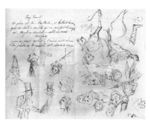
As the letters proceed, the reader is drawn again into the central drama of Cézanne's life: his tenacious pursuit of his ideas about painting. Even his slight sketches have a remarkable hold on our attention and convey a sense, not of realism, which Zola advised him to abjure, but of the real. He was afflicted with hesitations and uncertainty, and required much persuasion from Zola before he left Aix for Paris. Once there he immediately wanted to return, but stayed five months. It took another year at home before he returned to Paris, in 1862, this time staying for almost two years. Back with his family in 1866, he wrote to Camille Pissarro, 'I'm here in the bosom of my family, with the foulest people on earth, those who make up family, excruciatingly annoying.' No wonder he began to insist on his need to be elsewhere. No wonder that Zola complained, 'Convincing Cézanne of something is like persuading the towers of Notre Dame to execute a quadrille.'
He was becoming a thinker-painter.
more here.
Is there justice in the Book of Job?
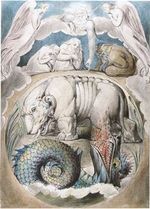
This test is the subject of the Book of Job. Is there such a thing as disinterested faith? Will people go on believing in God if they are not rewarded—indeed, if they are unjustly punished? And why should they be faithful to a God who allows the wicked to triumph and the innocent to suffer? Mark Larrimore, the director of the religious-studies program at the New School, has published “The Book of Job: A Biography” (Princeton University Press), which is a “reception history,” chronicling the answers given to that riddle by commentators from the midrash—the rabbinical meditations that were first compiled in the third century—down to Elie Wiesel.
When God first unleashes Satan on Job, he tells him that he must not damage the man physically. So Satan just kills Job’s children, servants, and livestock. In response, Job tears his robe, shaves his head, falls to the ground—and worships God! “The Lord gave, and the Lord hath taken away,” he says. “Blessed be the name of the Lord.” Satan returns to God and complains that as long as Job remains physically unharmed the test isn’t valid: “But put forth thine hand now, and touch his bone and his flesh, and he will curse thee to thy face.”
more here.
How Antidepression Drugs Work
Jeanene Swanson in Scientific American:

In fact, SSRIs fail to work for mild cases of depression, suggesting that regulating serotonin might be an indirect treatment only. “There’s really no evidence that depression is a serotonin-deficiency syndrome,” says Alan Gelenberg, a depression and psychiatric researcher at The Pennsylvania State University. “It’s like saying that a headache is an aspirin-deficiency syndrome.” SSRIs work insofar as they reduce the symptoms of depression, but “they’re pretty nonspecific,” he adds. Now, research headed up by neuroscientists David Gurwitz and Noam Shomron of Tel Aviv University in Israel supports recent thinking that rather than a shortage of serotonin, a lack of synaptogenesis (the growth of new synapses, or nerve contacts) and neurogenesis (the generation and migration of new neurons) could cause depression. In this model lower serotonin levels would merely result when cells stopped making new connections among neurons or the brain stopped making new neurons. So, directly treating the cause of this diminished neuronal activity could prove to be a more effective therapy for depression than simply relying on drugs to increase serotonin levels.
More here.
Pakistan should heed Husain Haqqani’s urgent message of reform
Stephen Kinzer in The Guardian:

Now Haqqani has published a book exploring the roots of this relationship and explaining how it became so toxic. Its arresting title is Magnificent Delusions: Pakistan, the United States, and an Epic History of Misunderstanding. As a trenchant and unsparing account of how these two countries came to mistrust each other so deeply, despite pretending to be friends, this book is unmatched. Its implicit message – the need to remake Pakistan – is even more provocative. Haqqani has been travelling around the United States, where he now lives, preaching this message. Officially he is on a book tour, but it feels like something more. Haqqani is laying out a radically different path for his homeland. His campaign is important not only to Pakistanis, but to all who are terrified by threats to global security posed by what Liam Fox, a former United Kingdom defense secretary, recently called “the most dangerous country in the world“.
More here.
Tuesday, December 10, 2013
Mandela and Tolstoy
Imraan Coovadia in n + 1:
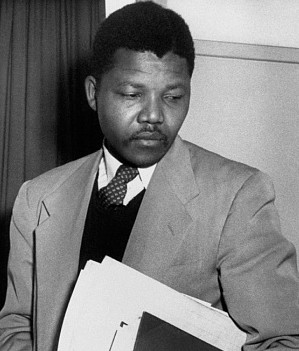
More here.
the neglected thought of Miguel de Unamuno
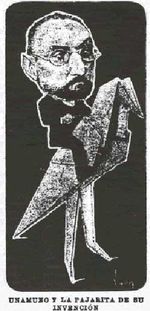
Imagine yourself in a small boat that has stopped midway between a river and a raging waterfall below. This is how the man with the tragic sense of life lives. It is, in any case, how Miguel de Unamuno lived — in a state of existential crisis, hovering over the abyss.
Imagine, now, that you are dead. You can’t do it; no matter how hard you try. It is literally impossible, wrote Unamuno, to imagine ourselves as not existing, no matter how great our imagination. Sit for a moment, he suggested, and try to imagine your mind — your consciousness — as it is when you are in a deep, dreamless sleep. It makes your head hurt. Try even harder and you will start to feel crazy. “It is like a cramped cell,” wrote Unamuno, “against the bars of which my soul beats its wings in vain. Its lack of air stifles me. More, more, and always more!”
I want to be myself, and yet without ceasing to be myself to be others as well, to merge myself into the totality of things visible and invisible, to extend myself into the illimitable of space and to prolong myself into the infinite of time. Not to be all and for ever is as if not to be—at least, let me be my whole self, and be so for ever and ever. And to be the whole of myself is to be everybody else. Either all or nothing!
more here.
Emily Dickinson’s Poetry As It Was Meant To Be Read

It turns out that for a not insignificant fee, literary museums and author’s homes will often let guests handle the artifacts, materials, and manuscripts of long-deceased writers. On a chilly, windblown visit to the Brontë Parsonage, I once held, in gloved hands, the tiny 2-inch-by-2-inch booklets the startlingly precocious Brontë children sewed and then filled with tales of imaginary lands. To hold and smell and access a manuscript at such close range was an inimitable experience. An exhaustive digital archive may satiate the researcher and gratify the fan, but a manuscript’s essence is inevitably tarnished when observed through a screen.
What makes The Gorgeous Nothings—a facsimile collection of the poems Emily Dickinson composed, as she often did, on envelopes—so riveting is that despite presenting reproductions it very nearly captures what Walter Benjamin would have referred to as the envelopes’ auras. Perfectly to scale, warmly photographed, and positioned inside a generous, expansive white margin, the envelopes are nearly as breathtaking on the page as they might be in the hand. But to merely call The Gorgeous Nothings, and the envelope poems within it, beautiful, would do a disservice to Marta Werner and Jen Bervin’s remarkable artistic and scholarly achievement.
more here.