Strange Life

Colin-Wilson

Ken MacLeod in Aeon:

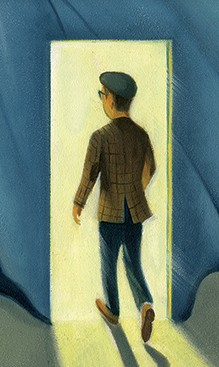
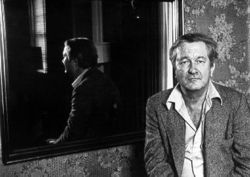
Like Aldous Huxley and C S Lewis with John F Kennedy, the English writer Colin Wilson had the misfortune of dying on the same day as a vastly (and justly) more famous man: Nelson Mandela. When Wilson’s first book, The Outsider, came out in 1956 — coinciding with the arrival of a noisy cohort of anti-establishment writers labelled the ‘Angry Young Men’ — he became an overnight sensation: a self-taught, ‘staggeringly erudite’, working-class, provincial 24-year-old hailed by highbrow reviewers as Britain’s answer to Jean-Paul Sartre and Albert Camus. Almost as quickly, he was dropped, and his subsequent prolific literary career, which moved from philosophy and religion through psychology and parapsychology to the wilder shores of Atlantis and science fiction, is usually taken to vindicate those second thoughts. A handful of obituaries have appeared in the quality press since 5 December. Most have a tincture of condescension, which is understandable. Wilson’s evaluation of his own importance as a writer and thinker was well out of kilter with that of most critics, and indeed with reality.

And yet, and yet… it’s a safe bet that some readers of Aeon will remember him fondly, and owe to him their first introduction to this magazine’s characteristic themes. I’ll cheerfully admit it myself. Reading Wilson’s The Outsider at the age of 16 or so opened my mind to writers, thinkers and ideas I’d never heard of before, and gave a new significance to some that I had. Sartre, Camus, Henri Barbusse, Ernest Hemingway, T E Lawrence, T S Eliot, Friedrich Nietzsche and many others, including William Blake and George Fox, founder of the Quakers, were all portrayed making heroic but usually ill‑fated attempts to storm a fortress of existential perplexity to which Wilson (as he strongly hinted) had found the key. The Outsider ticks all the boxes for a successful cult book: readable style, significant subject-matter, and reckless assertion. The effect was exhilarating.

More here.
Susan Sontag: The Complete Rolling Stone Interview

Jonathan Derbyshire in The Guardian:

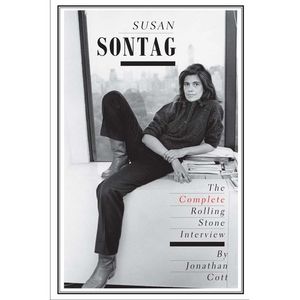
SontagA few months after Susan Sontag died in December 2004, the American literary academic and writer Terry Castle published a wonderful and amusing reminiscence in the London Review of Books of the woman to whom she'd intermittently played the role of “female aide-de-camp”. Castle lives and works in California, and whenever Sontag was on the west coast to give a lecture she'd co-opt her friend as a kind of amanuensis-cum-tour guide and fixer. Castle was happy to play the role of “obsequious gofer” (she had “idolised Sontag literally for decades”), though at its best, she confesses, their relationship resembled the one between Dame Edna Everage and her permanently mournful sidekick Madge Allsopp. (You shudder to think what it was like at its worst.) Castle would drive Sontag (pictured) between San Francisco and the Stanford University campus in Palo Alto. Her other job was to be a sounding board for Sontag's compulsive kvetching – about the “dreariness” of Castle's Stanford colleagues in particular and the provincialism of California in general. The latter was something of a specialist subject for Sontag, as her 1978 Rolling Stone interview with Jonathan Cott, published unexpurgated and at book length for the first time, makes clear.

Sontag was born in Arizona in 1933, and in 1945 she moved with her mother and sister to Los Angeles, where she attended high school. After spending a semester as an undergraduate at Berkeley, she moved to the University of Chicago and, following graduate school at Harvard, eventually ended up in New York, where she fell in with the intellectuals gathered around the Partisan Review. She tells Cott that New York is the place she feels loyal to and that she has the right to “knock California because I know it so well!” In fact, she knocks not just California – “Too many things have just not migrated [there]: the connection with Europe, with the past, with the book world …” – but Californians, too. One of the reasons, she says, that she prefers to be in New York is that she wants to be around people who are “ambitious and restless. You meet a Californian and they say, Hi! … and then there's a big silence.”

This and other passages in Cott's book reminded me of Castle's description of Sontag as a “great comic character” with whom Dickens or Henry James would have had a field day – an odd combination of “carefully cultivated moral seriousness” and gossipy skittishness, plus a rare erotic charisma that ensnared men and women alike. (The jacket photo, in which she lounges smoulderingly in a window seat overlooking Central Park, one elbow on a pile of books and papers, is echt mid-period Sontag.) Cott's interview, which he conducted in Paris and New York during the summer and autumn of 1978, corroborates Castle's judgment and offers rich pickings for a latter-day Dickens or James. It does so partly because he seems to have decided that his job was to act as stenographer to Sontag's performance of her own seriousness. In a somewhat breathless preface, he reports that she spoke to him in “measured and expansive paragraphs”, “precisely calibrating her intended meanings” (by which he means that she used qualifiers like “sometimes” and “occasionally” a lot). He also quotes a journal entry from 1965 in which Sontag vows to “give no interviews until I can sound as clear + authoritative + direct as Lillian Hellman in Paris Review”.

More here.

Why Indian author Vikram Seth is angry

From the BBC:

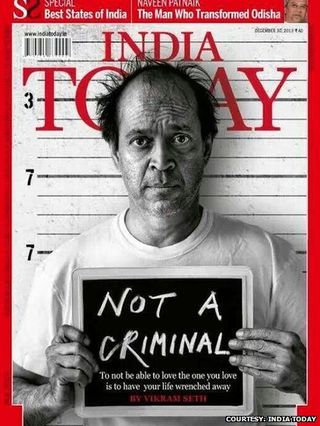
EthThe celebrated novelist, who is writing a sequel to his epic bestseller A Suitable Boy, is incensed with the recent decision of India's top court to uphold a law which criminalises gay sex – a ruling seen as a major blow to gay rights.

So much so that the usually calm and dapper writer has posed – unshaved, dishevelled and looking distinctly angry – on the cover of India Today magazine holding a plastic chalkboard speaking 'Not A Criminal' to promote hismoving essay in the magazine on gay rights.

No wonder the powerful cover has become a talking point – one doesn't remember any Indian writer doing such a thing ever in the past.

Mr Seth, who took a degree in philosophy, politics and economics at Oxford, was once described by The New York Times as a person with a “polite wit”. I found that wit intact when I spoke to him this morning on the cover that is making waves.

Why are you so angry?

I am appalled by the Supreme Court judgement [criminalising gay sex]. The judgement is intellectually shallow and ethically hollow.

It is slipshod in its reasoning and pusillanimous with regard to defending fundamental rights. It was squarely in the province of the Supreme Court to decide the matter, but this normally activist court has kicked the football onto the pitch of an illiberal parliament.

The constitution protects the liberties and rights of Indian citizens. It is not for the judges to confer rights or take them away.

More here.

opening The Dostoevsky Archive

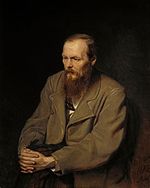
220px-Vasily_Perov_-_Портрет_Ф.М.Достоевского_-_Google_Art_ProjectAndre van Loon at Berlin Review of Books:

The impetus to know about a writer’s life becomes all the stronger when, rather than being unlikely to ever know more, we are instead faced with systematic attempts to obscure. The University of Toronto’s Slavic scholar Peter Sekirin, in compiling and translating around one hundred, rare first-hand accounts of Fyodor Mikhailovich Dostoevsky’s life and career, is driven to allow as many illuminating voices to be heard as were suppressed during the Soviet Union. Dostoevsky started well enough, from the later, official point of view. He debuted with the sentimental, socially conscious novelPoor Folk (1846), became a member of the Petrashevsky socialist circle, and suffered for his politics during his subsequent Siberian imprisonment and enforced military service. What the Soviets could not countenance, however, was the writer’s infuriating, post-Siberian right-wing turn, the erstwhile socialist dreamer becoming an ardent royalist and defender of personal responsibility. Thus, finding out about Dostoevsky became harder than ever during the Soviet era. The official school syllabus mentioned him in scant terms and academics were hampered by the so-called ‘special funds’: library archives requiring official, often denied, approval to access, and from which nothing could be published.

Sekirin has painstakingly managed to trace much of this previously restricted material. Impressively, less than ten percent of his compilation has been previously published in English, with nearly 80 per cent of it dating from the years 1881-1935. Although worldwide Dostoevsky studies can draw on a bibliography of thousands of items, including the monumental, five-volume biography written by Joseph Frank, it is undoubtedly to the field’s benefit that more people who actually knew, lived and worked with Dostoevsky can now be heard.

more here.

translating the golden ass

Ga30J. Kates at Harvard Review:

I’ve been looking at asses. More specifically, I have been weighing Sarah Ruden’s 2011 translation of The Golden Ass of Apuleius against the one I grew up with and have been sitting on all my life, Robert Graves’s 1951 version.

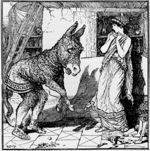
Strictly speaking, “The Golden Ass” isn’t the book’s proper name. More sedately known as Metamorphoses, written by the North African writer Lucius Apuleius in the second century CE, this work, often regarded as a proto-novel, follows the adventures of a young man perhaps not coincidentally named Lucius who trespasses trivially on occult secrets and—you’ll have to read for yourself how this is done—becomes the first, but not the last, to make an ass of himself.

Trapped inside his peau de chagrin, Lucius undergoes a number of outrages, overhears far more than he should, and ends up being redeemed after a year by the goddess Isis and inducted into mysteries we are not permitted to share. The Golden Ass is, in Lewis Carrollingian terms[1], what the name of the book has come to be called, presumably to keep it from being confused with Ovid’s. St. Augustine, of all people, is credited with assuring the world of Apuleius’s authority for the title The Golden Ass. There’s nothing at all golden about Lucius either as man or beast, and the name is likely a word play, a pun asinorum.

more here.

For That Zeus Bug in Your Life

Natalie Angier in The New York Times:

GiftsWe may denounce the hyper-consumerism of the Christmas season until we’re Hanukkah blue in the face, but much of our economy relies on the strength of the gift-giving impulse, and with good reason: The drive to exchange presents is ancient, transcultural and by no means limited to Homo sapiens. Researchers have found striking examples of gift-giving across the phyletic landscape, in insects, spiders, mollusks, birds and mammals. Many of these donations fall under the rubric of nuptial gifts, items or services offered up during the elaborate haggle of animal courtship to better the odds that one’s gametes will find purchase in the next generation. Hungry? Why don’t you go ahead and chew on the droplets oozing from my hind-leg spur while I just take a few moments to deposit a sperm packet in the neighborhood of your genitals?

Nuptial gifts can also be a gift for researchers, allowing them to precisely quantify a donor animal’s investment in mating and reproduction, and to track the subtleties of sexual competition and collusion by analyzing the chemical composition of a given bag of courtship swag. “This is an incredibly cool and important topic in sexual selection that we’re just beginning to explore,” said Sara M. Lewis, a professor of biology at Tufts University who has written extensively about nuptial gifts. “The bright side of nuptial gifts is, here’s a way that males can contribute things that are essential to his mate and to his future offspring. “On the other hand, the gifts can be a source of sexual conflict, a way of manipulating the female into doing what he wants,” she said. “So there is a lot of back and forth over evolutionary time.” Other researchers are studying how animals use gifts socially, to foster alliances or appease dominant members of the group. Grooming among primates is considered a form of gift-giving, and in most cases, it’s the subordinates who do the tick-picking: betas groom alphas, females groom males.

More here.

Monday, December 23, 2013

Happy holidays to everyone!

AbbasThanksLast day of this subscription stuff!

Dear Reader,

In the last year we have been approached by several large and well-known media conglomerates who have offered to take us under their financially secure wings but, though the offers were tempting, we have decided that it is more important for us to be completely independent and not beholden to anyone.

Please don't wait for others to do it. We need YOU to subscribe now. Oh, and in case you haven't noticed, the subscription button is in the left-hand column. Go. Do it. Now. Please.

If you do not wish to subscribe and would rather make a one-time payment, please do so using the “Pay Now” button in the left-hand column. You do NOT have to join Paypal, you can just use a debit or credit card to do this.

We know you like 3QD (and we are extremely flattered) because you have just told us so. I am appending some of the comments we got in our recent survey after this note. Thanks so much for your generous support as always.

Yours,

Abbas

P.S. For those of you who would rather not pay by debit card, credit card or use Paypal, please send me an email at s.abbas.raza.1 [at] gmail.com and I will tell you where to mail a check.

Read more »

Strained Analogies Between Recently Released Films and Current Events: The Desolation of Smaug and The Cessation of Unemployment Insurance

by Matt McKenna

Hobbit-2It is tempting to read The Desolation of Smaug, Peter Jackson's second installment in the Hobbit film trilogy, as a sweeping metaphor for the most grandiose concepts and topics currently under discussion on the cable news networks in the United States.

For example, Thorin Oakenshield's company of thirteen dwarves, a wizard, and a hobbit does bear surface similarities to what could reasonably be seen as a fantasy rendition of Occupy. After all, both groups consist of idealistic outsiders who attempt to reclaim once public land. However, this reading is undercut by the fact that Bilbo Baggins, the protagonist and titular hero, has joined the quest explicitly to render his services as the company's “burglar.” It is fair to say that Occupy activists don't see themselves as burglars, and there is certainly no sense that Bilbo nor anyone else employed on the quest is attempting to reclaim the word from the lexicon of their oppressors. Furthermore, the social structure of the dwarves is anything but flat, and their decision-making processes are completely at odds with the typical methodologies of Occupy. Arguments comparing the film's heroes to members of the Tea Party movement can be made and summarily dismissed along similar lines.

Another tantalizing interpretation of the film is to see it as an allegory for the implosion of capitalism in an era of unsustainable equality. Indeed, the economically disadvantaged villagers of Laketown who aid the dwarves during their travels to Erebor refer to the arrival of our heroes as the fulfillment of an ancient prophecy. But which ancient prophecy? While the townspeople are literally referring to the diegetic prognostication that posits Dwarves will one day reclaim the Lonely Mountain, the audience is compelled to wonder if these characters are metaphorically referring to Karl Marx's prediction that capitalism–Smaug, the fire-breathing dragon–will collapse under the weight of its own success. But this reading quickly falls apart once the viewer realizes that Smaug the Terrible doesn't actually adhere to the tenants capitalism. In fact, Smaug is a textbook mercantilist, what with the hoarding of gold and the extraction of wealth from foreign lands. Now, if Smaug were to reinvest his ill-gained gold into fixing the missing scale absent over his left breast–a womp-rat sized hole which one assumes will cause him some discomfort in the third film–then this capitalism metaphor might have some legs.

Thus, the film is not a fantasy retelling of major political movements in the early 21st century, nor is it a critique of the world's dominant economic system. What, then, is it? Could it be that The Desolation of Smaug is a film that can only be coherently enjoyed as a literal tale of diminutive creatures with British accents attempting to liberate treasure from within a hollow and tritely named geological structure?

Of course not.

Read more »

Sunday, December 22, 2013

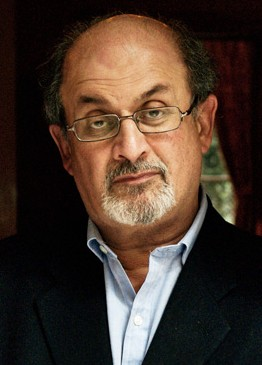
SALMAN RUSHDIE: “THE CURSE OF AN INTERESTING LIFE”

From The Talks:

Mr. Rushdie, do you have an optimistic view of the world?

ScreenHunter_470 Dec. 23 08.25No. (Laughs) In one word! I think it’s very difficult to be a writer in this moment of the history of the world and be an optimist. Anyway, darkness makes better comedy.

What motivates you to write?

I’ve got nothing else to do! I always wanted to write. The only other plan that I had in my life is that I wanted to be an actor. That didn’t work out! I had always thought that if there was a film of Midnight’s Children, the part I would like to play is the fortuneteller. I thought, since I made up the plot of the novel, if the film ever gets made I should play the fortuneteller.

Well, now the movie has been made. Were you in it?

The director hired me, but I fired myself because the last thing you want to happen in that scene is for the audience to be thinking, “Isn’t that Salman Rushdie?” (Laughs) It would just take your attention away from where it should be. We cut the scene out in the end anyway.

Too bad.

But my greatest regret about a part that I wasn’t able to play, I was approached by Will Ferrell’s company to play a part in what was then called “Untitled Will Ferrell Nascar Movie,” which became Talladega Nights.

More here.

Bird Cheaters Target Teams, But Teamwork Beats Cheats

Ed Yong in Not Exactly Rocket Science:

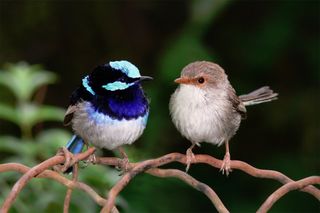
Superb-fairy-wren-990x660The common cuckoo is famed for its knack for mooching off the parental instincts of other birds. It lays its eggs in the nests of at least 100 other species, turning them into inadvertent foster parents for its greedy chicks. For this reason, it’s called a brood parasite.

It’s not alone. Among the birds, the full list of brood parasites includes more than 50 members of the cuckoo family, cowbirds, honeyguides, several finches, and at least one duck.

Now, William Feeney from the Australian National University has found that brand of reproductive cheating goes hand in hand with its polar opposite: cooperative breeding, where birds raise their young with help from siblings or offspring, often at the cost of the helpers’ own reproductive success.

The two strategies couldn’t be more different but Feeney found that each drives the evolution of the other. In places where one is common, the other is too. Exploitation goes hand-in-hand with cooperation.

More here.

Butterflies tied together Vladimir Nabokov’s home, science, and writing

Mary Ellen Hannibal in Nautilus:

ScreenHunter_469 Dec. 23 08.08The life and work of the novelist Vladimir Nabokov referenced many symbols, none so much as the butterfly. Butterflies prompted Nabokov’s travels across the United States, exposing him to the culture and physical environment that he would transform into his best-known novel, Lolita. Butterflies motivated his parallel career in science, culminating in a then-ignored evolutionary hypothesis, which would be vindicated 34 years after his death using the tools of modern genetic analysis. And it was the butterfly around which some of Nabokov’s fondest childhood memories revolved.

Nabokov was born in St. Petersburg, Russia to an aristocratic family, and spent much of his childhood at the family’s country estate in Vyra, 40 miles outside of the city. The Nabokovs were forced to flee Russia in 1919 in the wake of the Bolshevik Revolution. After moving between England, Germany, and France, Nabokov came to the U.S., returning for the final years of his life to Switzerland, where he died in 1977. Nabokov rued the loss of Vyra, and called it a “break with my destiny.” In his student days at Cambridge University in England, he lamented the loss in a 1920 letter to his mother: “Will I really never return, is it really all finished, wiped out, destroyed…? I would like to describe every little bush, every stalk in our divine park at Vyra…”

Lepidoptera and his childhood home were inseparable to Nabokov, an idea he explored in his letters and his science. Especially in his autobiography, Speak, Memory (1951), he identifies Vyra as the place where his love for the butterfly began. It was at Vyra that his father, a liberal-minded nobleman, taught him the correct flick of the wrist required to decisively push the net over a fluttering insect.

More here.

Having a Servant Is Not a Right

Ananya Bhattacharyya in the New York Times:

ScreenHunter_468 Dec. 23 08.00

Devyani Khobragade

At the heart of the fracas surrounding the arrest of an Indian diplomat in New York who promised to pay her housekeeper $9.75 per hour, in compliance with United States labor rules, but instead paid her $3.31 per hour, is India’s dirty secret: One segment of the Indian population routinely exploits another, and the country’s labor laws allow gross mistreatment of domestic workers.

India is furious that the diplomat, Devyani Khobragade, was strip-searched and kept in a cell in New York with criminals. Retaliation from the newly assertive but otherwise bureaucracy-ridden nation was swift. American diplomats were stripped of identity cards granting them diplomatic benefits, and security barriers surrounding the American Embassy in New Delhi were hauled away. A former finance minister suggested that India respond by arresting same-sex partners of American diplomats, since the Indian Supreme Court recently upheld a section of a Colonial-era law that criminalizes homosexuality.

Notwithstanding legitimate Indian concerns about whether American marshals used correct protocol in the way they treated a diplomat, the truth is that India is party to an exploitative system that needs to be scrutinized.

More here.

The haunting grace of Marilynne Robinson

Kenan Malik in Pandaemonium:

CandleWhich book am I most looking forward to in 2014? Perhaps, surprisingly, Marilynne Robinson’s forthcoming novel, Lila. Robinson’s life and writing is suffused with religious faith, indeed with a strong-souled Calvinism (though, improbably, she tends to see John Calvin more as a kind of Erasmus-like humanist than as the firebrand preacher who railed against the human race as constituting a ‘teeming horde of infamies’). Her most celebrated collection of essays, The Death of Adam, she describes as ‘contrarian in method and spirit’. It is an unfashionably sturdy defence of Calvinism. It is an equally unfashionable call to arms against cynicism:

When a good man or woman stumbles, we say, ‘I knew it all along,’ and when a bad one has a gracious moment, we sneer at the hypocrisy. It is as if there is nothing to mourn or to admire, only a hidden narrative now and then apparent through the false, surface narrative. And the hidden narrative, because it is ugly and sinister, is therefore true.

We have been, Robinson observes acutely, ‘launched on a great campaign to deromanticize everything, even while we are eager to insist that more or less everything that matters is a romance’. It is this combination of cynicism and sentimentality that oozes through much of contemporary life and against which Robinson bears arms.

There is much on which I disagree with Robinson, for there is a great distance between her view of the world and mine. And yet even in her wrongness she often possesses the power to illuminate and to make you question your certainties. And even in her wrongness the grace of her writing makes reading both a pleasure and an education.

More here.

William Styron, The Art of Fiction

George Plimpton interviews WS in The Paris Review:

StyronINTERVIEWER: Are you worried about the future of the written word?

STYRON : Not really. I get moments of alarm. Not long ago I received in the mail a doctoral thesis entitled “Sophie’s Choice: A Jungian Perspective,” which I sat down to read. It was quite a long document. In the first paragraph it said, In this thesis my point of reference throughout will be the Alan J. Pakula movie of Sophie’s Choice. There was a footnote, which I swear to you said, Where the movie is obscure I will refer to William Styron’s novel for clarification. This idiocy laid a pall over my life for a dark brief time because it brought back all these bugaboos we have about the written word. But in the nineteenth century they said that the railroads were going to jeopardize the written word; in the 1920s they said that the appearance of sound movies was guaranteed to drive novels into purdah; then later, television. All of these means of communication have existed happily side by side and parallel with writing. I don’t think for a minute that literature is going to perish. Marshall McLuhan’s prophecy of forty years ago simply didn’t pan out. Even the Internet and the idea of the electronic book reinforces my belief—they will not threaten the written word but actually complement writing, and perhaps even ultimately enhance it.

More here.

Sunday Poem

Landmine
.

Some persons just by staying alive cause us discomfort. Such a man does not harm us, does not threaten us, shows us no hidden knife, does not snatch the gold-locket off a wife’s neck. He just keeps living. Year after year, through winter-summer-rain, he survives people’s apathy, pelting of brickbats and hot water. We think—it would be better if he died! May we not have to see his face again after tomorrow! But alas! The next day, too, we see him at the bend of the road, by the side of the Shiva temple, close to the railway-platform—just by staying alive, like a sleeping landmine, causing us discomfort!
.

by Angshuman Kar
from Nasho Square Feeter Jadukar
publisher: Saptarshi Prakashan, Kolkata, 2006

.