
Category: Recommended Reading
Fatima Bhutto’s affectionate portrait of Pakistan
Lucy Beresford in The Telegraph:

Above all, what The Shadow of the Crescent Moon captures so well is not just the trauma of war, but also the conflicts of contemporary Pakistanis, torn between remaining faithful to the legacy of previous generations, and their own dreams of choosing their own destiny.
More here.
Saturday, December 14, 2013
Stoner: the must-read novel of 2013
Julian Barnes in The Guardian:

…Stoner was published in 1965, and – as is usually the case – it steered a mid‑course between the novelist's fears and his hopes. It was respectably reviewed; it had a reasonable sale; it did not become a bestseller; it went out of print. In 1972, Augustus, Williams's “Roman” novel, won half the National Book Award for fiction (the other half going to John Barth's Chimera). It was his largest moment of public success, yet he did not even attend the ceremony; perhaps he was rightly suspicious, as the laudatum pronounced in his absence was strangely disparaging. When he died, two decades later, without publishing any more fiction, the New York Times obituarist treated him as much as a poet and “educator” as a novelist. But still to come was that factor – identified by Williams in his letter – that novelists often write about, that they fear, but also place their trust in: time. And time has vindicated him way beyond his own modest hope. Fifty years after Williams wrote to his agent, Stoner became a bestseller. A quite unexpected bestseller. A bestseller across Europe. A bestseller publishers themselves could not quite understand. A bestseller of the purest kind – one caused almost entirely by word-of-mouth among readers.
More here. (Note: Read it, loved it, gave it to many friends who loved it. It is the male version of Madame Bovary. Do read it.)
The Invisible Heart: Adam Smith Reconsidered
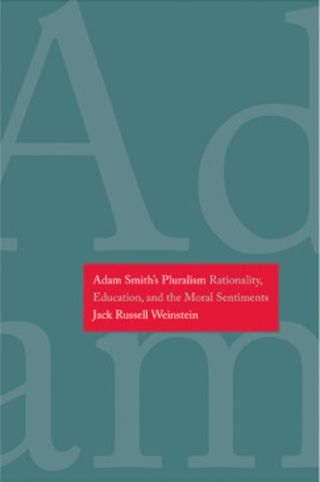
John Paul Rollert reviews Jack Russell Weinstein's Adam Smith's Pluralism: Rationality, Education and the Moral Sentiments, in the LA Review of Books:
FRETTING, PERHAPS, for the fate of his own work, Jorge Luis Borges described the tendency of time to denude and adulterate a careful architecture of ideas. “There is no intellectual exercise that is not ultimately pointless,” he said. “A philosophical doctrine is, at first, a plausible description of the universe; the years go by, and it is a mere chapter — if not a paragraph or proper noun — in the history of philosophy.”
This is not the destiny of marginal minds, but the lot of first-rate philosophers like Kant, Heidegger, and Rawls. The Categorical Imperative, Dasein, and Veil of Ignorance are all bywords for a broader vision, one that many of us feel we should know something about but which few of us will ever bother to investigate in any detail.
There are worse fates. Consider Adam Smith. His philosophy — indeed, the fact he was a philosopher — has been obscured by the “invisible hand.” That phrase occurs just three times in his entire corpus and only once in his most famous work, The Wealth of Nations. Nevertheless, it has become a symbol for the “caricaturish libertarian” whose philosophy (if we may call it that) has supplanted the “holistic picture of human agency” Smith spent his adult life describing.
Or so says Jack Russell Weinstein in a remarkable new book, Adam Smith’s Pluralism: Rationality, Education, and the Moral Sentiments. The title is most telling for what it omits. Smith is best known as the founding father of modern economics. More than two centuries after his death, he is still celebrated for establishing a “free-market paradigm,” as Alan Greenspan put it in a 2005 lecture in Kirkcaldy, Scotland, Smith’s birthplace, that “remains applicable to this day.”
Of course, it wasn’t long before the former Fed chair had to acknowledge that the applicability of that paradigm was a bit more limited. In the fall of 2008, with the financial crisis in full bloom, the dean of deregulation famously confessed to the House Oversight Committee that there was a “flaw” in the “ideology” he presumed to share with Smith. The belief that “free, competitive markets are by far the unrivaled way to organize economies” and that attempts to regulate them were unnecessary because they had never “meaningfully worked” warranted an amendment. Free markets, Greenspan conceded occasionally needed fixing.
More here.
The Science of Sex

Katherine Rowland interviews Daniel Bergner in Guernica:
Guernica: In the book, you reference a quote by the British gynecologist William Acton, who wrote in the Victorian era: “The majority of women, happily for society, are not very much troubled by sexual feeling of any kind.” The message there being that women’s sexuality, if unleashed, could upend civilization. Times have changed, but your book suggests that elements of that logic persist.
Daniel Bergner: If we cast back to Victorian times as they’re encapsulated in that Acton quotation, we see this really severe denial of women’s desire, and that denial is mixed in with a level of fear. That carries forward to our society. Women’s sexuality surrounds us, but right beneath that there’s this other standard for women’s desire that’s still informed by uneasiness. It’s linked, ultimately, to the comfort that we all get—men and society as a whole—from this idea that women are somehow less desiring than men. We can still lean on women a little bit to keep society stable. The dichotomy that’s set up is that men are animals and anarchic in their lust and women are civilized and civilizing in their sexuality.
Guernica: This assumption that women’s sexuality exerts a civilizing force seems to even carry over into the efforts to develop a female Viagra. You write about researchers concerned that the pills they’re developing might be too powerful.
Daniel Bergner: To be clear, the FDA isn’t going to talk to me and say, “We’re going to consider rejecting a drug because it had too strong an effect and would create a generation of nymphomaniacs.” But it was the drug companies themselves that were worried that if the effects were too strong, the FDA might reject them on those grounds. Was I surprised that those conversations were happening inside the drug companies? Yes, I was staggered.
More here.
The Leonard Bernstein Letters
 John Rockwell at The New York Times:
Whenever a generous collection of correspondence like “The Leonard Bernstein Letters” appears, one rejoices, but sadly. People still write one another, though usually through electronic and social media that discourage leisurely soul-searching or digressions. Lenny was lucky he didn’t live later, or we’d have “The Leonard Bernstein Tweets.”
“Letters are impossible,” Bernstein once complained to Aaron Copland, but that hardly stopped him from writing them. Most of the letters here offer glimpses of his personality rather than insights into his compositions or conducting. There is some of that, as in exchanges with David Diamond, Marc Blitzstein, John Cage and Gunther Schuller. Yet despite discussions with collaborators like Jerome Robbins, Arthur Laurents and Stephen Sondheim, this is hardly a latter-day version of the Strauss-Hofmannsthal correspondence, which remains the ultimate depiction of a long-distance working relationship. Bernstein’s subjects offer more about love and affection and concert triumphs than deep insights. They open up a window into his dazzling personality and his close relations with an expansive range of friends, and a smaller circle of truly close friends, often dating back to his youth (Copland, Adolph Green, the producer David Oppenheim, the orchestrator Sid Ramin and more), and, above all, family.
more here.
the complex life of Jonathan Swift

What about Swift? Gulliver’s Travels can be read in many different ways: as local satire (on particular political circumstances and scientific fashions), as parody of the kind of pseudo-realistic travel narrative represented by Crusoe, as mockery of utopian visions, as the misanthropic ravings of a furious old man. Three hundred years on, scholars and students still debate whether or not Swift the narrator is directing his irony against Gulliver or the talking horses known as Houyhnhnms (all you need to do is whinny). Or both. The fact the name Gulliver contains the word “gull” – someone who is easily deceived – is a starting point.
We cannot begin to give decent answers to the questions raised by Gulliver’s Travels without a sense of its place in Jonathan Swift’s long and complicated life, which lasted from 1667 (probably) to 1745 (by which time he had already written his own epitaph, the magnificently self-knowing and wittily self-deprecatory Verses on the Death of Dr Swift). The Harvard professor Leo Damrosch’s new biography is to be warmly welcomed. Up until now, the serious student of Swift has had to rely on Irvin Ehrenpreis’s three-volume epic treatment, completed half a century ago. As Damrosch shows in a crisp and exemplary prologue, Ehrenpreis, for all his command of minutiae, was unnecessarily dismissive of certain items of contemporary gossip about Swift and over-confident in his psychoanalytic interpretations.
more here.
Catastrophe: Europe Goes to War 1914

Even before the mobilisation orders had been dispatched and the declarations of war issued in late July and early August 1914, the forthcoming conflict had been invested with moral significance. Following the assassination of the Archduke Franz Ferdinand and his wife, Sophie, in Sarajevo on June 28th, Austro-Hungarian diplomats framed Serbia as a criminal state. “We have no plans for conquest,” Oskar von Montlong, the head of the ministry of foreign affairs press bureau told a leading newspaper editor, “we only want to punish the criminals and protect the peace of Europe.” Serbian diplomats framed their defence in legal and moral terms, promising to extradite any of their citizens who were proved to have been complicit in the assassination. They also reminded the European public that Serbia had made concessions during the Balkan Wars in 1912 and 1913 in the “exclusive interest of European peace”. What it meant to be European was at the core of the First World War, as each side sought to bend conceptions of the continent to its own national interest. Raw talk of the reason of state, ungarnished by a wider political sensibility, was surprisingly rare in a war in which states struggled for their very existence. Power was constituted not only by military force, but also by ideas, ideas that would inform the future settlement of Europe.
more here.
A Literary Look Back at 2013
From The New York Times:

The first ever Lahore Literary Festival — not because it was the largest such festival in the world, or the most star-studded, and not because festivals are in and of themselves always good things, but rather because, at the sight of its 800-seat main auditorium filled repeatedly beyond capacity, every stair and aisle occupied in the giddiest breach of fire safety, and with so many hundreds more keen but unable to squeeze into this or that talk, most of them half my age or younger, I began to think that, laments to the contrary notwithstanding, the ranks of readers are in fact growing, in Pakistan and I suspect across Asia and Africa, and that this is a wonderful development, worth our taking a minute to cheer.
— Mohsin Hamid
Earlier this year, in a 6,400-word newspaper essay taken from his book “The Kraus Project,” Jonathan Franzen set out some of his objections to — and anxieties about — Internet culture. The article was many things: angry, mournful, brilliant, occasionally dotty. The widespread mockery it received was only depressingly crude. For the sin of casting doubt on the Truth and Beauty of Twitter, Franzen was swiftly branded a Luddite, an elitist, a pretentious old fart and a misogynist. The yakkers, braggers and bullies did themselves proud.
— Zoë Heller
More here.
Michelangelo’s most famous work doesn’t show us anything about the life of the artist himself
Our own Morgan Meis in The Smart Set:
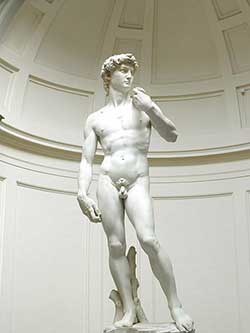
Michelangelo chose to make David — the giant-killer — into a giant himself. Mostly this has to do with accidents of history and dumb luck. There was a huge piece of marble lying around Florence in the 15th century. A couple of sculptors had tried to make a statue of it. But the block was tricky to work with, so tall and thin. No artist was yet up to the task. In 1501, Michelangelo, 26 years old at the time, said he could do the job. He promised to bring David out of the marble.
David was a special figure for Florentines. This was Italy during the Renaissance: a collection of city-states and principalities usually at war with one another. This was a time of warrior popes and family feuds that killed hundreds. The people of Florence wanted to see themselves in David. Florence was the little city that could stand up to all the others. Plus, Florence had the powerful banking family, the Medici, to deal with. The Medici were always threatening to dominate Florence, economically and politically. In the late 15th century, the city kicked the Medici out of Florence. Defying the Medici was another David-like act. Problem was, the Medici had already commissioned a sculpture of David. That’s the famous statue by Donatello. With the ousting of the Medici, the people of Florence wanted to commission their own David. They wanted to take back the symbol for themselves.
So, Michelangelo solved two problems at once. He solved the technical problem of making a giant sculpture out of a giant block of marble. And he solved the problem of political symbols by creating a statue so overwhelming to behold that David would forever be associated with the Republic of Florence. The irony is that Michelangelo had learned to sculpt under the patronage of the Medici family, but his most famous work was a repudiation of their claims over the city.
More here.
Sandaraa – “Haatera Taiyga”
Sandaraa is a new band from Lahore, Pakistan and Brooklyn, New York. The group is fronted by vocalist Zeb Bangash (Zeb and Haniya) and features Brooklyn musicians Michael Winograd on clarinet, Eylem Basaldi on violin, Patrick Farrell on accordion, Yoshie Fruchter on guitar, Benjy Fox-Rosen on bass and drummer Richie Barshay. Sandaraa explores a vast repertoire of South Asian material (from Balochistan, Afghanistan and beyond,) while blending it with the sounds of Eastern Europe, the Balkans, and more.
Bilal Tanweer’s debut novel is an ode to a city
Zara Khadeeja Majoka in The Friday Times:
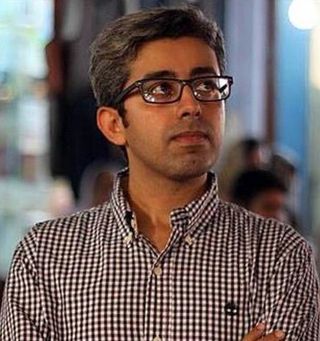
There is a bomb blast at Cantt Station and rippling out of it is this novel narrated in a myriad of voices: the brother of a shell-shocked ambulance driver, a child with protruding teeth, a car-snatching thug, a writer, a horny teenager, a middle aged entrepreneur writing a book to win his son back, a child who thrives on stories from his elder sister, a young cartoonist. All of these interconnected characters come on stage to give us their stories and the resonance of their multiple voices reveals a faint light of reason amidst unreason, excavates new forms of congruence amidst incongruity.
More here.
Saturday Poem
A Coat
I made my song a coat
Covered with embroideries
Out of old mythologies
From heel to throat;
But the fools caught it,
Wore it in the world's eye
As though they'd wrought it.
Song, let them take it
For there's more enterprise
In walking naked.
by William Butler Yeats
Friday, December 13, 2013
Scholarship and Politics: The Case of Noam Chomsky
Stanley Fish in the New York Times:
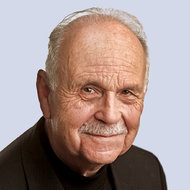
The views I have been peddling to various audiences (without notable success) are: (1) The academy is a world of its own, complete with rules, protocols, systems of evaluation, recognized achievements, agreed-on goals, a roster of heroes and a list of tasks yet to be done. (2) Academic work proceeds within the confines of that world, within, that is, a professional, not a public, space, although its performance may be, and often is, public. Accordingly, (3) academic work is only tangentially, not essentially, political; politics may attend the formation of academic units and the selection of academic personnel, but political concerns and pressures have no place in the unfolding of academic argument, except as objects of its distinctive forms of attention. (If academic work had no distinctive forms of attention, it would be shapeless and would not be a thing.) (4) The academic views of a professor are independent of his or her real-world political views; academic disputes don’t track partisan disputes or vice versa; you can’t reason from an academic’s disciplinary views to the positions he or she would take in the public sphere; they are independent variables.
Now, as everyone knows, Noam Chomsky is a distinguished academic, a scholar who pretty much single-handedly reconfigured the discipline of linguistics and a strong presence in the landscape of other disciplines — philosophy of mind, psychology, biology, literary criticism, to name a few. But Chomsky is also a prominent public intellectual whose opinions on a wide range of political topics — American foreign policy, the Middle East, capitalism, fossil fuels, education, etc. — are well known and often controversial. So the question was, which Chomsky was going to show up at Columbia, or alternatively, could you have one without the other? The answer, it turned out, is “yes.”
More here.
Why Cul-de-Sacs Are Bad for Your Health
Award-winning Canadian journalist Charles Montgomery's fascinating new bookHappy City: Transforming Our Lives Through Urban Design examines how lessons from psychology, neuroscience, and design can help us fix broken cities and improve our quality of life in an increasingly urban-centered world.
Charles Montgomery in Slate:
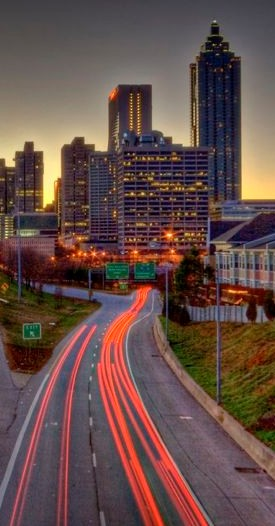
Frank found that a white male living in Midtown, a lively district near Atlanta’s downtown, was likely to weigh 10 pounds less than his identical twin living out in a place like, say, Mableton, in the cul-de-sac archipelago that surrounds Atlanta, simply because the Midtowner would be twice as likely to get enough exercise every day.
Here’s how their neighborhoods engineer their travel behavior:
Midtown was laid out long before the dispersalists got their hands on the city. It exhibits the convenient geometry of the streetcar neighborhood even though its streetcars disappeared in 1949. Housing, offices, and retail space are all sprinkled relatively close together on a latticelike street grid. A quart of milk or a bar or a downtown-bound bus are never more than a few blocks away. It is easy for people to walk to shops, services, or MARTA, the city’s limited rapid transit system, so that’s what they do.
More here.
How Did the 1 Percent Get Ahead So Fast?
Cass R. Sunstein at Bloomberg:
From 2009 to 2012, the U.S. experienced a significant economic recovery, in which average real income growth jumped by 6 percent. That’s the good news. The bad news is that almost all of that increase — 95 percent – – was enjoyed by those in the top 1 percent of the income distribution.
To appreciate this remarkable finding, set out in an important paper by University of California economist Emmanuel Saez, we need to add some context. From 2007 to 2009, the recession produced a 17.4 percent decline in average real income — the largest drop since the Great Depression. Every income class was hit hard, but in percentage terms, those at the top of the economic ladder suffered the biggest decreases.
During the recovery — from 2009 to 2012 — members of the top 1 percent have enjoyed a big boost in their average income: 31.4 percent. As Saez shows, this figure almost wiped out the loss from the recession, returning the top 1 percent to essentially where it was in 2007.
By contrast, the remaining 99 percent saw measly growth of 0.4 percent, about a 30th of the 11.6 percent loss they experienced in the recession. By the end of 2012, the bottom 99 percent wasn’t close to where it was in 2007.
More here.
Benedict Cumberbatch Recites R. Kelly Lyrics
Dogfight Over Karachi

For me the war began in the predawn dark on the fourth. My father shook me awake from sleep. ‘Get up!’ he commanded urgently. As my head cleared I heard the air raid siren. And through its wail came, muted but steady, a droning noise, like heavy motors in neutral gear, from somewhere in the sky. Bombers, I realized. I scrambled out of bed and we – my parents, younger brother, sister and our servant boy Bhola – hustled out of the side door to stand beneath the main stairs, which is what the civil defense authorities recommended during bombing raids. The upstairs family – the two small sons not quite fully awake – were already there. The other upstairs family had stayed put. The side door of our neighbouring flat, Tariq’s, was ajar and I heard voices coming from inside. But they didn’t join us beneath the stairs. We knew why. We were two Bengali families standing there, and they were Punjabis, there was no way they going to cower with us beneath the stairs, bombs or no bombs, air raids or no air raids. Especially not during an Indian air attack. Pakistan was in its death throes and this war was the final act of separation between East and West Pakistan.
Seconds later the anti-aircraft guns opened up with a vengeance.
more here.
In the Darkroom with W. Eugene Smith

In early March of 1955, W. Eugene Smith steered his overstuffed station wagon into the steel city of Pittsburgh. He’d been on the road all day, leaving that morning from Croton-on-Hudson, New York, where he lived in a large, comfortable house with his wife and four children, plus a live-in housekeeper and her daughter. He was thirty-six, and a fuse was burning inside him. He had recently quit Life, after a successful but troubled twelve years, and joined Magnum, and this was his first freelance assignment. He had been hired by renowned filmmaker and editor Stefan Lorant to shoot a hundred scripted photographs for a book commemorating Pittsburgh’s bicentennial, a job Lorant expected to take three weeks. On Smith’s horizon, however, was one of the most ambitious projects in the history of photography: he wanted to create a photo story to end all photo stories. His station wagon was packed with some twenty pieces of luggage, a phonograph, and hundreds of books and vinyl records—he was prepared for an eruption.
A hundred and eighty miles southwest of Pittsburgh, in Athens, Ohio, James Karales was finishing up a degree in photography at Ohio University. He had studied Smith’s work in class; Smith was a hero. While Smith was crawling all over Pittsburgh, day and night, several cameras wrapped around his neck, fueled by amphetamines, alcohol, and quixotic fevers, Karales was getting his diploma. Little did Karales know, his path and Smith’s were about to become one, and he would get an education no college could provide.
more here.
Rome: Sex & Freedom
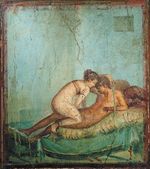
Antiquity is always stranger than we think. Nowhere does it prove to be more strange than where we once assumed that it was most familiar to us. We always knew that the Romans had a lot of sex. Indeed, in the opinion of our elders, they probably had a lot more than was quite good for them. We also always knew that the early Christians had an acute sense of sin. We tend to think that they had a lot more sense of sin than they should have had. Otherwise they were very like ourselves. Until recently, studies of sex in Rome and of Christianity in the Roman world were wrapped in a cocoon of false familiarity.
Only in the last generation have we realized the sheer, tingling drop of the canyon that lies between us and a world that we had previously tended to take for granted as directly available to our own categories of understanding. “Revealing Antiquity,” the Harvard University Press series edited by Glen Bowersock, has played its part in instilling in us all a healthy sense of dizziness as we peer over the edge into a fascinating but deeply strange world. Kyle Harper’s book From Shame to Sin: The Christian Transformation of Sexual Morality in Late Antiquity is a scintillating contribution to this series. Not only does it measure the exact nature of the tension between the familiar and the deeply unfamiliar that lies behind our image of the sexual morality of Greeks and Romans of the Roman Empire of the classical period. It also goes on to evoke the sheer, unexpected strangeness of the very different sexual code elaborated in early Christian circles, and its sudden, largely unforeseen undermining of a very ancient social equilibrium in the two centuries that followed the conversion of Constantine to Christianity in 312.
more here.