Why Conservatives Should Read Marx

Marx3_0Jonny Thakkar at The Point:

If they want to be consistent, conservatives ought really to be anti-capitalist. This may be a little surprising, but in point of fact conservatism has always been flexible as far as particular policies are concerned. In the U.S. conservatives oppose universal healthcare as an attack on freedom; in the U.K. they defend it as a national tradition. Both positions count as conservative because, as Samuel Huntington argues, conservatism is a “situational” ideology which necessarily varies from place to place and time to time: “The essence of conservatism is the passionate affirmation of the value of existing institutions.” It follows that conservatives can seek to conserve all manner of institutions, including those designed to fight inequality, safeguard the environment, tame market forces, and so on.

But the potential for such reversals is by no means restricted to the Right. When Leftists reflect on their opposition to the free market, they will find that their reasons are–at least in part–conservative. And why not? If conservatism is indeed situational then its rightness or wrongness must depend entirely on the situation, and the value of what is to be conserved. One trope of “utopian” literature from Plato’s Republic to Aldous Huxley’s Island is the fear of adulterating perfect arrangements. Even radicals sometimes have to be conservative.

more here.

Chris Marker’s level five

MarieastmanWhitney Mallet at n+1:

Around the time video games were to coming to define the memory of Operation Desert Storm, Chris Marker made a movie about a video game that depicted a forgotten battle of a well-remembered war. The heroine in Marker’s 1997 film Level Five is working on a Macintosh, writing a game to reconstruct the Battle of Okinawa,at the tail end of World War II. The Battle of Okinawa was dizzying in its loss of human life, but in the West today, hardly anyone knows it happened. In Level Five, Marker’s subject is as much the conflict as our technologies of remembering it. The focus might be predictable from the experimental filmmaker, who is best-known for his meditations on memory in La Jetée and Sans Soleil—though Level Five is structured more like the latter, an essay film that challenges easy categorization as either fiction or non-fiction. Nearly two decades after the film was made and two years after Marker’s death, Level Five is having its first theatrical release at a moment when wars are not just being remembered in digital arenas, but are increasingly being fought in them too.

In Level Five’s fictional frame, Laura, played by Catherine Belkhodja, is making a video game to tell the true story of the U.S. Army’s invasion into the Japanese island and of the subsequent mass suicide that claimed a huge portion of civilian life. Together with the casualties of war, 150,000 men, women, and children died in the battle, roughly a third of the island’s entire population.

more here.

What Do Talking Apes Really Tell Us?

Jane C. Hu in Slate:

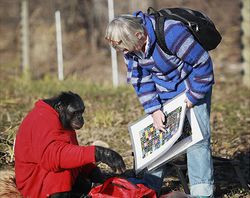
KokoLast week, people around the world mourned the death of beloved actor and comedian Robin Williams. According to the Gorilla Foundation in Woodside, California, we were not the only primates mourning. A press release from the foundation announced that Koko the gorilla—the main subject of its research on ape language ability, capable in sign language and a celebrity in her own right—“was quiet and looked very thoughtful” when she heard about Williams’ death, and later became “somber” as the news sank in. Williams, described in the press release as one of Koko’s “closest friends,” spent an afternoon with the gorilla in 2001. The foundation released a video showing the two laughing and tickling one another. At one point, Koko lifts up Williams’ shirt to touch his bare chest. In another scene, Koko steals Williams’ glasses and wears them around her trailer. These clips resonated with people. In the days after Williams’ death, the video amassed more than 3 million views. Many viewers were charmed and touched to learn that a gorilla forged a bond with a celebrity in just an afternoon and, 13 years later, not only remembered him and understood the finality of his death, but grieved. The foundation hailed the relationship as a triumph over “interspecies boundaries,” and the story was covered in outlets from BuzzFeed to the New York Post to Slate.

The story is a prime example of selective interpretation, a critique that has plagued ape language research since its first experiments. Was Koko really mourning Robin Williams? How much are we projecting ourselves onto her and what are we reading into her behaviors?

More here.

Autómata: a believable robot future

From KurzweilAI:

AutomataGeorge Mason University neuroscience researcher Todd Gillette got a preview of the forthcoming movie Autómata. It “caught me completely by surprise,” he said on his OnMason blog. “Starring Antonio Banderas, here we have a believable future (2044, 30 years from now) in which desertification is threatening society, and a single company is leading the way in intelligent robotics.” “Will this happen? Maybe not, but could it happen? Certainly. There’s at least one nod to Asimov’s 3 laws, and at least from the preview it feels more like an Asimov story, albeit with a somewhat gloomier tone than I, Robot the movie was. “As District 9 showed up the humanity of a severely alien species, finally we get dirty, mechanical robots that don’t look cute at all, but that arguably are alive in the only way that really matters.”The movie is due in theaters on Oct. 10, 2014.

Synopsis

Fast forward fifty years into the future, planet earth is in the midst of gradual desertification. Mankind struggles to survive as the environment deteriorates and the slow regression of the human race begins in AUTÓMATA. On the brink of life and the reality of death, technology combats the prevailing uncertainty and fear with the creation of the first quantum android, the Automata Pilgrim 7000. Designed to bring support to society’s plight, man and robot reveal what it means to co-exist in a culture defined by human nature.

More here.

Wednesday, August 27, 2014

Iraqi Immigrants Struggle to Make a Living in Arizona

Sep14_g02_iraq.jpg__800x600_q85_cropSue Halpern and Bill McKibben at Smithsonian Magazine:

Perhaps you’ve bought pita bread at the supermarket? Dry, flat: a kind of envelope for holding food. Now imagine something more like a beautiful down pillow where food could rest and relax and dream big dreams.

And you’ve probably never tasted a samoon, a diamond-shaped Iraqi bread, because, if you had, you’d have moved to Phoenix so you could live within smelling distance of the Sahara Sweets Baghdad-style bakery, which is in a strip mall next to the Iraqi halal butcher and the Iraqi grocery store. A samoon, hot from the wood-fired oven, is like a popover that you can really sink your teeth into. It wants hummus the way pancakes want maple syrup.

Can you wrap your mind around a tray—a huge tray, the size of a pool table—that’s nothing but tiny squares of baklava, a giant grid of honeyed puff? There are eight or nine of these trays at Sahara Sweets, just waiting for the moment when Iraqis across the city get off their jobs and race to the bakery.

If you’ve got these images in your head (or in your mouth), then perhaps you can imagine a secure, prosperous Iraqi community under the Arizona sun. There, sadly, you’d be wrong.

more here.

Wallace Stevens: “The Emperor of Ice-Cream”

Wallace-stevensAustin Allen at Poetry Magazine:

Wallace Stevens had a notorious sweet tooth. In the oral biography Parts of a World: Wallace Stevens Remembered, friends and colleagues repeatedly attest to his appetite and love of delicious foods. Yet Stevens also had a strong, competing ascetic streak. He was, for most of his life, a quiet, reserved insurance lawyer in Hartford, Connecticut, who lived semi-reclusively and often behaved distantly toward his family. He once declared during a celebratory dinner that “you’ve got to be a monk” to succeed as a poet, an austerity that impressed and perhaps surprised one of his table companions, the young Richard Wilbur.

As in his life, so in his writing. Stevens’s poems are full of lush language, balmy climates, and tropical fruits but also wintry landscapes and austere philosophizing. They are both sensuous and abstract, indulgent and hermetic. Their playfulness belies a stoic, even pessimistic, outlook. (His poem “Table Talk” begins simply: “Granted, we die for good.”)

Squarely in the midst of these contradictions falls “The Emperor of Ice-Cream.”

more here.

why we walk

140901_r25389-320Adam Gopnik at The New Yorker:

Why people walk is a hard question that looks easy. Upright bipedalism seems such an obvious advantage from the viewpoint of those already upright that we rarely see its difficulty. In the famous diagram, Darwinian man unfolds himself from frightened crouch to strong surveyor of the ages, and it looks like a natural ascension: you start out bending over, knuckles dragging, timidly scouring the ground for grubs, then you slowly straighten up until there you are, staring at the skies and counting the stars and thinking up gods to rule them. But the advantages of walking have actually been tricky to calculate. One guess among the evolutionary biologists has been that a significant advantage may simply be that walking on two legs frees up your hands to throw rocks at what might become your food—or to throw rocks at other bipedal creatures who are throwing rocks at what might become their food. Although walking upright seems to have preceded throwing rocks, the rock throwing, the biologists point out, is rarer than the bipedalism alone, which we share with all the birds, including awkward penguins and ostriches, and with angry bears. Meanwhile, the certainty of human back pain, like the inevitability of labor pains, is evidence of the jury-rigged, best-solution-at-hand nature of evolution.

Over time, though, things we do for a purpose, however obscure in origin, become things we do for pleasure, particularly when we no longer have to do them.

more here.

A genome is not a blueprint for building a human being, so is there any way to judge whether DNA is junk or not?

Itai Yanai and Martin Lercher in Aeon:

ScreenHunter_775 Aug. 27 17.53Humans are astounding creatures, our unique and highly complex traits encoded by our genome – a vast sequence of DNA ‘letters’ (called nucleotides) directing the building and maintenance of the body and brain. Yet science has served up the confounding paradox that the bulk of our genome appears to be dead wood, biologically inert junk.

Could all this mysterious ‘dark matter’ in our genome really be non-functional?

Our genome has more than 20,000 genes, relatively stable stretches of DNA transmitted largely unchanged between generations. These genes contain recipes for molecules, especially proteins, that are the main building blocks and molecular machines of our bodies. Yet DNA that codes for such known structures accounts for just over 3 per cent of our genome. What about the other 97 per cent? With the publication of the first draft of the human genome in 2001, that shadow world came into focus. It emerged that roughly half our DNA consisted of ‘repeats’, long stretches of letters sometimes found in millions of copies at seemingly random places throughout the genome. Were all these repeats just junk?

More here.

Wednesday Poem

The Doctor –Exceprt from A Boxing Story

No more boxers for me.

Bar room brawlers,
that's another story.
They don't train
to destroy people.
No one pays to watch
a couple of drunks
demolish furniture.

Four and a half hours
inside this kid's head
and I'll fight anyone
who calls this sport.

Prize fighting?
You want to know
this kid's prize?
Bifrontal craniotomy,
three subdural hematomas,
possible embolisms,
possible skull fracture,
total left hemiplegia.

Let me translate.
If he ever wakes up
half life in the cabbage patch,
maybe complete loss
of his whole left side,
years of therapy
so he can shuffle,
drool and gawk about.

No more boxers for me.
I'm a neurosurgeon
not a bloody botanist.

by Garry Hyland
from After Atlantis
Thistledown Press, 1991.

Europe’s Slow Surrender to Intolerance

Jeffrey Goldberg in The Atlantic:

LeadOn the one hand, it is completely unsurprising that Europe has become a swamp of anti-Jewish hostility. It is, after all, Europe. Anti-Jewish hostility has been its metier for centuries. (Yes, the locus of much anti-Jewish activity today is within Europe’s large Muslim-immigrant population; but the young men who threaten their Jewish neighbors draw on the language and traditions of European anti-Semitism as much as they do on Muslim modes of anti-Semitic thought.) On the other hand, the intensity, and velocity, of anti-Jewish invective—and actual anti-Jewish thuggery—has surprised even Eurocynics such as myself. “Jews to the gas,” a chant heard at rallies in Germany, still has the capacity to shock. So do images of besieged synagogues and looted stores. And testimony from harassed rabbis and frightened Jewish children.

But I find myself most bothered by what seems to have been, on the surface, a relatively minor incident. The episode took place last weekend at a Sainsbury’s supermarket in central London. Protesters assembled outside the store to call for a boycott of Israeli-made goods. Quickly, the manager ordered employees to empty the kosher food section. One account suggests that a staff member, when asked about the empty shelves, said “We support Free Gaza.” Other reports suggest that the manager believed that demonstrators might invade the store and trash it. (There is precedent to justify his worry.)

More here.

E-cigarettes: The lingering questions

Daniel Cressey in Nature:

Cig1In many respects, the modern electronic cigarette is not so different from its leaf-and-paper predecessor. Take a drag from the mouthpiece and you get a genuine nicotine fix — albeit from a fluid wicked into the chamber of a battery-powered atomizer and vaporized by a heating element. Users exhale a half-convincing cloud of ‘smoke’, and many e-cigarettes even sport an LED at the tip that glows blue, green or classic red to better simulate the experience romanticized by countless writers and film-makers. The only things missing are the dozens of cancer-causing chemicals found in this digital wonder’s analogue forebears.

E-cigarettes — also known as personal vaporizers or electronic nicotine-delivery systems among other names — are perhaps the most disruptive devices that public-health researchers working on tobacco control have ever faced. To some, they promise to snuff out a behaviour responsible for around 100 million deaths in the twentieth century. Others fear that they could perpetuate the habit, and undo decades of work. Now, a group once united against a common enemy is divided. “These devices have really polarized the tobacco-control community,” says Michael Siegel, a physician and tobacco researcher at Boston University School of Public Health in Massachusetts. “You now have two completely opposite extremes with almost no common ground between them.” Evidence is in short supply on both sides. Even when studies do appear, they are often furiously debated. And it is not just researchers who are attempting to catch up with the products now pouring out of Chinese factories: conventional tobacco companies are pushing into the nascent industry, and regulators are scrambling to work out what to do.

More here.

I will build columns to support your roof / If need be, with my bones

Douglas Martin in the New York Times:

ScreenHunter_774 Aug. 27 12.40Simin Behbahani, a prizewinning poet known as “the lioness of Iran” for using her verse as a means of courageous social protest, died on Tuesday in Tehran. She was 87.

Her death was announced by the Iranian Republic News agency, the country’s official information service.

Ms. Behbahani wrote more than 600 poems, collected in 20 books, on subjects as diverse as earthquakes, revolution, war, poverty, prostitution, freedom of speech and her own plastic surgery. In poems and public speeches, she confronted Iran’s religious authorities, challenging them on practices like the stoning of women who commit adultery.

“She became the voice of the Iranian people,” Farzaneh Milani, a University of Virginia professor who translated many of her poems into English, said in an interview on Thursday. “She was the elegant voice of dissent, of conscience, of nonviolence, of refusal to be ideological.”

More here.

Forum: Against Empathy

Paul Bloom in the Boston Review:

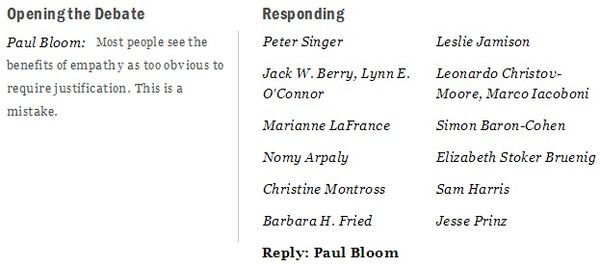
PaulBloomWhen asked what I am working on, I often say I am writing a book about empathy. People tend to smile and nod, and then I add, “I’m against it.” This usually gets an uncomfortable laugh.

This reaction surprised me at first, but I’ve come to realize that taking a position against empathy is like announcing that you hate kittens—a statement so outlandish it can only be a joke. And so I’ve learned to clarify, to explain that I am not against morality, compassion, kindness, love, being a good neighbor, doing the right thing, and making the world a better place. My claim is actually the opposite: if you want to be good and do good, empathy is a poor guide.

The word “empathy” is used in many ways, but here I am adopting its most common meaning, which corresponds to what eighteenth-century philosophers such as Adam Smith called “sympathy.” It refers to the process of experiencing the world as others do, or at least as you think they do. To empathize with someone is to put yourself in her shoes, to feel her pain. Some researchers also use the term to encompass the more coldblooded process of assessing what other people are thinking, their motivations, their plans, what they believe. This is sometimes called “cognitive,” as opposed to “emotional,” empathy. I will follow this convention here, but we should keep in mind that the two are distinct—they emerge from different brain processes; you can have a lot of one and a little of the other—and that most of the discussion of the moral implications of empathy focuses on its emotional side.

More here.

Tuesday, August 26, 2014

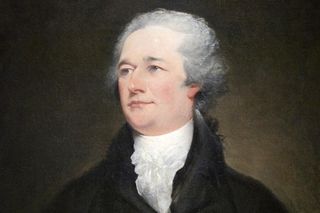
Reading Hamilton From the Left

0509_hamilton_970

Christian Parenti in Jacobin:

In the American political imagination, Jefferson is rural, idealistic, and democratic, while Hamilton is urban, pessimistic, and authoritarian. So, too, on the US left, where Jefferson gets the better billing. Michael Hardt recently edited a sheaf of Jefferson’s writings for the left publisher Verso.

Reading “Jefferson beyond Jefferson,” Hardt casts him as a theorist of “revolutionary transition.” We like Jefferson’s stirring words about “the tree of liberty” occasionally needing “the blood of patriots and tyrants,” and his worldview fits comfortably with a “small is beautiful” style localism. We recall Jefferson as a great democrat. When Tea Partiers echo his rhetoric, we dismiss it as a lamentable misunderstanding.

But in reality, Jefferson represented the most backward and fundamentally reactionary sector of the economy: large, patrimonial, slave-owning, agrarian elites who exported primary commodities and imported finished manufactured goods from Europe. He was a fabulously wealthy planter who lived in luxury paid for by slave labor. Worse yet, he raised slaves specifically for sale.

“I consider the labor of a breeding woman,” Jefferson wrote, “as no object, and that a child raised every 2 years is of more profit than the crop of the best laboring man.”

Even if it could somehow be dislodged from the institution of slavery, Jefferson’s vision of a weak government and an export-based agrarian economy would have been the path of political fragmentation and economic underdevelopment. His romantic notions were a veil behind which lay ossified privilege.

Hamilton was alone among the “founding fathers” in understanding that the world was witnessing two revolutions simultaneously. One was the political transformation, embodied in the rise of republican government. The other was the economic rise of modern capitalism, with its globalizing networks of production, trade, and finance. Hamilton grasped the epochal importance of applied science and machinery as forces of production.

More here.

What I’ve Learned from Two Years Collecting Data on Police Killings

Mwlcnipmn99tkwz64eyq

D. Brian Burghart in Gawker:

Nowhere could I find out how many people died during interactions with police in the United States. Try as I might, I just couldn't wrap my head around that idea. How was it that, in the 21st century, this data wasn't being tracked, compiled, and made available to the public? How could journalists know if police were killing too many people in their town if they didn't have a way to compare to other cities? Hell, how could citizens or police? How could cops possibly know “best practices” for dealing with any fluid situation? They couldn't.

The bottom line was that I found the absence of such a library of police killings offensive. And so I decided to build it. I'm still building it. But I could use some help. You can find my growing database of deadly police violence here, at Fatal Encounters, and I invite you to go here,research one of the listed shootings, fill out the row, and change its background color. It'll take you about 25 minutes. There are thousands to choose from, and another 2,000 or so on my cloud drive that I haven't even added yet. After I fact-check and fill in the cracks, your contribution will be added to largest database about police violence in the country. Feel free to check out what has been collected about your locale's information here.

The biggest thing I've taken away from this project is something I'll never be able to prove, but I'm convinced to my core: The lack of such a database is intentional. No government—not the federal government, and not the thousands of municipalities that give their police forces license to use deadly force—wants you to know how many people it kills and why.

It's the only conclusion that can be drawn from the evidence.

More here.

The Mysterious World of Stefan Zweig

Zweig_cc_62414

Jacob Heilbrunn in The National Interest:

IN JOSEPH Roth’s novel Radetzky March, Count Chojnicki drives district captain Franz von Trotta and his son Carl Joseph, a lieutenant in the Austrian infantry, in a straw-yellow britska to his small hunting lodge in the Galician forest near the border with Ukraine. After pouring glasses of 180 proof, Chojnicki disconcerts his two guests by declaring that the Habsburg Empire is doomed:

With great effort Herr von Trotta asked another question: “I don’t understand! Why shouldn’t the monarchy still exist?” “Of course,”Chojnicki answered, “taken literally, it continues to exist. We still have an army”—the count motioned to the lieutenant—“and officials”—the count pointed to the district captain. “But it is disintegrating. . . . An aged one, whose number is up, endangered by each sniffle, hangs onto his throne simply by the miracle that he can still sit upon it. How much longer, how much longer! This era doesn’t want us any longer! This era wants to create nation-states! No one believes in God. The new religion is nationalism. . . . The monarchy, our monarchy, is based on piety: in the belief that God elected the Habsburgs. . . . Our Emperor is a secular brother of the Pope. . . . The Emperor of Austria-Hungary cannot be abandoned by God. But now God has abandoned him!”

Chojnicki’s lament reflects the profound sense of abandonment that assailed not only Roth, but also his compatriot Stefan Zweig. Both mourned the collapse of the Habsburg monarchy and the loss of the comforting stability it had represented, not least for Jews like themselves. Both became refugees, going into exile years before the Anschluss, or annexation, of Austria by Nazi Germany in March 1938—in a 1933 letter, Roth warned Zweig that it was all over once Hitler had been appointed chancellor by the senescent President Hindenburg. And both ended up destroying themselves—the alcoholic Roth, dependent on handouts from Zweig, perished of delirium tremens in a Paris hospital in 1939 at the age of forty-five; Zweig, together with his young second wife, Lotte, swallowed poison in a little bungalow in 1942 in Petropolis, a lovely mountain resort located near Rio de Janeiro. Unlike Roth, however, Zweig’s literary star dimmed after his death, even though he was one of the most popular authors in the world during the 1930s, an era when books, like the cinema, could command a mass audience.

Now, in his beguiling study The Impossible Exile, George Prochnik examines Zweig’s odyssey. Prochnik, who is the author of In Pursuit of Silence, sets Zweig in the context of literary and social Vienna. It’s very much a life and times rather than a discussion of the old boy’s oeuvre, which was rather vitriolically attacked as “just putrid” by Michael Hofmann in 2010 in the London Review of Books. That his works don’t measure up to Thomas Mann’s or Roth’s almost goes without saying.

But Zweig, a compulsive collector whose possessions included Goethe’s pen and Beethoven’s desk, makes for a fascinating subject (Wes Anderson’s charming new film The Grand Budapest Hotel was inspired by him). Prochnik mines both Zweig’s memoir The World of Yesterday as well as his letters to offer numerous insights. He suggests that Zweig, who was friends with everyone from Richard Strauss to Sigmund Freud, provides an acute lens through which to examine not only the cultural contradictions of the imperial city, but also the plight of the numerous cultural émigrés from Central Europe whom Nazi propaganda minister Joseph Goebbels ridiculed as “cadavers on leave.”

More here.

Who Will Pay Reparations on My Soul?

Jesse McCarthy in The Point:

In the summer of 1960, James Baldwin wrote an essay he styled “Fifth Avenue, Uptown: A Letter from Harlem.” Among the host of ills he observed in the neighborhood where he was born and raised, he gave a prominent place to the dynamics of racialized policing:

The only way to police a ghetto is to be oppressive … Rare, indeed, is the Harlem citizen, from the most circumspect church member to the most shiftless adolescent, who does not have a long tale to tell of police incompetence, injustice, or brutality. I myself have witnessed and endured it more than once.

Like so many of us watching events unfold on the live feed from Ferguson, Missouri, I thought about how depressingly familiar it all looked. How many times has this very script played out in our lives? What year wasn’t there a prominent slaying of a black citizen under dubious circumstances, followed by an outbreak of rioting? Here is Baldwin in 1960, describing the archetype in his characteristically lucid way, with empathy but also a stern moral clarity:

It is hard on the other hand to blame the policeman… he too, believes in good intentions and is astounded and offended when they are not taken for the deed… He moves through Harlem, therefore, like an occupying soldier in a bitterly hostile country; which is precisely what, and where, he is. … He can retreat from his unease in only one direction: into a callousness which very shortly becomes second nature. He becomes more callous, the population becomes more hostile, the situation grows more tense, and the police force is increased. One day, to everyone’s astonishment, someone drops a match in the powder keg and everything blows up. Before the dust has settled or the blood congealed, editorials, speeches and civil-rights commissions are loud in the land, demanding to know what happened. What happened is that Negroes want to be treated like men.

The vulnerability of racially marked bodies to power, particularly police power, and the lack of justice—the singular and persistent evidence of gross unfairness where race and the law intersect—reveals a bloody knot in the social fabric that is as vivid in Ferguson, Missouri today as it was in Baldwin’s Harlem half a century ago.

More here.

The Fantastical Panama Canal

Morgan Meis in The Smart Set:

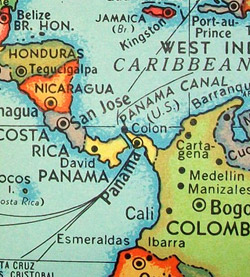
IC_MEIS_PANAMA_AP_001Boats traversing the Panama Canal look strange and out of place, like mirages or optical illusions. That’s because the Canal — especially at places like the Culebra Cut — goes right through what would otherwise be continuous land. The Canal is, in essence, a trench. It was dug right across the width of Panama in order to connect two oceans: Pacific and Atlantic. Ships going through the Panama Canal, therefore, are strange-goers, undertaking a journey that would be fantastical but for feats of engineering that still boggle the mind.

268,000,000 cubic yards of earthy stuff was moved to create the Panama Canal. Something like 27,000 people died from accidents and disease during construction. (The French, who started the project, did not keep accurate death records). A three-mile-long peninsula jutting out into the Pacific Ocean was created with material dug from the Canal. There are 46 gates along the Panama Canal, each of them weighing between 354 and 662 tons. 101,000 cubic meters of water are needed to fill a Panama Canal lock chamber. An average of 52 million gallons of fresh water are used in each transit.

These are just some of the raw numbers that tell the tale of the Panama Canal. Building the Canal took about 35 years. The French began the project in 1881. But there were so many problems (human and mechanical) that the project was abandoned. In 1904, the Americans took over the task. The Panama Canal was officially opened on August 15, 1914. One hundred years ago.

More here.