My Saga, Part 1: Karl Ove Knausgaard Travels Through North America

01cover-superJumbo-v3

Karl Ove Knausgaard in the NYT:

I lost my driver’s license over a year ago. I lose stuff all the time. Credit cards, passports, car keys, cash, books, bags, laptops. It doesn’t worry me, they usually turn up eventually. The last time I was in New York, I left my backpack in a taxi. I had taken three of my kids with me, so I was a little distracted when we got out. All of our passports were in the backpack, as well as my laptop, where everything I have written in the last 20 years is stored. I never talk to taxi drivers, but this one had been so friendly that I endedup questioning him a little. At a red light he even took out a photograph of his children, which he showed me. When we got back to the hotel that afternoon, I asked the receptionist what we could do. He just shook his head and said I could forget about seeing my backpack again. This is New York, he said. But the driver was from Nepal, I objected. And he had two kids. I’m sorry, the receptionist said, I don’t think that will help much. But of course you can report it missing. At that point the doorman came over, he had overheard our conversation and said he knew some Nepalis, should he call them for me? So he did, and I met them outside the hotel a while later. Based on my description, they identified the driver, and the next morning the backpack was waiting for me at the reception desk.

These things happen often; in my experience they always turn out fine. There is a saying in Norway that he who loses money shall receive money, and I think that’s true, because when you lose things, it means you’re not on your guard, you’re not trying to control everything, you’re not being so anal all the time — and if you aren’t, but allow yourself to be open to the world instead, then anything at all might come to you.

I know that’s true, but at the same time I also know that the reason I say it is to turn all my faults and weaknesses into strengths. It’s good that I’m afraid to speak on the phone with anyone except my closest friends. It’s good that I always put off paying bills. It’s good that I never cash the checks I receive. That means I’m a writer, I think I’m not so focused on worldly matters, which in turn means that some day I just might write a masterpiece.

So when my driver’s license stayed gone, the loss went into the same mental category; it became part of the stuff a writer is made of. I could drive without it anyway. Where I live now in Sweden, there are seldom any police checkpoints.

More here.
Things to Charm a Storyteller

9781781685754-0cf4131e915d5b6f89707568b8a228f0

Polly Dickson in 3:AM Magazine:

It speaks from within the home, with the voice of a guest. And, like a guest, ‘upon arrival, it is usually assessed just as quickly and as sharply’ (‘Reflections on Radio’, 1930-1). The voice of radio, unhampered by flesh or face, rings of unbelonging.

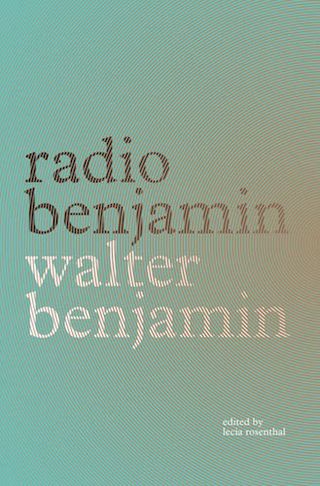
Radio Benjamin (2014), edited by Lecia Rosenthal, is the first book in English devoted entirely to Walter Benjamin’s work for radio. It artfully compiles some forty radio programmes and plays produced and broadcast between 1927 and 1933, most of them translated here for the first time into English by Jonathan Lutes, Lisa Harries Schumann and Diana K. Reese, and places them alongside a selection of his theoretical writings on radio.

Listener and broadcaster in these texts have a furtive, strained relationship. Inhabiting the same room – for ‘the radio listener, as opposed to every other kind of audience, receives the programming in his home’ (‘Reflections on Radio’) – the two are invisible to one another: to each other, they are Benjamin’s ‘dear invisible ones’. Theirs is a highly mediated intimacy that can be stifled immediately – an intimacy that lacks both touch and body. Benjamin’s broadcast is a space of compromise, where the valence of sound is afforded only by the conspicuous loss or suspension of sight and touch. As Rosenthal puts it in her introduction: ‘the impossibility of giving a complete account remains an essential component of the medium of sound broadcast and audio performance itself’.

There is a word to fit this necessary concession of the radio voice: acousmatic. ‘Acousmatic sound’ is sound that we hear with a cause that we cannot see; sound from an invisible source. Benjamin’s texts are already a curious group of creatures, with topics ranging from ‘True Dog Stories’ (1930) to the Borsig car factory (‘Borsig’, 1930), from ‘The Mississippi Flood of 1927’ (1932) to ‘What the Germans were reading while their classical Authors were writing’ (1932). There are drifting scenes lifted from childhood, bright accounts of tales of fraud and swindle and disaster, didactic ‘listening models’ (Hörmodelle) offering advice for the workplace, and a handful of raucous plays. And the texts are made more curious still for having undergone a double upheaval, twice removed from their sensory places of origin. First is the acousmatic loss: the compromise of the radio voice which can be heard only at the loss of its visual base. The second is the loss of sound itself – for, with the exception of a fragment from the play ‘Much Ado about Kasper’, no recordings of the texts remain. It is a fact that prickles, constantly, in reading them. In the face of what they may have lost, writes Rosenthal: ‘we must read and imagine what we cannot hear’.

Benjamin’s own dubiousness towards the (still relatively young) medium of radio is made obvious in excerpts from his letters to historian Gershom Scholem and others expressing disregard for the pieces and stressing his financial motives in producing them: ‘the series of countless talks… are of no interest except in economic terms’; ‘the work I do simply to earn a living’. But at moments, Benjamin’s tired scepticism reaches a more acute distaste for the strange power of the radio voice. Radio, after all – as it gives stage to the bodiless voice and invites it into the homes of the masses – was to gain quick, easy hold under Fascism.

More here.

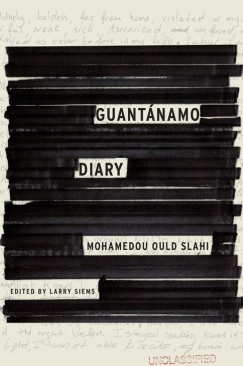
Guantánamo Diary: Random American Justice

Guantanamo-Diary-243x366

Anne Richardson on Mohamedou Ould Slahi's Guantánamo Diary, in The LA Review of Books:

MOHAMEDOU OULD SLAHI’S Guantánamo Diary is a page-turner. Unlike the Senate’s 500-page Senate Select Intelligence Committee Study, also known as the “torture report,” this one will keep you up at night. And it has something for everyone. For opponents of the use of the harsh interrogation practices that were approved after 9/11, it provides insight into why those techniques lead only to false confessions. For human rights advocates, it provides a dramatic firsthand account of the myriad reasons why civilized nations banned torture as set forth in the Convention Against Torture, adopted by the UN in 1984 and ratified by the United States in 1994. For prosecutors, it provides a nagging reminder that, when you torture, you lose not only your moral high ground but also your ability to prosecute, because you can’t prove whether the “confessions” are true. And for diplomats and politicians, it demonstrates just how much standing the United States has lost in the international community and how long it will take to rebuild our reputation as a leader of democratic ideals. We gave away much, in these dark holes of rendered suspects. Was it worth it?

Mohamedou Ould Slahi was a 30-year-old Mauritanian when Mauritanian authorities called him in, at the behest of the US government, in November 2001. He had fought with al-Qaeda in 1991 and again in 1992 against the communist-led government in Afghanistan, a cause supported by the West and the United States in particular. He eventually returned home to Mauritania and later spent time in Germany and Canada. He maintains that after 1992 he had no more commitment to al-Qaeda, although he remained in contact with some of his companions from Afghanistan. So it was that he was linked to known al-Qaeda fighters and leaders.

At times he was accused of masterminding the so-called Millennium Plot to blow up the Los Angeles airport. The Senegalese, Mauritanian, and American authorities questioned him in 2000 in connection with the Millennium Plot, but concluded there was no basis to believe he was involved. After September 11, 2001, FBI agents again detained and questioned him about the Millennium Plot. Once again, he was released.

But in November 2001, Mauritanian police came to his door and asked him to accompany them for further questioning. Thus launched Slahi’s 13-year continuing odyssey, from Mauritania to an interrogation chamber in Jordan, on to Bagram Air Base in Afghanistan, and finally to Guantánamo Bay, where he remains to this day. He has no charges pending against him. The District Court judge who heard his petition for habeas corpus ordered him to be released in 2010, but the Court of Appeals sent the case back for rehearing, and it is still pending.

More here.

Ben Lerner and the novel of detachment

Jon Baskin in The Nation:

ScreenHunter_1029 Feb. 25 13.32Although he has only published two books of fiction, Ben Lerner has already earned a reputation as a literary bellwether. His first novel, Leaving the Atocha Station(2011), was praised by James Wood for featuring a “convincing representative of twenty-first century AmericanHomo literatus,” while Gary Sernovitz pondered “What Leaving the Atocha Station says about America,” and Geoff Dyer proclaimed it a “comet from the future” of literature. Published by Coffee House Press, a small imprint in Minneapolis, and spurred by such reviews, Atochaachieved an unlikely success, which in turn helped secure Lerner a reported six-figure advance from Faber and Faber for a second novel, 10:04. Published last fall, Lerner’s newest effort has been serenaded by Christian Lorentzen in Bookforum for signaling “a new direction in American fiction,” and by Maggie Nelson in the Los Angeles Review of Books as “a near-perfect piece of literature, affirmative of both life and art.” On the jacket cover, Jeffrey Eugenides announces that “anyone interested in serious contemporary literature should read Ben Lerner.”

An award-winning poet and translator, Lerner is a talented stylist, capable of artfully conveying what he sees of Manhattan from Brooklyn Bridge Park (“the liquid sapphire and ruby of traffic on the FDR Drive and the present absence of the towers”), what a hurricane looks like from space (“an aerial sea monster with a single centered eye around which tentacular rain bands swirled”) and his sense of alienation upon encountering artist Donald Judd’s iconic boxes in Marfa, Texas (it was “inscrutable in human terms, as if the installation were waiting to be visited by an alien or god”). But there are reasons that reviewers of his novels tend to begin and end by listing their favorite descriptive passages. Lerner’s two novels offer little in the way of plot or secondary characters, and their subject matter can seem incidental, even arbitrary.

More here.

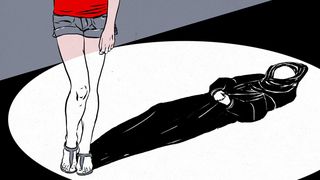
Practicing Islam in Short Shorts

Thanaa El-Naggar in Gawker:

Y72rzcl5tpjefnygof42The scenario I'm about to describe has happened to me more times than I can count, in more cities than I can remember, mostly in Western cities here in the U.S. and Europe.

I walk into a store. There's a woman shopping in the store that I can clearly identify as Muslim. In some scenarios she's standing behind the cash register tallying up totals and returning change to customers. She's wearing a headscarf. It's tightly fastened under her face where her head meets her neck. Arms covered to the wrists. Ankles modestly hidden behind loose fitting pants or a long, flowy dress. She's Muslim. I know it. Everyone around her knows it. I stare at her briefly and think to myself, “She can't tell if I'm staring at her because I think she is a spectacle or because I recognize something we share.”

I realize this must make her uncomfortable, so I look away. I want to say something, something that indicates I'm not staring because I'm not familiar with how she chooses to cover herself. Something that indicates that my mother dresses like her. That I grew up in an Arab state touching the Persian Gulf where the majority dresses like her. That I also face East and recite Quran when I pray.

“Should I greet her with A'salamu alaikum?” I ask myself. Then I look at what I picked out to wear on this day. A pair of distressed denim short shorts, a button-down Oxford shirt, and sandals. My hair is a big, curly entity on top of my head; still air-drying after my morning shower. Then I remember my two nose rings, one hugging my right nostril, the other snugly hanging around my septum. The rings have become a part of my face. I don't notice them until I have to blow my nose or until I meet someone not accustomed to face piercings.

More here.

Why Satire Matters

Justin E. H. Smith in the Chronicle of Higher Education:

ScreenHunter_1028 Feb. 25 13.19As recently as a few months ago, the common wisdom seemed to be that the only people who raise concerns about illiberalism in academic life are the embarrassing old avuncular types. You know the ones: the men in Hawaiian shirts who want to know why they can’t call women “dames” anymore. There was little serious engagement with the real problem of the trade-off between freedom of expression and the concern not to offend.

Then came a turning point, when, in Paris, a death squad targeted some cartoonists, and the widespread reaction in the online and academic left (increasingly indistinguishable from each other) was: “Well, the cartoons were offensive.” This is when I found I could no longer contain my own dismay. I, an American academic based in Paris, came suddenly to feel as though my relocation to France were not simply a career move but a proper exile from the political culture of North American academe, which has become inflexible, unsubtle, and dogmatic. The issue was no longer the anti-PC griping of uncles. It was now a matter of life and death.

If I try, in the aim of cool-headed analysis, to contain that dismay, I find that my American colleagues’ quasi-rationalization of the assassination of caricaturists is rooted in a failure to distinguish between certain basic varieties of the exercise of the freedom of expression. In particular, there seems to be a broad misunderstanding of the social function, and therefore also the necessity, of satire.

More here.

Toni Morrison Refuses To Privilege White People In Her Novels

“Toni Morrison has always taken for granted the centrality of Blackness in her novels. She has refused throughout her writing career to privilege “Whiteness” in her literary works. In this clip, Toni Morrison discusses the way she felt when interview Bill Moyers asked her when she would write about white people, as if this was something she should be interested in doing. She refuses to accept the idea that writing about Black people is not “real writing,” and that Black writers must engage with White characters or the White world in order for their writing to be legitimate. She will not privilege White people, nor will she explain things to White readers.”

More here. (Note: One post throughout February will be dedicated to Black History Month.)

The Brain’s Way of Healing

Lisa Appignanesi in The Guardian:

BrainDr Michael Moskowitz, an American psychiatrist specialising in treating pain, had long been his very own laboratory rat. After breaking his femur jumping from the turret of an army tank, he made an important discovery: the brain could be taught to turn off even screaming pain, once the body had sent the necessary alarm signal. Years of chronic pain linked to a neck injury sustained in a waterskiing accident meant Moskowitz already knew that neurons can misfire, becoming hypersensitive. The initial cause of pain may have gone, but the injured area still seems to hurt. Once habituated to pain, the smallest thing can set it off. But if repeated bodily experience or movement leads to structural changes, so can mental experience and exercise. Treatment that involved visualizing the affected brain areas when pain struck and imagining them shrinking (engaging in “neuro-stimulation” and creating “competitive plasticity”) cured Moskowitz’s long-standing neck problem. Having systematised the practice for his patients, he went on to improve the lives of many suffering from a range of chronic pain conditions, from back discomfort to multiple sclerosis.

Norman Doidge, a psychiatrist, psychoanalyst and author of the bestselling book The Brain that Changes Itself, says such treatments are neither hypnosis, self-hypnosis nor due to a placebo effect. All of those may have some beneficial impact on certain chronic sufferers, but what is at play is a (re)modelling of the brain, a change in the way its neurons fire. Important among Moskowitz’s findings and those of many others in the field is the suggestion that, after a short time, the opioid narcotics used for pain treatment cease to work. The plastic brain’s own opioid receptors grow saturated. It produces new ones less sensitive to the medication, rendering the patient more and more dependent on higher and higher doses. For Moskowitz, weaning the patient away from opioid-induced brain sensitivity is one of the first tasks in a treatment process that engages the patient in relentless mental effort.

More here.

Tuesday, February 24, 2015

Miles Davis & John Coltrane – Kind of blue

Miles Dewey Davis III (May 26, 1926 September 28, 1991) was an American jazz trumpeter, bandleader, and composer. Widely considered one of the most influential musicians of the 20th century, Davis was at the forefront of almost every major development in jazz from World War II to the 1990s: he played on various early bebop records and recorded one of the first cool jazz records; he was partially responsible for the development of hard bop and modal jazz, and both jazz-funk and jazz fusion arose from his work with other musicians in the late 1960s and early 1970s; and his final album blended jazz and rap. Many leading jazz musicians made their names in Davis's groups, including pianist Herbie Hancock, saxophonist John Coltrane, saxophonist Kenny Garrett, and guitarist John McLaughlin. As a trumpeter, Davis had a pure, round sound but also an unusual freedom of articulation and pitch. He was known for favoring a low register and relatively sparse playing that served the song rather than display flashy playing, but Davis was also capable of highly complex and technically demanding trumpet work.

More here. (Note: One post throughout February will be dedicated to Black History Month.)

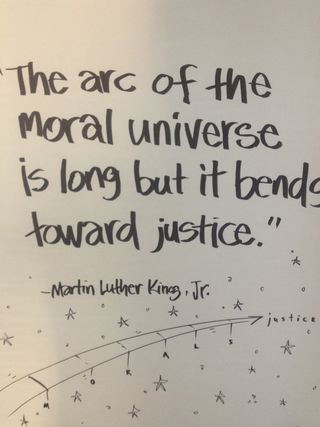
Michael Shermer and the moral arc of libertarianism

Massimo Pigliucci in Scientia Salon:

Img_0265Skeptic magazine publisher Michael Shermer has gotten onto the same “science can determine moral values” bandwagon as other scientistically-minded writers such as Sam Harris. But this commentary isn’t directly about Shermer’s latest book [1], and even less about Harris (about whose ideas I’ve written more than enough [2]). Rather, it concerns a more specific claim about science-driven moral progress made by Michael in a recent article that appeared in the libertarian Reason magazine, entitled “Are We Becoming Morally Smarter? The connection between increasing IQs, decreasing violence, and economic liberalism” [3]. The piece is an interesting mix of good points, good reasoning, bad points, and bad reasoning. I am going to try to sort things out in the interest of stimulating further discussion.

Shermer begins by talking about the famous (and still poorly understood) “Flynn effect” [4] the observation that IQ test scores, when non standardized to the population average, have increased by two standard deviations throughout the 20th century: we have become “smarter.” Of course, one has to buy into the idea that IQ tests actually measure “intelligence,” or that the latter is even a sufficiently coherent concept to be quantified effectively. But for the sake of the argument, let’s say that cultural evolution (obviously, as Shermer himself readily acknowledges, this has nothing to do with biological evolution) has made it so that people are getting better at scoring high on a certain class of standardized test that has something to do with intelligence, at the least when the latter is understood in certain ways.

More here.

For Saudis and Pakistan, a Bird of Contention

Declan Walsh in the New York Times:

08BUSTARD-articleLargeFor decades, royal Arab hunting expeditions have traveled to the far reaches of Pakistan in pursuit of the houbara bustard — a waddling, migratory bird whose meat, they believe, contains aphrodisiac powers.

Little expense is spared for the elaborate winter hunts. Cargo planes fly tents and luxury jeeps into custom-built desert airstrips, followed by private jets carrying the kings and princes of Persian Gulf countries along with their precious charges: expensive hunting falcons that are used to kill the white-plumed houbara.

This year’s hunt, however, has run into difficulty.

It started in November, when the High Court in Baluchistan, the vast and tumultuous Pakistani province that is a favored hunting ground, canceled all foreign hunting permits in response to complaints from conservationists.

Those experts say the houbara’s habitat, and perhaps the long-term survival of the species, which is already considered threatened, has been endangered by the ferocious pace of hunting.

That legal order ballooned into a minor political crisis last week when a senior Saudi prince and his entourage landed in Baluchistan, attracting unusually critical media attention and a legal battle that is scheduled to reach the country’s Supreme Court in the coming days.

More here.

Syriza’s mauling at the EU negotiations

Richard Seymour in Lenin's Tomb:

11010295_10152557601725448_7602541715825316414_nSyriza has been defeated in the first round of negotiations.
After a period of enjoyable defiance, during which they won the backing of the overwhelming majority of the Greek people – 80% according to a poll taken before the latest deal, published in today's Avgi – they have come back with small change. Pushed to the point where they were at risk of a collapse of the banking system, and unprepared for a Grexit (and thus unable to use it as a bargaining chip), they accepted the most comprehensive drubbing.
Tsipras has tried to put the best possible gloss on this, but what he said was delusional. He said that the deal shows that Europe stands for mutually beneficial compromise. No such thing. It stands, as Schauble crowed, for Syriza being forced to implement austerity against its own mandate. It stands for the crushing of national democracy.
Tsipras said that the deal creates the framework for Syriza to address the humanitarian crisis. Not with the commitment to a primary surplus and troika oversight, it doesn't. Not with the agreement that Syriza will not 'unilaterally' roll back austerity, it doesn't. We can admit that a 1.5% primary surplus is better than a 4.5% primary surplus. Yet even 1.5% in a depressed economy is harsh, and coupled with troika assessment of reforms for fiscal sustainability (according to neoliberal maxims), this amounts to the repudiation of most of Syriza's reform agenda.
Tsipras said that austerity and the Memorandum had been left behind. That is precisely the opposite of what has happened. The Thessaloniki programme, itself a carefully trimmed agenda shorn of the most radical of Syriza's goals, is what has been left behind.
More here.

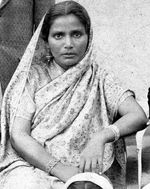
Memoirs by women who were not paragons but survivors

After-the-last-sky_courtesy-penguin_the-caravan-magazine_february-2015_01Nandini Ramachandran at Caravan:

The horizons of Indian women have long been defined by the peculiar demands of Indian sovereignty. Scholars such as Tanika Sarkar and Partha Chatterjee have argued that the female body—especially the Hindu female body—was crucial to the shaping of nationalism in the nineteenth century. Nationalist thinkers, eager to find a space “free” from colonialism within which they could locate an essential Indian culture that had to be liberated, settled upon the “Hindu home.” Hindu wives, who presided over those homes, thus became inextricably linked to patriotism. These wives—pure, virtuous, spiritual, submissive—were the soul of the motherland. They had to be saved from the depredations of modernity and colonialism, even when this meant they had to be saved from themselves. This ideology, that women are repositories of a cultural legacy, is as prevalent today as it was two hundred years ago—consider the violent policing of inter-caste marriages by khap panchayats, or the hysterical conversation about “love jihad” that presents Muslim men as existential threats to the Hindu family. This ideology, moreover, is also why most Indian women who survive outside the conventions of marriage must resign themselves to living with a submerged self.

The more interesting question remains, however, how women are to navigate such circumstances. One way would be through the discourse of empowerment, which suggests that women make choices that benefit them as individuals rather than those that benefit them as members of collectives such as the family or society. It demands that independent, self-respecting women defy the social strictures that hold them to home and hearth, and thus replace their pain with pleasure.

more here.

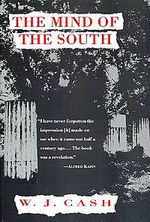
the mind of the south

200px-MindofthesouthcoverStefany Anne Golberg at The Smart Set:

Most of what we believe about the South, wrote W.J. Cash in the 1930s, exists in our imagination. But, he wrote, we shouldn’t take this to mean that the South is therefore unreal. The real South, wrote Cash in The Mind of the South, exists in unreality. It is the tendency toward unreality, toward romanticism, toward escape, that defines the mind of the South.

The unreality that shaped the South took many forms. In the South, wrote Cash (himself a Southern man), is “a mood in which the mind yields almost perforce to drift and in which the imagination holds unchecked sway, a mood in which nothing any more seems improbable save the puny inadequateness of fact, nothing incredible save the bareness of truth.” Most people still believe, wrote Cash — but no more than Southerners themselves — in a South built by European aristocrats who erected castles from scrub. This imaginary South, wrote Cash, was “a sort of stagepiece out of the eighteenth century,” where gentlemen planters and exquisite ladies in farthingales spoke softly on the steps of their stately mansions. But well-adjusted men of position and power, he wrote, “do not embark on frail ships for a dismal frontier… The laborer, faced with starvation; the debtor, anxious to get out of jail; the apprentice, eager for a fling at adventure; the small landowner and shopkeeper, faced with bankruptcy and hopeful of a fortune in tobacco; the neurotic, haunted by failure and despair” — only these would go.”

more here.

On writers, glass, Pliny the Elder, and family stories

Vesuvius_in_eruptionDaniel Torday at The Paris Review:

Since I started writing, I have sought forebears who might have had literary aspirations. Were there writers in the family? My great-uncle György, who was exiled to the Ukraine during World War II and afterward became a functionary in Hungary’s Communist government, was a novelist, but my father has always been dismissive of his work. He says György wrote a variety of socialist-realist novel that’s hard to take seriously, hard not to see as propaganda. His books have never been translated into English, and my Hungarian isn’t nearly good enough to understand what’s in them. The only existing copies I know of sit on a shelf in my Cousin Hajnal’s house in the Buda Hills. I don’t have the heart to ask to take them and have them translated. When I’ve asked her about them in the past, she’s simply said that they are books, yes, and that her father wrote them.

In their stead I have purchased rare used copies of two books written by Frederic Neuburg, author of a large trove of letters to my father’s Aunt Traute that he keeps in an old teak box in his house in Los Angeles. My father is not Bellow or Updike, and I am not the son of Bellow or Updike, but it is the book I have, in two editions, an art book containing photographs of Neuberg’s glass collection and extensive commentary on the pieces.

more here.

I’ve Just Seen a (DNA-Generated) Face

Heather Murphy in The New York Times:

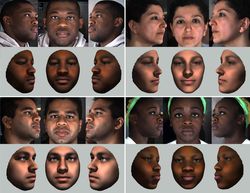
FACESThe faces here, which look a bit like video game avatars, are actually portraits drawn from DNA. Each rendering was created by plugging an individual genetic profile into a predictive tool created by Mark D. Shriver, a professor of anthropology and genetics at Penn State University. Dr. Shriver and his colleagues have studied the ways that genes influence facial development. Their software yields an image in a matter of minutes, rapidly drawing connections beween genetic markers and points on the face. In less time than it takes to make a cup of coffee, a sketch emerges inferred solely from DNA.

How accurate or useful are these predictions? That is something that Dr. Shriver is still researching – and that experts are still debating. Andrew Pollack writes about the issues in an article on genetic sleuthing in Science Times. On The New York Times’s science desk, we wondered whether it would be possible to identify our colleagues based on the formula that Dr. Shriver has developed. So we tried a somewhat unscientific experiment. John Markoff, a reporter, and Catherine Spangler, a video journalist, each volunteered to share their genetic profile, downloaded from 23andMe, a consumer DNA-testing company. The files we sent to Dr. Shriver did not include their names or any information about their height, weight or age. Dr. Shriver processed the genotype data and sent us renderings of the donors’ faces.

More here.

Tuesday Poem

The Nobodies

Fleas dream of buying themselves a dog, and nobodies dream of escaping poverty: that one magical day good luck will suddenly rain down on them–will rain down in buckets. But good luck doesn’t rain down yesterday, today, tomorrow, or ever. Good luck doesn’t even fall in a fine drizzle, no matter how hard the nobodies summon it, even if their left hand is tickling, or if they begin the new day with their right foot, or start the new year with a change of brooms.

The nobodies: nobody’s children, owners of nothing. The nobodies: the no ones, the
nobodied, running like rabbits, dying through life, screwed every which way.

Who are not, but could be.
Who don’t speak languages, but dialects.
Who don’t have religions, but superstitions.
Who don’t create art, but handicrafts.
Who don’t have culture, but folklore.
Who are not human beings, but human resources.
Who do not have faces, but arms.
Who do not have names, but numbers.
Who do not appear in the history of the world, but in the police blotter of the local paper.
The nobodies, who are not worth the bullet that kills them.

by Eduardo Galeano
from The Book of Embraces

(with thanks to Sughra Raza)

Los Nadies

Sueñan las pulgas con comprarse un perro y sueñan los nadies con salir de pobres, que algún mágico día llueva de pronto la buena suerte, que llueva a cántaros la buena suerte; pero la buena suerte no llueve ayer, ni hoy, ni mañana, ni nunca, ni en llovizna cae del cielo la buena suerte, por mucho que los nadies la llamen y aunque les pique la mano izquierda, o se levanten con el pie derecho, o empiecen el año cambiando de escoba.

Los nadies: los hijos de nadie, los dueños de nada. Los nadies: los ningunos, los niguneados, corriendo la liebre, muriendo la vida, jodidos, rejodidos.

Que no son, aunque sean.
Que no hablan idiomas, sino dialectos.
Que no profesan religiones, sino supersticiones.
Que no hacen arte, sino artesanías.
Que no practican cultura, sino folklore.
Que no son seres humanos, sino recursos humanos.
Que no tienen cara, sino brazos.
Que no tienen nombre, sino número.
Que no figuran en la historia universal, sino en la crónica roja de la prensa local.
Los nadies, que cuestan menos que la bala que los mata.

‘Hindu Right’s appropriation of svaraj is hypocrisy’ —Akeel Bilgrami

From The Hindu:

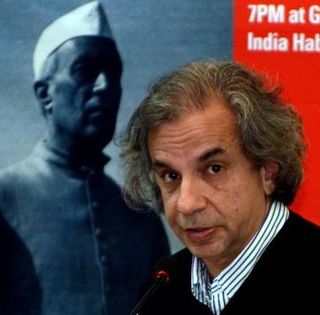
ScreenHunter_1026 Feb. 24 11.33In an interview to Rajgopal Saikumar, Prof. Bilgrami, the Sidney Morgenbesser Chair in Philosophy; Professor, Committee on Global Thought; Director, South Asian Institute at Columbia University and author of Secularism, Identity and Enchantment (2014) explained what autonomy and intellectual self-determination could mean to India in the current political context. Edited excerpts:

What does ‘svaraj in ideas’ imply in the current Indian political context?

It could mean something very important, if thoughtfully elaborated. There is a widespread tendency to say that what has happened in Europe or the West must inevitably happen in the rest of the world. For instance, in response to the protest over the dispossession of peasants for corporate projects in the Indian countryside, our economists were known to say, “England had to go through its pain to create its Londons and Manchesters; India will have to do so, too.” This suggests that there are some sort of economic laws that govern history. But this is a superstition. By that I mean we take it on trust, even though nobody knows when it was proved and no one has shown how it helps us to live better. Marx is often mistakenly said to believe this. But he did not. If you turn to the work he did in the last decade of his life, you will find that he strenuously argued that Russia did not, by any means, have to go through a western-European-style capitalist incubation as some sort of inevitable rite of passage.

When people try to justify the claim that what happened in the West must happen elsewhere, they do so on the grounds that what happened in the West was rational. In other words, not only that it will happen [elsewhere] but that it ought to happen. So, ‘svaraj in ideas’ for us could consist of showing in detail why many of the developments of the West were not always rational, but are rather the result of the greater might of some worldly forces over others.

More here.