Perceptions

09-Loris-Greaud-Dallas

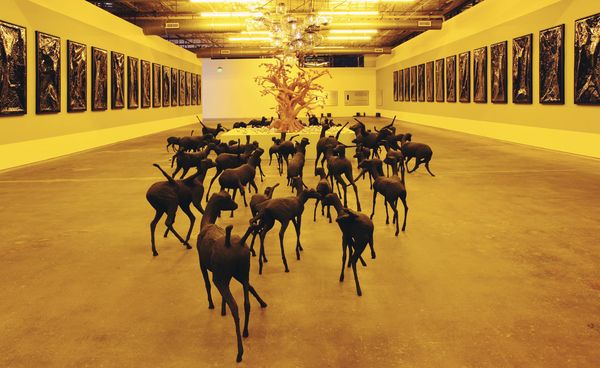
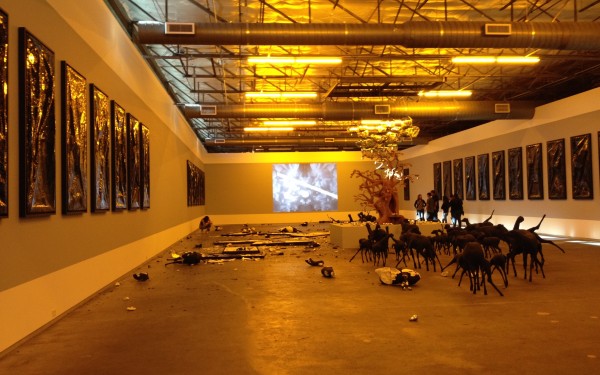
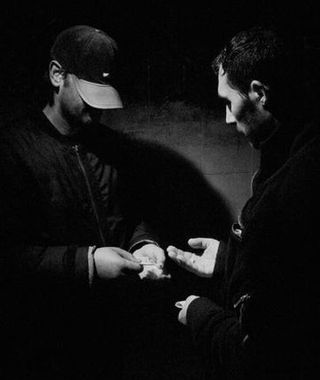
Loris Gréaud. The Unplayed Notes Museum. 2015

“What exactly will happen during the opening on Saturday? “If I tell you too much,” the artist says, following something like secret-agent protocol, “It will kill the idea.””


“On the evening of Saturday, January 17, the artist Loris Gréaud opened The Unplayed Notes Museum, his solo exhibition at the Dallas Contemporary, to a private audience—and then immediately destroyed it. A riot, choreographed by Gréaud and carried out by actors, stuntmen, and museum security, broke out that left the show in pieces, patrons in the parking lot, and the museum in complete darkness.”

IMG_1353-2-600x375

More here , here, and here.

Sunday, February 22, 2015

The Boys Who Loved Birds

Phil McKenna in The Big Roundtable:

ScreenHunter_1022 Feb. 22 18.54“In this area you should go just behind me,” the stout man says, the th of his this buzzing like a bee. Then, as if to reassure me, he adds, “I’ve been here before, with other colleagues and journalists, and no one died.” I’ve traveled here, to the former Iron Curtain, still studded with the occasional land mine, in pursuit of a love story. It’s an improbable tale about two boys, a friendship, and a passion for birds.

Twenty-five years earlier, in 1989, the man in front of me had hatched a plan to transform the former no-man’s land that separated Western Europe from the Eastern Bloc into an eco-corridor running through the heart of Europe. It was a preposterous idea. The Iron Curtain had been just that—a series of steel-reinforced barriers. Electrified fences, razor wire, land mines, trip lines, and machine guns: If it could stop, maim, or kill you, the Soviets put it there. Not exactly “eco.”

What’s more, the corridor would bisect one of the most heavily settled and fully domesticated continents on earth. Central Europe’s ecosystems have been so thoroughly reduced that locals don’t even bother hanging window screens.

Yet if returning lynx, wolves, and other wildlife are any indicator, it might just work. If it does, the European Green Belt, as proponents call it, will be one of the greatest conservation success stories of all time.

More here.

The Joyful, Gossipy and Absurd Private Life of Virginia Woolf

Emma Woolf in Newsweek:

ScreenHunter_1021 Feb. 22 18.45“I caused some slight argument with Leonard this morning by trying to cook my breakfast in bed. I believe, however, that the good sense of the proceeding will make it prevail; that is, if I can dispose of the eggshells.” (13 January 1915)

So wrote Virginia Woolf 100 years ago, musing on her latest domestic experiment. This attempt to cook eggs in bed was a light interlude in what was to become one of the worst years of her life. Reading her letters and diaries recently in the London Library, I discovered a more playful side to the modernist writer, who we have come to think of as stern, humourless, even tortured. Virginia’s daily journal and correspondence reveal a sensitive, perceptive young woman who loved a “debauch of gossip” with her friends. And this time in her life, January and February 1915, was a precious lull before the storm: one month later she plunged into a nervous breakdown so severe that she lost the rest of 1915.

Sadly, these breakdowns were nothing new. The sudden death of her mother from rheumatic fever in 1895 had provoked Virginia’s first breakdown at the age of 13. Her father’s death in 1904 triggered her second collapse; her nephew and biographer Quentin Bell wrote: “All that summer she was mad.” She also endured the death of her half-sister Stella in 1897 and her beloved brother Thoby in 1907; the repeated bereavements took their toll on her mental health. Virginia’s third breakdown in 1913, aged 31, occurred less than a year after her marriage to Leonard Woolf.

More here.

Nostalgia Just Became a Law of Nature

Simon Dedeo in Nautilus:
ScreenHunter_1020 Feb. 22 18.42John Ruskin called it the pathetic fallacy: to see rainstorms as passionate, drizzles as sad, and melting streams as innocent. After all, the intuition went, nature has no human passions.

Imagine Ruskin’s surprise, then, were he to learn that the mathematics of perception, knowledge, and experience lie at the heart of modern theories of the natural world. Quite contrary to his stern intuition, quantitative relationships appear to tie hard, material laws to soft qualities of mind and belief.

The story of that discovery begins with the physicist Ludwig Boltzmann, soon after Ruskin coined his phrase at the end of the 19th century. It was then that science first strived, not for knowledge, but for its opposite: for a theory of how we might ignore the messy details of, say, a steam engine or chemical reaction, but still predict and explain how it worked.

Boltzmann provided a unifying framework for how to do this nearly singlehandedly before his death by suicide in 1906. What he saw, if dimly, is that thermodynamics is a story not about the physical world, but about what happens when our knowledge of it fails. Quite literally: A student of thermodynamics today can translate the physical setup of a steam engine or chemical reaction into a statement about inference in the face of ignorance. Once she solves that (often simpler) problem, she can translate back into statements about thermometers and pressure gauges.

The ignorance that Boltzmann relied upon was maximal: Whatever could happen, must happen, and no hidden order could remain. Even in the simple world of pistons and gases, however, that assumption can fail. Push a piston extremely slowly, and Boltzmann’s method works well. But slam it inward, and the rules change. Vortices and whirlpools appear, streams and counter-streams, the piston stutters and may even stall.

More here.

Sunday Poem

—From the Washington Post – November 13, 1980:

“It defies the laws of orbital mechanics as I understand them but two components of the fifth ring out are braided,” said Dr. Bradford Smith of the University of Arizona, one of the scientists gathered at the Jet Propulsion Laboratory to study photographs being transmitted from [Voyager I]. “If the distribution of these braids is uniform around the entire ring then there are as many as 1,000 braids in the ring.”

Not only is the fifth ring in braids, Smith said, but the 500-mile long braids appear to have kinks in them. Smith said that as bizarre as the braids are the kinks are even more bizarre. “If you look closely, you see abrupt bends in the braids, as if somebody took the surface and bent it,” Smith said. “I don't even pretend to understand what this means.”


Don't Even Pretend
.

Saturn's rings was all nappy

spread out from her head

like she just woke up

took a shower & aint dried them yet

dread locks

cluttered with moons/meteors/mysteries

so God, She said:

“girl…now you know

I can't let you be orbiting round me

looking like that. suppose we have company.

what they gon think of me?”

God took off from work

unscrewed Her Afro Sheen jar

washed Her comb & pick

sat under constellations

& told Saturn to sit on the space

between Her legs.

Read more »

The Evolution Catechism

Adam Gopnik in The New Yorker:

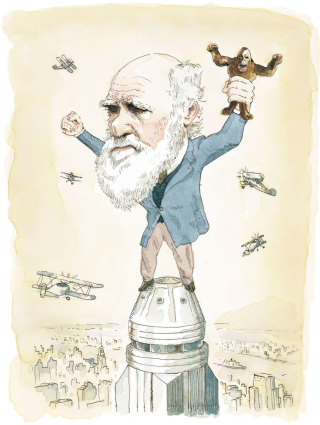
Gopnik-Republicans-Evolution-320Darwin Day, February 12th, passed last week without much fuss, even from those of us who have written at length about the man it honors. Celebrating Charles Darwin’s birthday has some of the vibe of Linus waiting for the Great Pumpkin—there’s a hope, and a ritual, but it can be pretty lonely. There was, however, one striking sort of counter-ceremony: the Wisconsin governor and would-be Republican Presidential candidate Scott Walker, asked, in London, if he “believed in evolution,” took a pass. “I’m going to punt on that one as well,” he said. “That’s a question a politician shouldn’t be involved in one way or the other.”

It does seem slightly odd to ask a man running for President—or, for that matter, for dogcatcher—to recite a catechism on modern science. It somehow puts one in mind of the stern and classic catechism of the Catholic Church, and the questions posed, in memorably ironic form, in “The Godfather,” when Michael Corleone attends his godson’s christening even as his boys are killing the heads of rival families. The priest asks, “Do you renounce Satan … and all his works?” Michael responds, “I do renounce them,” even as he doesn’t. One hears a British voice similarly demanding such things of American politicians: “Do you believe in an expanding universe with a strong inflationary instance in the first micro-seconds?” “I do so believe.”

But the notion that the evolution question was unfair, or irrelevant, or simply a “sorting” device designed to expose a politician as belonging to one cultural club or another, is finally ridiculous. For the real point is that evolution is not, like the Great Pumpkin, something one can or cannot “believe” in. It just is—a fact certain, the strongest and most resilient explanation of the development of life on Earth that there has ever been.

More here.

“Niggerization of America” – Cornel West

The fundamental irony of American history is that we follow the better angels of our nature when we honestly and compassionately confront the devilish realities we would like to ignore or deny. The founding of this most American of periodicals was motivated, in part, by a courageous resistance against the American institution of white- supremacist slavery. We must never forget that when this grand intellectual forum was established, the precious U.S. Constitution was, in practice, a pro-slavery document. To put it clearly yet crudely, the deep democratization of America was pitted against the ugly niggerization in America.

More here. (Note: One post throughout February will be dedicated to Black History Month.)

Through the looking glass: Shahzia Sikander, Pakistan’s most celebrated global icon of the arts

Raza Rumi in The Friday Times:

ShahziaIt is a pity that I got to discover Shahzia Sikander’s work only when I left Pakistan. After her initial successes in the 1990s, with her migration to the United States, she slowly disappeared from the local art scene and the narratives within her country of birth, almost rendered invisible, like the mythical characters one reads in the folklore. In a different country, she would be celebrated for being a global icon, intensely original and gifted. Not in her country of birth where talent is subjugated to the cliques that define ‘excellence’ and where history has to be doctored to make the present legible and comfortable.

…Sikander’s two decades of practice has seen three distinct phases: first pushing the boundaries of miniature and subverting the tradition; second the early 2000s where she distanced from the form but not its essence and delved into larger questions of global relevance. Her third and more recent phase is turning her art practice into a three dimensional endeavour where the form holds a dialogue with the content, the artist engages in a discourse with her medium; and the viewer is pulled into that conversation. This is reflected in her recent works such as Parallax and ‘The cypress despite its freedom is held captive by the garden’ based on a dilapidated cinema Khorfakkan and a Pakistani labourer. This amazing repertoire, unmatched by any artist of her generation, is nearly invisible in her own country. As Faisal Devji wrote last year in a hard-hitting piece entitled ‘Little Dictators’: “Sikander’s pioneering work is under threat, being routinely censored…”. Devji cited two books – Modernism and the Art of Muslim South Asia and Art and Polemic in Pakistan (by Iftikhar Dadi) Cultural Politics and Tradition in Contemporary Miniature Painting (by Virginia Whiles) that ignored the ‘foundational character’ of Sikander’s work. These are two major art histories of Pakistan and both omit Sikander’s vital contribution to contemporary Pakistani art at home and abroad. Devji added, “..If anyone can break this stranglehold on the narrative of Pakistan’s cultural history, it is Sikander, who achieved global fame in the pre-9/11 world and whose work is not over-determined by the “war on terror,” itself now an aesthetic commodity.”

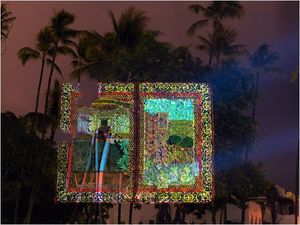
Picture: Unseen, 2011-2012, Outdoor Projection at Doris Duke’s ShangriLa, Honolulu, Hawaii.

More here.

Saturday, February 21, 2015

The Price of Black Ambition

ScreenHunter_1019 Feb. 22 12.56

Roxane Gay in the Virginia Quarterly Review:

I am thinking about success, ambition, and blackness and how breaking through while black is tempered by so much burden. Nothing exemplifies black success and ambition like Black History Month, a celebratory month I’ve come to dread as a time when people take an uncanny interest in sharing black-history facts with me to show how they are not racist. It’s the month where we segregate some of history’s most significant contributors into black history instead of fully integrating them into American history. Each February, we hold up civil-rights heroes and the black innovators and writers and artists who have made so much possible for this generation. We say, look at what the best of us have achieved. We conjure W. E. B. Du Bois, who once wrote, “The Negro race, like all races, is going to be saved by its exceptional men.” We ask much of our exceptional men and women. We must be exceptional if we are to be anything at all.

Black History Month is important and a corrective to so much of America’s fraught racial history. But in the twenty-first century, this relegating of black ambition to one month of recognition feels constraining and limiting rather than inspirational.

In the Atlantic, Ta-Nehisi Coates published an essay about President Barack Obama and the tradition of black politics that reached me in a vulnerable place. Coates writes of the president’s ascension: “He becomes a champion of black imagination, of black dreams and black possibilities.” In that same essay, Coates also writes about how the narrative of personal responsibility is a false one that is, unfortunately, often parroted by our president, our brightest shining star, Barack Obama, the first black president of the United States. At the end of his essay, Coates writes, “But I think history will also remember his [Obama’s] unquestioning embrace of ‘twice as good’ in a country that has always given black people, even under his watch, half as much.”

More here.

In Defense of Islam

Ross Douthat in the New York Times:

Consider this post a kind of complement, maybe, to my anti-anti-Crusades commentary of late. The big foreign policy piece that everyone is talking about this week, and deservedly, is Graeme Wood’s deep Atlantic dive into the religious premises underpinningthe Islamic State’s vision and grand strategy. Wood’s argument is rich enough to defy easy summary, but his core point is that Western analysts tend to understate not only the essential religiosity of ISIS’s worldview, but the extent to which that worldview has substantial theological grounding. It isn’t just a few guys making up a cult out of random bits of scripture; its political-religious vision appeals precisely because it derives “from coherent and even learned interpretations of Islam.” And we ignore the coherence of those interpretations at our peril: The Islamic State’s “intellectual genealogy” is intensely relevant to its political strategy, and its theology “must be understood to be combatted.”

As a longstanding believer in a “theology has consequences”approach to world history and current affairs, I agree with all of this … but I would append an important qualifier as well. Specifically, in taking Islamic-State theology seriously as a form of Islamic thought, we also need to take seriously the Islamic case against ISIS, and the reasons why the soi-disant caliphate’s interpretation of its faith, however internally coherent and textually-rooted, represents a stark departure from the way the faith has been traditionally interpreted and widely understood.

More here.

The Silk Road might have started as a libertarian experiment, but it was doomed to end as a fiefdom run by pirate kings

Henry Farrell in Aeon:

ScreenHunter_1017 Feb. 21 18.22The Hidden Wiki holds the keys to a secret internet. To reach it, you need a special browser that can access ‘Tor Hidden Services’ – websites that have chosen to obscure their physical location. But even this browser isn’t enough. Like the Isla de Muerta in the film Pirates of the Caribbean, the landmarks of this hidden internet can be discovered only by those who already know where they are.

Sites such as the Hidden Wiki provide unreliable treasure maps. They publish lists of the special addresses for sites where you can use Bitcoin to buy drugs or stolen credit card numbers, play strange games, or simply talk, perhaps on subjects too delicate for the open web. The lists are often untrustworthy. Sometimes the addresses are out-of-date. Sometimes they are actively deceptive. One link might lead to a thriving marketplace for buying and selling stolen data; another, to a wrecker’s display of false lights, a cloned site designed to relieve you of your coin and give you nothing in return.

This hidden internet is a product of debates among technology-obsessed libertarians in the 1990s. These radicals hoped to combine cryptography and the internet into a universal solvent that would corrupt the bonds of government tyranny. New currencies, based on recent cryptographic advances, would undermine traditional fiat money, seizing the cash nexus from the grasp of the state. ‘Mix networks’, where everyone’s identity was hidden by multiple layers of encryption, would allow people to talk and engage in economic exchange without the government being able to see.

More here.

Fast-Evolving Human DNA Leads to Bigger-Brained Mice

Ed Yong in Not Exactly Rocket Science:

MouseEmbryo-990x609Between 5 and 7 million years of evolution separate us humans from our closest relatives—chimpanzees. During that time, our bodies have diverged to an obvious degree, as have our mental skills. We have created spoken language, writing, mathematics, and advanced technology—including machines that can sequence our genomes. Those machines reveal that the genetic differences that separate us and chimps are subtler: we share between 96 and 99 percent of our DNA.

Some parts of our genome have evolved at particularly high speed, quickly accumulating mutations that distinguish them from their counterparts in chimps. You can find these regions by comparing different mammals and searching for stretches of DNA that are always the same, except in humans. Scientists started identifying these “human-accelerated regions” or HARs about a decade ago. Many turned out to be enhancers—sequences that are not part of genes but that control the activity of genes, telling them when and where to deploy. They’re more like coaches than players.

It’s tempting to think these fast-evolving enhancers, by deploying our genes in new formations, drove the evolution of our most distinguishing traits, like our opposable thumbs or our exceptionally large brains. There’s some evidence for this. One HAR controls the activity of genes in the part of the hand that gives rise to the thumb. Many others are found near genes involved in brain development, and at least two are active in the growing brain. So far, so compelling—but what are these sequences actually doing?

To find out, J. Lomax Boyd from Duke University searched a list of HARs for those that are probably enhancers. One jumped out—HARE5. It had been identified but never properly studied, and it seemed to control the activity of genes involved in brain development. The human version differs from the chimp version by just 16 DNA ‘letters’. But those 16 changes, it turned out, make a lot of difference.

More here.

The Case of Georges Simenon

22BRADFIELD3-master315-v2Scott Bradfield at the New York Times:

In many ways, the Maigrets were a sort of comfort food — the books that Simenon wrote to recover from the physical and psychological stress of writing his better, and far less comforting, novels. In these non-Maigret “thrillers,” often referred to as the romans durs (but to most aficionados known simply as the “Simenons”), the central, usually male character is lured from the stultifying cocoon of himself — and his suburban, oppressively Francophile (and often mother-dominated) life — into a wider, vertiginous world of sexual and philosophical peril, where violence, whether it occurs or only threatens to occur, feels like too much freedom coming at a guy far more quickly than he can handle.

Even though Simenon was widely published, and translated, in his lifetime, there still seem to be some very good “serious” books — like “The Mahé Circle,” which recently received its first English translation — falling loose from forgotten cupboards and laundry hampers. That novel’s Dr. Mahé is the quintessential Simenon protagonist: Raised in a provincial village, overshadowed by a local-legend father who died showing how far he could lift and carry a horse, and hemmed in by the always disapproving eyes of his family and neighbors, he discovers his first taste of existential freedom on holiday in the Porquerolles, where he falls in love (or in fascination) with a bohemian teenage girl in a red dress.

more here.

Human rights under international law

9c3d93b8-ceed-404b-ae5c-b7c09f45db5cPhilippe Sands at the Financial Times:

In the spring of 1945, governments came together to remake the world. Within a few years a new international legal architecture was in place, constructed on the pillars of economic liberalisation, limits on the use of force and the protection of human rights. That last idea, reflected in the UN Charter, drew on various sources including Magna Carta (1215), the French Declaration of the Rights of Man and of the Citizen (1789) and the US Bill of Rights (1791). But its effect was truly novel, upending the convention that states could do more or less as they wished within their own borders.

It may seem remarkable today but, back in the 1930s, Germany was free under international law to mistreat its own citizens, even to kill them, because they were Jewish or communist or gay or disabled. This was the world that jurists such as Hersch Lauterpacht, author of the groundbreaking book An International Bill of the Rights of Man (1945), sought to banish. The hope that the individual might become “the ultimate unit of all law”, as Lauterpacht put it, would underpin the 1948 Universal Declaration of Human Rights, which proclaimed a non-binding list of “inalienable rights of all members of the human family”; it would form a basis, too, for the binding European Convention on Human Rights that followed a couple of years later.

more here.

Mohsin Hamid’s ‘Discontent and Its Civilizations,’

La-ca-jc-mohsin-hamid-20150222-002David L. Ulin at the LA Times:

We're not accustomed to considering Pakistan with such subtlety, at least not in the United States. As such, “Discontent and its Civilizations” is at its best when Hamid takes time to deconstruct our preconceptions, as in the long essays “Why They Get Pakistan Wrong” — which reminds us that “[t]he country's annual death toll from terrorist attacks rose from 164 in 2003 to 3,318 in 2009, a level exceeding the number of Americans killed on September 11” — and “Why Drones Don't Help,” with its explication of the blowback provoked by our policies.

“To turn on one's TV's in Pakistan is to find oneself entering a world permeated with conspiracy theories,” he writes, before turning the argument on us: “Conspiracy theorists have numerous examples they can cite in support of their positions. But perhaps none is as emotionally potent as the claim that flying robots from an alien power regularly strike down from the skies and kill Pakistani citizens. In the U.S., such a claim would be science fiction or paranoid survivor cultism of the furthest fringe-dwelling kind. In Pakistan, it is real.”

more here.