on the bus

59bf97503d9a90baaac98ae07ff694a7_400x400Clifford Thompson at Threepenny Review:

The book, which my older brother had brought along, was Tim Brooks and Earle Marsh’s The Complete Directory to Prime-Time TV Shows,1946–Present. Here were articles, ranging from a paragraph to a page or two, about every evening television show I had ever watched—and baby, I had watched a lot of them—plus many, many more I hadn’t seen or even heard of. Here were Gilligan’s Island, M*A*S*H, The Mary Tyler Moore Show, Good Times, and all the other programs I had actively viewed or had on in the background while I did my homework or played with my toys. Here were the sources of those flickering blue images (these were the last days of black-and-white TV) that infused the atmosphere of our little semi-detached brick house like dust mites, like the air itself. The articles recounted the shows’ premises, described the characters, and, in many cases, gave critical analyses. Reading the analyses was like looking down from a helicopter at the street where I’d lived my whole life, seeing utterly familiar things from a brand-new angle. In the entry about Sanford and Son, the sitcom about a cantankerous, ailing, sixty-five-year-old junk dealer and his resentful, complaining thirty-year-old son and caretaker, I read that the son, Lamont—I am quoting all this from memory—“would never have left the old man.” No, come to think of it, I guess he wouldn’t have! “Although it was never thrown out at the audience,” I read about the warm, attractive, single main character of The Mary Tyler Moore Show, Mary “could spend the night with a man she wasn’t in love with.” I had never thought to put it that way, but yes, that was probably right!

more here.

Wednesday, March 4, 2015

Internationalizing human rights

Ken Roth in Open Democracy:

ScreenHunter_1049 Mar. 04 18.17The partnership between international and national groups has always had its moments of difficulty—misunderstandings born of different perspectives, priorities and resources. But the typical geographic divide between the two types of groups has usually led to a natural and healthy division of labor.

Several factors are now challenging this equilibrium. To begin with, the largest international groups are placing more of their staff outside the West. Human Rights Watch, for example, has long sought to locate researchers in the countries that they address.

Moreover, long gone are the days when international groups are presumptively staffed by Westerners. The people conducting research and advocacy around the world are increasingly likely to be from the country in which they are based—native speakers of the country’s language who are fully immersed in its culture. That staff diversity eases communication between international and national groups and ensures that international groups are informed of national concerns not only through external partnerships but also through internal discussions.

In addition, as certain governments outside the West grow in influence, Human Rights Watch is making a greater effort to influence their human rights policies not only at home but also in their relations with other governments, much as we have traditionally worked to influence the foreign policies of the major Western powers. Meanwhile, human rights groups based outside the West are themselves growing in stature and skill, and like Conectas in Brazil, are increasingly interested in addressing human rights issues beyond their national borders.

More here.

The Case Against Early Cancer Detection

Christie Aschwanden in FiveThirtyEight:

ScreenHunter_1048 Mar. 04 17.48South Korea has a thyroid cancer problem. Incidence of the disease there has climbed 15-fold over the past 20 years — faster than any other cancer worldwide.

South Korea also has a thyroid cancer diagnosis problem. In a studypublished this month in the New England Journal of Medicine, researchers identified the cause of the country’s alarming epidemic: South Korea’s high-tech health care system. A national cancer screening program started in 1999 provides free screening for several common cancers, and thyroid cancer screenings are widely offered as a cheap add-on. As a result, the number of Koreans getting screened for thyroid cancer has soared.

That might sound great. But the good news about this epidemic — death rates from thyroid cancer have remained flat (and low), despite the skyrocketing number of diagnoses — is also the bad news. Ideally, screenings should lead to a decrease in cancer deaths. But not in South Korea.

In 2011, 40,000 South Koreans were diagnosed with the disease — more than 100 times the number of people there who die from it each year. The huge influx of new cases consists almost entirely of papillary thyroid cancers, an early-stage variety found in about one-third of all adults without symptoms. The idea behind screening is to find and treat early-stage cancers, preventing them from becoming deadly. When it works, the number of advanced cases and deaths go down as early diagnoses rise…

More here.

Inheritance of Anger

Robert Minto in Open Letters Monthly:

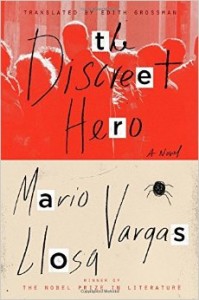
MarioMario Vargas Llosa’s father was a cruel man who abandoned Mario and his mother for ten years and then returned to tyrannize them. Vargas Llosa became a writer in order to annoy him. In his memoir A Fish in the Water he writes,

It is probable that without my progenitor’s contempt for literature I would never have pursued so obstinately what at the time was a game, but was gradually to turn into an obsessive and pressing need: a vocation.

But is the struggle of a son with his father an honorable source of direction for life? Or does Vargas Llosa’s origin story undermine his whole life’s work by identifying it with childish rebellion? In his new book The Discreet Hero, he seems to be wrestling with this problem. The Discreet Hero is two stories told in alternating chapters which intersect only in seemingly unimportant ways but really serve the purpose of commenting on shared themes. In Letters to a Young Novelist, he calls this structure by the odd term “communicating vessels.” He names it one of just three or four of the “primary techniques” of novel writing: a clue to any reader of his own novels about just how seriously he takes the doubled narrative. The other clue is that fact that he’s used the technique over and over again, even in his autobiography (which splices the story of his boyhood together with the story of his campaign to become President of Peru).

…In The Discreet Hero, the very tool Vargas Llosa uses for the analysis of power is turned on his own power by examining what is for him the foundational struggle of the vocation for literature. Would the healthy outcome for him have been, back when he first began to write, to confess to his father that it was all a lie, and never to write again, like Fonchito and Edilberto Torres? This is the kind of earnest reflection a literary mind conducts at the age of 79. It is a reason to read The Discreet Hero on its own account and — especially — as self-reflection on the origins of a great artist. I, for one, am glad Mario hated his father.

More here.

What Does Quantum Mechanics Suggest About Our Perceptions of Reality?

Hans Halvorson in Big Questions Online:

ScreenHunter_1047 Mar. 04 13.38Quantum mechanics suggests that we perceive at most a tiny sliver of reality. Of course we already knew that! We knew that the visible spectrum is only a small part of the spectrum of electromagnetic radiation. We knew that the universe is much, much larger than our ancestors believed. And we already knew that we are made of things that are too small for our eyes to see. So how is it news that we only perceive a tiny sliver of reality?

It’s news because quantum mechanics says that the part of reality that we do not perceive is radically different than the part of the world that we do perceive. The difference is so profound that we still don’t fully understand how to talk about quantum reality. There doesn’t seem to be any direct analogy between quantum reality and the reality we perceive with our senses.

Before I explain the gap between our perceptions and reality, I want to state that I completely disagree with the idea that quantum mechanics forces us to accept an idealist view of reality. Idealism says that the physical universe is made out of our perceptions – in other words, out of spiritual reality. Several early interpreters of quantum mechanics thought that it supported this idealistic understanding of reality. Why would they have thought this? The reason, quite simply, is that they didn’t know how to cope with the issue of quantum indeterminacy.

More here.

Cancer risk linked to DNA ‘wormholes’

From KurzweilAI:

DnaSingle-letter genetic variations within parts of the genome once dismissed as “junk DNA” can increase cancer risk through remote effects on far-off genes, new research by scientists at The Institute of Cancer Research, London shows.The researchers found that DNA sequences within “gene deserts” — so called because they are completely devoid of genes — can regulate gene activity elsewhere by forming DNA loops across relatively large distances. The study helps solve a mystery about how genetic variations in parts of the genome that don’t appear to be doing very much can increase cancer risk. Their study, published in Nature Communications, also has implications for the study of other complex genetic diseases.

The researchers developed a technique called Capture Hi-C to investigate long-range physical interactions between stretches of DNA – allowing them to look at how specific areas of chromosomes interact physically in more detail. The researchers assessed 14 regions of DNA that contain single-letter variations previously linked to bowel cancer risk. They detected significant long-range interactions for all 14 regions, confirming their role in gene regulation. “Our new technique shows that genetic variations are able to increase cancer risk through long-range looping interactions with cancer-causing genes elsewhere in the genome,” study leader Professor Richard Houlston, Professor of Molecular and Population Genetics at The Institute of Cancer Research, London said. “It is sometimes described as analogous to a wormhole, where distortions in space and time could in theory bring together distant parts of the universe.”

More here.

A Short History of Fairy Tale

Manguel_02_15Alberto Manguel at Literary Review:

How then can we explain our fascination with fairy tales, everywhere and always? Why do we enjoy the promise of 'Long, long ago, in a far-off land'? Why do we want to hear, again and again, the sagas of beautiful princesses, valiant heroes, crafty animals who can speak, voracious wolves and hairy ogres, kind crones and evil witches? Marina Warner's elegantly concise answer is: 'fairy tales express hopes'.

Warner is a longtime explorer of Fairyland. Her seminal book on the subject, From the Beast to the Blonde, was first published two decades ago, followed four years later byNo Go the Bogeyman, which expanded her research into the realm of ghosts and goblins. Now she has pulled together her thoughts in a 200-page fairy-size hardback titled, obviously, Once Upon a Time. It is a remarkable achievement.

Warner suggests that there are four characteristics that define a veritable fairy tale: first, it should be short; second, it should be (or seem) familiar; third, it should suggest 'the necessary presence of the past' through well-known plots and characters; fourth, since fairy tales are told in what Warner aptly calls 'a symbolic Esperanto', it should allow horrid deeds and truculent events to be read as matter-of-fact. If, as Warner says, 'the scope of a fairy tale is made by language', it is through language that our unconscious world, with its dreams and half-grasped intuitions, comes into being and its phantoms are transformed into comprehensible figures like cannibal giants, wicked parents or friendly beasts.

more here.

the Afterlife in Popular Imagination

2015_08_books_leadJohn Gray at The New Statesman:

The afterlife appears in mass media in many guises. Garrett covers depictions of heaven, hell, purgatory and a range of in-between states, including the one occupied by the undead. In zombie movies all of humankind is threatened with death of a peculiarly horrible kind. Ghost stories rely on the possibility that something of human intelligence persists after the dissolution of the body, while tales of vampires intimate that intelligent life can last for ever for those who subsist on human blood. In Shaun of the Dead and 28 Days Later, death means the opposite of intelligent life: “Whatever we were before, our souls, our memories, those things that make us human, vanish – but our bodies, our disgusting, dead, decaying bodies, will go on consuming long after our souls have departed them.” It might be objected that these stories of zombies aren’t about the afterlife. What zombie stories depict is not another world but an apocalyptic transformation of life on earth.

In that respect, however, these stories hark back to the original teachings of Jesus. As Garrett observes, “There is almost nothing in the Bible about going to heaven and still less about hell.”

more here.

Against Self-Criticism

Le_cigare_de_lacanAdam Phillips at The London Review of Books:

Lacan said that there was surely something ironic about Christ’s injunction to love thy neighbour as thyself – because actually, of course, people hate themselves. Or you could say that, given the way people treat one another, perhaps they had always loved their neighbours in the way they loved themselves: that is, with a good deal of cruelty and disregard. ‘After all,’ Lacan writes, ‘the people who followed Christ were not so brilliant.’ Lacan is here implicitly comparing Christ with Freud, many of whose followers in Lacan’s view had betrayed Freud’s vision by reading him in the wrong way. Lacan could be understood to be saying that, from a Freudian point of view, Christ’s story about love was a cover story, a repression of and a self-cure for ambivalence. In Freud’s vision we are, above all, ambivalent animals: wherever we hate we love, wherever we love we hate. If someone can satisfy us, they can frustrate us; and if someone can frustrate us we always believe they can satisfy us. And who frustrates us more than ourselves?

Ambivalence does not, in the Freudian story, mean mixed feelings, it means opposing feelings.

more here.

Wednesday Poem

The Day Nothing Happened

On that day in history, history
took a day off. Current events
were uneventful. Breaking news
never broke. Nobody
of any import was born, or died.
(If you were born that day,
bask in the inverted glory
of your unimportance.)
No milestones, no disasters.
The most significant thing going on
was a golf tournament (the Masters).

It was a Sunday. In Washington,
President Eisenhower
(whose very name induces sleep)
practiced his putt
on the carpet of the Oval Office,
a little white ball crossing
and recrossing the presidential seal
like one of Jupiter’s moons
or a hypnotist’s watch.
On the radio, Perry Como
was putting everyone into a coma.

But the very next day,
in New York City,
Bill Haley & His Comets
recorded “Rock Around the Clock;”
and a few young people
began to regain consciousness …
while history, like Polyphemus
waking from a one-day slumber,
stumbled out of his cave,
blinked his giant eye, and peered around
for something to destroy.
.

by Jeffrey Harrison
from Into Daylight, © Tupelo Press, 2014.

Tuesday, March 3, 2015

Is liberal Islam the answer?

If Islam needs to be seen through the eyes of the West in order to make sense of itself, how can it find the space for transformation on its own terms?

Zaheer Kazmi in Open Democracy:

ScreenHunter_1045 Mar. 04 11.14Launching a global summit against ‘violent extremism’ in Washington last month, President Obama employed the now familiar language of winning Muslim ‘hearts and minds.’ The meeting was the latest in a long line of similar Western policy initiatives reaching back well over a decade. Calling attention to “a twisted interpretation of religion that is rejected by the overwhelming majority of the world's Muslims” in a Los Angeles Times Op-Ed, Obama exhorted the world to “continue to lift up the voices of Muslim clerics and scholars who teach the true peaceful nature of Islam.” This was needed to counter rampant global terror in the name of a perverted vision of Islam, from Al Qaeda and Islamic State (IS), to Al Shabaab, Boko Haram, and homegrown attacks in North America and Europe.

As if to anticipate the superfluity of Obama’s appeals to amplify the voices of Muslim moderates, Muslims have overwhelmingly stood alongside their fellow citizens to denounce the brutal killings of satirists and Jews in Paris and Copenhagen. Such wanton carnage requires nothing less than unified condemnation from us all. On the day of the Charlie Hebdo murders, Tariq Ramadan, the prominent academic and activist who is often the nub of Islamophobic attacks, immediately took to Twitter with an unequivocalstatement about the assassins’ “betrayal” of Islamic values. His words were accompanied by a now familiar chorus of calls proclaiming that Islam is not extreme but, in fact, quintessentially liberal.

More here.

Inside the mind of Machiavelli

Christopher S. Celenza in Salon:

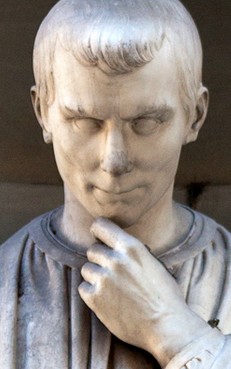
ScreenHunter_1041 Mar. 03 21.07Clues concerning Machiavelli’s thinking as to his own immediate personal path lie in one of the Italian Renaissance’s most beautiful—and in some ways most deceiving—letters, which he wrote to his friend Vettori on December 10, 1513. There had been a brief interruption in their correspondence, one that left Machiavelli concerned. But upon receiving Vettori’s latest letter Machiavelli is “most pleased,” he says, and since he has no news to report resolves to send Vettori an account of what his life in exile is like. “I am on my farm, and I haven’t been in Florence for more than twenty days, total, since my recent problems.” Machiavelli spent about a month hunting thrushes—“two at least, at most six”—each day. After this diversion ended, Machiavelli settled into a routine: “In the mornings I rise with the sun, and I go to one of my woods that I am having cleared, where I stay for two hours to look over the work done the day before and to spend some time with the woodsmen. They are always in the middle of some argument, either among themselves or with the neighbors.” Machiavelli mixes and mingles with people of all classes, even as he listens to and participates in arguments. This fact was probably unsurprising to Vettori, knowing his friend as he did, even as it might seem surprising to connoisseurs of “high” literature.

“After I leave the woods, I go to a spring, and thereafter to a place where I hang my bird nets. I have a book with me— Dante, or Petrarch, or a minor poet, like Tibullus, Ovid, or other ones of that sort. I read about their romantic passions, their love affairs, and I remember my own, taking pleasure for a while in those thoughts.” From the social to the solitary: this seems to be the second phase of his day, where repeated reading of a light classic, something that he already has read many times but to which he willingly returns, allows him to reflect on his own life. After this diversion and care of the soul comes more interactivity: “Then I take to the road, on the way to the inn. I chat with people who pass by, ask them about the news where they live, learning this and that, and I take note of the diverse taste and imaginings of men.” Machiavelli’s curiosity and, again, his proto-anthropological sensibility, is on display here.

More here.

Confessions of a Comma Queen

Mary Norris in The New Yorker:

150223_r26149-320I didn’t set out to be a comma queen. The first job I ever had, the summer I was fifteen, was checking feet at a public pool in Cleveland. I was a “key girl”—“Key personnel” was the job title on my pay stub. I never knew what that was supposed to mean. I was not in charge of any keys, and my position was by no means crucial to the operation of the pool, although I did clean the bathrooms. Swimmers had to follow an elaborate ritual before getting into the pool: tuck your hair into a hideous bathing cap (if you were a girl), shower, wade through a footbath spiked with disinfectant that tinted your feet orange, and stand in line to have your toes checked. This took place at a special wooden bench, like those things that shoe salesmen use, except that instead of a miniature sliding board and a size stick for the customer’s foot it had a stick with a foot-shaped platform on top. The prospective swimmer put one foot at a time on the platform and, leaning forward, used his fingers to spread out his toes so that the foot checker could make sure he didn’t have athlete’s foot. Only then could he pass into the pool. I have never heard of foot checkers in any city besides Cleveland.

More here.

Why Our Children Don’t Think There Are Moral Facts

Justin P. McBrayer in the New York Times:

ScreenHunter_1040 Mar. 03 20.41What would you say if you found out that our public schools were teaching children that it is not true that it’s wrong to kill people for fun or cheat on tests? Would you be surprised?

I was. As a philosopher, I already knew that many college-aged students don’t believe in moral facts. While there are no national surveys quantifying this phenomenon, philosophy professors with whom I have spoken suggest that the overwhelming majority of college freshman in their classrooms view moral claims as mere opinions that are not true or are true only relative to a culture.

What I didn’t know was where this attitude came from. Given the presence of moral relativism in some academic circles, some people might naturally assume that philosophers themselves are to blame. But they aren’t. There are historical examples of philosophers who endorse a kind of moral relativism, dating back at least to Protagoras who declared that “man is the measure of all things,” and several who deny that there are any moral facts whatsoever. But such creatures are rare. Besides, if students are already showing up to college with this view of morality, it’s very unlikely that it’s the result of what professional philosophers are teaching. So where is the view coming from?

A few weeks ago, I learned that students are exposed to this sort of thinking well before crossing the threshold of higher education. When I went to visit my son’s second grade open house, I found a troubling pair of signs hanging over the bulletin board.

More here.

Tuesday Poem

Without You

Again, damn it, radio, television, the papers.
The powers that be, as expected, are consummate crooks.
Those back in the days at least had some fear, today’s are no better.

I’d forbid the days to pass without you,
their pitiful sum total – you don’t come,
in the morning you are not to be found even in any of the mirrors,
you don’t arrive at noontime with a purse, a vagina,
an underarm, skin, a scent, an apple –
what should I do between noon and the evening?

In the evening you also do not come.
I want to know what has happened. Maybe you were on your way here,
perhaps they were running after you, maybe they raped you.
I think they cannot not rape you.

All this is radio, television, the papers.
The day without you is my untalented loneliness.
I lie under the ceiling, I pass.
Nothing has happened anywhere, you aren’t here.

A few armed conflicts,
a couple of traitors on TV.
The dollar exchange rate grew,
no trading in rubles today.
.

by Yuri Andrukhovych
from Songs From the Dead Rooster
translation Vitaly Chernetsky

THE WISDOM OF ANNE TYLER

Maggie Fergusson in More Intelligent Life:

SpoolofbluethreadA Spool of Blue Thread by Anne Tyler, Chatto, hardback, out now. Abby Whitshank, the selfless, self-doubting mother at the heart of Anne Tyler’s 20th novel, can’t bear to think that hers is “just another muddled, discontented, ordinary family”. But apparently ordinary families are what Tyler loves best. She writes about them with involved detachment, creating characters who are flawed but endearing, and capable of occasional humdrum heroism. Moving backwards in time, she explores three generations of Whitshanks: “Junior”, who built the family’s Baltimore home in the 1930s, his son Red, Abby’s husband, and Red and Abby’s four grown-up children, who compete to take control as their parents tumble into senility. Tyler is brilliant at the hairline fractures between siblings, and the intermeshing of irritation and tenderness that makes a marriage. But the real triumph here is her portrayal of old age—droll, and desperately sad.

More here.

Arming the Immune System Against Cancer

Claudia Dreifus in The New York Times:

CONVERSATION-articleLargeJames P. Allison is the chairman of the immunology department at the University of Texas M.D. Anderson Cancer Center in Houston. His seminal research opened up a new field in cancer treatment: immunotherapy. Instead of poisoning a tumor or destroying it with radiation, Dr. Allison has pioneered ways to unleash the immune system to destroy a cancer. Two years ago, Science magazine anointed immunotherapy as the “Breakthrough of the Year.” More recently, Dr. Allison, 66, won the Louisa Gross Horwitz Prize, often a precursor to a Nobel. Our conversation has been edited and condensed.

Q. The class of drugs you’ve helped invent has been hailed as one of the first truly new cancer treatments in decades. What makes it so different?

A. It’s a bit counterintuitive. Till now, most cancer treatments — radiation, surgery, chemotherapy — attacked tumors directly, with the goal of killing them. In the 1980s, my laboratory did work on how the T-cells of the immune system, which are the attack cells, latch onto the cells infected with viruses and bacteria and ultimately kill them. That research lead me to think that the immune system could be unleashed to kill cancers. Basically, I proposed that we should stop worrying about directly killing cancer cells and develop drugs to release those T-cells.

More here.

Monday, March 2, 2015