The Gorgeous Typeface That Drove Men Mad and Sparked a 100-Year Mystery

Kelsey Campbell-Dollaghan in Gizmodo:
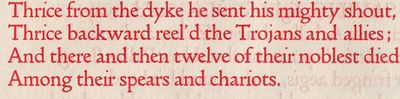
ScreenHunter_1013 Feb. 18 19.50No one seemed to notice him: A dark figure who often came to stand at the edge of London's Hammersmith Bridge on nights in 1916. No one seemed to notice, either, that during his visits he was dropping something into the River Thames. Something heavy.

Over the course of more than a hundred illicit nightly trips, this man was committing a crime—against his partner, a man who owned half of what was being heaved into the Thames, and against himself, the force that had spurred its creation. This venerable figure, founder of the legendary Doves Press and the mastermind of its typeface, was a man named T.J. Cobden Sanderson. And he was taking the metal type that he had painstakingly overseen and dumping thousands of pounds of it into the river.

As a driving force in the Arts & Crafts movement in England, Cobden Sanderson championed traditional craftsmanship against the rising tides of industrialization. He was brilliant and creative, and in some ways, a luddite—because he was concerned that the typeface he had designed would be sold to a mechanized printing press after his death by his business partner, with whom he was feuding.

So, night after night, he was making it his business to “bequeath” it to the river, in his words, screwing his partner out of his half of their work and destroying a legendarily beautiful typeface forever. Or so it seemed.

More here.
The Math of Powerball

Ethan Siegel in Starts With A Bang:

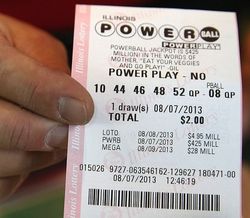
ScreenHunter_1012 Feb. 18 19.41This past week, the Powerball lottery jackpot went past $500,000,000, one of the largest sums in history, where the $564.1 million jackpot wound upbeing split by three winners. In order to win, you need to match five normallottery numbers — white balls numbered 1-through-59 — plus the Powerball: a red ball numbered 1-through-35. Each Powerball ticket costs $2, plus you have the option to pay an extra $1 to activate the power play, a multiplier that increases your payout for non-jackpot prizes.

Of course, if you win, you’ll conclude it will have been worth it, even if the payout was small, while if you lose, you’ll probably conclude that it wasn’tworth it. (Until the next drawing, of course, when you get another chance!)

But what does mathematics have to say about this? In particular:

      • What are your odds of winning each individual combination?
      • How much does each winning possibility pay out?
      • Is it worth it to activate the power play option?
      • And finally, how big does the jackpot have to be in order for playing the Powerball lottery to be “worth it”?

When you say worth it, by the way, it has a very specific meaning when it comes to mathematics. It means that the amount you can expect to win, on average, is greater than the amount you have to bet in order to play.

More here.

Islam and the West at War

Roger Cohen in the New York Times:

ScreenHunter_1011 Feb. 18 19.35After a Danish movie director at a seminar on “Art, Blasphemy and Freedom of Expression” and a Danish Jew guarding a synagogue were shot dead in Copenhagen, Helle Thorning-Schmidt, the prime minister of Denmark, uttered a familiar trope:

“We are not in the middle of a battle between Islam and the West. It’s not a battle between Muslims and non-Muslims. It’s a battle between values based on the freedom of the individual and a dark ideology.”

This statement — with its echoes of President Obama’s vague references to “violent extremists” uncoupled from the fundamentalist Islam to which said throat-cutting extremists pledge allegiance — scarcely stands up to scrutiny. It is empty talk.

Across a wide swath of territory, in Iraq, in Syria, in Afghanistan, in Pakistan, in Yemen, the West has been or is at war, or near-war, with the Muslim world, in a failed bid to eradicate a metastasizing Islamist movement of murderous hatred toward Western civilization.

To call this movement, whose most potent recent manifestation is the Islamic State, a “dark ideology” is like calling Nazism a reaction to German humiliation in World War I: true but wholly inadequate. There is little point in Western politicians rehearsing lines about there being no battle between Islam and the West, when in all the above-mentioned countries tens of millions of Muslims, with much carnage as evidence, believe the contrary.

More here.

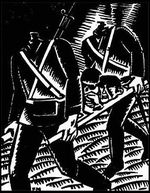
Frans Masereel’s books without words

LF_GOLBE_BKHRS_CO_001Stefany Anne Golberg at The Smart Set:

In the 1930s, when the Nazis took power in Germany, Frans Masereel’s works were almost immediately given the “degenerate” label and banned. Masereel and his wife fled to London and then Paris. During the German occupation of France, they assumed false identities and lived in hiding, traveling from town to town until the war’s end. In 1949, Masereel settled in the old port in Nice, where he lived quietly until his death in 1972.

War, affirmed Thomas Mann, was the inspiration behind Masereel’s art. This is a funny observation to make about an artist who was a devout pacifist. Of himself, Masereel said, “If someone were to wish to sum up my work in a few words, he could say that it is dedicated to the tormented, directed against tormentors in all areas of social and spiritual life, it speaks out for the fraternity of humanity, turns against all whose aim is to set people at odds with each other or incite conflict, it is addressed to those who desire peace and despise warmongers.” Like many European artists of his generation, Frans Masereel was in physical exile. But he was, as a pacifist during two great wars, a spiritual exile. In refusing to take up arms, Frans Masereel spent much of his life watching.

Throughout his career, Masereel found himself in the curious position of re-creating scenes of war in which he did not actually fight. Although he was, as Mann said, very much influenced by war, the primary tension in Frans Masereel’s work is that of an artist caught between the roles of participant and observer.

more here.

When the Facts Change, Essays By Tony Judt

Sandbrook_02_15Dominic Sandbrook at Literary Review:

The real pleasure of this book, though, comes from Judt's evisceration of other historians. He was a quite brilliant bad reviewer. Some of his targets seem a little too easy: among the pieces here is a full-blooded assault on Vesna Goldsworthy's bookInventing Ruritania, a sub-Edward Said account of the Western 'invention' of the Balkans, in which 'everything is imagined, represented, constructed, Orientalized'. But what was refreshing about Judt is that he was not afraid to go out big game hunting. The very first essay in the book, for example, is a supremely perceptive review of Eric Hobsbawm's book The Age of Extremes, absurdly overpraised in many circles. Judt rightly acknowledges Hobsbawm's strengths: the sweep of his narrative, the accessibility of his prose. But he shows very clearly how Hobsbawm, as an unrepentant Marxist, fudged and distorted the history of the early Cold War and failed to deal properly with the terror of Stalin's regime, which he implicitly supported for so long.

The book's most blistering essay, though, is an extraordinary review of Norman Davies's bestseller Europe: A History. Indeed, I am not sure I have ever read a long review that is quite so damning. Europe is not just 'littered with embarrassing and egregious errors', says Judt, 'it is a truly unsavoury book'. In one unforgettable aside, he develops an elaborate comparison between Professor Davies and Mr Toad, united by their 'unself-conscious immodesty'.

more here.

on duchamp, exile, and chess

Tumblr_mifowqOhTM1s40s58o1_1280Thomas Chatterton Williams at The Point:

This improbable, practically monastic midlife pivot away from the demands and rewards of artistic production and toward the cerebral pleasures of this insular game both mirrored and anticipated the progression of modern art—the impulse being always to strip down and arrive at what is most essential. “Reduce, reduce, reduce was my thought,” he explained years later. “But at the same time my aim was turning inward, rather than toward externals. And later, following this view, I came to feel that an artist might use anything—a dot, a line, the most conventional or unconventional symbol—to say what he wanted to say.”

Duchamp’s sudden turn to chess might be seen as nothing more than this modernist impulse taken to its logical extreme. Though in the popular imagination we tend to think of the game of chess, when taken as a serious pursuit, as the domain of extreme nerds of the Bobby Fischer mold, in the figure of Duchamp we can see something much more romantic and daring at work. Chess, far from being some dry or merely scientific hobby, becomes a legitimate artistic endeavor in its own right—and perhaps even a purer creative expression than all of the rest. Duchamp seemed to conclude as much: “Not all artists are chess players,” he famously quipped, “but all chess players are artists.”

more here.

Self-Regulating Coffee Drinkers?

Laura Levis in Harvard Magazine:

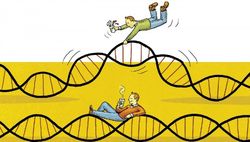
CoffeeCould genetic code determine someone’s Starbucks habit? Apparently so, according to a new study by researchers at the Harvard T.H. Chan School of Public Health (HSPH). Their data suggest that people instinctively regulate their coffee intake in order to experience the optimal effects of caffeine. Produced with the support of the Coffee and Caffeine Genetics Consortium and published in the journal Molecular Psychiatry this past fall, the study—one of several recent HSPH investigations of the popular beverage—involved a meta-analysis of genomic data from more than 120,000 regular coffee drinkers of European and African ancestry. The researchers analyzed their subjects’ genetic makeup through DNA sequencing, and compared those results to self-reported coffee-drinking figures, in an effort to understand why some people need more of the stimulant than others to feel the same effect.

Lead author Marilyn Cornelis, a former research associate in the HSPH nutrition department who is now assistant professor in preventive medicine at Northwestern, says their findings provide insight not only on why caffeine affects people differently, but also on how these effects influence coffee-drinking behavior. One individual, for example, may need three cups of coffee to feel invigorated, while another may need only one. If that one-cup-a-day person consumes four cups instead, Cornelis explains, any jitters or other ill effects that result may discourage that level of consumption in the future.

More here.

BEST TAP DANCE NUMBER EVER? (The Nicholas Brothers)

From the movie: STORMY WEATHER 1943
It is said that no less an authority on dance than Fred Astaire once said that this was in his opinion the best dance number ever put on film. One thing for sure, the Nicholas Brothers were without a doubt the best Tap Dance team ever, case closed. I have included the entire number including Cab Calloway's opening vocal. The dance starts at about the 1:30 mark.
More here. (Note: One post throughout February will be dedicated to Black History Month.) Via dear friend Kathleen Broglio.

Wednesday Poem

Soffly Soffly Nesta Skank
.

boy Marley
armed & ganjaras
soffly soffly his spliff a mystrical cloud
thirsty as he pores into the book
of nolej of wrong & rise
ever so the drumthud & bass gong
move us to skank
while they having fun/k in Babylon
as one more of my peopleses
slumps into his mouthful of gurgling blood

for the pigses
who haven’t known the sun
but interstellar con & contraption
for their politishams
who haven’t known love
but the bleeding triggah of lies
that quiets the poor
for the slipperous slime
home in their shrunken hearts
we’ll be burning all illusion tonight
& banging munition all night
.

by Seitlhamo Motsapi
from: earthstepper/the ocean is very shallow
publisher: Deep South, South Africa

Tuesday, February 17, 2015

Art and Politics in Occupied Crimea

Simferopol_crimea_theater_21Dimiter Kenarov at VQR:

Crimea has fascinated the Russian imagination for centuries. Once governed by the powerful and terrifying Crimean Khanate, a Turco-Mongol vassal state of the Ottoman Empire, the peninsula became part of Russia in 1783, when it was annexed by Catherine the Great. If St. Petersburg was the empire’s modern “window to the West,” Crimea was the southern casement overlooking the classical world, an ancient land of fairy tales and oriental myth. With its verdant mountains rising out of a wine-dark sea, Crimea, along with the Caucasus region a bit farther down the coast, became a locus of inspiration for the Russian Romantic movement. It was an “enchanting region” and a “spot of fairy dreams,” as Alexander Pushkin wrote in “The Fountain of Bakhchisaray,” a long poem about the tragic love of a Crimean khan for one of his Christian captives.

Drawn to its romantic aura, noblemen and artists slowly began to transform the region into a bohemian playground dotted with palaces and elaborate villas, casinos and bathing establishments and fashionable promenades that ran along the rugged coast. By the middle of the nineteenth century, Crimea had become “the garden of the empire” and “the Russian Riviera.” Peace was briefly interrupted in the 1850s by the Crimean War, in which Leo Tolstoy fought as an army officer.

more here.

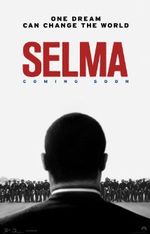
The Real Problem with Selma

MV5BODMxNjAwODA2Ml5BMl5BanBnXkFtZTgwMzc0NjgzMzE@._V1_SX214_AL_Adolph Reed, Jr. at nonsite:

Ava Du Vernay’s film Selma has generated yet another wave of mass mediated debate over cinematic representation of black Americans’ historical experience of racial injustice. The controversy’s logic is at this point familiar, nearly clichéd. Du Vernay and others have responded to complaints about the film’s historical accuracy, particularly in its portrayal of Lyndon Johnson, with invocations of artistic license and assertions that the film is not intended as historical scholarship. However, even Maureen Dowd recognizes the contradiction at the core of those claims. “The ‘Hey, it’s just a movie’ excuse doesn’t wash. Filmmakers love to talk about their artistic license to distort the truth, even as they bank on the authenticity of their films to boost them at awards season.”1 And that contradiction, as I’ve noted [Django Unchained, or, The Help”], permeates the dizzyingly incoherent and breathtakingly shallow pop controversies spawned by recent films dramatizing either the black experience of slavery or the southern Jim Crow order.

Notwithstanding their boosters’ claims about these films’ relation to the historical moments they depict, Selma and its recent predecessors, like other period dramas, treat the past like a props closet, a source of images that facilitate naturalizing presentist sensibilities by dressing them up in the garb of bygone days.

more here.

three Chinese classics from the NYRB’s new Calligram line

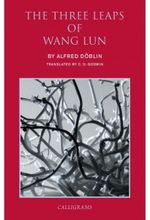
DoblinThreeLEapsofWangLun-205x300Steve Donoghue at Open Letters Monthly:

The new “Calligrams” imprint of the deservedly popular New York Review of Books paperback reprint line (produced in conjunction with the Chinese University of Hong Kong Press) devotes itself to “writings from and on China,” which is both succinct and staggering as mission summaries go. Chinese literature has one of the longest histories in the world; Chinese writers and poets and scholars were parsing fine points of rhetoric and prosody long before the Greeks had ever heard the song of Troy, and they were hotly debating critical fine points a millennium before the monks of Ireland wrote their first playful erotica with ice-cold fingers. The outflow has continued almost unabated for three thousand years, with major works spawning minor works and minor works spawning commentaries and the major commentaries spawning commentaries of their own. It’s an immense and frighteningly tangled bookish heritage.

Any new series dedicated to placing that heritage before a modern Western audience (and particularly the notoriously monoglot and incurious reading public of the United States) faces a task comparable to presenting the wealth of English literature by taking three pages at random from the magisterial Oxford Anthology of English Literature in the great two-volume edition edited by Frank Kermode, John Hollander, Harold Bloom, Martin Price, J. B. Trapp, and Lionel Trilling.

more here.

European languages linked to migration from the east

Ewen Callaway in Nature:

ScreenHunter_1010 Feb. 17 16.21A mysterious group of humans from the east stormed western Europe 4,500 years ago — bringing with them technologies such as the wheel, as well as a language that is the forebear of many modern tongues, suggests one of the largest studies of ancient DNA yet conducted. Vestiges of these eastern émigrés exist in the genomes of nearly all contemporary Europeans, according to the authors, who analysed genome data from nearly 100 ancient Europeans1.

The first Homo sapiens to colonize Europe were hunter-gatherers who arrived from Africa, by way of the Middle East, around 45,000 years ago. (Neanderthals and other archaic human species had begun roaming the continent much earlier.) Archaeology and ancient DNA suggest that farmers from the Middle East started streaming in around 8,000 years ago, replacing the hunter-gatherers in some areas and mixing with them in others.
But last year, a study of the genomes of ancient and contemporary Europeans found echoes not only of these two waves from the Middle East, but also of an enigmatic third group that they said could be from farther east2 (see 'Ancient European genomes reveal jumbled ancestry').

To further pin down the origins of this ghost lineage, a team led by David Reich, an evolutionary and population geneticist at Harvard Medical School in Boston, Massachusetts, analysed nuclear DNA from the bodies of 69 individuals who lived across Europe between 8,000 and 3,000 years ago. They also examined previously published genome data from another 25 ancient Europeans, including Ötzi, the 5,300-year-old 'ice man' who was discovered on the Italian-Austrian border.

Their analysis confirmed the arrival of Middle Eastern farmers in Europe between 8,000 and 7,000 years ago. But the team also found proof of a previously unknown migration, beginning several thousand years later.

More here.

To Explain the World: the Discovery of Modern Science

Lewis Dartnell in The Telegraph:

Earth_rising_3197121bThere have been many accounts of the historical progression of our understanding of the world around us, especially focusing on the transformative developments that began in the 17th century, but few have had the unique selling point of Steven Weinberg’s To Explain the World. Weinberg is a Nobel Prize-winning theoretical physicist, known for his research on elementary particles and the interactions between them, as well as on cosmology. In this sense, then, Weinberg’s chronicle of the long development of physics leading up to the role he has personally played in it is akin to Winston Churchill’s A History of the English-Speaking Peoples. To Explain the World is a sweeping narrative of the progression of ideas, from the geometrical proofs and beliefs on the nature of the cosmos proposed by ancient Greek philosophers, through the Golden Age of Islamic science in ninth-century Baghdad, to Copernicus’s heliocentric architecture of our solar system, Galileo’s discoveries through his spyglass, and Newton’s work on optics and the laws of motion. But Weinberg strives to show not just how our understanding of the cosmos has developed through history – a straightforward chronology of deductions and discoveries – but also to explore how humanity “came to learn how to learn about the world”. He masterfully explains how the emergence of the modern scientific method, the mechanism by which we interrogate the world and devise well-supported explanations we can be confident in, is itself a discovery.

For me, the highlight of the book is the discussion of Nicolaus Copernicus and the transformative shift in our world-view in the mid-16th century. The Copernican Revolution is a well-known story: the classical heritage of the Ptolemaic Earth-centred cosmos with its complex geometrical system of epicycles and deferents for the paths of the planets was replaced by Copernicus’s sun-centric architecture for the solar system. Where Weinberg excels is in his explanation of why the Copernican model became preferred, despite having no observational support and not providing improved predictions.

More here.

Tuesday Poem

The Men of My Country

the men of my country
give up their seats on the subway
to the handicapped the aged
and to the passengers with children
but mostly they go on sitting
since these categories of citizens
have a pronounced tendency to die out
or travel by subway less and less often

the men of my country
they are saints under a heel
with trained insect jaws
with which they gnaw their way
to deserved fatherhood
and later having untied their hands
savor children’s flesh
using proscribed methods
of raising the younger generation

the men of my country
are not mutants or perverts
they are products of secondary processing
of amino acids
this is all that remains of the nation
which loves and honors its heroes
youths so roly-poly or with pit bull jaws
their love for motherhood
has outgrown all discernible limits
and became a signature style

Read more »

George Washington, Slave Catcher

Erica Armstrong Dunbar in The New York Times:

EricaWhen he was 11 years old, Washington inherited 10 slaves from his father’s estate. He continued to acquire slaves — some through the death of family members and others through direct purchase. Washington’s cache of enslaved people peaked in 1759 when he married the wealthy widow Martha Dandridge Custis. His new wife brought more than 80 slaves to the estate at Mount Vernon. On the eve of the American Revolution, nearly 150 souls were counted as part of the property there. In 1789, Washington became the first president of the United States, a planter president who used and sanctioned black slavery. Washington needed slave labor to maintain his wealth, his lifestyle and his reputation. As he aged, Washington flirted with attempts to extricate himself from the murderous institution — “to get quit of Negroes,” as he famously wrote in 1778. But he never did.

During the president’s two terms in office, the Washingtons relocated first to New York and then to Philadelphia. Although slavery had steadily declined in the North, the Washingtons decided that they could not live without it. Once settled in Philadelphia, Washington encountered his first roadblock to slave ownership in the region — Pennsylvania’s Gradual Abolition Act of 1780. The act began dismantling slavery, eventually releasing people from bondage after their 28th birthdays. Under the law, any slave who entered Pennsylvania with an owner and lived in the state for longer than six months would be set free automatically. This presented a problem for the new president. Washington developed a canny strategy that would protect his property and allow him to avoid public scrutiny. Every six months, the president’s slaves would travel back to Mount Vernon or would journey with Mrs. Washington outside the boundaries of the state. In essence, the Washingtons reset the clock. The president was secretive when writing to his personal secretary Tobias Lear in 1791: “I request that these Sentiments and this advise may be known to none but yourself & Mrs. Washington.”

More here. (Note: One post throughout February will be dedicated to Black History Month.)

What ISIS Really Wants

Graeme Wood in The Atlantic:

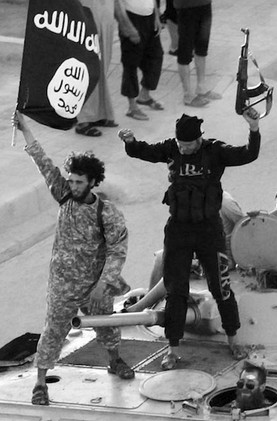
ScreenHunter_1009 Feb. 17 12.01Our ignorance of the Islamic State is in some ways understandable: It is a hermit kingdom; few have gone there and returned. Baghdadi has spoken on camera only once. But his address, and the Islamic State’s countless other propaganda videos and encyclicals, are online, and the caliphate’s supporters have toiled mightily to make their project knowable. We can gather that their state rejects peace as a matter of principle; that it hungers for genocide; that its religious views make it constitutionally incapable of certain types of change, even if that change might ensure its survival; and that it considers itself a harbinger of—and headline player in—the imminent end of the world.

The Islamic State, also known as the Islamic State of Iraq and al-Sham (ISIS), follows a distinctive variety of Islam whose beliefs about the path to the Day of Judgment matter to its strategy, and can help the West know its enemy and predict its behavior. Its rise to power is less like the triumph of the Muslim Brotherhood in Egypt (a group whose leaders the Islamic State considers apostates) than like the realization of a dystopian alternate reality in which David Koresh or Jim Jones survived to wield absolute power over not just a few hundred people, but some 8 million.

We have misunderstood the nature of the Islamic State in at least two ways.

More here.

A Dynamic Theory of Romantic Choice

Yichuan Wang in Medium:

Suppose that there are two groups of people on the market: “crazy” undateables and “good” people who are hot stuff. The reader, if willing to read such a piece, is of course in the second category.

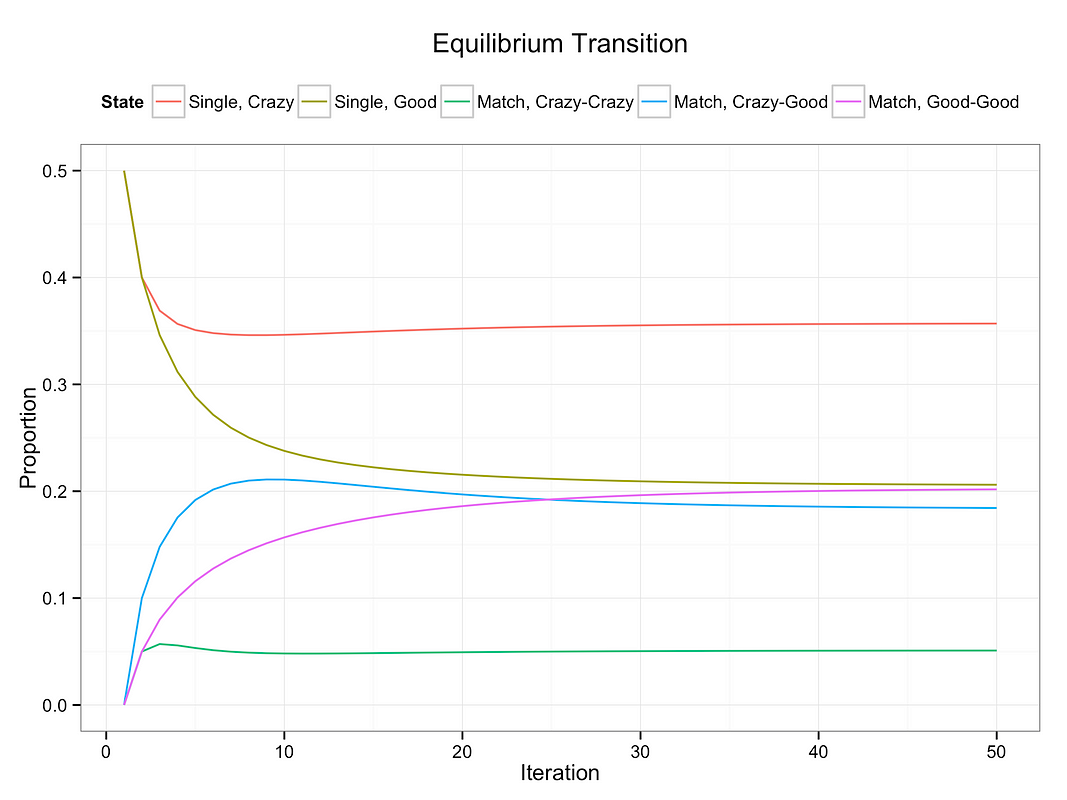
In each month, all the people mingle and can transition into/from one of five states: crazy-single, good-single, crazy-crazy-couple, crazy-good-couple, and good-good-couple. Single people transition into a couple state if they meet a person and hit it off, and couples spontaneous transition into the single state if they break up.

The key mechanism behind the model is that good couples stay together for longer periods of time. In my baseline calibration, I calibrate the model so that the expected relationship length of a crazy-crazy couple is 2 months, while the respective times for crazy-good and good-good couples are 6 and 24 months respectively.

The transition probabilities change with the number of people in each state. I defer mathematical details to an unwritten appendix, and instead show that under the baseline parameterization there is indeed convergence within 50 months.

We are now ready to answer basic questions about the equilibrium properties of dating markets.

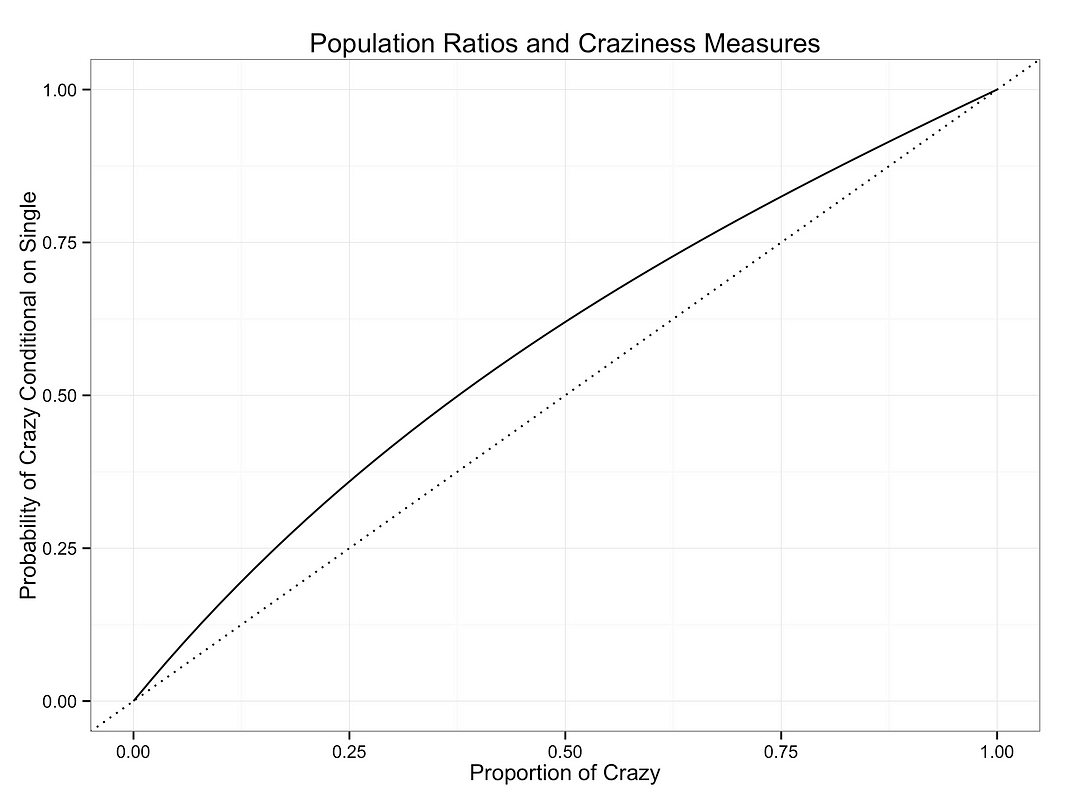
Most Single People are Crazy

Even if only 50% of the population is crazy, in equilibrium around 63% of single people are crazy.

More here.