Does Exercise Slow the Aging Process?

Gretchen Reynolds in The New York Times:

Well_cycle-tmagArticleFor those of us who don’t know every portion of our cells’ interiors, telomeres are tiny caps found on the end of DNA strands, like plastic aglets on shoelaces. They are believed to protect the DNA from damage during cell division and replication. As a cell ages, its telomeres naturally shorten and fray. But the process can be accelerated by obesity, smoking, insomnia, diabetes and other aspects of health and lifestyle. In those cases, the affected cells age prematurely. However, recent science suggests that exercise may slow the fraying of telomeres. Past studies have found, for instance, that master athletes typically have longer telomeres than sedentary people of the same age, as do older women who frequently walk or engage in other fairly moderate exercise.

But those studies were relatively narrow, focusing mostly on elderly people who ran or walked. It remained unclear whether people of different ages who engaged in a variety of exercises would likewise show effects on their telomeres. So for the new study, which was published this month in Medicine & Science in Sports & Exercise, researchers from the University of Mississippi and University of California, San Francisco, decided to look more broadly at the interactions of exercise and telomeres among a wide swath of Americans. To do so, they turned to the immense trove of data generated by the ongoing National Health and Nutrition Examination Survey, for which tens of thousands of adults answer questions annually about their health, including their exercise habits, and complete an in-person health exam, providing a blood sample. In recent years, those blood samples have been tested for, among other markers of health, telomere length in the participants’ white blood cells. The researchers gathered the data for about 6,500 of the participants, ranging in age from 20 to 84, and then categorized them into four groups, based on how they had responded to questions about exercise. Those questions in this survey tended to be broad, asking people only if, at any time during the past month, they had engaged in weight training, moderate exercise like walking, more vigorous exercise like running, or have walked or ridden a bike to work or school. If a participant answered yes to any of those four questions, he or she earned a point from the researchers. So, someone who reported walking received a point. If he also ran, he earned another, and so on, for a maximum of four points. The researchers then compared those tallies to each person’s telomere length.

And there were clear associations. For every point someone gained from any type of exercise, his or her risks of having unusually short telomeres declined significantly.

More here.
Tuesday Poem

How rain arrives

This morning you called
long before the sky slipped
on her sunrise shirt:
early stars blinked quietly
the way a heart beats
beneath the covers of sleep.
When the phone rang
the whole house seized awake.

She died in the night,
was the first thing you said.
I listened to you described
her fall, nodded my grief
into a phone gone suddenly
hard and cold.

You didn’t hear her go.

You couldn’t have known
how you’d sewn guilt
into your end of the conversation,
scratchy and strange the way
a mended sheet rubs
on a bare foot at dawn.

By the time my bed was made,
clouds shrouded the sky’s face.
When I started the car,
rain had already stained
the road dark and wet.
.

by Christine Klocek-Lim
from How to Photograph a Heart
The Lives You Touch Publications, 2009
.

Monday, November 2, 2015

Perceptions

IMG_0913

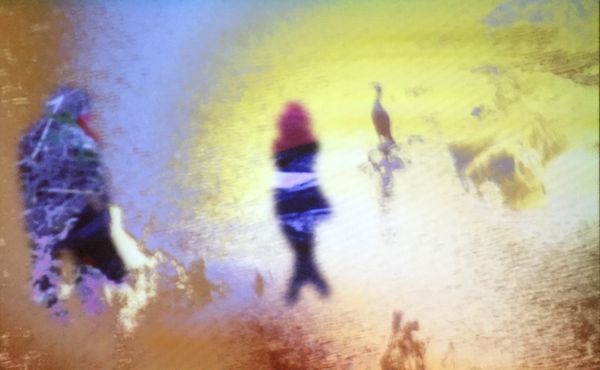
Sughra Raza. Self Portrait at Whispering Bayou, Houston, 2015.

Digital photograph.

The Contemporary Arts Museum Houston presents Whispering Bayou, an immersive multi-media installation that consists of a video triptych and a multi-channel soundscape composed of the sounds, voices, and images of Houstonians and their city. The project is a collaboration between Houston-based filmmaker, interactive multimedia producer, and community activist Carroll Parrott Blue; French composer and multimedia artist Jean-Baptiste Barrière; and New York-based composer and computer interactive artist George Lewis.”

More on this installation here and here.

Sunday, November 1, 2015

Has China Discovered a Better Political System Than Democracy?

Eric Fish in The Atlantic:

ScreenHunter_1484 Nov. 01 19.28Since the collapse of several authoritarian regimes in the 1980s and 1990s—most notably the Soviet Union—conventional wisdom in political science has held that dictatorships inevitably democratize or stagnate. This wisdom has even been applied to China, where the Communist Party (CCP) has presided over 26 years of economic growth since violently suppressing protests at Tiananmen Square. In 2012, the political theorist and Tsinghua University philosophy professor Daniel A. Bell aroused controversy among many China-watchers for challenging this idea. In several op-eds published in prominent Western publications, Bell argued that China’s government, far from being an opaque tyranny, actually presented a “meritocratic” alternative to liberal, multiparty democracy. In a new book titledThe China Model: Political Meritocracy and the Limits of Democracy, Bell expands on that idea.

“I disagree with the view that there’s only one morally legitimate way of selecting leaders: one person, one vote,” Bell said at a recent debate hosted by ChinaFile at Asia Society in New York.

Bell is under no illusion that China has already perfected its political recipe, admitting that the ideal “China model” is still very theoretical. This involves a “vertical democratic meritocracy,” as he puts it, with open democratic elections at the local level, meritocratic assessment (like China’s civil-service exam) to choose top national leaders, and experimentation in the middle. In this system, local leaders—who handle relatively basic issues—are still accountable to voters. But national leaders, who must handle more complex issues and make tough decisions that may not be popular (like enacting serious climate-change measures), can be chosen based on experience and knowledge without American-style political gridlock or susceptibility to populist approval.

More here.

How we became the heaviest drinkers in a century

Chrissie Giles in Mosaic:

ScreenHunter_1483 Nov. 01 19.24Everyone in alcohol research knows the graph. It plots the change in annual consumption of alcohol in the UK, calculated in litres of pure alcohol per person. (None of us drinks pure alcohol, thankfully; one litre of pure alcohol is equivalent to 35 pints of strong beer.) In 1950, Brits drank an average of 3.9 litres per person. Look to the right and at first the line barely rises. Then, in 1960, it begins to creep upward. The climb becomes more steady during the 1970s. The upward trajectory ends in 1980, but that turns out to be temporary. By the late 1990s consumption is rising rapidly again. Come Peak Booze, in 2004, we were drinking 9.5 litres of alcohol per person – the equivalent of more than 100 bottles of wine.

It’s impossible to untangle the forces behind the graph’s every rise and fall, but I’ve talked to researchers who have studied our relationship with alcohol. They told me how everything from recessions to marketing to sexism has shaped the way Brits drink. This is the story of that research, and of what it tells us about the ascent to Peak Booze. In many ways it is not a story about how much we drink, but about who drinks what, and where. It begins well over half a century ago, in the pub.

More here.

The burgeoning worldwide “Philosophy for Children” movement

Laura D'Olimpio at the Australian Broadcast Corporation:

ScreenHunter_1482 Nov. 01 19.17Some people may wonder if young people can do philosophy. In his Nicomachean Ethics, the ancient Greek philosopher Aristotle writes that the young—and not necessarily the young in age—are not suitable students of ethics and politics because they lack experience and because they tend to follow feelings rather than reason.

Furthermore, in Socrates’ day, there was a concern that teaching the youth critical thinking skills would result in them being less obedient. If we teach students philosophy, will they simply argue for whatever they like, and be able to justify their arguments? Is the study of philosophy corrupting or empowering?

Philosophy for Children (P4C) is a program that takes philosophy out of the academy and into the classrooms of primary and high schools. P4C started at Montclair State University, New Jersey in the 1970s, when Matthew Lipman and Ann Sharp decided that a pragmatic approach to doing philosophy was needed. Their vision was to train children to think critically, creatively and collaboratively so that they would be better democratic citizens.

Influenced by the pragmatism of the philosopher John Dewey, Lipman applied the term ‘community of inquiry’ to the pedagogy that is central to conducting philosophical dialogue with children.

More here.

Former Greece finance minister Yanis Varoufakis is setting up a Europe-wide movement to democratise the EU

Jon Stone in The Independent:

ScreenHunter_1481 Nov. 01 18.54Greece’s former finance minister is in the process of setting up a pan-European movement to reform the EU’s institutions, he has revealed.

Yanis Varoufakis said his experience in Eurogroup meetings had left him with the conclusion that the EU was not democratic.

“What is going on in Greece is simply a reflection – an echo – of a far deeper crisis throughout the eurozone, which cannot be solved at any national or member-state level,” told the Open Democracy website.

“The obvious conclusion one must draw from this is that either you argue for a dissolution of the monetary union, and then you can talk about national politics again quite sensibly. Or you should be talking about a pan-European movement for change throughout the eurozone.”

Mr Varoufakis, who is an economist, said the new movement would have “one very simple, but radical, idea: to democratise Europe”.

“A pan-European movement is the only solution. It sounds utopian, but this idea cemented in my mind in August when I started travelling across Europe, and realised that there was a great deal of hunger and thirst everywhere I went for such an idea.”

More here.

Sunday Poem

After Apple Picking

My long two-pointed ladder’s sticking through a tree
Toward heaven still,
And there’s a barrel that I didn’t fill
Beside it, and there may be two or three
Apples I didn’t pick upon some bough.
But I am done with apple-picking now.
Essence of winter sleep is on the night,
The scent of apples: I am drowsing off.
I cannot rub the strangeness from my sight
I got from looking through a pane of glass
I skimmed this morning from the drinking trough
And held against the world of hoary grass.
It melted, and I let it fall and break.
But I was well
Upon my way to sleep before it fell,
And I could tell
What form my dreaming was about to take.
Magnified apples appear and disappear,
Stem end and blossom end,
And every fleck of russet showing clear.
My instep arch not only keeps the ache,
It keeps the pressure of a ladder-round.
I feel the ladder sway as the boughs bend.
And I keep hearing from the cellar bin
The rumbling sound
Of load on load of apples coming in.
For I have had too much
Of apple-picking: I am overtired
Of the great harvest I myself desired.
There were ten thousand thousand fruit to touch,
Cherish in hand, lift down, and not let fall.
For all
That struck the earth,
No matter if not bruised or spiked with stubble,
Went surely to the cider-apple heap
As of no worth.
One can see what will trouble
This sleep of mine, whatever sleep it is.
Were he not gone,
The woodchuck could say whether it’s like his
Long sleep, as I describe its coming on,
Or just some human sleep.

.
by Robert Frost

Everything Is Erotic Therefore Everything Is Exhausting

Johanna Hedva in Two Serious Ladies:

Everything Is Erotic Therefore Everything Is Exhausting is an attempt to catalog everything erotic in the world. It was composed in a participatory performance, and will never be complete. Begun in 2010, the text was originally 100 entries, handwritten one entry per page, by the artist. During performances, participants are invited to take away pages. In return, they had to offer their own entries by speaking into the ear of the artist. The artist serves as scribe and devoted keeper of the text. The following text comprises the complete encyclopedia to date, as it’s been written by the artist and participants.

Screen-Shot-2015-04-07-at-2_11_12-PMAbscesses.

The act of, the sound of, spanking.

After something exhausting.

All of your lover at once.

Androgyny.

Ankles, when they peek out.

Ants on cake.

Any kind of slow dripping, like water from a faucet and honey from a spoon.

Anything wrapped in plastic wrap, and then unwrapping it.

The appearance of blood on something clean.

The arch of a slender foot.

The young arms of lean black men.

More here.

Product Placement: Selling the grasp for what isn’t there

Lewis H. Lapham in Lapham's Quarterly:

Fashion lives only in a perpetual round of giddy innovation and restless vanity…it is haughty, trifling, affected, servile, despotic, mean and ambitious, precise and fantastical, all in a breath.

—William Hazlitt

BonesAlone on the shore of Walden Pond, safely removed from the threat of crowdsourced infection, Henry David Thoreau in 1854 holds to the view that men and women in fancy dress are “sailing under false colors,” with the result “that there is greater anxiety, commonly, to have fashionable, or at least clean and unpatched, clothes than to have a sound conscience. It would be easier for [most people] to hobble to town with a broken leg than with a broken pantaloon.” Thoreau’s Puritan antecedents didn’t countenance the flying of false flags. They took offense at the sight of “people of mean condition” (i.e., anybody valued at a net worth of less than two hundred British pounds) dressed in a manner above their station “by the wearing of gold or silver lace or buttons, or points at their knees, [or] to walk in great boots.” The effrontery was punished with severe fines, as were the ambitions of servant girls seen wearing “silk or tiffany hoods or scarves, which though allowable to persons of greater estates, or more liberal education, yet we cannot but judge it intolerable.”

The judgment was uncharitable. Also hypocritical and ungrateful. The inspectors of souls in the Massachusetts wilderness depended for their existence on the market in London for luxurious bodily adornment, the shining city on the hill beholden for its daily bread to temptations of the flesh and the work of the devil. In the 1950s the teaching at Yale didn’t dwell on the point. Little time was left for class discussion of the Pilgrim colony as a financial speculation floated by venture capitalists intent on extracting a shameless profit from the wholesale slaughter of beavers. Beaver pelts sold in Jacobean England at the prices paid to rent nine acres of farmland. The fashionable nobility delighted in velvet and lace, but most extravagantly in the splendid magnificence of the mousquetaire, a beaver hat low-crowned and wide-brimmed, banded in silk, mounted with ostrich feathers. Prince Charles bought forty-three such hats in 1624, the year before he became king, his expenditure on clothing at one point equivalent to the cost of building and outfitting a pair of ships six times the size of the Mayflower.

More here.

Saturday, October 31, 2015

What Libraries Can (Still) Do

James Gleick in the New York Review of Books:

ScreenHunter_1480 Oct. 31 21.34Of the many institutions suffering through the world’s metamorphosis from analog to digital (real to virtual, offline to online), few are as beleaguered as that bedrock of our culture, the public library. Budgets are being slashed by state and local governments. Even the best libraries are cutting staff and hours. Their information desks are seemingly superseded by Google, their encyclopedias are gathering dust. And their defining product, the one that lines their shelves, now arrives in the form of a weightless doppelgänger that doesn’t require shelves.

In the technocracy, all the world’s information comes to us on screens—desk, pocket, wrist, goggles—and no one trudges through wind and rain with library card in hand to find a single worn object. After all, when you want the text of Magna Carta, you don’t track down the original. Same with books? “Libraries are screwed,” said Eli Neiburger, a Michigan library director, in a much-quoted presentation at a Library Journalconference in 2010. “Libraries are screwed because we are invested in the codex, and the codex has become outmoded.”

So is the library, storehouse and lender of books, as anachronistic as the record store, the telephone booth, and the Playboy centerfold? Perversely, the most popular service at some libraries has become free Internet access. People wait in line for terminals that will let them play solitaire and Minecraft, and librarians provide coffee. Other patrons stay in their cars outside just to use the Wi-Fi. No one can be happy with a situation that reduces the library to a Starbucks wannabe.

More here.

The Scariest Story Ever Told

Colin Nissan in The New Yorker:

ScreenHunter_1479 Oct. 31 21.23At the end of a quiet road, behind a veil of twisted black oak trees, there was a house. A woman lived there. On bitter nights like this one, she sat by the fire and read until she grew tired enough for sleep. But on this night, as her lids grew heavy, she was startled by a sound. A sound she wasn’t accustomed to hearing these days. Who could be calling, she wondered? And this late? She rose from her chair and picked up the phone.

“I’m going to kill you,” a man with a deep voice said.

“Who is this?” she asked.

No answer.

“Who is this?” she repeated, her hand trembling.

There was a click. Silence. She quickly dialled the police and explained what had happened. The officer told her to wait while he traced the call. After a few moments he said, “The call is coming from . . . inside your house.”

More here.

Exxon Knew about Climate Change Almost 40 Years Ago

Shannon Hall in Scientific American:

A0FC1458-B984-4950-8A8ACB6813D0C224_articleExxon was aware of climate change, as early as 1977, 11 years before it became a public issue, according to a recent investigation from InsideClimate News. This knowledge did not prevent the company (now ExxonMobil and the world’s largest oil and gas company) from spending decades refusing to publicly acknowledge climate change and even promoting climate misinformation—an approach many have likened to the lies spread by the tobacco industry regarding the health risks of smoking. Both industries were conscious that their products wouldn’t stay profitable once the world understood the risks, so much so that they used the same consultants to develop strategies on how to communicate with the public.

Experts, however, aren’t terribly surprised. “It’s never been remotely plausible that they did not understand the science,” says Naomi Oreskes, a history of science professor at Harvard University. But as it turns out, Exxon didn’t just understand the science, the company actively engaged with it. In the 1970s and 1980s it employed top scientists to look into the issue and launched its own ambitious research program that empirically sampled carbon dioxide and built rigorous climate models. Exxon even spent more than $1 million on a tanker project that would tackle how much CO2 is absorbed by the oceans. It was one of the biggest scientific questions of the time, meaning that Exxon was truly conducting unprecedented research.

More here.

ON STÉPHANE MALLARMÉ

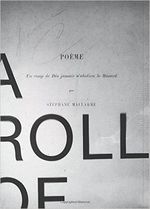
51IgsWsnK6L._SX356_BO1,204,203,200_Jack Hanson at The Quarterly Conversation:

Broadly speaking, Mallarmé’s influence in Anglophone poetry cuts two ways. The first and most prominent is the heritage of the Symbolists, a combination of religious and philosophical preoccupations with a deep concern for musicality and rhythm. The latter of these is in part what makes Mallarmé so difficult to translate. The nearest English equivalent to my mind is Wallace Stevens, a poet whose work is in constant conversation with his French predecessor. (Consider the task of translating even Stevens’ most famous poems, such as the “Emperor of Ice Cream,” which opens, “Call the roller of big cigars, / The muscular one, and bid him whip / In kitchen cups concupiscent curds.”) Through the American Modernist quadrumvirate of Stevens, Frost (with his insistence on the “sound of sense”), Pound, and Eliot (though, true to form, he cited the more obscure Jules La Forgue as a decisive influence), Mallarmé’s hand can be seen in all of what might be called “mainstream” poetry of the 20th century.

The other strain of Mallarmé’s influence comes down through the more experimental line in Modern poetry, from Gertrude Stein and William Carlos Williams to such diverse practitioners as Surrealists like André Breton, the Language poets, and, in our own time, the nascent movement of digital and computer-generated poetry. This loosely defined nexus of formally and conceptually experimental poets, who often relate intensely in their work with other art forms, can be traced directly to Mallarmé’s final work, Un coup des Dés jamais n’abolira le Hasard.

more here.

‘The Other Paris,’ by Luc Sante

1101-BKS-Haskell-SUB01-blog427Molly Haskell at The New York Times:

Luc Sante is no doubt a well-behaved person whose lodgings are neat as a pin, but his mind teems with filth and disorder, his nostrils alert to the dankness of slums. To this explorer of the urban under­belly, the squalid and the tawdry are manna from heaven.

Lost neighborhoods, the way the other half lived and died, buried treasure in the form of old photographs and documents, what he has called the “husks” cast off by the past, are the main attraction for this literary scavenger. The Belgian-born and vastly erudite Sante has followed his appetite for the detritus of the past in essays and translations and in books like “Low Life” (1991) and now “The Other Paris.” “I’ve always been a sucker for tales of lost civilizations, pockets in time, suppressed documents,” he once wrote.

In “Low Life” his quarry was the under­world of 19th- and early-20th-century New York, the freak shows and shooting galleries and Bowery museums, and those first flickers of cinema, the nickelodeons. Not finished with the “husks” contained in his chapters on “Gangland” and “Coppers,” this exuberant necrophiliac went on to publish “Evidence,” a macabre album containing crime scene photographs from the police archives.

more here.