One in a million: That was the chance that Jo Lennan had cancer.

Jo Lennan in More Intelligent Life:

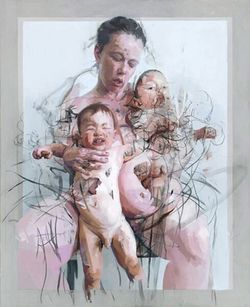
JoBefore this – before cancer – I had never spent a night in hospital. I made it to 30 without so much as a broken bone. Then, in February 2013, I noticed something, a certain discomfort of the stomach. I thought I’d overdone the black coffee in the morning, or the dried mango a houseguest had brought from Darwin. I began to dislike having the weight of my boyfriend’s leg across my body. These didn’t seem like symptoms. They were easy to dismiss, even when things got worse. I saw a GP, then a specialist, in Sydney, where I live. I was given the all-clear, and for a time I did get better. Then, in mid-2014, came several bouts of what felt like food poisoning. In August, instead of eating the Ottolenghi-style cod cakes a friend had carefully prepared, I threw up in her bathroom. I was about to take a work trip to London via Hong Kong, but my GP said not to go anywhere. The specialist rang my mobile to say the same thing, and her voice had a different note, something like alarm. Even so, I didn’t believe it would turn out to be anything serious. I was perpetually ready to assume that things were fine. From there things happened quickly. A surgeon said I had an obstruction in my small intestine that had to be cut out. I cancelled my trip. I bought pyjamas for hospital, because who under the age of 60 actually owns any, apart from old track pants and skimpy camisoles? I put my passwords in a file, which I jokingly labelled, “For if Jo croaks”. Instead of drinks with an editor at the Foreign Correspondents’ Club in Hong Kong, it was into hospital and under anaesthetic. The two weeks after that are hazy now; a cocktail of painkillers does tend to dull the memory. I remember the news, which showed Scotland voting No. I remember the visits from family and friends, the flowers and gifts. At first I kept quiet about being in hospital, but my parents came to Sydney, a six-hour drive from where they live, and looked bewildered when they saw me. My younger sister, a physiotherapist, flew in from Perth and took me for turns about the ward. I was still feeble and full of tubes, and for a few days I kept my phone off, while my boyfriend acted as gatekeeper and giver of updates. On the Saturday morning, instead of enjoying the warm weekend, the surgeon stopped by. He said the biopsy results were in, and they showed I had cancer.

…But why and how does cancer form, apparently for no reason? Medicine’s answers to these questions have changed dramatically through the ages, as have its methods for treating sufferers. One thing I do read is “The Emperor of All Maladies”, a remarkable book from 2010 by an American oncologist, Siddhartha Mukherjee, who recounts how, in the second century AD, Galen of Pergamon argued that cancer, like melancholia, was caused by an excess of black bile. His approach favoured bleeding and purging of humours, while surgery was used only in extreme cases.

More here.

The tapeworm that turned into a tumour

Ewen Callaway in Nature:

TapewormA tapeworm that infected a Colombian man deposited malignant cells inside his body that spread much like an aggressive cancer, researchers have reported in a bizarre, but not unprecedented, case. “We have a situation where a foreign organism is developing as a tumour rather than developing as an organism,” says Peter Olson, a developmental parasitologist at the Natural History Museum in London. He is part of a team that describes the case in a 4 November report in the New England Journal of Medicine1. The apparently cancerous cells were first examined in 2013 by investigators at the US Centers for Disease Control and Prevention (CDC) in Atlanta, Georgia. They came from a 41-year-old Colombian man with HIV, who had been ill for months when he sought medical attention in January 2013. Colombian doctors found that he had a compromised immune system, had been infected by the dwarf tapeworm (Hymenolepis nana), and had small tumour-like growths in his lungs and lymph nodes. They sent tissue samples to the CDC. Under a microscope, those samples revealed small odd-shaped cells that, like a cancer, appeared to be invading nearby healthy tissue, the CDC team found. Yet the cells tested negative for human proteins. That was a conundrum: although the US investigators knew about the man's tapeworm infection, the invading cells did not look like they should belong to a complex, multicellular organism such as a tapeworm.Tragically, in May 2013, the patient experienced kidney failure and died. A team led by CDC pathologist Atis Muehlenbachs examined the DNA of the invading cells and determined that they did belong to a tapeworm. And genome sequencing showed that the tapeworm cells carried particular mutations that, in human cells, are associated with tumours.

…Olson believes that the tumorous tapeworm cells are rogue larvae that burrowed from the stomach into the lymph nodes of immunocompromised people (a healthy immune system would stop this invasion). The larvae are loaded with regenerative stem cells, so instead of turning into an adult tapeworm, they proliferate. “Those stem cells that would normally give rise to a segmented worm don’t, because they’re in the wrong place and have the wrong environmental cues,” says Olson.

More here.

Wednesday, November 4, 2015

Marvin Minsky Reflects on a Life in AI

Minsky

Over at MIT Technology Review:

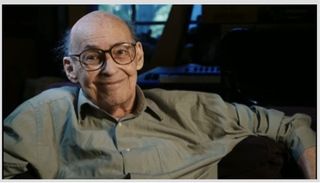
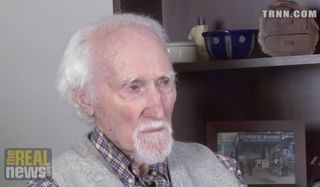
Marvin Minsky is one of the founding fathers of artificial intelligence, and over the past 60 years he has made key contributions in mathematics, robotics, computer graphics, machine perception, and machine learning. I was lucky enough to be invited to meet recently with Minsky at his home in Brookline, Massachusetts, and I took a videographer to capture the conversation.

It was a charming, slightly surreal experience. After all, it’s unusual to meet someone who was on a first-name basis with John von Neumann, Claude Shannon, and Albert Einstein. And despite being unwell for the past couple of years, Minsky, 88, hasn’t lost his playful sense of humor.

It was also fascinating because artificial intelligence has had a remarkable renaissance in recent years, thanks especially to progress in simulating the process by which neurons and synapses enable a brain to learn. Minsky has had a huge influence on the field’s progress toward this new dawn.

In 1951, while studying mathematics at Princeton, he built the first learning machine, an artificial neural network built from vacuum tubes called the Stochastic Neural Analog Reinforcement Calculator, or SNARC. Shortly after that, he turned his attention toward the manipulation of logic and symbols using computers, which guided his later work on artificial intelligence.

More here.

The End of the Humanities?

Martha3

James Garvey talks to Martha Nussbaum in The Philosophers' Magazine Online:

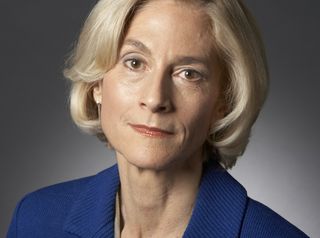
“We are in the midst of a crisis of massive proportions and grave global significance. No, I do not mean the global economic crisis….I mean a crisis that goes largely unnoticed, like a cancer; a crisis that is likely to be, in the long run, far more damaging to the future of democratic self-government: a world-wide crisis in education.” That’s the opening blast from Martha Nussbaum’s new book, Not for Profit: Why Democracy Needs the Humanities.

She starts by identifying a global trend. Policy-makers, universities, and even entire nations are discarding the humanities and focusing instead on academic subjects linked to economic growth. She then makes a case for a connection between liberal arts education, free-thinking citizens, and healthy democracy. Pull the plug on the liberal arts, and you no longer have the sort of people able to do the things required for democratic citizenship. Barely a page into the book and we’re warned that “nations all over the world will soon be producing generations of useful machines, rather than complete citizens who can think for themselves, criticise tradition, and understand the significance of another person’s sufferings and achievements. The future of the world’s democracies hangs in the balance.” Strong stuff. Are things really that bad?

“I don’t write in this alarmist way usually,” she says, “in fact in my book Cultivating Humanity the whole point was to say that insofar as higher education is concerned the changes that we’re seeing are on balance very positive. We’re confronting the new complexity of the world better. We’re educating ourselves about women, about race, about non-western cultures much better. But now, I feel, it’s not true any longer.”

She talks about some American universities which have closed their philosophy departments. “If it’s happening in the US – where the liberal arts system is deeply entrenched, where you have a system of private philanthropy which is also deeply entrenched, and where the tax system gives you strong incentives for that kind of philanthropy – it’s happening all the more in other countries. All over Europe people are reporting big cuts in the humanities.”

She’s aware of plans in the UK to distribute funding in higher education based in part on the economic impact of research. The very idea makes philosophers wince.

More here.

The Mystery of Primo Levi

Parks_1-110515_jpg_600x619_q85

Tim Parks in The New York Review of Books:

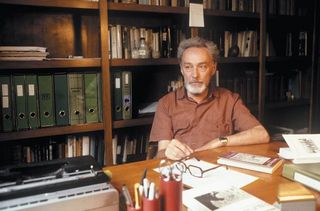
Primo Levi was born in 1919 on the fourth floor of an “undistinguished” apartment block in Turin and aside from “involuntary interruptions” continued to live there in the company of his mother until in 1987 he threw himself down the stairwell to his death. The longest interruption was from September 1943 to October 1945 and would provide Levi with the core material for his writing career: it involved three months on the fringe of the partisan resistance to the German occupation, two months in a Fascist internment camp, eleven months in Auschwitz, and a further nine in various Russian refugee camps.

In 1946, aged twenty-seven, despite working full-time as a chemist, Levi completed his account of his time in a concentration camp. Now widely considered a masterpiece, If This Is a Man was turned down by Turin’s main publishing house, Einaudi, in the person of Natalia Ginzburg, herself a Jew whose husband had died in a Fascist prison. It was also rejected by five other publishers. Why?

Even before his return, Levi had been overwhelmed by the need to tell what had happened. Prior to Auschwitz he had not felt that Jewishness was central to his identity. Like most Italian Jews, the Levis had long been assimilated with little to distinguish them from other Italians. The introduction of the Race Laws in 1938, which discriminated against Jews in public education and excluded them from regular employment, thus created a predicament for Levi that went far beyond the problem of completing his degree in chemistry and finding a job. It was a threat to his identity. Who was he if not an ordinary Italian like his fellow students? The question “what is a man?” that would echo throughout his work was never an abstract consideration but a matter of personal urgency.

More here.

The Aging Face

ID_PELISH_AGING_FI_001

Alysaa Pelish in The Smart Set:

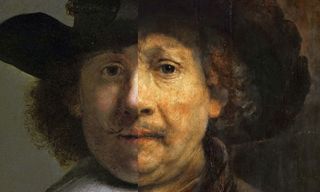
In the very last volume of Proust’s very long novel, the narrator attends an afternoon party where everyone seems to be wearing a mask. He can recognize the voices of his long-ago friends and acquaintances, but their words issue from faces that are all strangely slackened and faded, or hardened and rigidified. They seem to be wearing powdered wigs. Even his host, having disguised himself in the same manner as his guests, appears to have taken on the role of one of the very last stages of the Ages of Man.

What has happened, of course, is the passage of time. These people have aged.

This quality of the aging face, in so many respects like a living mask, was something I had hardly considered until I began to notice the fine crosshatching beneath my own eyes and the first tracing of lines across my forehead. It was disconcerting, these creeping forerunners of age — of aging. The only face I had ever known as my own — a face resolutely unwrinkled for over three decades — was somehow being impinged upon, irreversibly. I knew that, unlike a spate of pimples or the red peel of sunburn, these new lines and creases were here to stay, and they would only grow more pronounced.

As I considered the changes in my own face, my eyes were soon drawn to the lines in other people’s faces, as if searching for a benchmark of normalcy, a point of comparison. What I discovered, though, was the variability of a phenomenon I had never before bothered to notice. Some brows, I now saw, were entirely furrowed, really ploughed-in deep parallel lines that never even began to fade when the eyebrows lowered, as if that fairy Queen Mab who hectors sleepers had driven a team of oxen back and forth over the course of many nights.

More here.

Romantic Regimes

39452be39090498699995dcddf906beb_1MFWH6l_1_www_large_thumb

Polina Aronson in Aeon:

By analysing the language of popular magazines, TV shows and self-help books and by conducting interviews with men and women in different countries, scholars including Eva Illouz, Laura Kipnis and Frank Furedi have demonstrated clearly that our ideas about love are dominated by powerful political, economic and social forces. Together, these forces lead to the establishment of what we can call romantic regimes: systems of emotional conduct that affect how we speak about how we feel, determine ‘normal’ behaviours, and establish who is eligible for love – and who is not.

The clash of romantic regimes was precisely what I was experiencing on that day in the school library. The Seventeen girl was trained for making decisions about whom to get intimate with. She rationalised her emotions in terms of ‘needs’ and ‘rights’, and rejected commitments that did not seem compatible with them. She was raised in the Regime of Choice. By contrast, classic Russian literature (which, when I was coming of age, remained the main source of romantic norms in my country), described succumbing to love as if it were a supernatural power, even when it was detrimental to comfort, sanity or life itself. In other words, I grew up in the Regime of Fate.

These two regimes are based on opposing principles. Both of them turn love into an ordeal in their own ways. Nevertheless, in most middle-class, Westernised cultures (including contemporary Russia), the Regime of Choice is asserting itself over all other forms of romance. The reasons for this appear to lie in the ethical principles of neo-liberal, democratic societies, which regard freedom as the ultimate good. However, there is strong evidence that we need to re-consider our convictions, in order to see how they might, in fact, be hurting us in invisible ways.

More here.

Why eastern Europe says no to refugees

Drakulic_refugees_468wSlavenka Drakulic at Eurozine:

There is no single answer to the question why former Communist states are now showing their unpleasant side – but just to put it into perspective how difficult the answer is, we should remember that there is no harmony even between eastern and western Germany. When former Communist states joined the EU, they expected to get much more than they actually got. Besides freedom, democracy and human rights, citizens expected a better life, of the kind they saw in western TV advertisements. What they expected of “Europe”, i.e. the West, was justified by several reasons. For example, that they were Europeans too, now returning to where they naturally belong after decades of Soviet occupation. But the most important reason was their suffering under totalitarianism. Because of that, they deserved the status of victims of History, something that the West, meanwhile busy developing and getting rich, should never forget. As mere recognition of their victimhood was not enough, some kind of compensation for suffering was expected. Indeed, financial aid from the West was interpreted as a payment of an historical debt. Last but not least, has the West already forgotten that some of the former Communist states, now resisting the wave of Muslim refugees, spent centuries under the Turkish, that is, Muslim rule? And often fought the Turks in war, as they saw it, protecting Christian Europe?

One could claim that the psychology of the victim is still very much alive, if for no other reason than because calling upon this status could still bring material benefits. But the truth is that the victims of Communism now have serious competitors: war refugees arriving from the Middle East and Africa. The fact is that these new victims, mostly Muslims arriving in frighteningly high numbers, makes solidarity even more difficult for eastern Europeans.

more here.

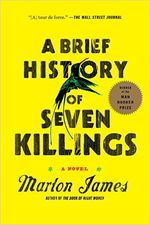
on ‘A Brief History of Seven Killings’ by Marlon James

51r7deroPbL._SX331_BO1,204,203,200_Christopher Tayler at the London Review of Books:

Bob Marley had called a break during a band rehearsal at his house on the evening of 3 December 1976 when two cars pulled up and seven or more gunmen got out. One found his way to the kitchen, where Marley was eating a grapefruit, and opened fire. A bullet scraped his chest before hitting his upper arm, and four or five hit his manager, Don Taylor, who was standing between him and the doorway. The keyboard player’s girlfriend saw ‘a kid’ with his eyes squeezed shut emptying a pistol into the rehearsal area. The lead guitarist, an American session man on his first visit to Jamaica, took cover behind a flight case. The bass player and others – accounts vary as to how many – dived into a metal bathtub. Marley’s wife, Rita, was hit in the driveway while trying to get their children out and went down with a bullet fragment in her scalp. There were shouts: ‘Did you get him?’ ‘Yeah! I shot him!’ Then police arrived to investigate the gunfire and the attackers took off.

The manager had to be flown to Miami for surgery, but all the victims survived, and while each of the gunmen gets killed in A Brief History of Seven Killings, the novel restages the assault on Marley’s house with eight shooters, most of whom get given names: Josey Wales, Weeper, Bam-Bam, Demus, Heckle and Funky Chicken, plus ‘two man from Jungle, one fat, one skinny’. (‘Jungle’ is a nickname for one of the many social housing developments that sprang up in Kingston in the 1960s and 1970s.)

more here.

demolishing dogmatic darwinism

51RmiV4qCTL._SX315_BO1,204,203,200_John Gray at Literary Review:

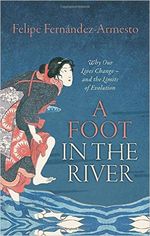
In a popular American blog propagating Darwinism, Felipe Fernández-Armesto reports, a well-known biologist with mildly unorthodox views has been described as needing a ‘good punch in the balls’. Fernández-Armesto writes, ‘This is almost as nasty as anyodium theologicum rival religious dogmatists have ever exchanged.’ It is a characteristically civilised comment on what has become a thoroughly uncivilised debate. For some of its most ardent proponents, Darwinism is not a scientific theory about the origins and development of living things but instead a comprehensive world-view. For these evangelists, evolution enables us to understand everything that exists – not least human culture.

A mix of wide and deep learning and rigorous argument, beautifully written, A Foot in the River demolishes this way of thinking. Fernández-Armesto is no enemy of science. Already in the early 1970s he was holding a seminar with a colleague on what they called ‘historical ecology’, which aimed ‘to understand humans in relation to the whole of the rest of nature: the climate that surrounds us, the landscape that enfolds us, the species with which we interact, the ecosystems in which we are bound’. This kind of understanding infused his illuminating surveys of human history, Millennium (1995) and Civilizations (2001). Far from resisting any role for scientific enquiry in the humanities, Fernández-Armesto has been a pioneer in showing how the material circumstances in which humans act have helped shape their histories.

more here.

We could all benefit from learning about consent

D H Kelly in The F Word:

GirlThere have been many clever and undoubtedly useful attempts to describe sexual consent in a non-sexual way, such as Alli Kirkham’s cartoons and Rockstar Dinosaur Pirate Princesss’s tea analogy which has inspired a video now promoted by the CPS. The trouble is, people do override one another’s non-sexual wishes. Disabled people and others who are considered vulnerable routinely have their wishes ignored, often for what is perceived to be for our own good. Friends, family and even strangers take hold of occupied wheelchairs and move us about without asking. I once listened in horror to a friend describe driving his autistic sister to a cafe for lunch, but refusing to tell her where they were going. “She insists on knowing the exact plan all the time,” my friend complained, “She needs to lighten up, so I said, ‘Tough. It’s a surprise.’ And she completely lost it!”

Most people don’t do these things most of the time. Most of us really don’t need to be taught not to rape, as one student recently put it. Not that because – as the young man claimed – we love consent, but because we are horrified at the idea of doing something sexual which isn’t wholly welcome. However, cultural ideas about consent are muddy enough for us to feel confused and conflicted about other people’s actions. Sex in movies almost always erupts spontaneously, without much interaction, let alone verbal discussion. Journalists ask whether you need permission to kiss someone, and there are apps which claim to record sexual consent, as if that’s about one moment in time. When Julian Assange was accused of penetrating an unconscious person – unable to make a decision, let alone indicate her wishes – there was a national debate about whether this was rape or bad manners. This doesn’t mean you or I, exposed to such a culture, will then look at a lovely sexy person who happens to be drunk as a skunk and think, “Here’s my chance!” but when we hear that someone else committed rape in these circumstances, culture tells us they were succumbing to temptation.

More here.

New research demands rethink on Darwin’s theory of ‘fecundity selection’

From PhysOrg:

FecundA key concept in Darwin's theory of evolution which suggests nature favours larger females that can produce greater numbers of off-spring must be redefined according to scientists behind ground-breaking research published today (3rd November 2015). The study, published in the scientific journal Biological Reviews, concludes that the theory of 'fecundity selection' – one of Charles Darwin's three main evolutionary principles, also known as 'fertility selection' – should be redefined so that it no longer rests on the idea that more fertile females are more successful in evolutionary terms. The research highlights that too many offspring can have severe implications for mothers and the success of their descendants, and that that males can also affect the evolutionary success of a brood. Darwin's theory of fecundity selection was postulated in 1874 and, together with the principles of natural selection and sexual selection, remains a fundamental component of modern evolutionary theory. It describes the process of reproductive success among organisms, defined by the number of successful offspring which reach breeding age.

After years of research, an evolutionary biologist from the University of Lincoln, UK, has proposed a revised version of the theory of fecundity selection which recommends an updated definition, adjusts its traditional predictions and incorporates important new biological terms. The research indicates that rather than aiding survival, too many offspring can be extremely costly, and can in fact reduce the lifetime reproductive success of females. It highlights that in many species, mothers who produce fewer offspring tend to raise them more efficiently, and that in some cases fathers can take the lead in nurturing young by evolving 'male pregnancy'.

More here.

Tuesday, November 3, 2015

Will Quantum Mechanics Swallow Relativity?

7464_7bd66825e9a97424ffe5645549270832

Corey Powell in Nautilus:

Basically you can think of the division between the relativity and quantum systems as “smooth” versus “chunky.” In general relativity, events are continuous and deterministic, meaning that every cause matches up to a specific, local effect. In quantum mechanics, events produced by the interaction of subatomic particles happen in jumps (yes, quantum leaps), with probabilistic rather than definite outcomes. Quantum rules allow connections forbidden by classical physics. This was demonstrated in a much-discussed recent experiment, in which Dutch researchers defied the local effect. They showed two particles—in this case, electrons—could influence each other instantly, even though they were a mile apart. When you try to interpret smooth relativistic laws in a chunky quantum style, or vice versa, things go dreadfully wrong.

Relativity gives nonsensical answers when you try to scale it down to quantum size, eventually descending to infinite values in its description of gravity. Likewise, quantum mechanics runs into serious trouble when you blow it up to cosmic dimensions. Quantum fields carry a certain amount of energy, even in seemingly empty space, and the amount of energy gets bigger as the fields get bigger. According to Einstein, energy and mass are equivalent (that’s the message of e=mc2), so piling up energy is exactly like piling up mass. Go big enough, and the amount of energy in the quantum fields becomes so great that it creates a black hole that causes the universe to fold in on itself. Oops.

Craig Hogan, a theoretical astrophysicist at the University of Chicago and the director of the Center for Particle Astrophysics at Fermilab, is reinterpreting the quantum side with a novel theory in which the quantum units of space itself might be large enough to be studied directly. Meanwhile, Lee Smolin, a founding member of the Perimeter Institute for Theoretical Physics in Waterloo, Canada, is seeking to push physics forward by returning back to Einstein’s philosophical roots and extending them in an exciting direction.

To understand what is at stake, look back at the precedents. When Einstein unveiled general relativity, he not only superseded Isaac Newton’s theory of gravity; he also unleashed a new way of looking at physics that led to the modern conception of the Big Bang and black holes, not to mention atomic bombs and the time adjustments essential to your phone’s GPS.

More here.

Frederick Douglass’s Faith in Photography

Plate-1-624x740

Matthew Pratt Guterl in TNR:

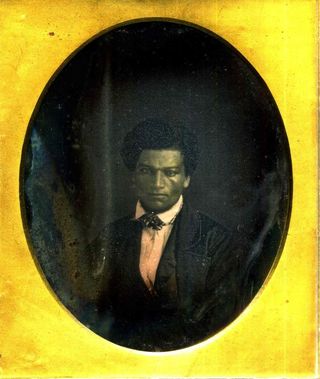
Towards the end of the late nineteenth century, Arabella Chapman, a young African American woman from upstate New York, began to collect and mount personally meaningful tintypes and cartes de visite in a set of small, leather-bound albums. Frederick Douglass appears on page thirty-three of Chapman’s first album—opposite the stern-faced abolitionist John Brown. Douglass is seated in a high-backed wooden chair, wearing a black suit, his hands in his lap, offering a direct, level gaze outward. One elbow is propped up on a side table, and his body is open to the viewer and slightly turned. A plain, white wall is in the background. Such an image conveyed a powerful, dignified seriousness, a certain kind of formal grace. This was a portrait meant to move minds and hearts.

Douglass, we learn in Picturing Frederick Douglass: An Illustrated Biography of the Nineteenth Century’s Most Photographed American, was convinced of the importance of photography. He wrote essays on the photograph and its majesty, posed for hundreds of different portraits, many of them endlessly copied and distributed around the United States. He was a theorist of the technology and a student of its social impact, one of the first to consider the fixed image as a public relations instrument. Indeed, the determined abolitionist believed fervently that he could represent the dignity of his race, inspiring others, and expanding the visual vocabulary of mass culture.

More here.

Sheldon Wolin and Inverted Totalitarianism

Sheldonwolinhedges2_590

Chris Hedges in truthdig:

Sheldon Wolin, our most important contemporary political theorist, died Oct. 21 at the age of 93. In his books “Democracy Incorporated: Managed Democracy and the Specter of Inverted Totalitarianism” and “Politics and Vision,” a massive survey of Western political thought that his former student Cornel West calls “magisterial,” Wolin lays bare the realities of our bankrupt democracy, the causes behind the decline of American empire and the rise of a new and terrifying configuration of corporate power he calls “inverted totalitarianism.”

Wendy Brown, a political science professor at UC Berkeley and another former student of Wolin’s, said in an email to me: “Resisting the monopolies on left theory by Marxism and on democratic theory by liberalism, Wolin developed a distinctive—even distinctively American—analysis of the political present and of radical democratic possibilities. He was especially prescient in theorizing the heavy statism forging what we now call neoliberalism, and in revealing the novel fusions of economic with political power that he took to be poisoning democracy at its root.”

Wolin throughout his scholarship charted the devolution of American democracy and in his last book, “Democracy Incorporated,” details our peculiar form of corporate totalitarianism. “One cannot point to any national institution[s] that can accurately be described as democratic,” he writes in that book, “surely not in the highly managed, money-saturated elections, the lobby-infested Congress, the imperial presidency, the class-biased judicial and penal system, or, least of all, the media.”

Inverted totalitarianism is different from classical forms of totalitarianism. It does not find its expression in a demagogue or charismatic leader but in the faceless anonymity of the corporate state. Our inverted totalitarianism pays outward fealty to the facade of electoral politics, the Constitution, civil liberties, freedom of the press, the independence of the judiciary, and the iconography, traditions and language of American patriotism, but it has effectively seized all of the mechanisms of power to render the citizen impotent.

More here.

A visit to the mansion of Frederic Edwin Church

SN001956Abraham Adams at Harper's Magazine:

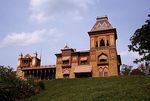
There is a Moorish mansion on a steep hill in the New York countryside. Built by the landscape painter Frederic Edwin Church, it has mosaic rooftops, mortared stone walls, and a fez-red trim. Its balconies look out through horseshoe archways at the Hudson River Valley from a boxy, upright structure of a kind that is more locally familiar than its trappings; in fact, it’s a Victorian in Orientalist drag.

To get inside you have to take the tour. They sell the tickets at the gift shop in the carriage barn, a building just below the hilltop, painted solid green in deference to the house. I went in spring on no occasion. The silent man behind the register declined my press credentials, looking at them like they were reminding him of something he’d forgotten, so I paid. We were early. He invited us to watch their documentary. We followed him to a sunny back room full of benches that felt like a frontier chapel. A television on a rolling stand was displaying credits. The video ended and started over.

Church had muttonchops, a bare chin, and a wide-eyed visionary look that seemed to me, 150 years or so his junior watching photos of him passing on the screen, a little funny in its gravitas.

more here.

President Obama & Marilynne Robinson: A Conversation—II

Obama_1-111915_jpg_600x640_q85… at the New York Review of Books:

Robinson: I think that in our earlier history—the Gettysburg Address or something—there was the conscious sense that democracy was an achievement. It was not simply the most efficient modern system or something. It was something that people collectively made and they understood that they held it together by valuing it. I think that in earlier periods—which is not to say one we will never return to—the president himself was this sort of symbolic achievement of democracy. And there was the human respect that I was talking about before, [that] compounds itself in the respect for the personified achievement of a democratic culture. Which is a hard thing—not many people can pull that together, you know…. So I do think that one of the things that we have to realize and talk about is that we cannot take it for granted. It’s a made thing that we make continuously.

The President: A source of optimism—I took my girls to see Hamilton, this new musical on Broadway, which you should see. Because this wonderful young Latino playwright produced this play, musical, about Alexander Hamilton and the Founding Fathers. And it’s all in rap and hip-hop. And it’s all played by young African-American and Latino actors.

And it sounds initially like it would not work at all. And it is brilliant, and so much so that I’m pretty sure this is the only thing that Dick Cheney and I have agreed on—during my entire political career—it speaks to this vibrancy of American democracy, but also the fact that it was made by these living, breathing, flawed individuals who were brilliant. We haven’t seen a collection of that much smarts and chutzpah and character in any other nation in history, I think.

more here.

The Work of the Dead: A Cultural History of Mortal Remains

BowlerdrybonesThomas W. Laqueur at The Paris Review:

When an important nineteenth-century painter takes on the subject of mortality and immortality, the scene is set in a churchyard, not a cemetery. There were no bodies evident in the latter. Henry Alexander Bowler’s The Doubt: ‘Can These Dry Bones Live?’ was painted in 1855 as a meditation on Tennyson’s In Memoriam. A young woman is standing amidst the genteel disrepair of what appears to be a substantial country churchyard (but actually is the churchyard of the London suburb of Stoke Newington). The box tomb on her right has lost its siding, exposing the brick vault beneath; this is the sort of shelter that sparked late eighteenth-century litigation, an effort that went against the nature of the place, that somehow tried to bring order to an individual grave by claiming for it a permanence that some opposed. The stone behind her has sunk almost out of sight; further back, an old-fashioned and short-lived grave board with elaborately carved posts running laterally along the body beneath is visible among a picturesque array of variously angled slabs. She rests her arms on the gravestone of John Faithful and looks onto the disturbed earth of the grave—there is no hint why it is in this condition, but it is almost a trope of churchyard representation. More specifically, she contemplates the skull that is lying there and the femur and bits of ribs that are poking out of the ground. This would have been unthinkable in the new regime of the cemetery. The red brick buttresses and a few windows of the church building itself stand out as if to make the point of a historical continuity of the Christian community of the living and the dead, represented by the field of markers in various stages of decay—its past, by the church that serves the living, and by the visit itself. John Faithful died in 1791, and the woman’s costume makes clear that the scene we are witnessing occurred sixty years later, in the 1850s.

more here.

Bring Muslims, Evangelicals, and Atheists Together on Campus

Eboo Patel and Mary Ellen Giess in The Chronicle of Higher Education:

Photo_73804_portrait_325x488This time it’s the Muslims at Wichita State University who are in the news. Consigned to praying in stairwells and hallways, they were delighted last month when a Christian minister on the campus proposed making changes in the chapel in a way that would accommodate diverse worship practices. The plan called for replacing the pews with stackable chairs, a step that enraged some alumni and community members. Part of the anger was directed toward the Christian leaders who led the plan. “You call yourself a Christian?” one critic thundered. But the Muslim students experienced the brunt of the backlash, accused of advocating for the Islamic transformation of America. The Wichita State events call to mind a similar incident at Duke University in January. After campus officials provided permission for Muslims to sound the adhan, or call to prayer, from the bell tower of the chapel, Franklin Graham, a prominent Christian evangelist, wrote: “As Christianity is being excluded from the public square and followers of Islam are raping, butchering, and beheading Christians, Jews, and anyone who doesn’t submit to their Sharia Islamic law, Duke is promoting this in the name of religious pluralism.” That inspired a groundswell of protest against Duke, with specific fury directed at its Muslim students. For us, these incidents highlight some disturbing facts.

It is no secret that non-Muslim Americans have generally negative attitudes toward Muslims. A 2014 report by the Pew Research Center, for example, shows that 41 percent of Americans rank Muslims in the lowest third on a scale of “warmth” toward diverse religious traditions. But it may surprise officials in higher education that perceptions in campus environments, generally thought to be more welcoming of diverse identities, bear striking similarities to the national data. The Campus Religious and Spiritual Climate Survey, designed by two professors of higher education, Alyssa Bryant Rockenbach and Matt Mayhew, found that only 46 percent of students surveyed believe that Muslims are accepted in their campus communities.

It has not escaped notice that many of the more aggressive individuals in targeting Muslims are evangelical Christians.

More here.

The free-will scale

Stephen Cave in Aeon:

WillIt is often thought that science has shown that there is no such thing as free will. If all things are bound by the same impersonal cosmic laws, then (the story goes) our paths are no freer than those of rocks tumbling down a hill. But this is wrong. Science is giving us a very powerful and clear way to understand freedom of the will. We have just been looking for it in the wrong place. Instead of using an electron microscope or a brain-scanner, we should go to the zoo. There we will find animals using a wide range of skills that give them options for what to do – skills that we share. These abilities have evolved through natural selection because they are essential for survival: animals need to weigh different factors, explore available options, pursue new alternatives when old strategies don’t work. Together these abilities give all animals, including humans, an entirely natural free will, one that we need precisely because we are not rocks. We are complex organisms actively pursuing our interests in a changing environment. And we are starting to understand the cognitive abilities that underpin this behavioural freedom. Like most evolved capacities, they are a matter of degree. Take, for example, the ability to delay gratification. For a hungry cat, this means being able to hold back from pouncing until it is sure the sparrow is within range and looking the other way. Experimenters measure this ability by testing how long an animal can resist a small treat in return for a larger reward after a delay. Chickens, for example, can do this for six seconds. They can choose whether to wait for the juicier titbit or not – but only if that titbit comes very soon. A chimpanzee, on the other hand, can wait for a cool two minutes – or even up to eight minutes in some experiments. I am guessing that you could manage a lot longer.

The chimpanzee therefore has more options: if a juicier treat became available after six seconds, a chimp would be free to choose whether to wait for it, but a chicken would not. If you can delay gratification even longer, you have still more options: whether to turn down dessert because you are on a diet, or to forego all pleasure in this world in the hope of a heavenly reward. As we start to understand, and learn to measure, the capacities that underlie behavioural freedom, we can begin to put this natural free will on a scale. Paralleling the measurement of intelligence, we could call it the freedom quotient: FQ. Such a scale should give us new insights into the factors that hinder or enhance our efforts to shape our lives. In other words, FQ should tell us how free we are – and how we can become even more so.

More here.