
Erica X Eisen at The Paris Review:
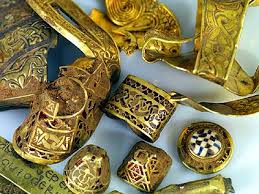
 In the Chester Beatty Library, there are books made entirely of jade. There are picture scrolls featuring calligraphy by the brother of the Japanese emperor. There are papyrus codices that constitute some of the few surviving texts of Manichaeism, a religion of darkness and light that rivaled Christianity in scale until its last believers died out in fourteenth-century China. There are Armenian hymnals, Renaissance catalogues of war machines, and monographs on native Australian fauna. There is all of this and more—thousands and thousands of other works diverse in period and place of origin, waiting for human eyes. And yet as I walk through the galleries, as I survey the cases of books safe behind their glass, it occurs to me that if a book is a thing meant to be read, then in a certain sense, these objects have lost their function to all but the scholarly epigraphists, backs bent in the private study room. And yet far from becoming something less because of this, the books on display have become something more.
Can we recover a physical literature? Can we recover a literature that is not merely read but felt? The library museum gestures at just such a possibility.
more here.
 “Castle Rock,” Hulu’s longform series ode to
  In early 2014
 The Hague, September 2016. The speech from the UN high commissioner for human rights was not expected to ruffle feathers. A mild appeal to our better angels and then back to the canapés—traditionally, as one UN speechwriter puts it, “we don’t use adjectives, we don’t name names.”
 Benjamin Moser in The New Yorker:
 W
W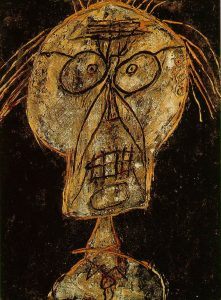 By conceiving the notion of art brutin a Europe devastated by the Second World War, French artist Jean Dubuffet questioned the underlying pretense behind the processes of artistic legitimization, dispossessing those authorities empowered to legislate in the art world. He also insisted on the flexible nature of definitions, maintaining that art brutcould incessantly evolve depending on the context of its emergence, knowing that the norm and the margins are perpetually reassessed. Without an art movement or identifiable style, art brut is not a category, but an evolving critical concept. Above all, as observed Céline Delavaux, Dubuffet likely proposed a singular, even poetic and literary way of thinking about art, “It is in the absence of the voice of the madman, the excluded, the uneducated, that his radically subjective art discourse was invented.”
 H
H Imagine you’re the president of a European country. You’re slated to take in 50,000 refugees from the Middle East this year. Most of them are very religious, while most of your population is very secular. You want to integrate the newcomers seamlessly, minimizing the risk of economic malaise or violence, but you have limited resources. One of your advisers tells you to invest in the refugees’ education; another says providing jobs is the key; yet another insists the most important thing is giving the youth opportunities to socialize with local kids. What do you do? Well, you make your best guess and hope the policy you chose works out. But it might not. Even a policy that yielded great results in another place or time may fail miserably in your particular country under its present circumstances. If that happens, you might find yourself wishing you could hit a giant reset button and run the whole experiment over again, this time choosing a different policy. But of course, you can’t experiment like that, not with real people.
 In the largest genetics study ever published in a scientific journal, an international team of scientists on Monday

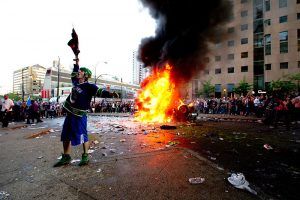 Spectator sports can reflect a society’s worst inclinations by promoting pure partisanship.
 Although some may be heralding the end of free speech, 2018 has been a year of far-reaching debate and discussion. In the coming months, we can anticipate attending or streaming discussions ranging from such topics as the role of race in American politics to the nature of truth, from existential threats posed by artificial intelligence to the value of religion.