
Tommy Orange in The New York Times:
 This year has been exhausting in so many ways, asking us to accept more than it seems we can, more than it seems should be possible. But really, in the end, today’s harsh realities are not all that surprising for some of us — for people of color, or for people from marginalized communities — who have long since given up on being shocked or dismayed by the news, by what this or that administration will allow, what this or that police department will excuse, who will be exonerated, what this or that fellow American is willing to let be, either by contribution or complicity. All this is done in the name of white supremacy under the guise of patriotism and conservatism, to keep things as they are, favoring white people over every other citizen, because where’s the incentive to give up privilege if you have it? Now more than ever I believe fiction can change minds, build empathy by asking readers to walk in others’ shoes, and thereby contribute to real change. In “Friday Black,” Nana Kwame Adjei-Brenyah has written a powerful and important and strange and beautiful collection of stories meant to be read right now, at the end of this year, as we inch ever closer to what feels like an inevitable phenomenal catastrophe or some other kind of radical change, for better or for worse. And when you can’t believe what’s happening in reality, there is no better time to suspend your disbelief and read and trust in a work of fiction — in what it can do.
Adjei-Brenyah grew up in a suburb of New York and graduated with his M.F.A. from Syracuse University, where he was taught by the short story master George Saunders. “Friday Black” is an unbelievable debut, one that announces a new and necessary American voice. This is a dystopian story collection as full of violence as it is of heart. To achieve such an honest pairing of gore with tenderness is no small feat. The two stories that bookend the collection are the most gruesome, and maybe my favorites. Where they could be seen as gratuitous (at least to those readers who are not paying close attention to the news, or to those who intentionally avert their eyes), I find them perfectly paced narratives filled with crackling dialogue and a rewarding balance of tension and release. Violence is only gratuitous when it serves no purpose, and throughout “Friday Black” we are aware that the violence is crucially related to both what is happening in America now, and what happened in its bloody and brutal history.
More here.
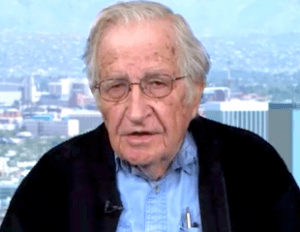 Linguist and long-time political gadfly Noam Chomsky argued in an interview Friday that President Donald Trump’s poisonous and violent rhetoric fueling hatred in the United States has a deep lineage in the country — and also accentuates the country’s role in an “alliance of reactionary and repressive states” worldwide. Asked by Democracy Now’s Amy Goodman to reflect on the recent
  In her New York Times op-ed “
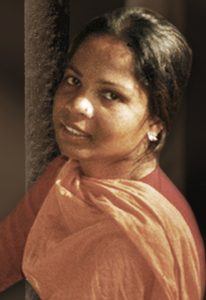 Aasia bibi
 In his 1927 essay “Supernatural Horror in Literature,” the influential horror writer H.P. Lovecraft declares that “the oldest and strongest emotion of mankind is fear, and the oldest and strongest kind of fear is the fear of the unknown.” The contemporary Swedish poet
 I will
 How democratic is the United States? According to a
 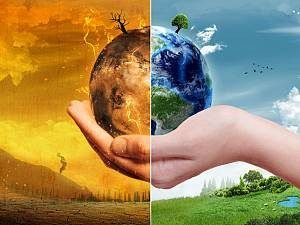 You are what you eat. The atoms in your body come from the food and drink you consume – and, to some extent, from the air you breathe. That is not terribly surprising. What few people realise, however, is that about half the nitrogen atoms in your body have passed through something called a Haber-Bosch reaction. This chemical process, invented just before the first world war, did as much to change the
  W
W The
The  I was particularly interested in sexuality and online porn. If, as Stephens-Davidowitz puts it, “Google is a digital truth serum,” then what else does it tell us about our private thoughts and desires? What else are we hiding from our friends, neighbors, and colleagues?
 T
T In the 1970s and ’80s, Pittsburgh’s haunted-house scene was booming. Simmons remembers perusing long lists of Halloween happenings printed in the local newspaper, then grabbing twenty dollars and spending the whole night hopping between attractions. There were no websites or phone numbers; the haunted houses would stay open until people stopped showing up. The era of big-budget haunted houses didn’t exist yet, and almost all of them were for charity, run by volunteer fire departments, Elks Clubs, Make-A-Wish, and the United States Junior Chamber, also known as the Jaycees. The Jaycees’ haunted-house fundraisers became so successful that they circulated how-to manuals to their chapters nationwide; many experts credit the Jaycees with putting a haunted house in every city in America.
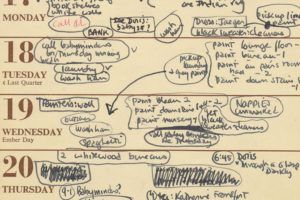 Many readers will be tempted to skip over the first 700 pages of this volume, to go straight for the final months. But that would be a big mistake. To begin with, the letters to Beuscher – Sylvia proposes rather poignantly at one point to pay her for her replies – need to be understood within a wider context of letter-writing patterns. The first volume of letters began at summer camp and ended with Sylvia and Ted’s honeymoon. The second begins in Cambridge in October 1956: Sylvia is studying for the second year of the English BA degree on a Fulbright scholarship; Ted, two years after graduating from Cambridge himself, is teaching at a boys’ school but “may have to take a labouring job” to cover the bills. They drink sherry, paint their shabby flat in cheerful colours, wait “breathlessly” for the post, heat milk for coffee (allowing the pan to boil over when it in fact arrives), recite Chaucer to the cows, and ask their omnipresent Ouija board when they will be published in the New Yorker. There is a huge amount about cooking and baking, including a request for Aurelia to send extra boxes of Flako pie crust mix across the Atlantic, a discussion of Ted’s love of casseroles, and the comment that “My Joy of Cooking is a blessing”. Really? A blessing? In her journal of the same year, Sylvia had rebuked herself wryly for reading The Joy of Cooking like a “rare novel”. “Whoa, I said to myself. You will escape into domesticity & stifle yourself by falling headfirst into a bowl of cookie batter.”
 We will soon be able to identify the likelihood that a newborn baby – perhaps your baby – will be susceptible to depression, anxiety and schizophrenia throughout his or her life. We will know the probability that our newborns will have difficulty learning to read, become obese and be prone to Alzheimer’s disease in their later years. Good news? Robert Plomin thinks so. In Blueprint, he argues such insights should make us more tolerant of those who might be overweight or prone to depression; they will enable us to support our children better and plan for our own life’s course. He is equally pleased with the discovery that much of what we think of as nurture – the caring, supporting environments we build for our children – has, on average, no impact on our loved ones’ development. Plomin explains that nurture in the home is as irrelevant as the school environment for influencing whether we become kind or gritty, happy or sad, wealthy or poor, and that this leads to greater equality of opportunity than would have otherwise been the case. The only thing that matters for our personalities and much else is the DNA that we inherit and those chance events of our lives beyond anyone’s control.