Waiting for the Bus
All along the road from Bulawayo
to Gwanda or Matopos or Vic Falls;
at bus-stops, lay-bys, under shadeless trees,
the people wait beside their bundled things.
All day long they wait, and sometimes all night
too, and the next day – anxiously waiting.
Waiting for the public transport to stop
and let them in and take them home. Waiting
with babies to nurse, children to comfort
and feed, chickens, the occasional goat.
They have learned to come prepared, with blankets,
izinduku, pots for cooking sadza.
Waiting for ZUPCO or SHU-SHINE, AJAY,
to get them to their Uncle’s funeral,
their cousin’s wedding, their baby brother’s
baptism. Waiting with the new Camper Vans
cruising by. Anxious to be at work on
time. Anxious not to lose their jobs. Waiting.
They take their time now not by wrist-watches
but by the sun and the stars and the moon;
by the appearance of the mopani worms;
by the ripening of marula fruit;
by the coming of the rains. Not by bus
timetables but by birth, marriage and death.
And while they wait they count the jets that fly
to Harare and Johannesburg.
Liverish businessmen sucking whiskies
are in these jets. And Chefs with mistresses
wearing the latest digital watches,
Digital dolly-birds. All carry brief-
cases with combination locks, and next
to nothing inside: dark glasses perhaps;
and a newspaper to study the Stock
Exchange; something digital, perhaps, for
calculating profit . . . and more profit.
It’s something for people to do while
they wait – counting the jets high overhead.
Often the vapour trails are the only
clouds in the sky. No Forex for buses,
They tell us, but the five-star hotels go
up, and another Boeing is purchased.
All day they wait; all night; long suffering.
And when, at last, a bus does stop, its tyres
are likely to be bald, its brakes likely
to be held together with wire, its body
battered, belching clouds of brain-tightening,
lung-collapsing smoke. Who’s responsible?
“Not me,” says the Chef dipping his fingers
in his girl-friend’s cocktail, shifting his vast
belly, vast enough to accommodate
at least seven baby goats. “Don’t look at
me,” says the Managing Director, “my
bottom line is profit. I owe it to
the shareholders. Another whisky please.”
And I don’t think it is going to be any
different tomorrow or the next day
or the next. The time of sweet-becoming
is over. For those millions who depend
on buses, nothing has changed; only their
expectations have once again been dashed.
The time of bitter arrival is here:
not safe new buses, but the amassing
of personal wealth, the cultivation
of another crop of heroes. Street
names change, statues change; hotels go up, jets
go up, and the people go on waiting.

 This past summer, migrants from throughout Africa and elsewhere continued to make the journey to Ceuta and Melilla, two autonomous Spanish cities nestled in Morocco’s northern coast. As small parcels of European land on the African continent, these cities defy the assumption that the Mediterranean Sea serves as a natural barrier between distinct civilizations. They are sites of border crossing, with all of the charge that this term carries in the contemporary geopolitical climate. Ceuta and Melilla are gateways to Europe, and for that reason they are surrounded by tall fences and kept under surveillance—not only by military guards, but also by the Spanish press.
 In the 1970s and ’80s, Pittsburgh’s haunted-house scene was booming. Simmons remembers perusing long lists of Halloween happenings printed in the local newspaper, then grabbing twenty dollars and spending the whole night hopping between attractions. There were no websites or phone numbers; the haunted houses would stay open until people stopped showing up. The era of big-budget haunted houses didn’t exist yet, and almost all of them were for charity, run by volunteer fire departments, Elks Clubs, Make-A-Wish, and the United States Junior Chamber, also known as the Jaycees. The Jaycees’ haunted-house fundraisers became so successful that they circulated how-to manuals to their chapters nationwide; many experts credit the Jaycees with putting a haunted house in every city in America.
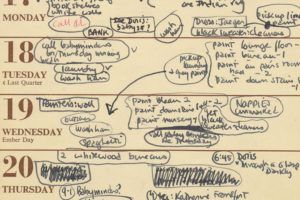 Many readers will be tempted to skip over the first 700 pages of this volume, to go straight for the final months. But that would be a big mistake. To begin with, the letters to Beuscher – Sylvia proposes rather poignantly at one point to pay her for her replies – need to be understood within a wider context of letter-writing patterns. The first volume of letters began at summer camp and ended with Sylvia and Ted’s honeymoon. The second begins in Cambridge in October 1956: Sylvia is studying for the second year of the English BA degree on a Fulbright scholarship; Ted, two years after graduating from Cambridge himself, is teaching at a boys’ school but “may have to take a labouring job” to cover the bills. They drink sherry, paint their shabby flat in cheerful colours, wait “breathlessly” for the post, heat milk for coffee (allowing the pan to boil over when it in fact arrives), recite Chaucer to the cows, and ask their omnipresent Ouija board when they will be published in the New Yorker. There is a huge amount about cooking and baking, including a request for Aurelia to send extra boxes of Flako pie crust mix across the Atlantic, a discussion of Ted’s love of casseroles, and the comment that “My Joy of Cooking is a blessing”. Really? A blessing? In her journal of the same year, Sylvia had rebuked herself wryly for reading The Joy of Cooking like a “rare novel”. “Whoa, I said to myself. You will escape into domesticity & stifle yourself by falling headfirst into a bowl of cookie batter.”
 We will soon be able to identify the likelihood that a newborn baby – perhaps your baby – will be susceptible to depression, anxiety and schizophrenia throughout his or her life. We will know the probability that our newborns will have difficulty learning to read, become obese and be prone to Alzheimer’s disease in their later years. Good news? Robert Plomin thinks so. In Blueprint, he argues such insights should make us more tolerant of those who might be overweight or prone to depression; they will enable us to support our children better and plan for our own life’s course. He is equally pleased with the discovery that much of what we think of as nurture – the caring, supporting environments we build for our children – has, on average, no impact on our loved ones’ development. Plomin explains that nurture in the home is as irrelevant as the school environment for influencing whether we become kind or gritty, happy or sad, wealthy or poor, and that this leads to greater equality of opportunity than would have otherwise been the case. The only thing that matters for our personalities and much else is the DNA that we inherit and those chance events of our lives beyond anyone’s control.
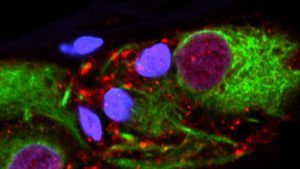 The appendix has a reputation of being useless at best. We tend to ignore this pinkie-size pouch dangling off our large intestine unless it gets inflamed and needs cutting out. But a new study suggests this enigmatic organ in the gut harbors a supply of a brain-damaging protein involved in Parkinson’s disease—even in healthy people. The study is the largest yet to find that an appendectomy early in life can decrease a person’s risk of Parkinson’s or delay its onset. “It plays into this whole booming field of whether Parkinson’s possibly starts in the gut,” says Per Borghammer, a neuroscientist at Aarhus University in Denmark who was not involved in the study. “And that would be a radical change in our understanding of the disease.” Look inside the brain of a person with Parkinson’s and you’ll find clumps of a misfolded form of a protein known as α-synuclein (αS). The protein’s normal function isn’t fully clear, but in this clumpy state, it may damage and kill neurons, including those near the base of the brain that help control movement. The results are the hallmark tremors and body rigidity of Parkinson’s.
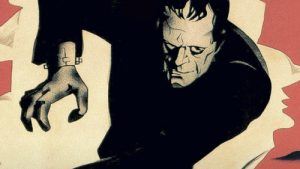 Mary Wollstonecraft Shelley’s 200-year-old creature is more alive than ever. In his new role as the bogeyman of artificial intelligence (AI), ‘the monster’ made by Victor Frankenstein is all over the internet. The British literary critic Frances Wilson even
 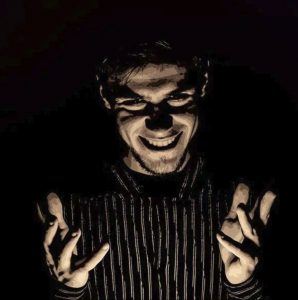 HALLOWEEN IS THE ONE
  When we consider the future that technological change will bring about, it is tempting to envision a world taken over by robots, where the singularity has given way to superintelligent agents and human extinction. This is the image of our future we have grown accustomed to seeing in cinematic depictions, but it is not the future that British barrister Jamie Susskind wants us to worry about. Instead, in Future Politics: Living Together in a World Transformed by Tech, Susskind focuses on how digital technologies control human life rather than eliminate it.
 In the summer of 1996, during an international anthropology conference in southeastern Brazil, Bruno Latour, France’s most famous and misunderstood philosopher, was approached by an anxious-looking developmental psychologist. The psychologist had a delicate question, and for this reason he requested that Latour meet him in a secluded spot — beside a lake at the Swiss-style resort where they were staying. Removing from his pocket a piece of paper on which he’d scribbled some notes, the psychologist hesitated before asking, “Do you believe in reality?”
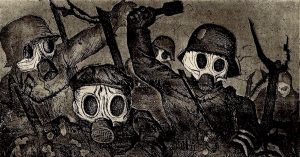 “The war has left its imprint in our souls [with] all these visions of horror it has conjured up around us,” wrote French author Pierre de Mazenod in 1922, describing the Great War. His word, horreur, appears in various forms in an incredible number of accounts of the war, written by English, German, Austrian, French, Russian, and American veterans. The years following the Great War became the first time in human history the word “horror” and its cognates appeared on such a massive scale. Images of catastrophe abounded. The Viennese writer Stefan Zweig, one of the stars in the firmament of central Europe’s decadent and demonic café culture before 1914, wrote of how “bridges are broken between today and tomorrow and the day before yesterday” in the conflict’s wake. Time was out of joint. When not describing the war as horror, the imagery of all we would come to associate with the word appeared. One French pilot passing over the ruined city of Verdun described the landscape as a haunted waste and a creature of nightmare, “the humid skin of a monstrous toad.”
 The mesmeric work of Lou Harrison (1917–2003) stands apart from so much of the music written in 20th-century America—so singular is its idiom, so striking are its borderless, cross-cultural sounds—yet despite a swell of interest coinciding with the composer’s centennial last year, his scores are all too rarely heard. He was always something of an outsider, this unrepentant free spirit and individualist. Harrison studied with Arnold Schoenberg in the 1940s, when the 12-tone master was ensconced in Los Angeles, and gave serial techniques a serious go, but his best music—lyrical, melodic, indebted to the sounds of Southeast Asia—inhabits a different world from so much of the postmodern avant-garde.
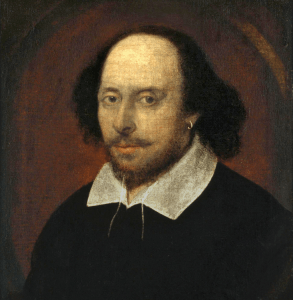 You’ve heard the argument before: Genes are the permanent aristocracy of evolution, looking after themselves as fleshy hosts come and go. That’s the thesis of a book that, last year, was christened the most influential science book of all time: Richard Dawkins’ The Selfish Gene. But we humans actually generate far more actionable information than is encoded in all of our combined genetic material, and we carry much of it into the future. The data outside of our biological selves—call it the dataome—could actually represent the grander scaffolding for complex life. The dataome may provide a universally recognizable signature of the slippery characteristic we call intelligence, and it might even teach us a thing or two about ourselves. It is also something that has a considerable energetic burden. That burden challenges us to ask if we are manufacturing and protecting our dataome for our benefit alone, or, like the selfish gene, because the data makes us do this because that’s what ensures its propagation into the future. Take, for instance, William Shakespeare.
 The cognitive revolution
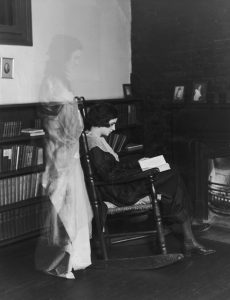 In 1960, the literary critic Leslie Fiedler delivered a eulogy for the ghost story in his classic study “Love and Death in the American Novel.” “An obsolescent subgenre,” he declared, with conspicuous relish; a “naïve” little form, as outmoded as its cheap effects, the table-tapping and flickering candlelight. Ghost stories belong to — brace yourself for maximum Fiedlerian venom — “middlebrow craftsmen,” who will peddle them to a rapidly dwindling audience and into an extinction that can’t come soon enough.
 Some of the scientists most often cited by the Intergovernmental Panel on Climate Change (IPCC) have taken the unusual step of