
by Nickolas Calabrese

Is art “a right or a privilege”? This question was addressed by a who’s who of artworld elites in a New York Times feature earlier this year with regards to the Metropolitan Museum of Art’s revised policy to charge out-of-towners the full $25.00 admission fee rather than their standard pay-what-you-wish policy. Predictably, this group (many of them known for their overt political or moral activism, like Ai Weiwei) overwhelmingly endorsed its status as a right (there was one dissenter, but even that came with caveats). Perhaps one of the most prominent defenders of this view, because of her station and her institutional influence, is Aggie Gund, President Emerita of the Museum of Modern Art in New York. She frequently states that “art is a right, not a privilege” (as she discusses in the beginning of this interview).
As framed here, it is unclear precisely what their statement is declaring. I understand it to mean one of two things: (1) Access to art is a moral right; that is, the belief that our ability to freely appreciate and produce art objects is, generally speaking, good and ought to be defended. This looks prima facie true to me. One would be hard-pressed to deny the moral good of the freedom to produce and appreciate art, barring extreme cases like hateful art, or propaganda attributed to and distributed by despotic regimes, such as the arts that Hitler or Mussolini championed in their lifetimes. This account would also be protective of art as a facet of free speech, which also seems like a mostly good thing. There is a more rigid account of art as a right, one which makes a more serious claim: (2) Access to art ought to be a legal right; that free access to museums and other institutions housing cultural artifacts should be legally guaranteed to citizens. I believe that this second usage is what is being suggested by Gund and the respondents in the NYT article, because the first claim is nearly unanimous, and anyone who would disagree with it is probably some kind of monster. But it is this second account that I am going to dispute. Read more »
 In Tian Shan mountains of the legendary snow leopard, errant wisps of mist float with the speed of scurrying ghosts, there is a climbers’ cemetery, Himalayan Griffin vultures and golden eagles are often sighted, though my attention is completely arrested by a Blue whistling thrush alighting on a rock— its plumage, its slender, seemingly weightless frame, and its long drawn, ventriloquist song remind me of the fairies of Alif Laila that were turned to birds by demons inhabiting barren mountains.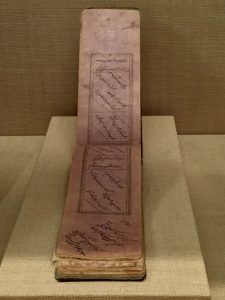
 On a recent windy morning, walking past the Soldiers’ and Sailors’ Monument on West 89th Street in New York City, seeing the flag at half mast, just days before the
  Ronald Reagan was elected President in 1980 with an attitude and agenda similar to Trump’s—to restore America to its rightful place where “someone can always get rich.” His administration arrived in Washington firm in its resolve to uproot the democratic style of feeling and thought that underwrote FDR’s New Deal. What was billed as the Reagan Revolution and the dawn of a New Morning in America recruited various parties of the dissatisfied right (conservative, neoconservative, libertarian, reactionary and evangelical) under one flag of abiding and transcendent truth—money ennobles rich people, making them healthy, wealthy and wise; money corrupts poor people, making them ignorant, lazy and sick.
 When my grandfather died last fall, it fell to my sisters and me to sort through the books and papers in his home in East Tennessee. My grandfather was a nuclear physicist, my grandmother a mathematician, and among their novels and magazines were reams of scientific publications. In the wood-paneled study, we passed around great sheaves of papers for sorting, filling the air with dust.
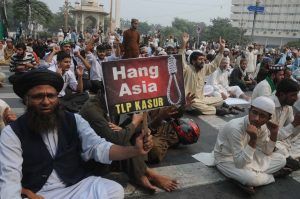 After spending eight years on death row, Asia Bibi, a Christian, was acquitted by Pakistan’s Supreme Court this week. For many here it seemed like a good day. The country’s highest court had finally delivered justice and released a woman whose life has already been destroyed by years in solitary confinement. The court decision quoted Islamic scriptures, bits of letters by the Prophet Muhammad and a smattering of Shakespeare. A great wrong was righted.
 Donald Trump’s election in 2016 as president of the United States can be taken as a striking example of the rise of right-wing populism around the world.
 LAST WEEK, AS
  The word Victorian tends to evoke old-fashioned ideas: women confined in corsets, strict gender roles, and a prudishness about all things sexual. In a world where conspicuous consumerism and self-expression rule, these nineteenth-century notions of self-restraint and self-denial seem hopelessly outdated.
 When Ammar Campa-Najjar was nine years old, his Palestinian father moved his family to Gaza, the narrow strip of Palestinian territory that has been under an Israeli blockade for over a decade. His family was living there when the second intifada broke out in 2000, and Israeli security forces crushed a violent Palestinian uprising with deadly and often indiscriminate force. He remembers when the electricity and water supply were cut off and sheltering in his kitchen while his neighbourhood was bombed. He remembers how a military Hummer crashed into his family’s car, causing him to burn his back and fracture his thigh and putting his younger brother into a coma.
 “Will no one rid me of this meddlesome priest?” asked Henry II as he instigated the murder of the Archbishop of Canterbury, Thomas Becket, in 1170. Down through the ages, presidents and princes around the world have been murderers and accessories to murder, as the great Harvard sociologist Pitirim Sorokin and Walter Lunden documented in statistical detail in their masterwork
  IN THE ANNUS MIRABILIS
 An increasingly visible school of heterodox macroeconomics, Modern Monetary Theory (MMT), makes the case for functional finance—the view that governments should set their fiscal position at whatever level is consistent with price stability and full employment, regardless of current debt or deficits. Functional finance is widely understood, by both supporters and opponents, as a departure from orthodox macroeconomics. We argue that this perception is mistaken: While MMT’s policy proposals are unorthodox, the analysis underlying them is entirely orthodox. A central bank able to control domestic interest rates is a sufficient condition to allow a government to freely pursue countercyclical fiscal policy with no danger of a runaway increase in the debt ratio. The difference between MMT and orthodox policy can be thought of as a different assignment of the two instruments of fiscal position and interest rate to the two targets of price stability and debt stability. As such, the debate between them hinges not on any fundamental difference of analysis, but rather on different practical judgements—in particular what kinds of errors are most likely from policymakers.
 So, again, why is there no socialism in the United States? Perhaps when the millennial generation comes to power, the question will no longer make much sense. But if these enthusiastic young fans of socialist democracy are ever to win big in American electoral politics, it’s going to be because they will have figured out a new way to talk about class in America. And to do that, they will need to understand some of the different ways that Americans have thought—and felt—about class. And to do that, they might want to read a neglected classic of American sociology—The American Perception of Class, by Reeve Vanneman and Lynn Cannon, just reissued as an open access title by Temple University Press and available for
 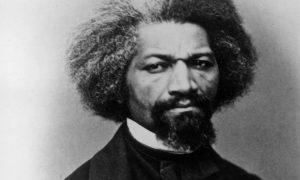 “Douglass engaged in a lifelong autobiographical quest for a coherent story of ascendance and familial identity,” Blight writes, and “for the healing of his own wounds”. Douglass himself thundered that slavery “converted the mother that bore me into a myth, it shrouded my father in mystery, and left me without an intelligible beginning in the world”. He yearned for “a bright gleam of a mother’s love”.
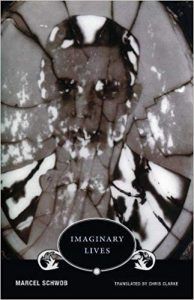 Imaginary Lives (1896) was Schwob’s last book of fiction. He composed its twenty-two chapters—each one the story of a life, recounted in fewer than a dozen pages, with all of these lives arranged in chronological order—between 1893 and 1896. Early in its composition, at the age of twenty-six, Schwob suffered the first attack of a mysterious intestinal ailment whose painful effects and questionable treatments (ether, opium, morphine) would lead to his death at thirty-seven. Schwob’s physical condition to some extent shaped his fiction, and though all the chapters of Imaginary Lives culminate, naturally enough, in their subjects’ deaths, these deaths are often unnaturally violent. Lucretius the Poet is poisoned by his lover. Clodia the Licentious Matron is strangled, robbed, and dumped in the river Tiber. Gabriel Spenser the Actor is stabbed in the lung by Ben Jonson the playwright. And the three pirates of the book (Captain Kidd, Walter Kennedy, Stede Bonnet) are hanged and left to rot upon the rope. Imaginary Lives is, among other things, a study of human violence, proceeding from the sun-stroked era of ancient Greek gods and demigods to the soot-blackened nineteenth-century Edinburgh of the serial murderers Burke and Hare.