by Emily Ogden
Unfitness to pursue our research in the unfathomable waters. —Herman Melville, Moby-Dick
What are the forms of unknowing? Ambivalence. Diffidence. The open mind. The broken mind. The mind faced with the sacred. Deprivation of an education. Naiveté—or is it just youth? Objectivity. Credulity. Amateurism. Anti-intellectualism. Forgetting. Willful forgetting. Receipt of mercy, as when we say, it’s better if she doesn’t know.
Neither good nor bad, neither innocent nor strategic, unknowing in itself belongs neither to the right, nor to the left, nor even to the clueless, privileged middle. Yet forces conspire of late to make unknowing, both posture and reality, look like the exclusive territory of the reactionary guard. I do not think progressives should cede their claim to this common property of ours. For a little while, then—never mind how long; I’m not sure yet—this column will concern unknowing: when and why one might value it.
I am aware of how untimely such a project may seem, may even be. The Trump administration’s aggressive, racialized ignorance has reached literally world-destroying proportions. Seemingly the one kind of expertise toward which the US president does not maintain open hostility is criminal defense litigation, and that’s of necessity. Republican voters take pride in their know-nothingism—see “I’m a Deplorable” bumper stickers—and their critics agree, calling them uneducated, in denial about their white supremacist sympathies, or both.
While campaigns like #bluelivesmatter and climate-change denial weaponize obtuseness, the left assumes a defensive crouch and draws tight the mantle of its enlightenment. What other choice is there? To enter certain conversations—as for example about abortion or rape—unsure of what you think is often to be judged conservative. Only slightly less often, it is actually to be so. And thus knowingness becomes at times an affected signal, and at other times a reliable sign, of progressive politics.
But—but. Aren’t there forms of unknowing one might want to protect, even prize? Read more »

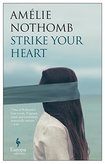 NO WORKING WRITER believes in the shattering power of an encounter—with another person, with a new sensation, with possibility—more than Amélie Nothomb, the prolific Paris-based Belgian who’s published a novel a year since 1992’s Hygiène de l’assassin (rendered in English as Hygiene and the Assassin, though a more accurate title would be The Assassin’s Purity). Her first book offered an impressive blueprint of what would define her subsequent work: arrogant, infuriating personalities; vicious character clashes; childhood love so obsessive that it bleeds out over an adult’s entire history; and philosophical declarations about war. (Nothomb’s fervent worship of “war,” used to describe any grand conflict, is as distinctive a signature as her actual name.) “My books are more harmful than war,” brags the author at the center of Hygiene, “because they make you want to die, whereas war, in fact, makes you want to live.” His demeanor is so provoking that it incites murder, which is another Nothomb theme. People are always destroying one another. She’s killed a self-named avatar off on at least two separate occasions.
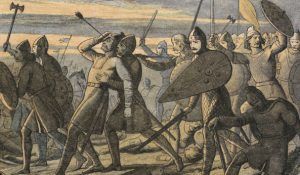
 To understand the literary Gothic – to even begin to account for its curious appeal, and its simultaneous qualities of seduction and repulsion – it is necessary to undertake a little time travel. We must go back beyond the builders putting the capstone on Pugin’s Palace of Westminster, and on past the last lick of paint on the iced cake of Horace Walpole’s Strawberry Hill House; back again another six hundred years past the rap of the stone-mason’s hammer on the cathedral at Reims, in order to finally alight on a promontory above the city of Rome in 410AD. The city is on fire. There are bodies in the streets and barbarians at the gates. Pope Innocent I, hedging his bets, has consented to a little pagan worship that is being undertaken in private. Over in Bethlehem, St Jerome hears that Rome has fallen. ‘The city which had taken the whole world’, he writes, ‘was itself taken.’ The old order – of decency and lawfulness meted out with repressive colonial cruelty – has gone. The Goths have taken the Forum.
 It’s dark. It’s cold. As I write this the rain is lashing down outside my window and beyond that – ugh! The world. Brexit, Trump, Putin. Danger, fear and uncertainty. I want warmth, I want comfort and I want to feel that somehow, somewhere, order might be restored. I want, in other words, to read a novel by
  In the winter of 1994, a young man in his early twenties named Tim was a patient in a London psychiatric hospital. Despite a happy and energetic demeanour, Tim had bipolar disorder and had recently attempted suicide. During his stay, he became close with a visiting US undergraduate psychology student called Matt. The two quickly bonded over their love of early-nineties hip-hop and, just before being discharged, Tim surprised his friend with a portrait that he had painted of him. Matt was deeply touched. But after returning to the United States with portrait in hand, he learned that Tim had ended his life by jumping off a bridge.
  April 2018: ‘Tis the Season of Giddiness in Democratlandia. Republicans are saddled with a widely despised President and riven by internal dissension. The Republican leadership in Congress is lurching from fiasco to fiasco – interrupted briefly by one great “success” on tax cuts. The zombie candidates of the Tea Party are still stalking establishment Republicans across the land. And, somewhere in his formidable fastness, the Great Dragon Mueller is winding up for the fiery breath that will consume the world of Trumpism like a paper lantern. And a Blue Wave – nay, a Tsunami – is headed towards the Republicans in Congress, looking to engulf them in November.
 When you consume a meal, do you eat cow or beef? Yes, these are the same, especially considering where they end up, but we tend to think of the cow as the beginning of this particular process, and the beef as the product. More of these pairings include calf/veal, swine or pig/pork, sheep/mutton, hen or chicken/poultry, deer/venison, snail/escargot.

 It could almost be a question on a very meta personality quiz: Do you prefer the Myers-Briggs typology or the Big Five personality traits? The Myers-Brigg Type Inventory is a popular tool that was developed outside of the scientific establishment by two women who did not have credentials in psychology. It’s qualitative rather than quantitative, and in the past decade or so, it’s been criticized as meaningless or unscientific. The Big Five taxonomy is widely accepted in academia and is the basis of much current personality research. It’s quantitative; in fact, it’s based on statistical analysis. Am I rejecting science if I continue to prefer the Myers-Briggs system as a key to understanding my own personality and those of others?
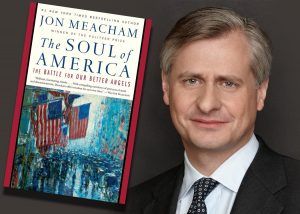 It is difficult to remember a time over recent decades when a president of the United States (US) has created so much controversy and division within the US and challenged its credibility and standing in international relations as has the incumbent president, Donald Trump. Indeed, so bewildering to many is the election of a former reality TV star and dubious businessman without experience in government, to the high office of president of the US and ‘leader’ of the ‘free’ world, a plethora of literature to account for such a phenomenon has emerged. Similarly, commentaries on evaluations of Trump’s calibre and character, and just how far he is fit for such high office and powerful position in global politics, are plentiful. Jon Meacham’s The Soul of America: The Battle for Our Better Angels can be viewed as a contribution to the literature on those issues.
 Last fall, after a day spent hiking around the neighborhood, I ended up back on my porch with my buddy, Chef Mike. We were drinking beers and chatting about life.
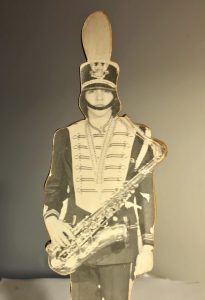 The William Penn High School Marching band was a juggernaut, the coolest team in school. Its director, Holman F James, strode the football field, unzipped windbreaker, cigarette dangling, the Greatest Generation’s bandmaster. A sterling musician, he played trumpet and piano, wrote or arranged all the music and choreographed our field shows. He was also a solider, avid outdoorsman and master craftsman, everything Hugh Hefner should have been.
 In the early 1790s, the London intellectual scene was convulsed with the fervor of the ongoing French Revolution. Sympathizers and counter-revolutionaries engaged in a ferocious pamphlet war, initiated by the Unitarian minister Richard Price, rejoined by Edmund Burke in his masterpiece of reactionary rhetoric, Reflections on the Revolution in France, and rejoined again by such writers as Mary Wollstonecraft and Thomas Paine. Political organizations arguing for electoral reform, including the London Corresponding Society and the Society for Constitutional Information, flourished. The resulting conservative backlash culminated in government suspension of habeas corpus and suppression of the free press and free assembly. The decade following the revolution was, all told, a time of tremendous political creativity and turbulence in the Anglophone world.
 JAMES ALLISON LOOKS
  When French President Emmanuel Macron declared during a visit to the Vatican this past summer that, “We have, anthropologically, ontologically, metaphysically, need of religion” (Nous avons, anthropologiquement, ontologiquement, métaphysiquement, besoin de la religion), there was little critical analysis in the press, much less by philosophers and scientists, of the moral, historical, or evidentiary basis of such a sweeping claim by the