
Samir Chopra in Aeon:
 The grand term ‘intellectual property’ covers a lot of ground: the software that runs our lives, the movies we watch, the songs we listen to. But also the credit-scoring algorithms that determine the contours of our futures, the chemical structure and manufacturing processes for life-saving pharmaceutical drugs, even the golden arches of McDonald’s and terms such as ‘Google’. All are supposedly ‘intellectual property’. We are urged, whether by stern warnings on the packaging of our Blu-ray discs or by sonorous pronouncements from media company CEOs, to cease and desist from making unwanted, illegal or improper uses of such ‘property’, not to be ‘pirates’, to show the proper respect for the rights of those who own these things. But what kind of property is this? And why do we refer to such a menagerie with one inclusive term?
More here.
 For all its economic might, Germany’s main centrist parties are
  The latest TV series by charming, tidy-up guru Marie Kondo
  A deep-learning algorithm is helping doctors and researchers to pinpoint a range of rare genetic disorders by analysing pictures of people’s faces. In a paper
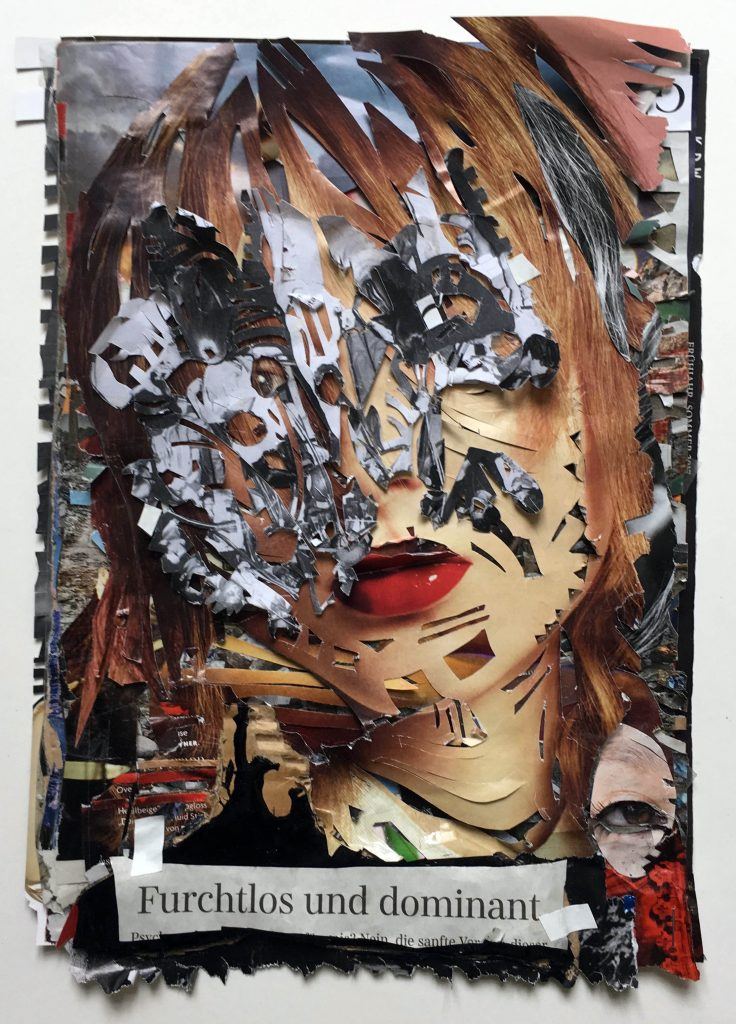

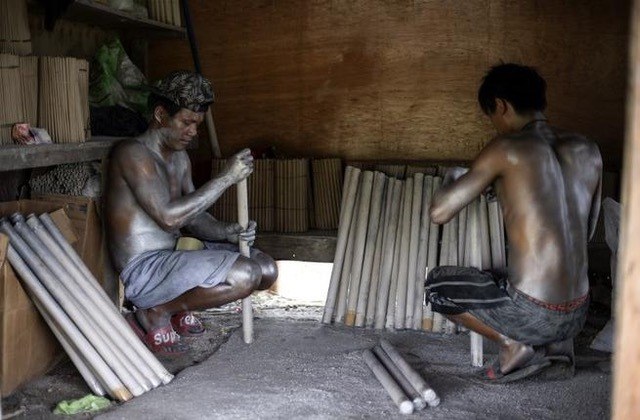
 On the morning of August 20, 1968, the Czech playwright Vaclav Havel had a serious hangover. He was at his country home in Liberec after a night of boozing it up with his actor friend
  My wife and I took a peek into the interior of Papua New Guinea twenty years ago.

 When contemporary atheists criticise religious beliefs, they usually criticise beliefs that only crude religious thinkers embrace. Or so some people claim. The beliefs of the sophisticated religious believer, it’s suggested, are immune to such assaults.
 Recently I’ve been experimenting with mood-modification through temperature extremes (like
  The state in polities broadly described as ‘liberal democracies’ with political economies broadly described as ‘capitalist’ are characterised by a feature that Gramsci called ‘hegemony’. This is a technical term, not to be confused with the loose use of that term to connote ‘power and domination over another’. In Gramsci’s special sense, hegemony means that a class gets to be the ruling class by convincing all other classes that its interests are the interests of all other classes. It is because of this feature that such states avoid being authoritarian. Authoritarian states need to be authoritarian precisely because they lack Gramscian hegemony. It would follow from this that if a state that does possess hegemony in this sense is authoritarian, there is something compulsive about its authoritarianism. Now, what is interesting is that the present government in India keeps boastfully proclaiming that it possesses hegemony in this sense, that it has all the classes convinced that its policies are to their benefit. If so, one can only conclude that its widely recorded authoritarianism, therefore, is pathological.
 So it’s 2018, and we’re at a pivotal point in the world of cancer. A breakthrough has been made, is this the revolution we’ve all been waiting for. Is the cut and burn era over?
 IN MARCH