
James Goodman in The New York Times:
 In the spring of 1890, Albion Tourgée, who had fought for the Union in the United States Army and then against the Ku Klux Klan as a Reconstruction judge, received an invitation to address a conference in upstate New York on the “Negro Question” hosted by the Quaker philanthropist Albert Smiley. Tourgée was an ideal choice: He had remained engaged in the struggle for equality long after many white people had lost interest. But as Steve Luxenberg shows in “Separate: The Story of Plessy v. Ferguson, and America’s Journey From Slavery to Segregation,” Tourgée was tempted to stay home. Longtime allies were boycotting the conference, with the encouragement of black newspaper editors and activists. Their complaint was simple: Not a single “Negro” had been invited. Yet in response to the protest, organizers doubled down. “A patient is not invited to the consultation of the doctors on his case,” Lyman Abbott wrote in The Christian Union.
Tourgée attended and lectured a roomful of liberal reformers, educators and clergymen for over an hour. He celebrated the progress freedmen had made since emancipation, wondered if the churches had forgotten who Christ was and what he stood for, and criticized the presumption of the guest list: “We have sought testimony about the Negro from his avowed friends and confessed enemies, and think we shall obtain the truth by ‘splitting the difference’ between them. The testimony of the Negro in regard to his past and present conditions and aspirations for the future is worth more than that of all the white observers that can be packed upon the planet.”
This incident, which comes toward the end of Luxenberg’s absorbing book, is a valuable reminder of something easy to forget. Not that the North also had a race problem; no sentient American should be able to forget that. Rather, that in the century after Reconstruction, segregation was not the worst possible outcome for black people. There was also exclusion (not separate schools but no schools) and elimination. Thousands of African-Americans were murdered by lynching alone.
More here. (Note: Throughout February, we will publish at least one post dedicated to Black History Month)
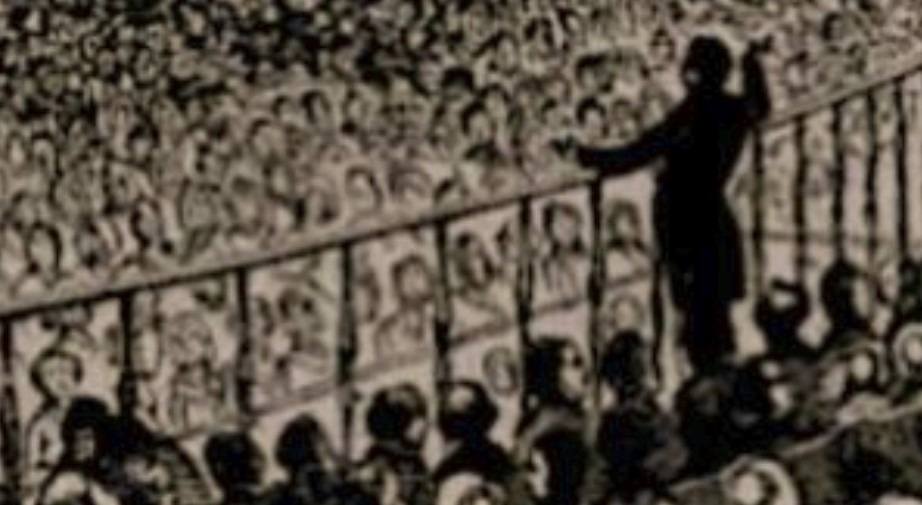 POPULISM AND DEMOCRACY are an odd couple. The first, populism, rejects the pejorative connotation that its name represents for the second, democracy, which it in turn criticizes for being hypocritical. The second declares itself the sole form of legitimate existence. Both of them claim to be supremely popular. Their virulent opposition in the current discourse is matched only by the indecision that hangs over their respective meanings. What “people” are they talking about, both together and separately?
 On February 19, 1855, Charles Sumner, the Massachusetts senator, wrote his supporters about an enslaved 7-year-old girl whose freedom he had helped to secure. She would be joining him onstage at an abolitionist lecture that spring. “I think her presence among us (in Boston) will be a great deal more effective than any speech I could make,” the noted orator wrote. He said her name was Mary, but he also referred to her, significantly, as “another Ida May.” Sumner enclosed a daguerreotype of Mary standing next to a small table with a notebook at her elbow. She is neatly outfitted in a plaid dress, with a solemn expression on her face, and looks for all the world like a white girl from a well-to-do family.
 In 1985, the chemist Steven A. Benner sat down with some colleagues and a notebook and sketched out a way to expand the alphabet of DNA. He has been trying to make those sketches real ever since.
 One evening in 2016, a twenty-five-year-old community-college student named Alex Gutiérrez was waiting tables at La Piazza Ristorante Italiano, an upscale restaurant in Tulare, in California’s San Joaquin Valley. Gutiérrez spotted Yorai Benzeevi, a physician who ran the local hospital, sitting at a table with Parmod Kumar, a member of the hospital board. They seemed to be in a celebratory mood, drinking expensive bottles of wine and laughing. This irritated Gutiérrez. The kingpins, he thought with disgust.
 Lynn Nottage is the only living American playwright to have won the Pulitzer Prize multiple times. Her first one came in 2009 for Ruined, a drama about a small bar in a mining town in the Congo that serves soldiers from both sides of that country’s civil war. She received her second Pulitzer in 2017 for Sweat, a drama about the downfall of Reading, Pennsylvania, that largely takes place in a bar frequented by union workers as they find themselves caught between solidarity and trying to make rent.
 The
The Over the course of the more than half-century of relentless experimentation that followed, Ryman radically expanded the possibilities of abstract painting, continuously rethinking how it could be made and what it could look like, even while seeming to confine himself to a single color: white. His death on Friday, in New York, at the age of 88, brings to a close one of the singular careers in postwar America art.
 Yet one cluster of texts never entered public discourse in the same way. For eight months after these texts were released online — an eon, in internet time — no one wrote about them. The sleaziest gossip outlets, which enthusiastically published other dirty details about Manafort (including his membership in BDSM sex clubs), wouldn’t touch it. Deep transparency conspiracy theorists didn’t Tweet about it. A
 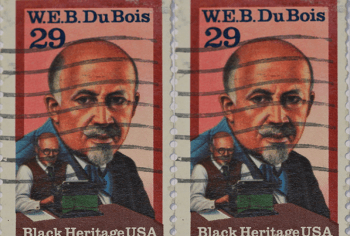 February 1951 was a busy month for W. E. B. Du Bois, who turned eighty-three and threw himself a huge birthday party to raise funds for African decolonization. He also married his second wife, the leftist writer Shirley Graham, in what the Baltimore Afro-American newspaper called the wedding of the year. And he was indicted, arrested, and arraigned in federal court as an agent of the Soviet Union because he had circulated a petition protesting nuclear weapons. The Justice Department saw Du Bois’s petition as a threat to national security. They thought it was communist propaganda meant to encourage American pacifism in the face of Soviet aggression. They put Du Bois on trial in order to brand him as “un-American,” to use the language of Joe McCarthy’s House Un-American Activities Committee. Du Bois was not in fact a Soviet agent. He was an American citizen using his First Amendment rights to protest nuclear weapons on his own behalf. A federal judge acquitted him because prosecutors failed to present any evidence.
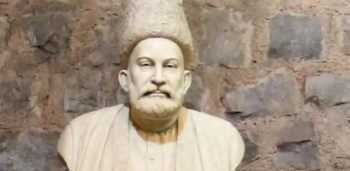 One thing is common among all the good and great writers: a deep sympathy with man; an ability to view and understand the various aspects of his character and the complex situations of his psychology; and a desire to see life as elegant, pure and pretty, fruit-laden and blooming. Humans do work of various kinds to maintain their personal and social life and for the satisfaction of their desires and instincts; and establish mutual bonds and relationships. They make things, provisions and tools, different laws for their use, ownership and distribution, and principles and codes of conduct.
 I remember One Hundred Years of Solitude on my parents’ bookshelf when I was a child: it was the “one hundred years” that put me off: it sounded like it must be something to do with history, very boring history; “solitude” didn’t sound like much fun either. I imagined it was about a man being alone for a hundred years, talking endlessly to himself in the manner of “To be or not to be?” There was also Love in the Time of Cholera, which I assumed must be about cholera. (There were many medical textbooks in the house, both my parents being doctors. I had often leafed through The Handbook of Tropical Infectious Diseases, and knew all about cholera.)
 In the near future, we will be in possession of genetic engineering technology which allows us to move genes precisely and massively from one species to another. Careless or commercially driven use of this technology could make the concept of species meaningless, mixing up populations and mating systems so that much of the individuality of species would be lost. Cultural evolution gave us the power to do this. To preserve our wildlife as nature evolved it, the machinery of biological evolution must be protected from the homogenizing effects of cultural evolution.
 Ever since the election of Donald Trump, pundits and scholars have been sounding the alarm over the
  Religious fictionalists hold that the contentious claims of religion, such as “God exists” or “Jesus rose from the dead” are all, strictly speaking, false. They nonetheless think that religious discourse, as part of the practice in which such discourse is embedded, has a pragmatic value that justifies its use. To put it simply: God is a useful fiction. In fact, fictionalism is popular in many areas of philosophy. There are, for example, moral fictionalists and mathematical fictionalists, who think that there are pragmatic benefits to using moral/mathematical language even though such discourse fails to correspond to a genuine reality (there are, on these views, no such things as goodness or the number 9, any more than there are dragons or witches). Religious fictionalists merely extend this approach to the statements of religion.
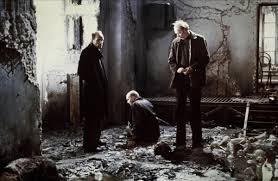 For me, Eastern Europe is a continent of ruins, a relic of a fallen empire.