Greg Grandin in The Chronicle of Higher Education:
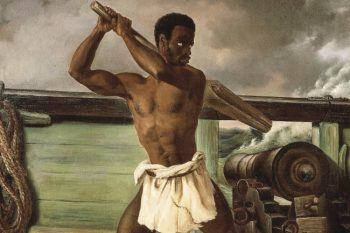 On a late February day in 1805 in the South Pacific, Amasa Delano, master of the Perseverance, a sealer out of Boston, boarded a distressed Spanish ship carrying about 70 West African men, women, and children. Delano spent about nine hours on the vessel, called the Tryal. He talked with its sailors, who were few in number, doled out water to its black-skinned men and women, and took charge of organizing repairs. And all that time, he couldn’t see that it was the West Africans, whom he thought were slaves, and not the Spaniard who introduced himself as captain, who were in command. Nearly two months earlier, the West Africans, who had been loaded at Valparaiso, Chile, bound to be sold in Lima, rose up, executing most of the Tryal’s crew and passengers, along with the slave trader who was taking them to Peru. Led by an elderly man named Babo and his son Mori, the rebels ordered Benito Cerreño, the ship’s owner and captain, to sail them to Senegal.
Cerreño stalled, cruising first north and then south, before running into the Perseverance.The rebels began to ready their weapons for a fight. But then Babo had an idea.
The West Africans let Delano come on board and acted as if they were still slaves. Mori stayed at Cerreño’s side and feigned at being a humble and devoted servant. Cerreño pretended he was still in charge, telling Delano stories about storms, doldrums, and fevers to account for the state of his ship and the absence of any officer aside from himself. The alabaster-skinned Delano later wrote that he found himself surrounded by scores of Africans and a handful of Spanish and mulatto sailors telling their “stories” and sharing their “grievances” in a babel of languages. They spoke in Wolof, Mandinka, Fulani, and Spanish, a rush of words indecipherable in its details but soothing to Delano in its generalities, convincing the New Englander that the desperation he was witnessing was real, that he wasn’t being lured into a pirate’s trap.
Over the years, this remarkable affair—in effect, a one-act, nine-hour, full-cast pantomime of the master-slave relation performed by a group of desperate, starving, and thirsty men and women—has inspired writers, poets, and novelists. The Chilean poet Pablo Neruda thought the boldness of the slaves reflected the dissent of the 1960s. More recently the Uruguayan Tomás de Mattos’s Chinese box of a novel, La fragata de las máscaras, uses the deception as a metaphor for a world where reality isn’t hidden behind a mask but is the mask itself.
But by far the most haunting rendition of the events on the Tryal is Herman Melville’s Benito Cereno, first published in 1855. Melville left no letters or diaries, at least none yet found, that reveal his thoughts upon reading Delano’s memoir, or what had moved him to fictionalize Delano’s experience on board the rebel-held ship. But by the 1850s, Melville had become preoccupied with the sham of modern life, with the difficulty of distinguishing surface appearance from substance. So it isn’t hard to imagine what attracted him to the incident, and particularly to the duped Delano.
More here. (Note: Throughout February, we will publish at least one post dedicated to Black History Month)

 What is missing in Clapton’s imitation of African American musical tradition on Unplugged, which Chicago Tribune critic Greg Kot fairly described as “a blues album for yuppies,” is the quality most responsible for the music’s sadness as well as its humor, lasting relevance, and political bite: that is, a profound self-awareness. As Eric Lott writes in Love and Theft: Blackface Minstrelsy and the American Working Class (1993), whose title Bob Dylan lifted for his 2001 record, “Minstrelsy brought to public form racialized elements of thought and feeling, tone and impulse, residing at the very edge of semantic availability, which Americans only dimly realized they felt, let alone understood.” The antebellum minstrel show, whose enthusiasts included Mark Twain, Walt Whitman, and Abraham Lincoln, was an expression of white America’s ambivalence toward its own culture of self-proclaimed supremacy; “the whites involved in minstrelsy,” Lott writes, “were far from unenthusiastic about black cultural practices or, conversely, untroubled by them, continuous though the economic logic of blackface was with slavery.”
 A week or so before the election in May 2017 that brought Emmanuel Macron to power, I interviewed a senior academic at the Ecole des Hautes Etudes en Sciences Sociales in Paris, wishing to understand where Macron would be taking France if he won. The response from the professor was gloomy. This was, he said, first because people would be voting for Macron out of fear – at this stage the spectre of a victory for the Front National was still very much on the cards – and not any real belief in his policies. His would therefore be a government elected in bad faith.
 During his long journey through Europe and the Levant in 1867, Mark Twain stopped off in Milan. Like many, he was struck by the grandeur of the city’s great cathedral, but it was something else that truly became etched in his memory. Standing inside the cathedral was a statue of St Bartholomew, the apostle who had been skinned alive, and who was depicted with his skin draped around his shoulders as if it were a towel. In “The Innocents Abroad”, Twain’s account of that year of travel, he recounts: “The figure was that of a man without a skin; with every vein, artery, muscle, every fibre and tendon and tissue of the human frame represented in minute detail… It was a hideous thing, and yet there was a fascination about it somehow.”
 Everything we think about the world outside our immediate senses is shaped by information brought to us by other sources. In the case of what’s currently happening to the human race, we call that information “the news.” There is no such thing as “unfiltered” news — no matter how we get it, someone is deciding what information to convey and how to convey it. And the way that is happening is currently in a state of flux. Today’s guest, journalist Jessica Yellin, has seen the news business from the perspective of both the establishment and the upstart. Working for major news organizations, she witnessed the strange ways in which decisions about what to cover were made, including the constant focus on short-term profits. And now she is spearheading a new online effort to bring people news in a different way. We talk about what the news business is, what it should be, and where it is going.
 It takes a special sort of person to be a cardiologist. This is not always a good thing.
 It has long been claimed that there are somewhere between three and 36 basic plots in all forms of storytelling. Three years ago, academics fed nearly 2,000 stories into a computer analysis and concluded that there were
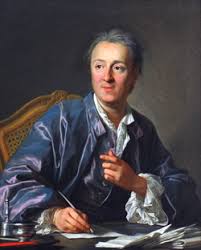 There are at least two Diderots, both controversial, both remarkable Enlightenment figures. The first was a renowned philosophe and atheist associated with Voltaire and Rousseau but often thought their inferior in accomplishment. He was known chiefly as the major author and editor of the
  Why do we so often believe that secrecy must necessarily mask transgression? Busch unravels that association in How to Disappear. The laborious, sometimes caustic recipes for invisibility ink and potion included in the book (some from mythology, some from military history) themselves suggest something nefarious. Take for instance the hulinhjalmur, an invisibility-granting symbol from ancient Iceland that had to be smeared on a person’s forehead with a mixture of “blood drawn from your finger and nipples, mixed with the blood and brains of a raven along with a piece of human stomach.” Busch writes that our tendency “to associate [invisibility] with wrongdoing, degeneracy, malice, even the work of the devil” is not accidental. It is inscribed into many of our oldest myths, including the Ring of Gyges, retold famously by Kristin Scott Thomas’s character in The English Patient. Gyges, a simple shepherd who discovers a ring that confers invisibility, uses his newfound power to kill the king, marry his wife, and take the throne for himself. This idea, that invisibility can lead “an otherwise ordinary and honorable person to commit transgressions and behave unjustly,” has stubbornly stayed with us.
 In the Indian and Islamic cultures, then, we have what should be uncontroversial examples of sophisticated and long-lasting philosophical traditions. Then there is the culture dearest to Van Norden’s own heart, namely that of China; Baggini also devotes much attention to this, as well as to Japanese philosophy. Though these traditions are arguably not quite as given to the kind of scholastic, dialectical debates so beloved of Indian, Islamic and contemporary analytic philosophers, it seems pretty uncontentious that there is philosophical material here too, notably in the field of ethics with Confucianism and its critics. More open to debate would be the case of various “indigenous” cultures around the world. Neither of our authors ventures far in this direction, though both are optimistic that it would be rewarding to approach traditional African cultures, say, as a repository of philosophical insight. Distinctive methodological challenges arise here, since for indigenous African societies we largely lack traditions of argumentative writing. Work on African philosophy has instead drawn mostly on living oral traditions and on the studies of ethnographers, anthropologists and archaeologists. Similar issues are raised by, among others, Native American, Inuit and Australian aboriginal cultures, and further back in history, ancient Mesoamerica. All of these have, to varying degrees, been subjected to philosophical analysis. For example there is a substantial literature on African conceptions of the person, and on the causal theories underlying the wide range of healing practices found in traditional African societies. Then too, the very notion of locating philosophy in an oral tradition rather than in the writings of brilliant individuals is itself an intriguing one.
 “[T]here is in fact nothing that can alleviate that fatal flaw in Darwinism” says Professor Behe,
  rapture, claiming that “Michael Behe’s Darwin Devolves Topples Foundational Claim of Evolutionary Theory” and that “Anyone interested in knowing the truth about the design/evolution debate will find Darwin Devolves a must read.”
 I wonder whether Behe’s most vociferous supporters actually understand his position. Unlike them, he