
Seamus Perry at the LRB:
 It is not the critical fashion to dwell on Shelley’s Platonism, and it is true that his expressions of enthusiasm for various Platonic doctrines were qualified. But it is difficult not to see the main feeling in his work as a conviction that the world of experience is merely an imperfect clue to the real reality that lies beyond, the idea of which haunts it; and, after all, that is nothing but a Platonic notion. ‘The truth and splendour of his imagery and the melody of his language is the most intense that it is possible to conceive,’ Shelley says of Plato in his polemic A Defence of Poetry; he translated the Symposium, and once said he would rather be damned with Plato and Bacon than go to heaven with the Anglican worthies Paley and Malthus. ‘You know that I always seek in what I see the manifestation of something beyond the present & tangible object,’ he told a correspondent: there is ‘no more fitting epigraph to the dynamic driving Shelley’s literary career’, according to the poet and critic Michael O’Neill, one of our best Shelleyan commentators. The ghostly effects that this penchant for intangibility enables in his poetry – its distinctive repertoire of veils and shadows and hauntings – are eerily magnificent and inimitably his own. No other poet could have conceived the extraordinary opening lines of the ‘Hymn to Intellectual Beauty’: ‘The awful shadow of some unseen Power/Floats though unseen amongst us’. Not even a Power, but the shadow of a Power, so already placed at two removes from anything like concrete presence; and then the oddly effective insistence involved in repeating the word ‘unseen’, as though he were struggling to capture the Power’s sheerly counter-empirical invisibility by doubling up the word.
more here.
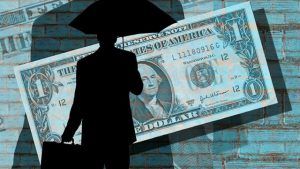 On October 1, 2014, the National Labor Relations Board ruled that a Burger King franchise in Ferndale, Michigan, near Detroit, had bullied a part-time worker, Claudette Wilson, by sending her home two hours early for not positioning pickles correctly on her burgers. As Judge Arthur J. Anchan put it, the company illegally sent Wilson home for failing to “put pickles on her sandwiches in perfect squares.”
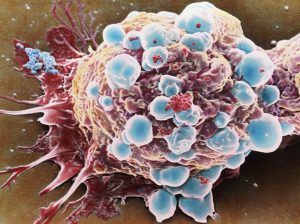 A survey of thousands of advanced cancers suggests a way to identify those most likely to respond to revolutionary therapies that unleash an immune response against tumours. But the results highlight how difficult it will be to translate such an approach into a reliable clinical test. The findings
 Like millions of other people in the US, I often begin the day by listening to ‘Morning Edition,’ the early morning news program on National Public Radio. Sometimes, though, I get so disgusted by the rubbish spewed by the politicians being interviewed, or so infuriated by the flimsiness of the questions put to them, that I just can’t stand it and have to take myself out of earshot. Friday was a case in point.
 In October of 2014, a bunch of young men and women did their university proud. A couple of engineers, two finance graduates, a biology major, some finishing accounting and business degrees, and a clutch from the school of humanities and social sciences; Muslims mostly, two Christians, a lone Hindu, one Buddhist wannabe, and two oblivious to religion though aware of its place in other folks’ lives. They came together from Sahiwal, Karachi, Gilgit, Swat, Peshawar, Gujranwala, one from Quetta (non-Baluchi), and two from Delhi via the University of Texas. Though the majority of students and faculty stayed away, these young men and women with similar features and skin tones, in colorful flowing kurtas, chooridars, skinny jeans, funky T-shirts, and hijabs, got together to celebrate Diwali, a festival that celebrates Ram’s return from exile.
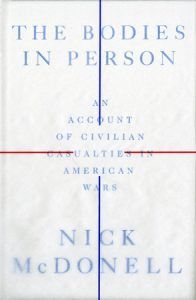 Nick McDonell has spent the past decade going in and out of war zones across the
  Not long ago, during an Amtrak ride, I met a college student who told me he was a fiction writer. I asked him what he’d been writing and reading, and he said that he was writing a novel about time travel, and that he was reading — well, he had been reading Edith Wharton’s “The House of Mirth,” but after about 50 pages, he said, he’d tossed it into the trash.
 During the twentieth century, discoveries in mathematical logic revolutionized our understanding of the very foundations of mathematics. In 1931, the logician Kurt Gödel showed that, in any system of axioms that is expressive enough to model arithmetic, some true statements will be unprovable
 On “60 Minutes” Sunday, Ocasio-Cortez talked about a 70 percent tax rate for Americans earning more than $10 million a year. She said this would fund a Green New Deal: big money for renewable energy and technologies to avert climate catastrophe.
 Hope is being privatized. Throughout the world, but especially in the United States and the United Kingdom, a seismic shift is underway, displacing aspirations and responsibilities from the larger society to our own individual universes. The detaching of personal expectations from the wider world transforms both.
 Don’t start with a moral theory, start with where you actually are. Here is a question that I think ethicists should be asking alongside Nagel’s famous question about bats (at the moment I want to use it as the title of Epiphanies Chapter 4): “What is it like to be a human being?” So start with that. Start with what it’s like to be you, with your subjectivity here and now, with what looks serious and real and important and beautiful and (yes, why not?) fun to you just as you are, from your own viewpoint. Because actually that’s the only place you ever can start from, really, and one tendency of systematising theories is to obscure this truth.
 Talking about the public role of intellectuals in today’s world, and more specifically in India, is of great significance given changes taking place in culture and politics. It is not simply enough to talk about the role of Indian public intellectuals in the making and preserving of critical mindedness and democratic engagement in Indian academia. One should also pay attention to the role which could and should be played by public intellectuals in promoting moral and political excellence and civic friendship among the future generation of Indians.
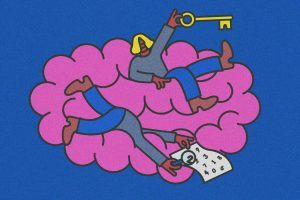 You slide the key into the door and hear a clunk as the tumblers engage. You rotate the key, twist the doorknob and walk inside. The house is familiar, but the contents foreign. At your left, there’s a map of Minnesota, dangling precariously from the wall. You’re certain it wasn’t there this morning. Below it, you find a plush M&M candy. To the right, a dog, a shiba inu you’ve never seen before. In its mouth, a pair of your expensive socks.