
Judith Newman in The New York Times:
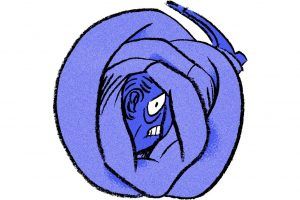 How did I know my anxiety had gotten the better of me? When I found myself taking meticulous notes on a forthcoming book by Erica Feldmann called HAUSMAGICK: Transform Your Home With Witchcraft (HarperOne, $25.99, available in March). The year 2018 hadn’t been so great, what with the death of a husband and, possibly, a republic. Maybe 2019 would be better if I bought certain purifying elements for my home. The right crystals, sage sticks and — salt? Apparently, you can sprinkle salt around the house after a person with “toxic energy” visits. Attention future dates: If you see me reaching for the shaker as you’re leaving, you know things haven’t gone well. If my nerves are frayed, I take cold comfort in knowing I’m not alone. Whether it’s our political situation, the jangling distractions of everyday life or the not-irrational sense that mankind’s need to find another planet isn’t just a sci-fi plotline, we seem to be in the midst of one massive freakout. Kierkegaard argued that anxiety stemmed from the “dizziness of freedom,” the paralysis that comes from infinite choice and possibility. That was in 1844. Imagine what he would have thought about today.
But here’s some good news: If we’re all a little tense, well, there’s a book for that. Many books, actually. Several of the ones I consulted were so wrongheaded or incomprehensible they made me more nervous. (“Motivation is a Unicorn Fart” almost made me hurl in a glittery rainbow arc.) Here are three that worked.
Recently a friend told me that he had reached what he calls his vidpoint: the moment you realize you have more movie hours stored on your DVR than you have hours left to live. I thought about that friend while reading Matt Haig’s NOTES ON A NERVOUS PLANET (Penguin, paper, $16), a follow-up to his previous book “Reasons to Stay Alive,” which chronicled his struggles with anxiety and depression. The core of first-world malaise, he argues, can be summed up by something T. S. Eliot observed in “Four Quartets”: We are “distracted from distraction by distraction.” Here, in clever chapterettes and listicles (he seems to assume we’re all too jumpy to read more than a few pages at a time), Haig muses about our anxieties: our fears of aging, of not being rich, of not being beautiful or successful enough. All while being massive consumers of everything.
More here.
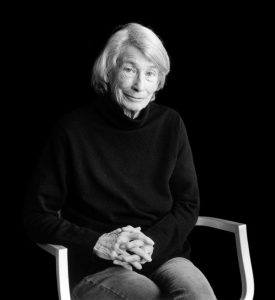 “Wild Geese” was trending on Twitter on Thursday, and poetry lovers — not naturalists or ornithologists — were responsible. Mary Oliver, arguably America’s most beloved best-selling poet, had died earlier in the day, at the age of 83. Her poem “Wild Geese,” from her 1986 collection
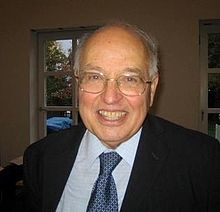 While away on vacation, I heard last week the sad news of the death last week of Michael Atiyah, at the age of 89. Atiyah was both a truly great mathematician and a wonderful human being. In his mathematical work he simultaneously covered a wide range of different fields, often making deep connections between them and providing continual new evidence of the unity of mathematics. This unifying vision also encompassed physics, and the entire field of topological quantum field theory was one result.
 A FEW DAYS before the 2016 election, journalist Andrew Sullivan wrote this about Donald Trump: “He has no concept of a nonzero-sum engagement, in which a deal can be beneficial for both sides. A win-win scenario is intolerable to him, because mastery of others is the only moment when he is psychically at peace.”
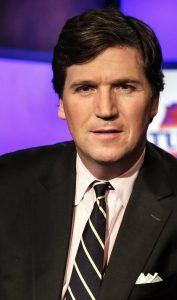 Last Wednesday, the conservative talk show host Tucker Carlson started a fire on the right after airing a prolonged
  The first literary anniversary of 2019 will be one of the biggest: Jan. 1 marks the centenary of J.D. Salinger. (To mark the occasion, his four books are being
 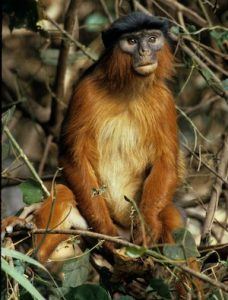 For years I spent my days, from before dawn until after dusk, following a troop of endangered red colobus monkeys around a small West African forest. For the most part the simian soap opera taking place above my head was based around everyday practical domestic themes like gorging; sleeping; snacking; resting; leaping; and forming and maintaining alliances. But, as with many soap operas, from time to time life here became totally unfocused and utterly confusing. The plots—and there were many—often drifted: sometimes boring, sometimes sitcom, sometimes rom-com, sometimes melodrama, sometimes kill-‘em-dead bloody action and sometimes high scary political drama. The characters, with enough variety to delight any casting director, ranged from gentle to not-so-nice, helpful to nasty, benevolent to downright wicked.
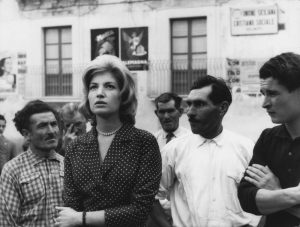 Antonioni films typically featured jaded lovers in middle-class urban settings, their lives blighted by quiet desperation, joyless sex and existential ennui. His open-ended plots were elliptical, elusive and experimental, providing rich material for both his most ardent admirers and harshest critics. Inevitably, after an almost unblemished run of classic films spanning the 1960s and 70s, shifting fashion and ill health forced him into semi-retirement. It makes perfect sense that he spent his twilight years painting big, bold, colourful abstract art.
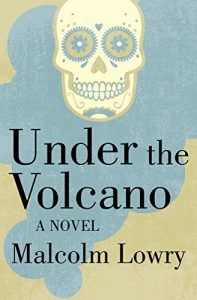 The ultimate tragedy of Under the Volcano is that of humanity’s wasted potential. Can, Lowry pondered, the psyche repair itself? We are capable of such great things, yet we choose mollification and comfort over almost anything—sometimes even over life itself. “I love hell,” Firmin claims. “I can’t wait to get back there. In fact I’m running, I’m almost back there already.” Under the Volcano is Firmin’s attempt to reckon with himself. He is alone, alienated and is finally unable to square himself with the world he has built for himself within the world he has, in many respects, stolen from others. And, in this, he has everything in common with those around him but, from Firmin’s point of view, the other characters are often reduced to minor characters, walk-ons. The only character that truly comforts Firmin is the beverage waiting before him. This minimization is not only Firmin’s: Each of the novel’s characters, in different ways, attempts to reduce the other to satiate the self.
 People who tweet in their jobs—let’s say 21st century journalists, just for example—might say that writing two million tweets represents a daunting challenge. That’s the rough number,
 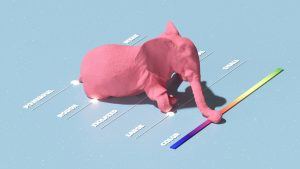 We humans have always experienced an odd — and oddly deep — connection between the mental worlds and physical worlds we inhabit, especially when it comes to memory. We’re good at remembering landmarks and settings, and if we give our memories a location for context, hanging on to them becomes easier. To remember long speeches, ancient Greek and Roman orators imagined wandering through “memory palaces” full of reminders. Modern memory contest champions still use that technique to “place” long lists of numbers, names and other pieces of information.
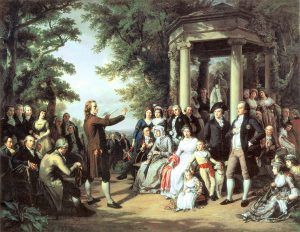 You wouldn’t think that a defense of reason, science, and humanism would be particularly controversial in an era in which those ideals would seem to need all the help they can get. But in the words of a colleague, “You’ve made people’s heads explode!” Many people who have written to me about my 2018 book
  Journalist, teacher, and novelist, pan-Africanist historian and left-leaning political activist, Cyril Lionel Robert James is best remembered for
 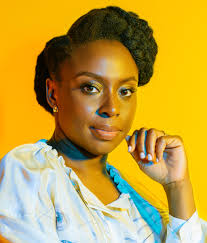 Citizenship, for a person like me from a country like Nigeria, in a continent like Africa, is not just a sensibility, it is also a condition. A condition that arises from being what I like to call “inhabitants of the periphery”. And what do I mean by inhabitants of the periphery? I am not merely referring to political expressions like Third World, but to the phenomenon of being outside the centre in ways more subtle than mere politics, in ways metaphysical and psychological.