
Andrew F. Krepinevich, Jr. in Foreign Affairs:
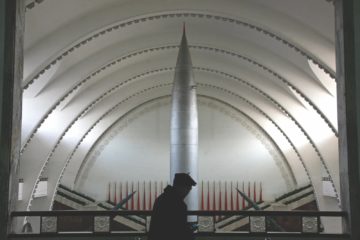 In developing a nuclear arsenal that will soon rival those of Russia and the United States, China is not merely departing from its decades-old status as a minor nuclear state; it is also upending the bipolar nuclear power system. For the 73 years since the Soviet Union’s first nuclear test, that bipolar system, for all its flaws and moments of terror, has averted nuclear war. Now, by closing in on parity with the two existing great nuclear powers, China is heralding a paradigm shift to something much less stable: a tripolar nuclear system. In that world, there will be both a greater risk of a nuclear arms race and heightened incentives for states to resort to nuclear weapons in a crisis. With three competing great nuclear powers, many of the features that enhanced stability in the bipolar system will be rendered either moot or far less reliable.
There is nothing the United States can do to prevent China from joining it and Russia as the world’s top nuclear powers, but there are things that U.S. strategists and defense planners can do to mitigate the consequences.
More here.
 How do you like to pay? Do you prefer to tap, wave, insert, single-click or double-click – or are you a hold out for hard cash? If it’s the latter, you’re fast becoming the exception. Between our growing enthusiasm for online shopping, the ease and speed with which we can now make electronic bank transfers, and the inexorable rise of cards and the advent of digital wallets, more and more of us are shunning physical money. This is still a relatively recent trend.
 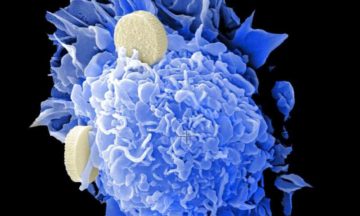 Kinase inhibitors are a type of targeted
 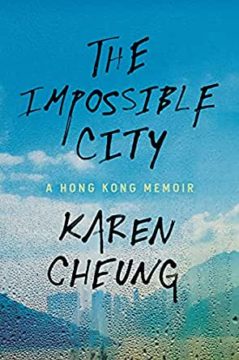 “What is writing good for if we can’t write a way out of this darkest timeline?” (264), Karen Cheung asks in this hauntingly moving memoir of her life in Hong Kong over these last two decades. Since the passage of the National Security Law (NSL) in the summer of 2020, “Hong Kong is dead” has become a common refrain in international news. Amid constant crackdowns and arrests, Hong Kong no longer fits the image of a vibrant cosmopolitan city where foreign corporations, tourists, and expatriates can enjoy unbridled freedom. Beginning with a scathing and acute interrogation of this narrative, Cheung’s memoir cannot write Hong Kong out of its darkest timeline, but it has succeeded in lifting up the deeds and voices of Hongkongers who have always dared to imagine and work towards a better collective future for the city.
 Inside one of the buildings lies a wonder of modern technology: 285,000 CPU cores yoked together into one giant supercomputer, powered by solar arrays and cooled by industrial fans. The machines never sleep: Every second of every day, they churn through innumerable calculations, using state-of-the-art techniques in machine intelligence that go by names like ‘‘stochastic gradient descent’’ and ‘‘convolutional neural networks.’’ The whole system is believed to be one of the most powerful supercomputers on the planet.
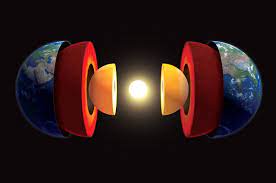 Earth’s magnetic field, nearly as old as the planet itself, protects life from damaging space radiation. But 565 million years ago, the field was sputtering, dropping to 10% of today’s strength, according to a recent discovery. Then, almost miraculously, over the course of just a few tens of millions of years, it regained its strength—just in time for the sudden profusion of complex multicellular life known as
  The basic charge against Imran Khan
 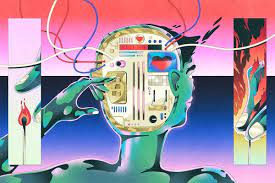 In May 2020, Omar Ruiz found himself with a broken heart. “My wife told me she was no longer in love with me,” and shortly thereafter, the couple, who had been married 11 years, separated. Not only was he crushed, he said, but as a marriage and family therapist, “this entire process challenged my professional identity,” said Mr. Ruiz, who is 36 and lives in Boston. “How could I help couples when my own marriage is falling apart?”
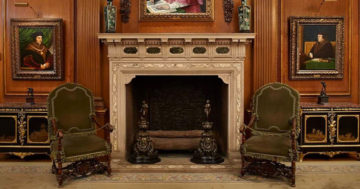 “It seems as though Cromwell has More right where he wants him,” the social scientist Todd Oakley writes in his essay, “Do Pictures Stare?” Many art-loving New Yorkers will immediately get the reference. At the Frick Collection on Fifth Avenue, two portraits by the German artist Hans Holbein the Younger—one of Sir Thomas More, the other of Thomas Cromwell—faced off against each other for years from either side of a majestic fireplace in the hallowed, oak-paneled room known as the Living Hall.
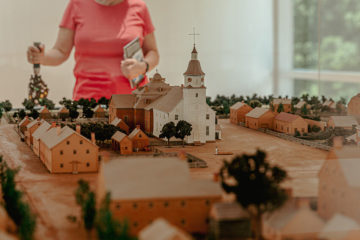 This story is fairly typical. Inland America is pocked with the unmarked graves of communitarian utopias—primitive socialist and communist experiments—that tried to rebuild the world on what was assumed to be virgin soil. Ephrata, Pennsylvania; Germantown, Tennessee; Utopia, Ohio; Brentwood, New York; Iowa’s Amana Colonies: these and many other towns were originally settled by communalists with lofty visions of abolishing private property, quashing material inequity, and transcending divisive individualism.
 Part of the pleasure of reading Parul Sehgal’s book reviews when she served as a critic for The New York Times was the impression that her prose had slipped past the censors. Some of her sentences had the crispness of newspaper copy but others were much more blurred and atmospheric. You could watch her trialing an idea, circling it with adjectives, letting it rise with the sound of the words.
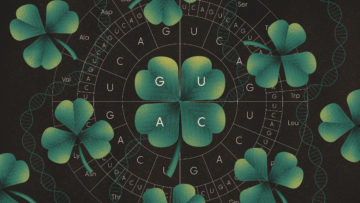 As wildly diverse as life on Earth is — whether it’s a jaguar hunting down a deer in the Amazon, an orchid vine spiraling around a tree in Congo, primitive cells growing in boiling hot springs in Canada, or a stockbroker sipping coffee on Wall Street — at the genetic level, it all plays by the same rules. Four chemical letters, or nucleotide bases, spell out 64 three-letter “words” called codons, each of which stands for one of 20 amino acids. When amino acids are strung together in keeping with these encoded instructions, they form the proteins characteristic of each species. With only a few obscure exceptions, all genomes encode information identically.
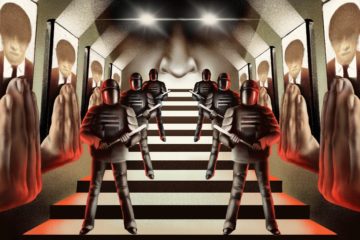 It’s remarkable: For more than a year, it’s been impossible to describe any world leader as a version of the sitting U.S. president. Run this thought experiment yourself: Who might be the “Joe Biden of South America”? Or “Central Europe’s Biden”? You draw a blank. What a contrast from the four years in which the world contained
  Deutsch: I am not the first to propose this idea. The Italian geologist Antonio Stoppani wrote in the 19th century that he had no hesitation in declaring man to be a new power in the universe, equivalent to the power of gravitation.
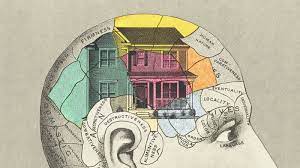 Growing up, Erin Nelson used to make fun of their dad for spending so much time looking out the window at what the neighbors were up to. “Now I’m that person,” Nelson, a 31-year-old who bought their first house a year ago in Portland, Oregon, told me. “I’m always peeking out the window … That’s like my new TV.” Nelson, who uses they/them pronouns, has realized that as a homeowner, their life is bound up with the people next door in a way it never has been before.