https://www.youtube.com/watch?v=8lrQDy7ZuoE&ab_channel=ArmchairExpert

https://www.youtube.com/watch?v=8lrQDy7ZuoE&ab_channel=ArmchairExpert
Vince Aletti at The New Yorker:
 “I went to town and photographed non-stop, with literally, vengeance,” William Klein wrote of the book of New York City street photographs that he made in 1954 and 1955. He added, “I saw the book as a tabloid gone berserk, gross, over-inked, brutal layout, bullhorn headlines. This is what New York deserved and would get.” The book in question, “Life Is Good and Good for You in New York,” was sensational when it appeared, in 1956, in France–it was too unconventional for any American publisher to touch. Klein, who learned while he worked, loved amateurish accidents–lopsided compositions, heads lopped off, blur, grain, flare. “Life is Good” remains one of the most exciting and idiosyncratic photography books of the past century, and a rival to Robert Frank’s “The Americans” as the most influential.
more here.
Nandita Dinesh at Literary Hub:
 I was going to write about mutton biryani, the multi-layered, aromatic, mouth-watering rice preparation of which my grandmother created her own version—I clarify that it’s “her” version because every family has its own biryani recipe.
Each home’s biryani has its own preferred star ingredient—goat, lamb, chicken, egg, potatoes, or paneer—and its own first step: frying a shitload of thinly sliced onions; par-boiling basmati rice for just the right amount of time; marinating the chosen star ingredient in ancestor-defined ratios. And each has its own biryani masala: home-made, store-bought, or a mixture of the two.
I was going to write about why mutton biryani matters to me; how its preparation symbolized “occasion” during my childhood. How it is a particularly poignant allegory for the ways in which flavors collide and mingle in India’s worlds, and how the dish carries a unique, evocative aftertaste for which I have no words in Malayalam, Tamil, English, Hindi, or Spanish.
More here.
David Kordahl at Inference Review:
 THROUGHOUT HIS CAREER, the historian Bruce Hunt has been one of the key scholars to revivify nineteenth-century physics. Any physicist can name a few giants from that period—just from equations and units, we all know James Clerk Maxwell for his electrodynamics, and Lord Kelvin for introducing an absolute temperature scale. But the routes these giants took often go unexplored.
In textbook physics, technologies provide specific examples of general principles. But from Hunt’s books, one can see how these principles were often codified by individuals whose views differed dramatically from our own, and who often viewed their contemporary technologies as scientific mysteries. Hunt’s first book, The Maxwellians, shows how Maxwell’s disciples altered the form of his theory of electromagnetism so significantly after his death that the Maxwell’s equations taught today were unknown to Maxwell himself.1 In his second book, Pursuing Power and Light: Technology and Physics from James Watt to Albert Einstein, Hunt examines nineteenth-century physics in the glow of nineteenth-century technology.2 He shows that, just as Maxwell—and, later, his disciples—pioneered electromagnetic field theory only after telegraph wires already lined the countryside, the science of thermodynamics was developed only after steam engines were already widespread.
Hunt has now published a third volume, Imperial Science: Cable Telegraphy and Electrical Physics in the Victorian British Empire. It marries the electrical history of The Maxwellians to the underlying thesis of Pursuing Power—that science is pushed along by technology just as often as it pulls technology ahead.
More here.
Ron Jacobs at CounterPunch:
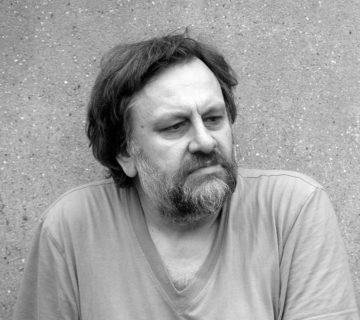 Zizek has been out of the left-leaning limelight for a while. Maybe this inattention to his ego from the media, his fans and detractors is why he penned a piece attacking pacifists and calling for a stronger NATO in the June 21, 2022 edition of the mainstream liberal publication British publication the Guardian. Yes, like a few others mostly in the US/western European Left, Zizek has decided that the only response to the Russia-Ukraine conflict is full-on support for the Kyiv government, no matter what. Going beyond others on the Left who have voiced similar sentiments, but kept their opposition to NATO/US troops and air involvement intact, Zizek has jumped full on board with the “fight to the last Ukrainian” crowd; the liberals, nazis, church patriarchs and every other segment of the pro-war crowd.
In his column, he lumps Noam Chomsky and Henry Kissinger together, solely because they both support negotiations instead of a wider war. In making this comparison conveniently ignores the differences in each man’s statements on the subject.
More here.
Stephen Thomson in NPR:
 It’s tempting to fixate on the palliative effects of Joan Shelley‘s music; to liken it to cold compresses or warm breezes, lazy afternoons or headache remedies. But, while it’s hard to overestimate the value of a piece of music that slows the blood on a stressful day, Shelley’s songs are there to provide more than just comfort.
Across several albums, the Kentucky singer-songwriter has set her dusky, softly lived-in voice against spare acoustic arrangements. Her latest, The Spur, finds her expounding on country living, newly married life and the birth of her daughter. But life’s joys are never far removed from the deeply worrying state — and fate — of the world: Shelley may sing of postcard-perfect countrysides and the soothing routines of home, but they’re presented as escape hatches, respites, even hiding places. She knows the wind is howling outside, and where it’s coming from.
More here.
Roni Rabin in The New York Times:
 A 20-year-old woman who was born with a small and misshapen right ear has received a 3-D printed ear implant made from her own cells, the manufacturer announced on Thursday. Independent experts said that the transplant, part of the first clinical trial of a successful medical application of this technology, was a stunning advance in the field of tissue engineering.
The new ear was printed in a shape that precisely matched the woman’s left ear, according to 3DBio Therapeutics, a regenerative medicine company based in Queens. The new ear, transplanted in March, will continue to regenerate cartilage tissue, giving it the look and feel of a natural ear, the company said. “It’s definitely a big deal,” said Adam Feinberg, a professor of biomedical engineering and materials science and engineering at Carnegie Mellon University. Dr. Feinberg, who is not affiliated with 3DBio, is a co-founder of FluidForm, a regenerative medicine company that also uses 3-D printing. “It shows this technology is not an ‘if’ anymore, but a ‘when,’” he said.
More here.
i wish you could see what i see out the window¹—rhododendron bush dropping blooms across the driveway & the bees drunk on fuchsia—stand of douglas firs thin as moon or fingernail or fingernail of moon, red cedars chartreuse-tipped behind them—& in the branches a goldfinch glittering, a squirrel sleeping rounded as the spots on the northern flicker’s breast—roof of the mailboxes felted with moss—purpleblue mountains against the grey eyelid of sky and no sun for miles, only the light filtered through the stratus—hill of ivy emerald and bright & in it the bugs and the dark dirt & the slug ripe and yellow— humming bush of salvia budding dusk-blue—& the earth a brittle throat of grass or a green tongue of huckleberry—the feeling of enormity in each thing—it is a very beautiful world. ²
by Clair Dunlap
from The Ecotheo Review
¹ Georgia O’Keeffe to Arthur Dove, 1942
² Ibid
Kit Wilson at The New Atlantis:

Between 1900 and 1990, the amount of time the average American spent reading and writing remained broadly consistent: somewhere between one and two hours a day. According to a 2012 McKinsey report, the addition of text messaging and the Internet raised that amount to something closer to four or five hours a day. Most people were illiterate four hundred years ago; today Americans spend up to a third of their waking hours encoding and decoding text.
Every minute, humans send 220 million emails, 70 million WhatsApp and Facebook messages, 16 million texts, 530,000 tweets, and make 6 million Google searches. The journalist Nick Bilton has estimated that each day the average Internet user now sees as many as 490,000 words — more than War and Peace. If an alien landed on Earth today, it might assume that reading and writing are our species’ main function, second only to sleeping and well ahead of eating and reproducing.
more here.
Gavin Jacobson at The New Statesman:
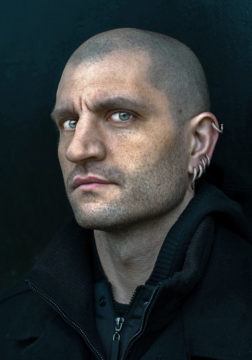 What, I asked Miéville, might a counter-factual history of Marxism-communism look like if instead of “spectre” the opening had always included “hobgoblin”? “The serious answer,” he replied, “is that nothing would have changed. But the hobgoblin is a stranger figure than the ghost. What has always inspired me is the ‘red sublime’ – the unsayable, the beyond-speech, the apophatic; literally unthinkable change. I want a radical movement that understands that there is no ‘right’ way to do things. Maybe the hobgoblin is closer to the sublime than the spectre.” There are few outside academia who are better qualified to write on the Manifesto than Miéville. As a novelist, he is receptive to the “thunderously uncynical” style and expression of its authors – the declamatory tenor through which Marx and Engels literally willed the future. There is also the remarkable shift in voice into the second person, when the Manifesto goes from discussing the bourgeoisie to excoriating it directly, “You reproach us [communists] with intending to do away with your property. Precisely so; that is just what we intend.”
more here.
Dan Falk at Aeon:
 In Galileo’s Dialogue Concerning the Two Chief World Systems (1632), three Italian gentlemen – one philosopher and two laymen – debate the structure of the Universe. The philosopher, Salviati, argues in support of the Copernican theory, even though it requires a moving Earth – something that strikes his interlocutors as problematic, if not absurd. After all, we don’t feel the ground moving beneath our feet; clouds and birds are not swept backwards as the planet whooshes through space; a ball dropped from a tower does not land far away from the base of that tower.
But Salviati, standing in for Galileo, asks his companions, Sagredo and Simplicio, to reconsider their intuitions. Suppose one were to drop an object from the mast of a tall ship. Does it make any difference if the ship is moving? No, Salviati insists; it lands at the base of the mast regardless, and therefore one cannot conclude anything at all about the ship’s motion from such an experiment. If the ship can be in motion, then why not the whole planet? Simplicio objects: Salviati has not actually carried out this shipboard experiment, so how can he be sure of the result?
More here.
Jonathan O’Callaghan in Nature:
 The European Space Agency (ESA) has approved a new mission, called Comet Interceptor, which will launch without any specific target in mind — instead lying in wait for a visitor from the outer Solar System, or even from another star. Comet Interceptor could give researchers a first glimpse of pristine material from far beyond the Sun’s reaches, or even unveil the chemical make-up of alien worlds.
It will be the first probe to be parked in space, ready to fly to a target at short notice. “We are taking a significant risk,” says Günther Hasinger, ESA’s director of science. “But it’s a high reward.”
The mission, first put forward in 2019, will launch in 2028 along with a new telescope, Ariel, designed to study the atmospheres of exoplanets.
More here.
“More informative than the entire literature on the financialization of rental housing.” —An economist of our acquaintance.
Jonathan Lis in Prospect:

We don’t even have to cast our minds back to the EU referendum. Imagine for a moment that a vote was being proposed today. In the wake of the pandemic, in the middle of a cost of living crisis, and during a war in Europe that demands unity and solidarity across the continent—how would the British public respond to a political party that proposed Brexit? The idea of splitting the UK from its European neighbours would be seen as indulgent or preposterous—self-evidently absurd.
But of course the case against Brexit does not need to rely on counterfactuals. We can look at the real world, in which the project is failing on every discernible level.
More here.
Brian Teare in The Boston Review:
 In Arthur W. Frank’s foundational text for narrative medicine, The Wounded Storyteller: Body, Illness, and Ethics (1995), the ill, Frank suggests, need “to tell their stories, in order to construct new maps and new perceptions of their relationships to the world.” Frank posits three common narrative structures for the experience of illness: restitution, chaos, and quest. In restitution narratives, the healthy person becomes sick and then they become healthy again, a quick, clean plot that reifies health in ways too naïve to be meaningful. This, of course, is the arc popular culture prefers.
In chaos narratives, the unlucky ill suffer without plot, their nonnarratives untouched by restitution or even just movement toward suffering in a more agentive way. Frank seems genuinely freaked out by so-called chaos. In his account, chaos strains the limits of caregiver empathy and institutional capacity because the chaotic body is nonnarrative—which, for Frank, is in effect to be a non-self, one who cannot effectively communicate or connect with others.
In quest narratives, the plot Frank prefers, the ill person finds the strength and agency to turn their experience of illness into allegory, a journey of insight gained from suffering. As opposed to the pro forma performances of restitution and the nonnarratives of chaos, quest narratives feature a “communicative body” that models for others that patients can “accept illness and seek to use it.” So central is this narrative structure to Frank’s conception of illness that he claims, “Becoming seriously ill is a call for stories.”
Is it, though? What if serious illness doesn’t or can’t call for anything? Or if it can, it’s only the body’s call for the restoration of equilibrium?
More here.
Judith Thurman in The New Yorker:
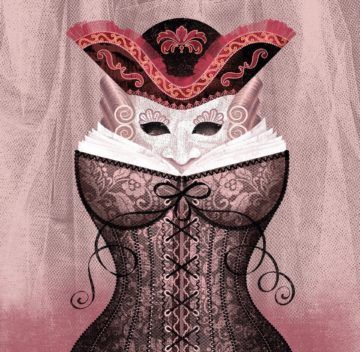 In 1763, the young James Boswell finished his “London Journal,” one of the frankest accounts of high and low life in the eighteenth century. The following year, he embarked on a Grand Tour. In a Berlin tavern, he encountered a certain Neuhaus. This voluble personage of thirty-nine, unusually tall, with a dark complexion and affected manners, was an Italian who “wanted to shine as a great philosopher,” Boswell wrote, “and accordingly doubted of his own existence and everything else. I thought him a blockhead.”
The “blockhead” had also been travelling around Europe, although not on a patrician’s leisurely inspection of art and ruins. Giacomo Casanova, whose surname means “new house,” practiced many trades—violinist, gambler, spy, Kabbalist, soldier, man of letters—but his main line of work, he later admitted, was deceiving fools. Many of them were gulls at a card table, though he had recently convinced an elderly marquise, a widow with a vast fortune and an obsession with the occult, that he could arrange for her rebirth as her own son. How would this work? Casanova’s mystically enabled sperm would impregnate her with a male fetus endowed with her soul. A casket of jewels was involved, along with a comely young accomplice posing as a naked water nymph. When his ardor flagged, the nymph’s task was to rekindle it.
Casanova had a sideline, of course, which has earned him eponymous immortality; most of us, I’d venture to say, have met “a real Casanova.” But his conquests in the boudoir, not to mention those in carriages, in bathhouses, or behind park shrubbery, have eclipsed his accomplishments while fully dressed. He translated the Iliad into Italian; he published a utopian novel; he grappled with problems in classical geometry; he traded bons mots with Voltaire. He even charmed his way into the French court, posing as a financier, and sold Louis XV on the concept of a national lottery.
More here.
on the ark noah lodges stegosaurs tyrannosaurs plesiosaurs
brontosaurs archaeopteryxes iguanodons diplodocuses triceratops
they are small and smiley-faced
they will all fit
everyone will sail off peacefully
it’s a long journey
a snow-white pterodactyl
flies out of the ark
and returns bearing a green branch in its mouth
so the banks of hollywood must be nearby
so everyone’s been saved for some reason
god hanging on to the branch for dear life
squeaks like a toy in the jaws of a puppy
by Andrej Sen-Senkov
from International Poetry Web