
Shelly Fan in Singularity Hub:
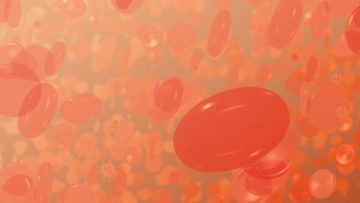 A blood draw is one the most mundane clinical tests. It can also be a Rosetta stone for decoding genetic information and linking DNA typos to health and disease. This week, three studies in Nature focused on the watery component of blood—called plasma—as a translator between genes and bodily functions. Devoid of blood cells, plasma is yellowish in color and packs thousands of proteins that swirl through the bloodstream. Plasma proteins trigger a myriad of biological processes: they tweak immune responses, alter metabolism, and even spur—or hinder—new connections in the brain.
They’re also a bridge between our genetics and health.
Ever since first mapping the human genome, scientists have tried to link genetic typos to health and disease. It’s a tough problem. Some of our most troubling health concerns—cancer, heart and vascular disease, and dementia and other brain disorders—are influenced by multiple genes working in concert. Diet, exercise, and other lifestyle factors muddle gene-to-body connections. The new studies tapped into the UK Biobank, a comprehensive database containing plasma samples from over 500,000 people alongside their health and genetic data. The research found multiple protein “signatures” in plasma that mapped onto specific parts of the genetic code—for example, rare DNA letter edits that were previously hard to capture. Digging deeper, several plasma protein signatures reflected genetic changes that linked to fatty liver disease. Other associations between gene and plasma predicted blood type, gut health, and other physical traits.
More here.
 The short film is a neglected form of American entertainment, prevalent — you can find them most anywhere, and pretty much every filmmaker
  Imagine a nanocrystal so minuscule that it behaves like an atom.
  Dread gives way to the cold stab of terrible certainty as it hits you: they aren’t people. They’re bots. The Internet is all bots. Under your nose, the Internet of real people has gradually shifted into a digital world of shadow puppets. They look like people, they act like people, but there are no people left. Well, there’s you and maybe a few others, but you can’t tell the difference, because the bots wear a million masks. You might be alone, and have been for a while. It’s a horror worse than blindness: the certainty that your vision is clear but there is no genuine world to be seen.
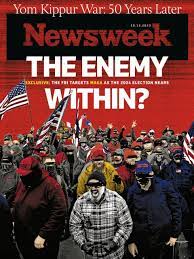 The federal government believes that the threat of violence and major civil disturbances around the 2024 U.S. presidential election is so great that it has quietly created a new category of extremists that it seeks to track and counter:
 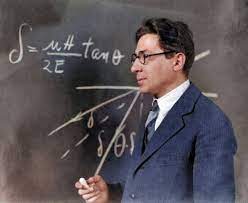 On July 16, 1945, J. Robert Oppenheimer stood in the Jornada del Muerto desert in New Mexico, watching a second sunrise—that caused by the detonation of the world’s first nuclear explosion, marking the dawn of the atomic age. Standing by his side was I.I. Rabi, another Jewish physicist. “It was a vision,” Rabi later said of that explosion. “Then, a few minutes afterward, I had gooseflesh all over me when I realized what this meant for the future of humanity.” If Oppenheimer was the Jewish father of the bomb, it had a large assortment of Jewish uncles (and at least one aunt, Lise Meitner), including Edward Teller, Leo Szilard, Niels Bohr, Felix Bloch, Hans Bethe, John von Neuman, Rudolf Peierls, Franz Eugene Simon, Hans Halban, Joseph Rotblatt, Stanislav Ulam, Richard Feynman, and Eugene Wigner.
 NEARLY ALL REVOLUTIONS
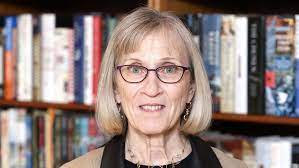 The 2023 Sveriges Riksbank Prize in Economic Sciences — the ‘economics Nobel’ — has been awarded to economic historian Claudia Goldin at Harvard University in Cambridge, Massachusetts, “for having advanced our understanding of women’s labour market outcomes”. Goldin’s work has helped to explain why women have been under-represented in the labour market for at least the past two centuries, and why even today they continue to earn less than men on average (by around 13%).
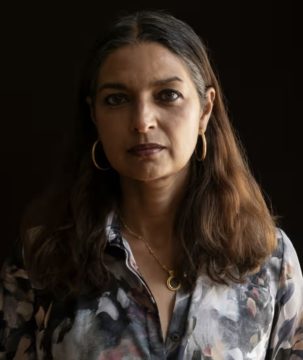 Jhumpa Lahiri, 56, is the author and translator of three story collections, including the Pulitzer prize-winning Interpreter of Maladies, and three novels,
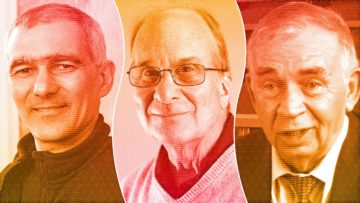
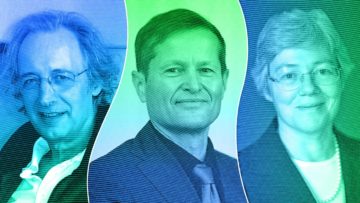 To catch a glimpse of the subatomic world’s unimaginably fleet-footed particles, you need to produce unimaginably brief flashes of light. Anne L’Huillier, Pierre Agostini and Ferenc Krausz have shared the
  H
H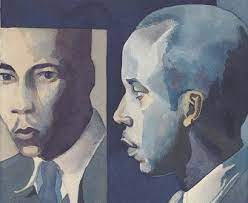 Debates about the representation of African Americans circulated throughout the 1920s—what kinds of depictions should be encouraged, who should be responsible for them, and what role black artists had in responding to negative descriptions and uplifting the race. These themes served as the subject of
  A
A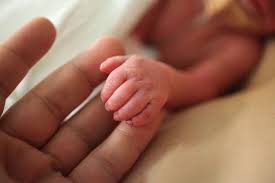 A Food and Drug Administration (FDA) advisory committee met last week to discuss human trials of artificial wombs, which could one day be used to keep extremely premature, or preterm, infants alive. Artificial wombs have been tested with animals, but never in human clinical trials. The FDA has not approved the technology yet, but the advisory panel discussed the available science, as well as the clinical risks, benefits and ethical considerations of testing artificial wombs with humans.
 One night in 1981, in the middle of bath time, Marty Gonzalez noticed a strange glow that seemed to emanate from inside one of the eyes of her 9-month-old daughter, Marissa. “It was really bizarre,” Gonzalez recalls. “It looked like a cat’s eye — like I could see all the way through.” Though Marissa’s pediatrician in Long Beach, Calif., assured Gonzalez it was nothing, she sought another opinion. While teaching her sixth-grade class, Gonzalez anxiously awaited news from her mother, who had taken Marissa to see a pediatric ophthalmologist. By lunchtime, with still no word from her mom, Gonzalez called the doctor directly. “I think it’s cancer,” the doctor told her.