by Omar Ali
Since then, the US has itself admitted that he worked for the CIA and relatively sober Pakistani military analysts have hinted that the two victims were ISI agents who had been tailing Raymond for over an hour.

by Omar Ali
Since then, the US has itself admitted that he worked for the CIA and relatively sober Pakistani military analysts have hinted that the two victims were ISI agents who had been tailing Raymond for over an hour.

I wrote this piece not long after meeting Pecriaux:
By Tolu Ogunlesi
On a Friday afternoon at the Lagos Sheraton, a group of people are gathered in one of the banquet rooms. Most are Sheraton staff – waiters and waitresses. There are also a few journalists, like me. We are all waiting for Pascal Pecriaux.
Pecriaux is a “Wine Ambassador” who has flown all the way from the village of Champagne in France, to spread the gospel of Moët to a Nigerian audience. By the time he steps into the room, two hours behind schedule, we are not the only ones waiting for him. Rows of empty champagne flutes line the tables in front of us, and half a dozen or so bottles peek from ice-boxes at the far end of the room.
Moët is one of the most easily recognizable badges of honour flaunted by Nigeria’s elite, especially its young upwardly mobile class. If the frequency of its appearance in the lyrics of Nigerian hiphop songs and in music videos is anything to go by, Marc Wozniak, Deputy General Manager of the Lagos Sheraton, is absolutely right when he says that Moët is “the most common and most well-known champagne in Nigeria.” David Hourdry, Moët Hennessy’s Market Manager for Western Africa says that “Nigeria is today the biggest market for Moët & Chandon in all Africa.”
A Simple Ontology
It may be that a flower’s petals
are held to stems by thought
and the wind is a counter-thought
that plucks petals from stems,
shifts them across a field
and sets them softly upon the grass
to repose in contemplative resolution
next to the notion of a grub-pulling crow
For all I know the wind itself may be
a palpable bright idea,
something about motion
and the abhorrence of vacuums
something about coming and going,
about ferocity, about stillness
about war and the absence of war
Maybe the moon is the concept of fullness,
loss, abatement, regeneration from slivers,
hope at the hour of the wolf, the opposite of
darkness at the break of noon, the
upside of shadow
For all I know Descartes may have had it right
and this, from horizon to horizon, may be
a simple ontology, an inherent
daisy chain of ideas
chasing its tail
Anyway, one idea
conceived in this synapse nest
is to harvest thought from thought
under a perception of blue
while the conception of breeze
riffles the hint of hair
and I place them like dreams of plums
into the essence of basket
and give them with the intention of love
to my belief in the natural
thought of you
by Jim Culleny
Feb.26, 2011
by George Wilkinson
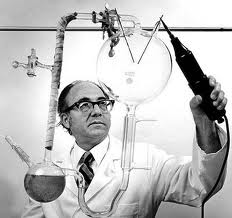
RNA was likely to be among the very first of the modern information polymer classes to emerge, because RNAs can do the jobs of genome storage (now done mainly by DNA) and enzymatic action (now done mainly by protein). Proteins might have come second, and DNA last. So how did DNA take over the job of genome storage?
by Jenny White
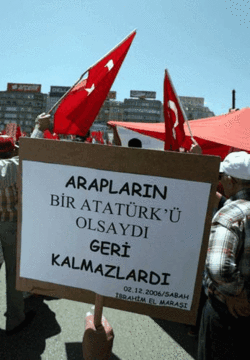
Turkey has been bandied about this past week as a model to be emulated by the new nations being born like small supernovas across the Middle East. Turkey was founded by a powerful military that doesn’t flinch from coups, but has also had a functioning and fair, if flawed, electoral democracy since 1950. The country currently appears to have found a place for Islamic piety within its political system without jamming any of its democratic wheels, although the process has been noisy and contentious. Its present elected government, under the Justice and Development Party (known by its Turkish acronym AKP), consists primarily of politicians who see themselves as pious individuals running a secular system. Some Turks believe that their intentions are secular, some don’t, but the democratic wheels keep turning. The AKP government has managed to make Turkey’s economy the fifteenth biggest in the world in GDP, only lightly sideswiped by the global turndown. There’s another election coming up this June and AKP leader Recep Tayyip Erdogan has promised that if his party doesn’t win, he’ll leave politics. All indicators show that he has nothing to worry about, but the critical element of his promise is the assumption that his party could lose, and then he would leave. That’s the trick of democracy that “eternal leaders” in the Middle East haven’t come to terms with. You lose, you leave. What has to be in place for this simple equation to become as second-nature as it is in Turkey? I happen to be teaching a course on Turkey this semester, so I posed the question to my students: Would the “Turkey Model” work in the Middle East? Here are some of the variables they came up with.
Who chooses the system? Is it top-down or bottom-up?
Turkey’s democracy was an entirely top-down imposition by Ottoman officers and bureaucrats who had wrestled back the territory that now makes up Turkey from European powers that had conquered the Ottoman Empire in WWI. Their leader Mustafa Kemal Ataturk was celebrated as a war hero, the savior of Turkey, and became its first president. He initiated extreme reforms, among them replacing Ottoman with the Latin alphabet (imagine someone telling you that in six months time, we’ll only be using Arabic script) and requiring men and women to emulate western fashion; veiling was discouraged and outright banned for civil servants, teachers, students, doctors.
Article and photos by Wayne Ferrier

Jen had been on a date and it was really, really awkward. Patti leaned forward interested. Jen revealed that they had met for the first time in a restaurant and it was going fine until they started talking about their hobbies. Jen's date said that his hobby was—of all things—birdwatching. Patti's face turned sour, registering first dismay then unabashed disgust. Nate saw Patti's intense reaction to Jen's revelation and burst into hysterical, almost embarrassed, laughter. While the audience roared, Nate's face turned a shade redder and stayed that way though the entire interaction. But this was the exact response Jen was looking for. She squealed, “Yes exactly! Patti, that's why I need help, because I just can't just look at him and say next! So I let him go on and on about this story about birdwatching.”
Patti's advice: “Every girl needs a hundred dollars in a different compartment of her purse called stash cash, you always have to have it, whether you're in a city or a suburb, it doesn't matter, to get out of Dodge. So you get up and you say to him, I think you're a really great guy, I think you're awesome, you're just not my type, I don't want to waste your time, I don't want to hold you up, I think I'm going to get going. But if I know somebody I'll send them your way. There's no wasting time, you're too hot and single to be wasting time on a birdwatcher!”
(Wherein we dump the obsolete Adam and Eve tale of the Advent of Consciousness for a more radical and contemporary one based on evolutionary psychology and cognitive neuroscience.)
by Fred Zackel
“Something fell out of the mirror.”
“Did you hold it upside down?”
“Yes.”
“Did you shake it?”
“Yes.”
“After I told you not to?”
“I got curious.”
We must congratulate ourselves. Name another animal capable of creating its own meaning for its existence and then imposing it on the universe. We might even be the ones who most delay their own extinction.
Are we there yet?
Our Divine is simply the most acceptable conceptual metaphor our limited minds can imagine and can cope with at this time. The nearest equivalent to our group mind consensus.
Our Divine is a snapshot of our conceptions of the Divine.
Ever-changing and always needed.
Usually the Divine just needs a tweak here and there. Generally we really don’t imagine the Divine any incrementally better than we did yesterday. But we can work with this business model better than other previously available ones.
Sometimes a new god comes to town.
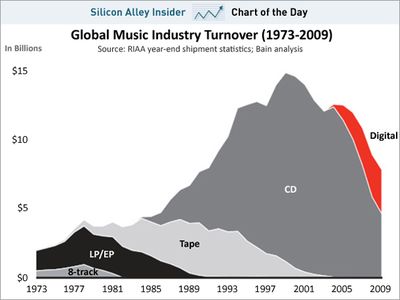
This chart's got a 'hook' – in this case, a simple and clean presentation that illustrates the rise and fall of the music business. And it has so many overtones: economic, musical, personal …
The story's simple: Vinyl got replaced by tape, then tape started falling off just as revenues from CDs picked up the slack and started skyrocketing. The business kept falling upward, making more and more money as it went. Until it didn't.
When Things Go Wrong … It Hurts Me Too
I had it … I had a deal lined up. I was going to make it.
In the late seventies rock and roll seemed to be booming. I had some songs and a five-piece band, and two managers were fighting over me. One was still struggling, on the way up. He'd take me out to breakfast once in a while according to then-standard manager/artist protocol: rented limo, Eggs Benedict and champagne, an offer of coke in the back seat on the way back. He'd managed to scrape up an offer from a second-rate record company that had a lot of hits once, but was struggling to be relevant again. The other manager couldn't care less about impressing me. But he had a superstar New Wave client and got me into a couple of major labels, both of which booked studio time for demos.
The first manager was a nice guy – not always a plus in a manager – and he had the hustle it might've taken to break an unknown act. But I dropped him and went with the guy who had the superstar in his stable. Everything was going great until I met the superstar at a party and mentioned his name. “I'm sorry I have to walk the same planet as that asshole,” she said. Uh-oh.
By Maniza Naqvi
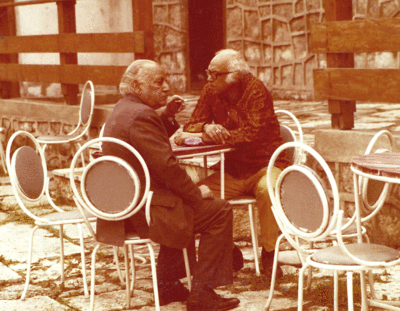
“With such love, oh beloved, at this time, the memory of you has placed its hand on my heart’s visage/ A sensation, still, though now it is the morning of separation, set the day of exile, arrived reunion’s night.”
Is qadr piyaar sey, eh, jan e jahan rakha hai/Dil ke rukhsaar par is wakht teri yad nay hath.
Yun guma ho tha hai garchey hai abhi subhay firaq/Dhal, gaya hijr ka din ah bhi gayee wasal ki raat.
And in this moment as I write this piece which is meant to be about this photograph and about the immortality and intensity of poetry and poets, I search for Ami’s gentle touch. Ami with her perfection in relating her understanding of meanings, her precision of thought, her clarity of language and her passion for prose filled my life with poetry. My understanding of Urdu poetry was through Ami and my father. Ami recited poetry to me and helped me read it in my mother tongue—she explained and translated the difficult vocabulary and gave meaning to its detailed and often culturally specific symbolism and context of my motherland. With Ami’s help I read and understood a handful of shers contained in Faiz Ahmed Faiz’s book of poetry called Nuskhaye Wafa, on the inside cover of our copy of the book I had scrawled in pencil my own alternative title:—“A Prisoners and Exiles Guide to Survival.” One of my favorite poems or ghazals of Faiz begins with:
Merey dil merey musafir, Huwa pir sey hokum sazir key watan badar hon hum tum.
My heart, my traveler, Once again we are ordered into exile you and I.
It is this photograph of Faiz Ahmed Faiz that I want to write about. But in this moment I cannot see it through any other lens then that of the sorrow and loss of Ami, my mother whose intekal or transition from this life occurred January 17, 2011.
by Jen Paton
Perhaps it’s an ailment that doesn’t just afflict foreigners. Europeans seem to have developed a kind of Europe Syndrome, in that the ideas they have of their countries, or more precisely, their cities, fail to meet the reality of contemporary urban Europe, and they just aren’t sure how to deal with it. Hence the growing success of rightist nationalism from Sweden to Hungary, with attendant visions of forests of minarets growing across the continent. Hence, also, the scrambling of so many European leaders to declare multiculturalism failed and dead. But how can something have failed, let alone be dead when it is being lived, however precariously, every day? Can multiculturalism as a lived reality fail or die, when it simply is?
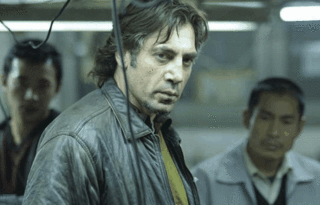
This partial sightedness stood out to me in reading many of the reviews of Alejandro González Iñárritu’s Biutiful, reviews which cannot help but note that Javier Bardem returns to a Barcelona that is anything but the sundrenched, nubile-American filled playground of Woody Allan’s Vicky Christina Barcelona.
by Dave Maier
A reader writes in to ask (“naïvely,” as he thinks):
In Kant's transcendental idealism, what is at stake? And, if we take it that it is a form of anti-realism and a source of later anti-realisms in philosophy, what is at stake in anti-realism? […] I see that one answer is that anti-realism lends itself readily to relativism, and if we want the comfort of believing that what we hold to be true or valuable is true or valuable “in fact”, then realism seems attractive and anti-realism problematic, whereas on the other hand we might think that we empowering our mental faculties in some important way if we adopt an idealist or anti-realist conclusion. [Also,] if truth has some kind of epistemic criteria and does not reduce to correspondence to a reality, but these criteria are objective in the sense that they enable us to establish that a claim is indeed true or correct, this might be thought to facilitate the meaningfulness of our moral and aesthetic claims against the possibilities of emotivism and expressivism. […] Maybe this move owes a debt to Kant, because Kant's idealism gives epistemic criteria for the truth even of empirical propositions while nonetheless maintaining an “empirical realism” according to which there are objective truths.
Dear reader:
That is one heck of a question, and not at all naïve. It would be a better and much different world if everyone were clear on realism, anti-realism, their relation to each other and to the other views which try to get beyond them, not to mention Kant. I am not a Kant scholar, but as a pragmatist I do have some things to say about realism et al, so let me give your question a necessarily compressed as well as highly contentious go.

By Nick Werle
 The late economist Hyman Minsky wrote that after fortunes inflate on the back of a speculative bubble, and after investors’ irrational optimism and overvalued assets inevitably collapse, an economy enters a “period of revulsion,” when people remember that it’s risky to bet big on an uncertain future. Likewise, it’s always during the depths of a hangover that a drinker remembers how whiskey invites its own overconsumption and swears that the only way to avoid another descent into this purgatory is to never touch the stuff again. But after the fog leaves and with a clear head regained, he forgets the pain after the party and declares another Manhattan to be an eminently reasonable investment. Of course, the trick is to recall at just that moment how miserable you’ll be after another three. A pessimistic economist faces the same cyclical popularity as a tee-totaling friend; a consoling voice the morning after becomes a buzz killer as soon as night falls again.
For economists focused on capitalism’s tendency to foment crisis, it’s important to make the most of investors’ revulsion. Indeed, if there’s ever a time for Marxists to find an eager audience for their theories of capitalist overaccumulation, it’s in the wake of a financial crisis. The moment is particularly ripe for David Harvey, a Marxist trained as a geographer, who has made a career of explaining why surplus capital has such an affinity for real estate and describing how overproduction regularly reconfigures the spaces in which we live. Both Ben Bernanke and a slew of Neo-Keynesians led by Paul Krugman have pointed to a “global savings glut” – originating in the current-account surpluses of net exporters such as China, Japan, and Germany and flowing to the bloated real estate markets of the United States and Western Europe – as the fundamental imbalance responsible for the latest boom and bust. To Harvey and his fellow Marxists, the global savings glut is not a historical fluke but an instance of an intrinsic tendency for capitalist economies to overproduce, and the great North Atlantic real estate bubble is but another temporary answer to their perpetual problem: What can absorb the great mass of overaccumulated capital?
by James McGirk
New York City’s skyline should be familiar to most readers, a vertical city, slender shafts of steel and glass erupting from a jostling street culture, with an occasional verdant hamlet lurking in its shadows, courtesy of Jane Jacobs and Frederick Law Olmsted. At its core the city is a ferocious machine, churning through money and real estate. But at its periphery in places like Ridgewood, New York City remains riddled with shelters, and slightly strange.
Radiating out from iconic Manhattan are four chunks, the “outer” boroughs of Queens, Brooklyn, the Bronx and Staten Island. The outer boroughs are more residential than Manhattan, entire sections consisting entirely of semidetached houses and tenements, the vistas seeming to spool as you traverse them, replaying the same scenes again and again, with only an occasional bodega or Laundromat interrupting the repetition. Yet here too, the sidewalks teem with life, foot traffic clustering around transit hubs.
These nodes connect to one another by tunnels, bridges and subway lines. The lines act as a root system, connecting and nourishing the surrounding areas; allowing the city’s pedestrian culture to flow through and expand. Beyond Manhattan’s densest, most prosperous districts, the city has a pre-automotive feel, recalling a time when most city-dwelling Americans took streetcars and trains. The transit infrastructure is over a hundred years old, an industrial age scaffold shaping and supporting an amorphous superstructure.
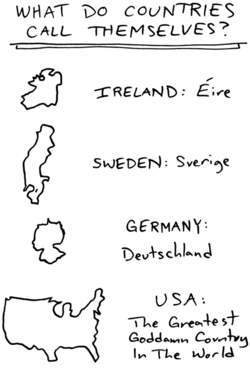
The play is set in New York in the 80s, in the shadow of Koch and Reagan and AIDS, and I read it first in the shadow of terrorism and Bush and Iraq, and then the scene came to mind again recently when I was listening to a show on the radio about American exceptionalism. The discussion among the panel was, as seems fairly typical for this show, careful and nuanced and balanced, but there developed in the end the general consensus that American exceptionalism was, has been, might still be and could be again a good thing.
“De Tocqueville’s America” was the phrase that kept coming up, part of the frequent nods to the founding mythology of the country (immigrants, freedom, republic), to the journey of America, the perfecting of the union, what seemed a sort of moral Manifest Destiny. The argument was that America at its founding represented something that was, indeed, exceptional, and a return to that idea, that kind of exceptionalism, would be good, would be worth striving for. The thing though about Manifest Destinies is that there is always a cost, there are always Indians, and American exceptionalism in the eighteenth century or to de Tocqueville might have meant one thing but it has become something else now. At the very least, it has developed a darker tinge, stains that a simple return to the past cannot whitewash.
by Jeff Strabone
One way that novels and films differ from the real world is that events that mark the end of a narrative fiction tend to be just the beginning in the non-fictional world. Case in point: revolutions. A revolution is never the end of the story in real life. If the razzle-dazzle of mass protest, the minting of fresh martyrs, and the deposition of decades-fattened tyrants are the marks of a real revolution—one that 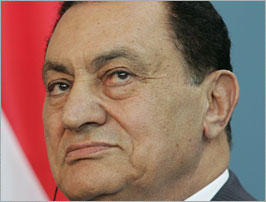
What, then, will be the story of the Arab revolts in 2011? It is too soon to know even what genre of tale will be told. In lieu of predicting what will happen next, I offer instead some first thoughts on the exciting events so far and what they will mean for the Arab states, the United States, and Israel.
by Ryan Sayre
Elisha Otis was a solver of problems—practical problems involving bread ovens, steam engines, bed frames, and the like. Faced with the problem of safely bringing debris down from the second floor of his workshop, in 1852 he repurposed a railroad brake into an emergency elevator brake that would stop the lift cold in its tracks should the supporting cables snap. This small innovation opened an entirely new kind of space; a space we might call the 'up'. ‘Up’ had of course always existed, but never before as a habitable territory. As a place for work, life, and leisure, ‘up’ would have to be imagined. While colonial powers in the early 20th century were busy stretching railroad lines across continents, urban engineers in cities like Chicago and New York were beginning to bend Otis' elevator tracks ever further upward into uncharted verticality.
For a short three to four year period in the late 1920s and early 1930s, New York City drove its skyline 70, 87, and then 102 stories into the air. The expedition marked a transformational moment in the city. During these few years city traffic was detoured skyward. The city’s profile was nearly flipped on its axis. The goal of city planners was to rationalize the city and the ‘up’ seemed like the most efficient direction to take a growing population. But rationalization and efficiency are never linear; the stories of buildings are marked by countless twists and turns.
by Feisal H. Naqvi
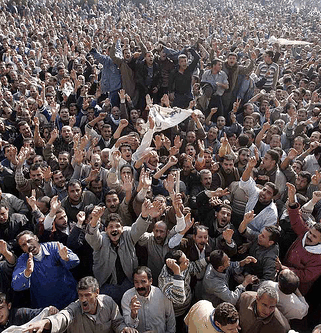
The question of what to do with a revolution in a Muslim country has gained new relevance in the past few days because of the tumultuous events in Egypt and Tunisia. In both of those countries, popular dissatisfaction has led to the unceremonious ouster of well entrenched autocrats. As a consequence, many observers have jumped to the conclusion that the old choice between a secular dictator and a fundamentalist democracy a la Iran is now dead.
Is that really so? Have Facebook and Twitter really killed all the monsters lurking in the hearts of Muslims? I am not so sure.
Let me begin my thoughts with a plethora of caveats. I have never been to either Egypt or Tunisia. I know very little about the history and the culture of either country. I am in no position to prognosticate about their future with any degree of confidence. But like many other writers before me, I am not going to let my complete ignorance stop me from making a complete fool of myself.
In my defence, I am not trying to make sense of either the Egyptian or the Tunisian revolutions. What I am interested in is how these two countries will make sense of themselves in the years ahead. Both of these countries are predominantly Muslim. Both of these countries are now going to try and develop a popular form of democracy. If either of these countries can develop an intellectually sustainable form of Islam and liberal democracy, my life as a Pakistani will be different (as will the lives of all Muslims). And while I hope I am wrong, history certainly gives me great reason to be cautious.
by Alyssa Pelish
I.
“He brought out the five objects and studied them. The green strip of cloth. The code key. The ticket stub. The parcel receipt. The half poker chip. Strange, that little things like that could be important.”
—“Paycheck,” Philip K. Dick
If people know just one thing about Proust, it’s the madeleine. And why wouldn’t that be just exactly what catches in the popular imagination? Whether you read it yourself or hear of it secondhand, there’s a great deal of wish fulfillment in that scene: one small cookie[1] that seems to contain the entirety of a grown man’s childhood. The moment it occurs is marvelous. This is that famous moment, more cited than any other, when our narrator at last recognizes the taste of the tea-soaked madeleine as that of the morsels that his aunt would give him, and
immediately the old grey house upon the street, where her room was, rose up like the scenery of a theatre to attach itself to the little pavilion, opening on to the garden, which had been built out behind it for my parents (the isolated panel which until that moment had been all that I could see); and with the house the town, from morning to night and in all weathers, the Square where I was sent before luncheon, the streets along which I used to run errands, the country roads we took when it was fine. And just as the Japanese amuse themselves by filling a porcelain bowl with water and steeping in it little pieces of paper which until then are without character or form, but, the moment they become wet, stretch themselves and bend, take on colour and distinctive shape, become flowers or houses or people, permanent and recognisable, so in that moment all the flowers in our garden and in M. Swann’s park, and the water-lilies on the Vivonne and the good folk of the village and their little dwellings and the parish church and the whole of Combray and of its surroundings, taking their proper shapes and growing solid, sprang into being, town and gardens alike, from my cup of tea .[2]
“From my cup of tea.” The tea in which he’d dissolved the crumbs of that madeleine. That very small cookie. What impossible relief, that. To find that all is not lost – that, in fact, all has been neatly contained and preserved in a small object not a bit subject to the vicissitudes of one’s own moods and mental lapses. See it splendidly unfurl and bloom like a paper flower come alive in water.
Most people are concerned at least a little about remembering. This is largely why shops sell souvenirs and we snap photographs and save ticket stubs and keep diaries. Most people are at least a little bit worried about losing the past. Memory is messy; it’s most of the time hopelessly inexact and fragmented. It’s unreliable – if it’s there at all. So to be able to stash the whole of one’s experience in a small object, retrievable (as it was not even for Proust) at will, sounds very reassuring. It does to me, at least.
by Gautam Pemmaraju
Allauddin Khilji1 did not vacation in France. The Turko-Afghan marauder and conqueror did not say to 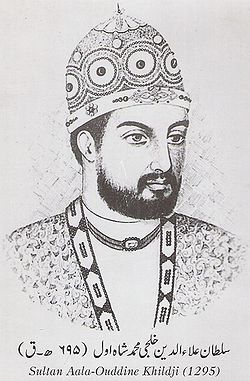
But I wrote that he did. I claimed, in my 7th class history final exam, that the heat-stricken ruler set off for some well deserved R&R and frolicked, as men of such regal stature are apt to do, with some fine local lasses – one massaged his troubled brow, one fed him grapes, and others fanned him. A few days later, post our Maths final as we played makeshift cricket with thick plywood clamp boards and a red rubber ball, I was called into a higher class (their exams were longer) by our history teacher Mr. Imdad Ali – popularly known as petloo on account of his distended, overhanging belly. He asked after my parents, if there was to be a family holiday, and how I had fared on the history exam. I had cracked it of course. The margins were straight, broad and drawn in red ink, I had spaced out my words cleanly, my handwriting was fairly legible, it even had an distinctive appeal I thought, and importantly, I had written more answer sheets than anyone else in my class. As the older boys sniggered in the prescient knowledge of my humiliation, I began to get a sneaky suspicion that something was amiss. He ruffled my hair, pinched my cheeks, told the class of how good a student I was, of my passion for cricket, and then asked in faux concern: “But baba, when did Allauddin Khilji go to France?”
During the 1990s, 
Critics claimed that identity politics were the culprit in this emerging crisis. That too many people’s allegiances, identities, and agendas were based on their membership in various sub-groups of ethnicity, gender, and/or class. None other than Arthur Schlesinger, an eminent American Historian and former adviser to President John Kennedy, complained that America was suffering from “too much pluribus and not enough unum.” Another term that became popular among critics was “hyphenated Americans,” a jab at those who were supposedly not content to simply be “American.”
The issue girding identity politics in Roosevelt’s time was foreign immigration. Immigrants had been washing over America’s shores by the millions for 35 years when TR gave his speech at a Knights of Columbus meeting in New York City, to an audience comprised mostly of Irish immigrants no less. But identity politics in American history go back much further than that.
Historians, though they don’t necessarily use the term in this context, are keenly aware that Andrew Jackson’s rise to the presidency came as he rode a wave of unprecedented identity politics. Although their candidate was a wealthy land speculator who owned a cotton plantation nearly two square miles in size and over 150 slaves, Jackson’s campaign presented him as an every man. They starkly contrasted him against and even mocked the well-heeled, blue blood elitism of his main rival, John Quincy Adams.