by Kevin S. Baldwin
Anniversaries be they of marriages or births, are generally a time to celebrate (another lap around the sun, yeah!). They can also be a time of darker speculation: “What if I had stayed single, gotten married, married someone else, hadn’t been so career-focused, or hadn’t been born?” These “what if” scenarios are the subject of many novels and films (e.g., A Christmas Carol, The Last Temptation of Christ, The Family Man, and It's a Wonderful Life), because they link regret, acceptance, and possibility. 
Anniversaries also focus our attention on particular dates or years. Two years ago, there was much celebration of the bicentennial of Charles Darwin's birth (1809) and the sesquicentennial of his publication of his On the Origin of Species (1859). In 1859, John Stuart Mill published On Liberty and Edwin Drake discovered oil in western Pennsylvania. The competitive pursuit of liberty through the consumption of oil has characterized much of the late 19th and all of the 20th Century. With regard to the recent sesquicentennial of 1859, my purpose is not so much to ask “what if?” (as in the stories and films cited earlier) as it is to ask “what now?” The result is that I hope to offer a way to incorporate the full implications of Darwin, Drake, and Mill’s work to get us to the next big anniversary in 2059.
How did we get to 1859? To understand Darwin, we need to recall Malthus whose 1798 Essay on the Principle of Population established the idea that food production increased arithmetically (or linearly) while populations increased geometrically (or exponentially), thus growing populations would rapidly outstrip their food supply. Malthus' insights informed both Darwin's and Alfred Russel Wallace's formulations of natural selection and they acknowledged him explicitly in their writings.
Darwin's On the Origin of Species in 1859 is most remembered for the principle of natural selection and its popularization into phrases like Herbert Spencer's (1864) “Survival of the fittest” and Alfred Tennyson's (1849) “Nature, red in tooth and claw.” Even today, a reference to The Origin evokes the idea that life is hard and competitive. In a word: Darwinian. 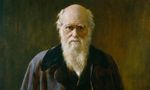
The second great contribution of 1859 was Edwin Drake's discovery of oil near Titusville, Pennsylvania, which launched the American petroleum industry. Oil is an astonishingly energy dense material. A single 42 gallon barrel of oil may contain the energy-equivalent of about 25,000 hours of human labor. Oil also provides the chemical feed-stock for many items that we consider to be essential (e.g., chemicals including plastics and pharmaceuticals). Cheap, readily available oil has given us lots of energy to do many things and make lots of stuff. 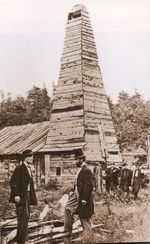
The third great contribution of 1859 was John Stuart Mill's On Liberty, which advocated for the moral and economic freedom of individuals from government and other citizens. Mention Mill today and terms like utilitarianism, libertarianism (both upper and lower case), and individual freedom come to mind immediately. On Liberty is perhaps best known for the phrase: “Over himself, over his own body and mind, the individual is sovereign.”
Combined with the seemingly inexaustible supply of cheap energy in the form of oil, competition and individuality became the defining metaphors for the development of western civilization in the late 19th and 20th centuries. A selective reading of the lessons of 1859 would be that life, including the human condition, is a struggle, energy is cheap and abundant, and the pursuit of individuality and freedom are paramount. Does this not sound like America in the first decade of the 21st Century?
Read more »