by Hasan Altaf
Looking back, I'm not sure how I got through my entire education, studying literature and writing, without ever really reading Greek drama; there was of course Shakespeare; Chaucer, at one point; I even have a vague memory of the Jataka tales, but no teacher or professor ever had me read or think about Greek tragedy. The stories we all knew, of course – Oedipus, Troy, Heracles, capricious deities – but we never actually read the material.
This did not strike me as a problem. Most people, after all, get through life just fine without Greek tragedy, and in any case it is hard to imagine literature more ancient and more removed from us; its relevance seemed questionable. A friend, however, recommend the poet Anne Carson's Autobiography of Red, a novel in verse that recreates the story of Geryon (in the myth, a many-headed monster Heracles kills to steal his cattle – one of the labors; in Carson's hands, an awkward, lonely child growing up), and I liked Carson's work, so I picked up another book of hers, Grief Lessons. Mostly I just liked the title, but it turned out to be a translation of four plays by Euripides. The book sat on my bookshelf for years, moving from Baltimore to Pakistan to DC, until I finally got around to it. Since then I have been oddly hooked; when you find yourself looking forward to comparing two translations of Sophocles' Elektra, you know something has gotten to you.
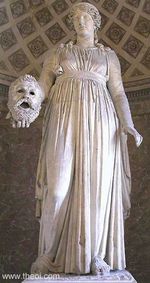
I am, obviously, no expert in this material; my knowledge of ancient Greece is essentially limited to what I remember of the myths and what Wikipedia tells me (among other things, that Melpomene, the Muse of Tragedy, was famous for her boots).