There was a time, oddly, when I very much identified with Alan Shore, the charismatic skirt-chaser of an attorney played by James Spader on Boston Legal. Not that I shared Alan Shore’s tastes for bespoke suits or cigars, let alone his highly cultivated predilection for women. My fellow feeling did, however, have everything to do with his absolutely mordant wit. As with the best wit, it had an economy and timing that thrilled me. (And it was, of course, all of a piece with Spader's acting that, in its purest, most enduring form, seems to rely on only the musculature of his eyes.) But Alan Shore’s wit, like his eternal bachelor of a character, was never quite matched. His remarks, cutting through the general babble of conversational convention, would typically hang in the air for a beat — while I would chortle and the characters on the show would either ignore, shake their heads at, or (most typically) take offense at them. Even his best friend, the aging rainmaker Denny Krane, was typically too near the precipice of senility (or his own lascivious preoccupations) to fully match Alan’s witticisms. That was just how the dynamic of the show worked — and it worked pretty well. But of all the staple characters — the bluster and senility of William Shatner’s Denny, Candice Bergen’s no-nonsense senior partner, René Auberjonois’ milquetoast authority figure, the expendable cast of comely junior partners — Alan Shore was really the one who had my empathy.
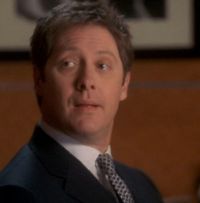
Alan Shore was (and probably still is) one of my favorite instantiations of what I think of as the solitary wit. This is the sort of person who is always at the ready with an epigram or an ironic aside. There's a detached elegance to their pith that places them above the pedestrian fumbling of ordinary conversation. But if honest-to-goodness repartee consists, at a minimum, of one wit’s thrust followed by another’s riposte, the solitary wit’s rapier is ever brandished but never met by another blade. Alan Shore’s predecessors, Oscar Wilde’s most epigrammatic characters must have pride of place in this. Although the dialogue of Wilde’s prose and plays is, in general, known for its incisive wit, it almost always turns on the solitary wit — for whom the world is his straight man. Think of the caustic bon mots dropped by Dorian Gray’s Lord Henry, which are never quite returned in kind by the more socially reserved Basil or wide-eyed young Dorian.[1] Even in The Importance of Being Earnest, which is adored for its comically mannered exchanges, Algernon is the only true wit. His every other line is a perfect epigram — but it's rarely ever returned in kind by the others.[2]