by Rishidev Chaudhuri
Good and convenient fats to use with vegetables are poultry fat (chicken or duck), rendered bacon fat, butter and cream. You can also use beef or lamb fat, which are harder to find without a butcher, and veal fat if you're feeling decadent. And small fatty fish (like anchovies) are wonderful with vegetables, but that's a subject for another post.
Unsurprisingly, bacon fat emerges when you cook bacon. To make the process smoother, you can add a splash of water to the pan when you put the bacon in, which allows for gentle heating while the water heats up and boils off. Eat or reserve the bacon and strain and store the fat for later use. Poultry fat is often sold relatively cheaply but you can also accumulate fatty bits of chicken or duck (like the skin and the fat inside the cavity) in the freezer, and render it when you have enough. This is quite straightforward: trim away any attached bits of meat and cut the fat into small pieces; put it on low heat with some water and let it render out, stirring occasionally to make sure the non-fatty bits don't burn. Once the fat is liquid and the water has cooked off, strain it and store in the fridge. You can also render beef or pork fat in a similar way.
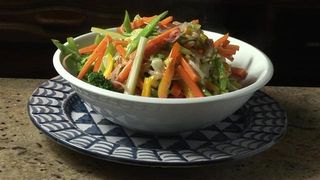
As a start, you can use these fats instead of oil when making salad dressings. If you're making a vinaigrette (mix vinegar or lemon juice with salt, mustard, etc. and whisk in fat with a fork), try using melted duck or chicken fat, or some rendered bacon fat, or even brown butter instead of part or all of the oil. This is delicious tossed with a simple salad of greens, and makes an excellent weekday lunch. Of course you could add refinements to your salad; possibly the best is a poached egg (or, equivalent but simpler, an egg boiled in its shell for about four minutes till the white is mostly set and the yolk is runny).