
by Brooks Riley
Bookworm
by Carol A. Westbrook

each one how he enjoyed the book. And each admitted he hadn't yet opened the book, but assured me he put it in the bathroom. After my initial shock, I recognized that I was being paid the highest compliment. For a non-reader, the bathroom is the place of honor for reading material. A stack of books or magazines in the bathroom means, “this is valuable to me, and I am going to read it some day.”
What a different world than the one in which I live! In my world, books hold a place of honor and, more importantly, books are read. I love books. When I was a kid, the Tooth Fairy left us books. My first Tooth Fairy book was “Harold and the Purple Crayon,” by Crockett Johnson, which today remains my favorite children's book. I loved getting books from the Tooth Fairy, and treasured every one.
Because we were a Catholic family of four children, all of whom attended parochial school, we didn't have much money to spare, but books were always there. My father got many of these books for free, since they were demos at his place of work–he did PR for the Chicago Public Schools. We were fortunate to have a steady supply of children’s' books long after we had our permanent teeth.
Reading was a joyful activity in our family. We children taught each other to read long before we started first grade (there was no kindergarten at St. Hyacinth's School). I remember showing my younger brother how to sound out the letters in words; I was seven and he was three. Family vacations were always preceded by a trip to the library, to stock up on a dozen or so books to take along as we lounged at the lake or drove on our interminable car trips.
I was the bookworm of the family. In fourth grade I breezed through the classics on our classroom bookshelves–“Black Beauty,” “Oliver Twist”, and “Tom Sawyer.” I doubt these books would be considered suitable for a 10 year old today (even if they could read them), featuring abuse of both animals and children.
Radiant Blues
by Mara Jebsen

Woke up this morning, the moon wasn't right.
Sharp as a blade, and she slung to the right.
Woke up this morning, the moon wasn't right.
Carolina, I miss you, miss your crackle-whipped pines;
Miss your bread-rising breath, thick-sweet like old times;
And I miss your lying photographs, your freshly buried crimes.
Caroline, when the moon shines I miss you.
Shake loose the yam-dirt where the shadow lays down.
And wake the white girls in the colored gowns,
And wake the cruel and quiet towns,
Where the lace and knife lie mute.
And a long stare loops over miles of road
Faceless and numb as any old moon;
I don't want these dreams of blood and light;
Don't want this hanging in my doorless room.
Carolina. Carolina, stop all that howling,
Its getting too late–its a full, black morning–
You're strong, and you're safe–and you know
I can't fight you. But Carolina, tonight
Let me sleep without you.
Welcome to Weimar
by Lisa Lieberman
Hadn't there been something youthfully heartless in my enjoyment of the spectacle of Berlin in the early thirties, with its poverty, its political hatred and its despair?
Christopher Isherwood
The Weimar Republic is everybody's favorite example 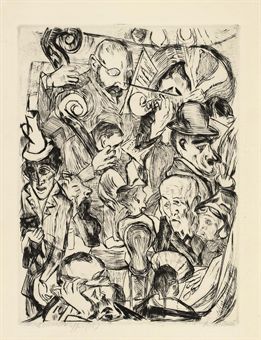
Today liberals, by their unwillingness to admit the consequences of a victory by Hitler and Stalin, are emotionally on the side of “peace” — when peace, so-called, at this moment means capitulation to the forces that will not merely wipe out liberalism but will overthrow certain precious principles with which one element of liberalism has been indelibly associated: freedom of thought, belief in an objective reason, belief in human dignity.
Mumford attacked the complacency of American intellectuals who were blind to the “destruction, malice, violence” of the Nazi regime. He himself had been slow to recognize Hitler's barbarism, and chose to suspend judgement regarding the Soviet experiment for twenty years, but he now condemned liberal habits of mind for degrading America, sapping it of energy and the moral courage required to combat political extremism. By the end of the New Republic essay, he was advocating action, passion, and force as an alternative to the cold rationalism, tolerance, and open mindedness he blamed for “liberalism's deep-seated impotence.” In fact, this same accusation had already been leveled at the Weimar Republic by the Nazis, and in remarkably similar terms.
Exhibit A
Christopher Isherwood came to Germany in 1929 for one thing only: “Berlin meant Boys,” he confessed in his memoir. His friend Wystan (the poet W. H. Auden) had promised him that he would 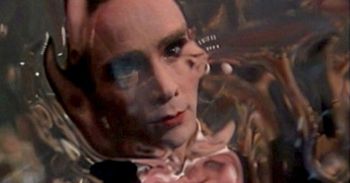
By way of contrast, the Austrian writer Stefan Zweig was horrified by Weimar Germany.
Monday, September 29, 2014
The shortest path, the traveling salesman, and an unsolved question
by Hari Balasubramanian
The Shortest Path
How does Google Maps figure out the best route between two addresses? The exact algorithm is known only to Google, but probably some variation of what is called the shortest path problem has to be solved [1]. Here is the simplified version. Suppose we have a network of nodes (cities, towns, landmarks etc.) connected by links (roads), and we know the time it takes to travel a particular link. Then what is the shortest path from a starting node A to a destination node D?
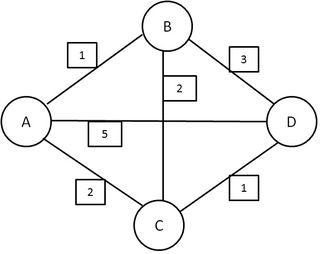
In the instance above, there are 4 nodes. The rectangles provide the link travel times. The B-C link takes 2 time units to travel; the A-D link takes 5; the C-D link takes 1; and so on. The five possible routes from A to D are: A-D; A-B-D; A-C-D; A-B-C-D; and A-C-B-D. The easily spotted shortest path is A-C-D, with a total length of 3. But what if a network has hundreds of nodes and links? It would be impossible to visually identify the shortest path. We would need an efficient algorithm. By that I mean an algorithm whose execution time on a computer stays reasonable even when the problem size – the number of nodes or links in the network – gets bigger.
In 1959, Edsger Djikstra published just such an algorithm. Djikstra's Algorithm doesn't simply look for all possible routes between the start and destination nodes and then choose the shortest. That kind of brute-force approach wouldn't work, given how dramatically the number of possible routes increases even with a slight increase in network size. Instead, Djikstra's Algorithm progressively explores the network in a simple yet intelligent way. It begins with the start node A, looks at all its immediate neighbors, then moves on to the closest neighbor, and from there updates travel times to all as yet unvisited nodes if new and shorter routes are discovered. I am fudging important details here, but this basic procedure of moving from a node to its nearest neighbor and updating travel times is repeated deeper and deeper in the network until the shortest path to the destination is confirmed. Wikipedia has a good animation illustrating this.
How fast does the algorithm run? Let's say there are V nodes. Then, in the worst case, Djikstra's Algorithm will take in the order of V x V steps to compute the optimal path. An algorithm like this that grows polynomially with the problem size is something we will call efficient (of course lower order polynomials, such as the square function, are preferable; V raised to the power 50 wouldn't be helpful at all). So a 10-node problem might take around 100 steps; a 1000-node problem will take 1000000 steps. This increase is something a modern day computer can easily handle. The algorithm might do much better in most instances, but the worst case is commonly used as a conservative measure of efficiency. There are faster variations of Djikstra's Algorithm, but for simplicity we'll stick to the original.
Monday Poem
Early Autumn Surf
…… it’s still
the birds have gone
knowing it’s time
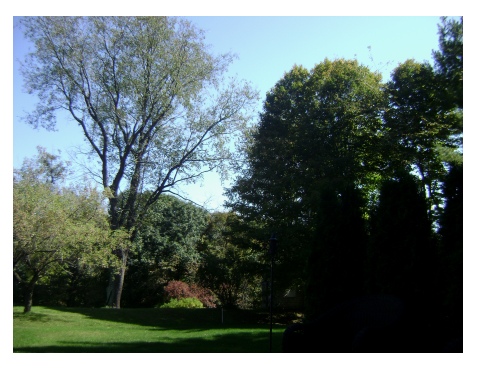
but today is an anomalous summer day
which, breaking protocol,
has oozed into early fall
with temperate trappings
lulling me with spacious softness
and late brilliance,
being the last echo of July,
the final peal of August’s bell
expanding as I surf
down the hump of its luxurious waveform
under the comfort of its breaking curl
.
by Jim Culleny
9/27/14, 2:45
Photo and poem, shot
and jotted together
Heaven and Earth
by Brooks Riley

Why not? There are worst entities for a come-back kid when its mortal coil is taken up again. As a capybara you would live in a small community of peaceful vegans, free to join the party or to wander off on your own without being ostracized. You’d enjoy communal living with all the advantages, including a swimming hole in the vicinity. Your leader would be the biggest male, not a testosterone-driven despot intent on hoarding all the females for himself, but a gentle giant who shares. He might get first choice, but there’s plenty enough to go around. If the kids got on your nerves, allomothers would take over for a while.
The real question is, why would you want to come back at all?
Hope is like a birthmark no one can see: Everyone has one, and it doesn’t go away. It all starts with hoping to inhale your first breath, and progresses to hoping your mother will pick you up when you cry. It ends with hoping there’s something to look forward to when you die—call it heaven, call it oblivion. As the hopes in this life diminish, they get transferred to the other side, even if there’s no there there, as Gertrude Stein once said of Oakland, California.
The problem is that our notions of heaven are so pathetically limited. Why would I want to sit on a cloud playing a harp? If I wanted to play a harp, I’d have tried it in this life. And what if I see my loved ones in that light at the end of the tunnel? What then? Do I embrace them over and over again? For men who dream of an endless supply of virgins, is heaven just a coitus repetitus? Let’s face it, nothing we can possibly imagine or wish about heaven can allay the inevitable tedium that would arise from a satisfaction repeated many times over. Our visions of heaven quickly expose themselves as visions of hell, adulterated by endless repetitions and endless time. Even Pope Benedict suggested as much.
Israel, Gaza, and the stupidity of leaders
by Emrys Westacott
Like millions of other people, I found the recent Israel-Gaza conflict sickening and depressing. After fifty days of military exchanges from July 8 to August 26, over 2,000 Gazans had been killed of which, even according to Israeli government estimates, over half were civilians. Around 11,000 Gazans had been injured, and several hundred thousand had been displaced from their homes and needed emergency assistance. On the Israeli side, 62 soldiers and 6 civilians were killed, and around 1,300 were injured. To what end?

While it went on I read, watched and listened to dozens of interviews and debates about the conflict. These involved Israeli government ministers, leaders of Hamas (the governing party in Gaza), journalists, scholars and political analysts, some highly critical of the Israeli government, others defending its actions. Two things struck me about what I heard.
First, there was a great deal of repetition: “Israel has the same right as any other country to defend itself against attacks.” –”The people of Gaza have the right to resist occupation.” – “Israel is ultimately responsible for the conflict because they continue to impose intolerable living conditions on the Palestinians.” –”Hamas is responsible because they committed the first acts of violence.” –”Israel targets civilians in breach of basic moral principles and international law.” –”So does Hamas.” –”Hamas still won't recognize the right of Israel to exist.” –”Israel continues to undermine the possibility of a viable Palestinian state by constructing new settlements.” Listening to these debates is like being on a merry go round, going round in circles, seeing the same sights come and go; you hear the same points being made again and again in more or less the same order.
Second, the points made by the parties to the debates typically pass each other like skew lines, not quite engaging. Question: “Isn't the Israeli governments showing a callous disregard for the lives of Palestinian civilians?” Answer: “It's Hamas with their rockets that is targeting civilians. And why is Israel being singled out for special criticism when other countries also kill civilians when they're fighting a war?” Question: “Does Hamas accept the right of Israel to exist?” Answer: “The Israeli occupation of Palestine is illegal under international law.” So often, the answers don't engage with the questions. This aspect of the debates is most frustrating.
Longing for Letters
by Mathangi Krishnamurthy

The first letter I ever received was from my father. Truth be told, it was a postcard. He was away in faraway lands and had sent me a one-line missive with a picture of some Disneyland minion in Mickey Mouse costume, looking both avuncular and eerie. I remember feeling a distinct happiness at the sight of his handwriting, all beautiful, cursive, and grand. People wrote me letters for a large part of my life. My father, my grandfather, two cousins, friends that moved away, and friends in foreign lands. I have letters bearing dates right up until the nineties. I wrote back letters and in the process, accumulated beautiful pens, inkpots, and thick, fancy letter-writing paper. Also, for those who remember, I owned blotting paper; inspite of that, my hands were permanently ink-streaked. I always owned what used to be called a China pen even though it bore the brand name “Hero”. The need for good handwriting was drummed early into my head. Pages of pages of cursive writing have rendered permanent the callus on my middle finger.
Two things show up regularly on my reading list these days; one, the daily habits of artists, scientists, thinkers, and writers, and two, their prolific and thoughtful correspondence. As others have argued so forcefully, letter writing was for writers, not merely a distraction but a way to find some breathing space from their craft while also allowing them the possibility of re-infusing it with vigor and vitality. Through letters they made manifest their orientation towards life and the world, but also communicated and cleansed new ways of thinking about their craft. Writing about writing to empathetic interlocutors seems to also been also about finding community, and laying the foundations for a new world.
Quaere, how much do we really see?
by Charlie Huenemann

This is a big question always, but it was particularly big over the course of the 17th and 18th centuries. Some thinkers abided by the scholastic dictum – “there's nothing in the mind that isn't first presented by the senses” – which means that all of the content in our model of the world is gained through sensory experience. There is something very neat and tidy about this – nothing comes from nothing, and everything is accounted for.
Other philosophers found, as they carefully parsed their own sensory experience, that there was a lot less in it than they thought. We see patches of colors, not objects; we see sudden bright changes, and hear loud booms, and it is only with some mental effort that we combine them into a single event; we observe one change, and another, and we only come to think of the changes as causally related. The senses surely give us some data, these philosophers believed, but the mind is required to structure these data into a world. There is order in our experience that does not come from the senses.
The general debate became focused on a thought experiment raised by William Molyneux in a letter to John Locke (1693):
Suppose a Man born blind, and now adult, and taught by his touch to distinguish between a Cube, and a Sphere of the same metal, and nighly of the same bigness, so as to tell, when he felt one and t'other; which is the Cube, which the Sphere. Suppose then the Cube and Sphere placed on a Table, and the Blind Man to be made to see. Quaere, Whether by his sight, before he touch'd them, he could now distinguish, and tell, which is the Globe, which the Cube.
Those of us used to coordinating sight and touch must make some effort to imagine what it would be like to see a sphere and a cube for the first time, without already knowing from experience what each would feel like, were we to reach out and touch it. Without having had that experience, would it be obvious that one shape would feel sphere-y, and obvious that the other would feel cube-y?
CATSPEAK
by Brooks Riley
The Humour of Disappearance
by Carl Pierer
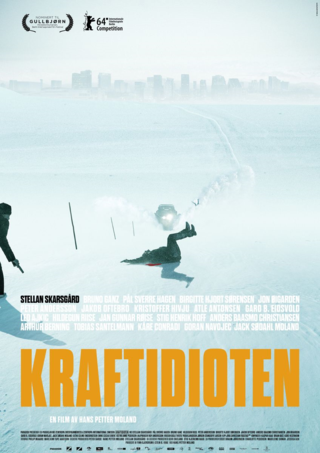
It is not quite clear to whom the Norwegian title of Hans Petter Moland's new film, “Kraftidioten” (roughly: ‘really dumb person'), is meant to refer. Any of the characters seem to be a suitable candidates. The English title, on the other hand, “In Order of Disappearance” points toward the first central element in the film's comedy: it lets the audience expect, but meets those very expectations only through inversion. For instance, the film flips the standard cast-list in the closing titles. Instead of their order of appearance, a brief obituary is shown as the characters disappear throughout the film. This motif is varied on different levels: the evil boss of the Norwegian drug gang, “the Count”, is indeed a very progressive and forward thinking individual. He is a vegan, gets coffee for his men while they are busy torturing one of their victims, and does not readily give in to his ex-wife's custody battle over their son. In short, a modern business leader. Nils, in contrast, is a calculating, cold-blooded serial killer. He shows no signs of pain nor remorse. Yet, the film challenges the viewer subtly: while “the Count” should be appreciated (and Nils condemned) because of their respective deeds, the audience sympathises with Nils' Nordic Stoicism. Fortunately, this moral dilemma is resolved for the spectator in the second half of the film as “the Count” acts more and more as an evil overlord is supposed to do: shooting his own men, hitting his ex-wife, killing his informants after they delivered their information.
Cry ISIS
by Maniza Naqvi
Offspring of wanton wants, they arrive, together, these gods of war and weather, to the beating drums, and sound of thunder, crying out crisis, each September. This century's, Septembers, all arrive back to school, as it were, refreshed from resorts and beaches, in need of replenishing, their depleted coffers, of personal savings, and future job offers.This century's September, as if afraid of endings, arrives as though, unrepentant, its own immortal endless season, of unceasing sameness, an eerie stillness of repeated scripts and finite possibility: War as weather and weather as war. Each September, reminds us, of an, unchanging, unreformed industry, of needs, that guarantees, more spectacular bombs and thunderous storms. Bombs and storms. Lovingly named for eradicated tribes, victims of genocide, and of course women. Apache Helicopters, and Tomahawk missiles, Rita, Katrina, and Ophelia. Do you even remember, come September, as we lurch from one year to the next, all the threats and crisis, these Septembers past have presented as pretexts? And we, the video generation, watching and watched, posting selfies, we need only a video to suspend belief, acquiesce and agree. War is peace! This is a crisis, indeed. These past, two half dozens, and change, Septembers,this same cry of crisis? And we, resolutely unquestioning, of how rules were changed, to protect us, from ourselves. The Patriots Act? Remember? In September 2005 came Katrina, after Rita,and Ophelia: and army boots and troops came out, to act and protect the land, while patriots drowned? Boots on the ground? This ground. Remember Septembers past, and to come. Then, came FISA ‘Protect America Act', in September 2007. Do you remember? (here.) Do you remember the rules, that changed? Rules on how you were to be protected, by being watched and listened to, and put in your place, if needed, by guns and batons, and military courts, and tear gas and bullets and fantastical costumes of robot cops and juggernauts. Do you remember that September? For your own protection, for your own, good, of course. Who elses'? Do you remember, the Financial Crisis, come September in 2008? The rules that changed? And Wall Street won and you lost your gains—and your roof, in its name, and, of course, your good name? And then, came the Gulf spill and by September 2009 British Petroleum, how it threatened, do you remember, the war on life? Or the threat for burning of the Quran, again godsent, then, in September 2010 that almost ushered in the chance on changing the rules on freedom of speech? And in September 2011, the Occupy Movement, which revealed, to us, the extent of our powers, against power, which as it turned out, were: None. That revealed to us, that the police, primarily protects property. That even a movement for rights and freedom, uses the term, Occupy. Are we mystified? And then the storm of Sandy which by September 2012 had made it clear, as it battered and washed away, our water front properties and flooded, Wall Street how powerless the batons, bullets, the tear gas, the shells, the bombs were against, the real threat. That year, they bombed Libya straight to hell. Then, a video of insanity, and that September, the attack at the embassy, in Bengazi? Yes, that was September 2012. Come September 2013, the drums of war turned to a deafening roar—that bloodlust's design, to go bomb Syria, all the way back to Afghanistan and more, Iraq and Libya and even Iran! A video, several, tried to help. Always a video, to make the case, to go bomb and invade, yet another place.That juggernaut denied its chance, by another hegemon, rose again, metamorphosed to fight another day. And come September now today, bombing of Syria, anyway—just the same, for now, lo and behold, there it is, ISIS, proof in hideous videos, for our eyes to suspend disbelief, that lets them there drop their bombs, which they had baked, and ached to drop for years, and almost did, last year. Iraq, has been bombed, for twenty five years! A gift from God, for endless war. Who created this new Goddess? This new crisis, of this ISIS? (here,here,here and here). So here we are, this September, with the headlines developed so far, which we won't remember, this time, next year, which gives us, our latest bed time story, and the newest season of hideous videos galore. No way, not today, will we slash defense spending, cut down weapons, roll back armies as was proposed. Hurray, we are on our way, again to war and endless hay. Hurray, for this new goose, this ISIS, and to the golden eggs, that it lays! And yet another resolution, a rule that claims, the right to kill belongs to only one hegemon, one Military. This, we will have forgotten by next September? Remember? War and weather. Bombs and storms. Rita, Ophelia, Katrina, Gustave, Ike and Sandy. Afghanistan, Iraq, Sudan, Libya, now Syria. And what can we do except this time, too, accept, and: Cry, it is a crisis, store canned food, upgrade the flat screen, consume the news, buy rubber boots and torches and: Cry Isis.
More Writing by Maniza Naqvi here.
2 Cheers for Libertarian Paternalism!
by Thomas Rodham Wells
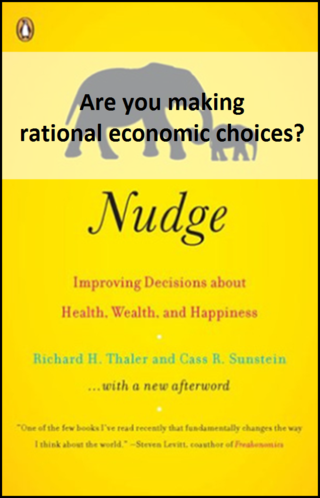
Thaler and Sunstein argue that the behavioral economics evidence is quite clear that people do not choose as rationally as standard economic theory (or our folk psychology) suggest. In particular, people's choices are often strongly influenced by what should be irrelevant features of how their choices are framed. People tend to put more food on their plate if the plate they are handed is bigger; most of us go along with whatever the default option is for choices about pension contributions and organ donation; and so on. In many cases it seems that we don't have an existing specific preference over outcomes and are therefore open to having our subjective valuations shaped or induced by how the options are presented.
Libertarian paternalism is the ethical thesis that, since how people make many choices is so influenced by their framing, it is right and proper for governments to try to design the choices people face in a helpful way (paternalism). Yet nothing about designing the presentation of choices forces people to choose what the designers had in mind. People are still as free as ever to choose what they want, if they know what they want (libertarian). (Sunstein went on to try to put some of his ideas into practice as Administrator of the Office of Information and Regulatory Affairs from 2009-12.)
Now, the critics of this approach have landed a couple of good blows.
First, how do we know what the 'rational' choice is that people should be making? In order to design choice architectures that nudge people to make the 'correct' choice – e.g. about signing up as an organ donor – policymakers must believe that they know the correct answers to these. In other words, government civil servants (no doubt with the assistance of behavioural economics consultants) are supposed to be able to work out what is in the best interests of 'ordinary' people more accurately and reliably than we can.
Monday, September 22, 2014
A Place Called Home
by Namit Arora
Former changing rooms in the Birla Industries Club
‘No man ever steps in the same river twice,’ wrote Heraclitus, the ancient Greek philosopher, ‘for it’s not the same river and he’s not the same man.’ Some also say this about ‘home’, making it less a place, more a state of mind. Or as Basho, the haiku master, put it, ‘Every day is a journey, and the journey itself is home.’ Still, in an age of physical migration like ours, one of the most bittersweet experiences in a migrant’s life is revisiting, after a long gap, the hometown where he came of age. More so perhaps if, while he was away, his neighborhood turned to ruin, crumbling and overrun with weeds, as happened in my case.
Last month, I revisited my boyhood home in Gwalior, a city in north central India, with my parents. I had grown up with my two sisters in Birlanagar, an industrial township in Gwalior, until I went away to college at age 17. After graduation, I left for the U.S. in 1989 for post-graduate studies and various jobs in the U.S. and Europe over the next two decades. I continued to think of Gwalior as my hometown until my parents also left in 1995 and I stopped going there during my India visits. By most measures I had a decent boyhood in Gwalior, yet I’m loath to idealize it or look upon it fondly. If it had its joys, it was also full of graceless anxieties, pressures, and confusions.
A ‘Temple of Modern India’
Many industrial townships similar to Birlanagar had arisen in mid-20th-century India, including at Bhilai, Durgapur, Rourkela, Bokaro, Jamshedpur, and Ranchi. Most were built around public sector enterprises, housing factories that employed thousands. Nehru, the modernizer, called these the ‘temples of modern India’. Birlanagar, where I grew up, was a private township, centered on two textile mills. The Birlas had started building it shortly before independence on land given to them for free by the Scindias, who ruled the then princely state of Gwalior. The older and larger of Birlanagar’s two mills was Jiyajeerao Cotton Mills (JC Mills), named after a member of the dynasty. The other mill, founded around 1950, was Gwalior Rayon (later Grasim), where my father, a textile engineer, worked for 36 years from 1958-94. Under the once famous ‘Gwalior Suiting & Shirting’ brand (watch this ad with Tiger Pataudi and Sharmila Tagore), Gwalior Rayon produced a range of fabrics combining both natural and synthetic fibers—such as cotton, wool, rayon, polyester, acetate, viscose—including some that ‘never tore’ and needed no ironing. Retailers apparently loved these products because their quality required no discounting.
On Optimal Paths & Minimal Action
by Tasneem Zehra Husain
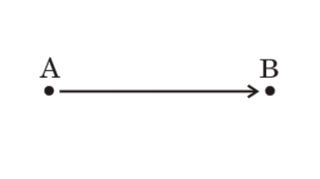
So what exactly is this mysterious knowledge that subatomic particles seem to possess, and how does one go about acquiring it? We begin by recognizing that these particles aren't furiously calculating their every move, maximizing the effect thereof; they are merely obeying the laws of nature – familiar laws, like those transcribed by Newton. The least action principle offers an approach that enables us to calculate the motion of a classical object, without recourse to conventional mechanics. But this principle should not be thought of as just an alternative to Newton's laws; it is much more powerful and far deeper than that. The chief strength of the least action principle is its flexibility. It is applicable not just within the province of classical mechanics, but can be extended to the realms of optics, electronics, electrodynamics, the theory of relativity and – perhaps most shockingly – even quantum mechanics. In fact, (as is evident in Feynman's path integral formulation) the least action principle is the most logically smooth way to connect classical and quantum physics! Suffice it to say that many well known laws are encapsulated in the elegant statement that “a physical system evolves from a fixed beginning to a fixed end in such a manner that its action is minimized.”
Having drummed up the anticipation, l should at least attempt to explain what the principle is, and give you a glimpse of how it works.
7500 Miles, Part I: Baltimore>NYC>A2>QC>Lincoln>Omaha>Vermillion>Brookings
by Akim Reinhardt

How? Why?
It's a massive research/conference trip. I'm on sabbatical. A full year at half-pay.
A single semester at full pay is the more common sabbatical leave. For a full year sabbatical, the typical approach is to get a research fellowship that makes up the lost salary and provides academic focus.
But I usually end up doing things my own way. I'm not bragging. It's as much a blend of chaos and neurosis as anything else. But in this case the result is, no research fellowship.
Instead, I've rented out my house during the semester, and this past summer I took on a freelance writing project. I co-authored a coffee table book, which will come out next summer.
Bill moved in to my Baltimore rowhome in August. At the end of the month, I bid him a fond farewell and hit the road. And thus the journey begins.
*
The first stop was The Bronx. It seems only fitting to kick off an epic trek by visiting friends and family in my hometown.
Like the rest of the city, more chains are moving into The Bronx. Not at the same rate that sees Manhattan turning into a bland, congested, overpriced version of the rest of America, but it's happening nonetheless. Very depressing. Dunkin' Donuts. Target. Bla bla bla.
The day I see a real New Yorker, not some Midwestern transplant, order Domino's, is the day I turn my back on the city completely. When that day comes, New York's pointlessness will be profound beyond words.
For now, the pizza's still worth it. For now.
Conquistador of the Useless
by Leanne Ogasawara
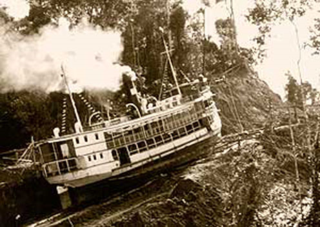
The incredible Sisyphean story of a man who wants to build an opera house in the middle of the Amazon rainforest in the late 19th century is only to be outdone by the crazy outlandishness of the man who decides to re-create the event a hundred years later in film.
Like a set of nested Russian dolls–each more mind-bogglingly conceived– the story's central metaphor continuously revolves around the theme of “man against nature.” This is a world where it is dreams that truly matter. And people move mountains in order to pursue their obsessions. So, to build his opera house, the hero, Fitcarraldo, has to employ hundreds of Indians to help pull a 320-ton ship over a muddy hill. But perhaps what is the most incredible part of the story is that Werner Herzog, in the making of his film about the historic ship-pulling, insists on physically re-creating the original challenges by struggling to capture on film the impossible task of having the local Indians pulling a real 320-ton ship over a mountain. His hell-bent will to veracity has made Herzog's film the stuff of legend.
And this is all very unexpected since film has never been an art much concerned with literal truth, being taken up solely by images. Not to mention that if all that matters is the “burden of his dream,” why doesn't Herzog employ the usual Hollywood devices of stage set and miniatures to evoke his story more poetically? Why does he seek to do the impossible and film actual people pulling a real 320-ton ship over a steep and very slippery hill in the most remote part of the Amazon –given the useless burden of doing so?
Why, indeed?
Alongside Herzog's wonderful memoir concerning the making of the film, Conquest of the Useless, I am reading a fascinating book about 17th century science, by Ofer Gal and Raz Chen-Morris. Exploring the intellectual compromises in epistemology that were generated by the rise of the “new science,” Baroque Science tells the story of Western philosophy's estrangement from the senses. In particular, it focuses on the inevitable denigrating of human vision and the disappearing observer in natural philosophy.
Another Great War List
By Eric Byrd
Journey to the Abyss: The Diaries of Count Harry Kessler, 1880-1918

The Belle Époque cosmopolitan, after bidding Rodin adieu at the Gare du Nord the day of the Austrian ultimatum, returned to Germany and donned the feldgrau tunic, to battle for the fortunes of the Reich. The 1914-18 entries of this famous diary can be hard going for those of us unfamiliar with the Eastern Front campaigns or the intrigues of the German High Command – but occasionally Kessler unfolds a comprehensive collage of prewar Modernism – with which he was so intimate – as it continued and changed behind the national parapet. On the day he heard of Rodin's death, after a visit to Grosz's studio, Kessler set down this astonishing vista:
Berlin. November 18, 1917. Sunday. I think Grosz has something demonic in him. This new Berlin art in general, Grosz, Becher, Benn, Wieland Herzfelde, is most curious. Big city art, with a tense density of impressions that appears simultaneous, brutally realistic, and at the same time fairy-tale-like, just like the big city itself, illuminating things harshly and distortedly as with searchlights and then disappearing in the glow. A highly nervous, cerebral, illusionist art, and in this respect reminiscent of the music hall and also of film, or at least of a possible, still unrealized film. An art of flashing lights with a perfume of sin and perversity like every nocturnal street in the big city. The precursors are E.T.A. Hoffmann, Breughel, Mallarmé, Seurat, Lautrec, the futurists: but in the density and organization of the overwhelming abundance of sensation, the brutal reality, the Berliners seem new to me. Perhaps one could also include Stravinsky here (Petrushka). Piled-up ornamentation each of which expresses a trivial reality but which, in their sum and through their relations to each other, has a thoroughly un-trivial impact.
All round the world war rages and in the center is this nervous city in which so much presses and shoves, so many people and streets and lights and colors and interests: politics and music hall, business and yet also art, field gray, privy counselors, chansonettes, and right and left, and up and down, somewhere, very far away, the trenches, regiments storming over to attack, the dying, submarines, zeppelins, airplane squadrons, columns marching on muddy streets, Hindenburg and Ludendorff, victories; Riga, Constantinople, the Isonzo, Flanders, the Russian Revolution, America, the Anzacs and the poilus, the pacifists and the wild newspaper people. And all ending up in the half-darkened Friedrichstrasse, filled with people at night, unconquerable, never to be reached by Cossacks, Gurkhas, Chasseurs d'Afrique, Bersaglieris, and cowboys, still not yet dishonored, despite the prostitutes who pass by. If a revolution were to break out here, a powerful upheaval in this chaos, barricades on the Friedrichstrasse, or the collapse of the distant parapets, what a spark, how the mighty, inextricably complicated organism would crack, how like the Last Judgment! And yet we have experienced, have caused precisely this to happen in Liège, Brussels, Warsaw, Bucharest, even almost in Paris. That's the world war, all right.
Is Feminism Relevant Today?
by Tara* Kaushal 
My take on the evolving conversation around feminism today. Image courtsey bollywoodlife.com.
The other day, at a gathering of distant relatives, I was introduced to this older lady as a “feminist writer”. After the polite hellos, she said, “So, you're a feminist, huh?” I nodded. “Well, I don't think feminism is necessary nowadays… Look at all walks of life, women are now equal. At the forefront even.”
What is Feminism?
It was the first day of feminism class in our all-girls college in New Delhi. Dr Abraham walked in and asked us whether we were feminists. We all nodded yes. “What is feminism?” Three years before, I'd written an essay on the subject to get into college, and to Dr Abraham I remember answering “freedom” and “equality”. Thus began my journey of understanding this complex subject, but even now, I always reach back to my first answers about what it is. Then, simplistically, I thought it was about women being equal to men, and freedom being the ability to live life without gender constraints like men in India seemed to. Now, I see feminism as a way towards an egalitarian, utopian world for everyone—man, woman, either, neither, irrelevant—by addressing the issues faced by the gender that bears the brunt of gender discrimination.
Now, I'm not unfamiliar with the arguments against feminism. Those who advocate them fall in to two broad categories: those who believe that women are genuinely the weaker sex that deserves to be subjugated for religious or sociocultural reasons, and those who believe, like the lady from the party and many subscribers to the Women Against Feminism movement, that women are already ‘equal'.
The End is Nowhere Near
To the former type, I have nothing to say (not here, idiot). It's the latter reason, especially coming from those living in a country like India, that actually astounds me. As a rookie many years ago, one of my interview questions to British author Helen Cross was whether she was a feminist. And she answered that people don't really ask that in England “because they just sort-of presume that everybody is, because it's kind-of beyond that point”; she said she was asked that a lot here because it was an “active and dynamic” conversation.
I especially don't understand it when the women here say that.
A) How do YOU think you got here, wearing jeans, having careers, taking selfies in your bikinis, living with your boyfriends, eh?
B) Are you really ‘equal' and ‘free' from any sort of gender discrimination—at work, on the street, in your relationships? (Answer ‘no' straightaway if you get a male friend to drop you home at night.)
And C) Is every single woman around you as ‘equal' as you—is there really no family you know where the son roams wild and free while the daughter's expected to obey, or woman who has been harassed for dowry? There, you have your answer.
This is not to say that countries where women are highly emancipated, like the UK or US, have done away with gender discrimination and no longer need feminism. While they, for the most part, may not have to contend with issues as basic ours, women continue to bear the brunt of lookism and media stereotypes, battle the glass ceiling, and deal with sexual violence. In India, we deal with the whole range of gender issues—from child marriage and dowry to ‘First World' concerns like those listed above, judgement-free promiscuity, maiden surnames and independent choice.
Take this week, for instance. A leading movie star has taken a leading newspaper to task for a headline that calls attention to her cleavage with an open letter about choice, reel/real (an quick summary here), spawning much conversation about double standards—the newspaper's, the film industry's and even hers. In another India not so far away, the grave of a toddler girl, suspected to have been buried alive and rumoured to be a ‘goddess', became an impromptu pilgrimage site for hundreds of villagers, who came to offer prayers, fruits, flowers and money.
While I have oftentimes wondered at the futility of writing about ‘evolved' concerns when there's so much work on the basics that is yet to be done (read here), I'll end with this: Feminism is beyond the bra burning and the wild lurch from domesticity to feminazi; it's beyond first wave and second wave; it lives in plurals and pluralities, evolving as society has, addressing a problem here, another there. It is a means to an end. And until genders are equal on all levels, the feminists' fight is far from over.