by Hari Balasubramanian
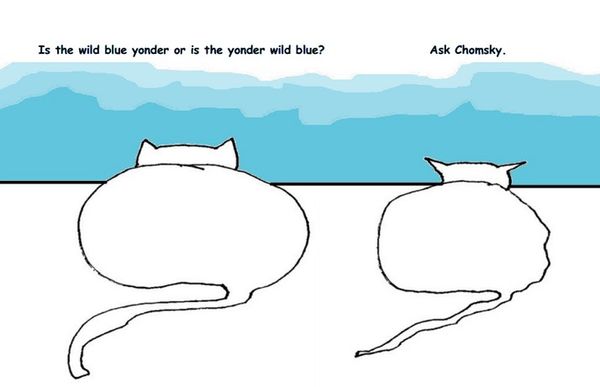
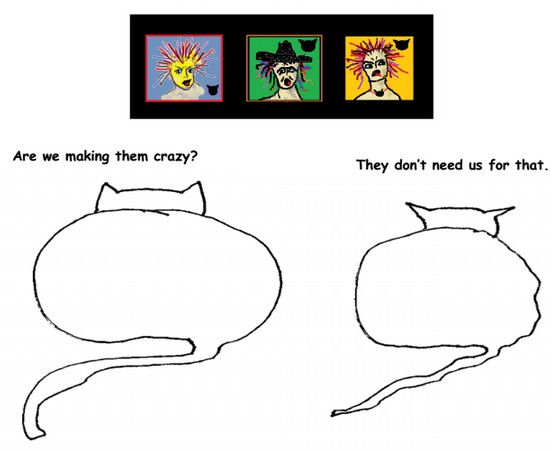
You might wonder who is conversing with whom. The best description I have is that these are two voices or perspectives in my head debating each other.
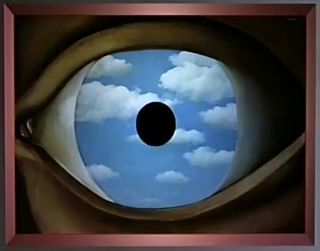 “This thing called the sense of self, the ego or the ‘I'. There are many claims floating around these days that confidently say that the sense of self is an illusion. Not sure what to make of this. If I accept such a claim then who or what is this ‘I' that just accepted the illusory nature of the self? It's like walking around in circles, like a dog chasing its tail and going nowhere.”
“You could say the ‘I' is some kind of energy in our conscious experience that comes together in such a way as to create the illusion.”
“Maybe so. But how does that help me? I still feel the sense of self exists; that's what is speaking right now! I can't just wish it away because somebody says it is an illusion. I can't wish it away even if my own intellect logically reasons out that it is an illusion. For example, I know very well that the body – the best proxy I have for the ‘I' – had a certain shape in the womb, a different shape as a baby, something entirely different as an adult, and will disintegrate after death. So I can reason pretty clearly that what we call the body is ever changing, from one moment to the next, that there is nothing constant there. Yet each one of us, without fail, invariably points to his or her body to claim that this is me…”
“I agree that there is something that always seems to be hovering around. And it is quite practical in claiming an ever-changing and perishable body, among a host of other perishable things, for itself. But when examined closely, the ‘I' cannot be pointed out as anything concrete – where is it?”
“It is right here, always the main point of reference, always claiming that this is me or this is not me. Or I like this or I do not like this, or I am neutral to this. We cannot even frame a sentence while conversing that does not have ‘I' or ‘you' or ‘this' or ‘that' in it. If consciousness of anything is there, the ‘I' is very much there mixed up with it. This is why – unless I experience it myself firsthand: I don't know what that would be like – the idea that the self is an illusion does not affect me. It's as if one moment the ‘I' feels strongly it exists, and then the very next moment the very same ‘I' cleverly changes hats and declares: ‘Well, I shouldn't take myself seriously, since there is strong evidence that I am an illusion!'”
“Still, don't you think there is some practical benefit to the idea of no-self, of not taking the ego seriously? When I observe my thoughts closely, I find there is very little control; I don't know where thoughts are coming from and what their source is. They just come and go; sometimes my mind is very busy, chaotic, and at other times very slow and relaxed. Everything – decisions, events, what captures my attention, how things unfold in time – seems so complex and intertwined. An emotion or idea or feeling or inspiration will surge up within me whether I want it or not. When this understanding sinks deep enough, I may learn to understand that others too are being driven by thoughts that are not under their control. So maybe the ‘I' can observe and train itself. It may or may not work – there are never any guarantees – but you remind yourself, all the time, to not take the ego seriously.”
“You have to do it all the time because this thing called the ‘I' is present all the time!”
Read more »