by Rishidev Chaudhuri
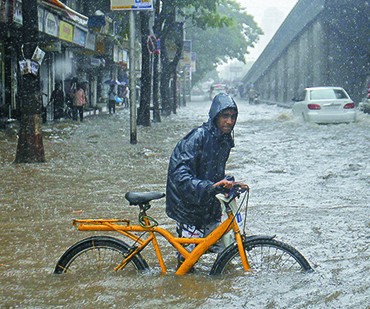
But of course this was an entirely fitting essay topic. Much as the coming of winter looms in the imagination of people in further latitudes, the coming of the rains is atavistically woven into the fabric of the subcontinental consciousness, stirring strange rain-fed yearnings in the blood, reflected back at us in art and in politics. The arrival of the monsoon is tracked for weeks, the subject of prayers and village ritual and newspaper op-eds and roadside chatter. Musical forms are dedicated to the first rains; governments fall because of late rains. And, fittingly, the first storms of the season are grand affairs, full of sound and fury, signifying life and fertility. Indeed, for years several friends of mine thought that one got pregnant by dancing around trees in the rain, based on their extensive watching of Hindi movies.
I worked on a farm for half a year after college, through the dry scorching heat of the summer (all fine dust and burnt skin and plants with insufficiently sublimated death drives) and into the coming of the monsoon. My most vivid memories from that year are the monsoon evenings spent sitting on the verandah after a day at work in the fields, drinking rum and watching the rain upon the rice fields and the lightning play through the sky, trees suddenly illuminated by flashes, slightly damp dogs curled up at my feet. And this is to say nothing of other memories of watching the rain fall in the courtyards of old Calcutta houses, which should justifiably be the subject of a novel-cycle about memory and decay (it probably is).