by Paul North
Wind is low on the list of the awe-inspiring invisible powers. In other eras it ranked among the top 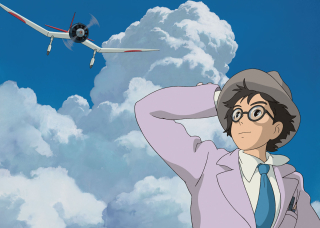
If those lips could talk, we would hear some stories about uncontrollable forces. Although there hasn't been much talk of wind lately, a serious anemological investigation has been being carried out over the last three decades by the anime director Hayao Miyazaki. Wind is always blowing in Miyazaki, or almost always. Nevertheless, it doesn't always do the same thing. The main question driving his investigation into wind is: does wind liberate us or blow us in the direction of our destiny? One thing does stay steady across his films. Whatever we do on and in the wind, we never gain control over it. This doesn't mean that wind is in control of us. Miyazaki's is a control-less view of fate. Wind is the basic element in a fluid cosmic system that strews and carries, resists and supports, lifts upward and slams to earth with abandon. Where fate is King, wind is his advance scout, his highest ambassador and field marshal. It decides nothing: wind simply executes. In contrast, fate is rather abstract, a faint inkling of limits on what you can do or hope. When you face fate, however, you don't face a concept but a force. Wind is the force against which you push when you resist your fate, and when pushed, wind reveals itself to be only air. And you cannot push against air.
You can however ride it. Many things ride the wind in Miyazaki's landscapes. Pollution. War machines. Clouds. And depending how it is ridden, depending whether your calculations include the wind as the most salient factor, your endeavors may come out well or extremely ill.
In classical myths and tales wind is either a brutish force or a changeable force. The Aesop's fable about the North Wind and the Sun tells of wind's brutishness. Sun and North Wind argue: who can strip a traveler's clothes off more quickly? Wind goes first, blowing its all. Yet it doesn't loosen a button. Sun only shines on the traveler long enough and she starts to undress of her own accord. Persuasion wins over force—that's the moral of the tale. Both are forces—soft, effective persuasion and brutish, direct assault. But as a form of force, the sun is more pernicious. It disguises its violence as reason and presents its strength as gentility. Worse than this, whereas it exerts deadly force, the force appears to come from the victim—the traveler believes the decision to undress has been a free decision of her own. In contrast, the cold North Wind, Boreas, comes openly and directly, and human ingenuity can resist it, at least when it comes to clothing. Notice that both these fateful forces aim to render the traveler defenseless and naked, a plaything for nature's sadism.