by Muhammad Aurangzeb Ahmad

There is a particular moment of weakness that most of us recognize without needing to name it. You are lying in your bed, it is late at night. The light from the phone is brighter than the background in the room. The day has thinned your patience as well as your judgment. You click on posts and stories what you would otherwise have ignored. You may even be tempted to buy what you do not need. In other words, your guard is down. You read for a few seconds and then doom scroll to the next story and then the next. You feel like going to sleep but then you lie to yourself, one more scroll.” Welcome to the world of attention economy. It is basically a system in which human focus is treated as a scarce resource to be captured, measured, and monetized by digital platforms. The attention economy began with a relatively simple goal i.e., capture and hold the gaze. Over time, that ambition evolved into not just focusing on what you like but also focusing on when you are least able to resist. Timing, not just taste, has become the new frontier that these algorithms focus on. While it is true that these platforms were informed by decades of research on human psychology, they do not need to understand us in any deep, human sense. What they do need to do is to predict when you are tired, lonely, bored, anxious, or depleted. It is precisely in these states of vulnerability that it is easier to influence people and steal their attention.
Behavioral science has long recognized that cognition is not constrained by what else is going on in one’s life. Decision fatigue is real. Cognitive depletion makes us more suggestible. Our skepticism varies with sleep, stress, and emotional load. What has changed is that our devices now emit a steady exhaust of behavioral signals that correlate with these states. The phone does not know that you are lonely. It does not need to. It only needs to register that your scrolling pattern has slowed, that you are lingering on certain kinds of content, that the hour is late, that your interactions look different from your baseline. Correlation at scale does not need understanding. The use of human vulnerability is not a rhetorical device, it is anchored in behavioral research. Read more »
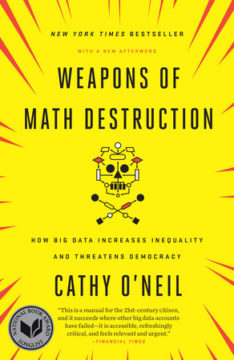 And then I started trying to warn people about the dangers of algorithms when we trust them blindly. I wrote a book called Weapons of Math Destruction, and in doing so I interviewed a series of teachers and principals who were being tested by this new-fangled algorithm called the value-added model for teachers. And it was high stakes. They were being denied tenure or even fired based on low scores, but nobody could explain their scores. Or shall I say, when I asked them, “Did you ask for an explanation of the score you got?” They often said, “Well, I asked, but they told me it was math and I wouldn’t understand it.”