
“The piano ain’t got no wrong notes.”
~ Thelonious Monk
 It’s with a certain pleasure that I can recall the exact moment I was seduced by the musical avant-garde. It was in the fourth grade, in a public elementary school somewhere in New Jersey. Our music teacher, Mrs. Jones, would visit the classroom several times a week, accompanied by an ancient record player and a stack of LPs. You could always tell when she was coming down the hall because the wheels of the cart had a particularly squeak-squeak-wheeze pattern. However, such a Cageian sensibility was not the occasion of my epiphany. I’m also not sure if fourth-graders are allowed to have epiphanies, or, which is likelier, if they are not having them on a daily basis.
Rather, it was a record that she cued up for us one day: Henry Cowell’s ‘The Banshee’, originally composed in 1925. Originating in Irish folklore, the banshee is a female spirit whose keening announces the imminent death of a family member. Cowell sought to evoke the supernatural terror such an encounter might elicit by creating a composition for piano where no keys are actually depressed – instead, the performer plucks and rakes the strings of the piano directly. With the damper pedal pressed down, the tones so generated are freely sustained, and the adjoining wires ring out in consonant vibration, creating a rich set of overtone resonances that add to the unearthly textures that hang in the air. My fourth-grade self was transfixed, and although I can’t remember anything else we did in Mrs. Jones’s class, that occasion remains in my memory with an almost crystalline clarity. Read more »


 If by “objectivity” we mean “wholly lacking personal biases”, in wine tasting, this idea can be ruled out. There are too many individual differences among wine tasters, regardless of how much expertise they have acquired, to aspire to this kind of objectivity. But traditional aesthetics has employed a related concept which does seem attainable—an attitude of disinterestedness, which provides much of what we want from objectivity. We can’t eliminate differences among tasters that arise from biology or life history, but we can minimize the influence of personal motives and desires that might distort the tasting experience.
 Dr Abdus Salam had once said, “It became quite clear to me that either I must leave my country or leave physics. And with great anguish, I chose to leave my country.”
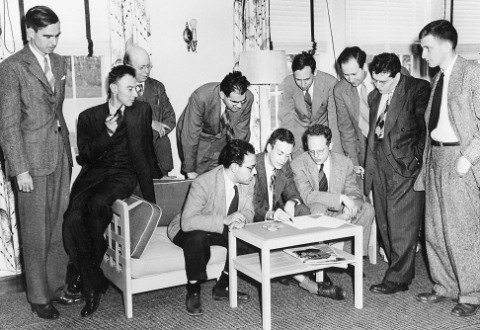 A new theory seldom comes into the world like a fully formed, beautiful infant, ready to be coddled and embraced by its parents, grandparents and relatives. Rather, most new theories make their mark kicking and screaming while their fathers and grandfathers try to disown, ignore or sometimes even hurt them before accepting them as equivalent to their own creations. Ranging from Darwin’s theory of evolution by natural selection to Wegener’s theory of continental drift, new ideas in science have faced scientific, political and religious resistance. There are few better examples of this jagged, haphazard, bruised birth of a new theory as the scientific renaissance that burst forth in a mountain resort during the spring of 1948.
 “Griselda was fighting against the patriarchy the only way she knew – through her unquenchable lust for venison.”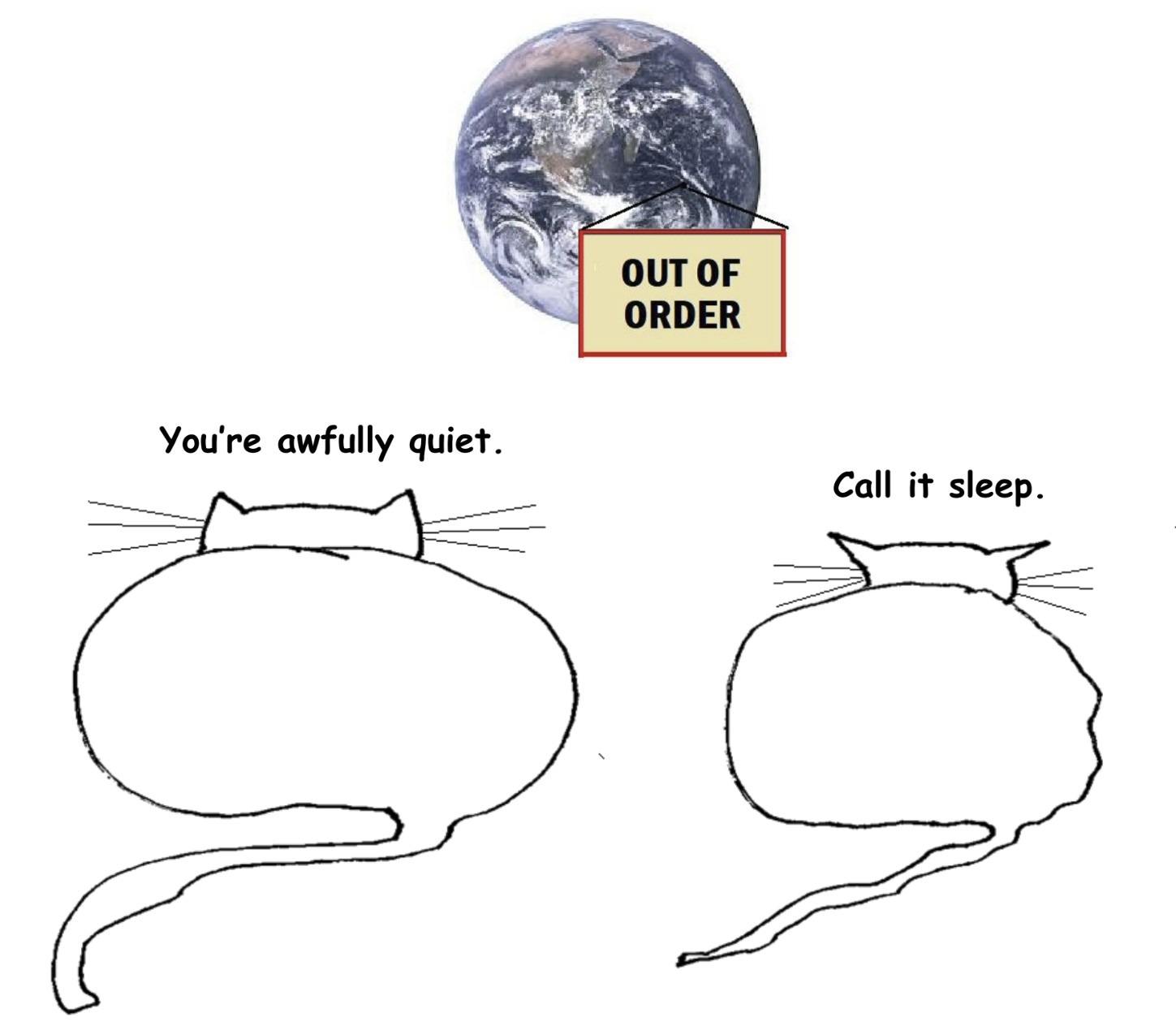
 by Christopher Bacas
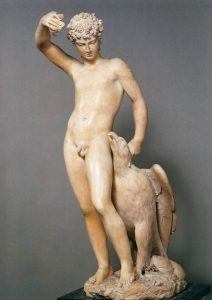 A celebrated altercation between Benvenuto Cellini (1500-1571), the Florentine artist, and fellow sculptor Bartolommeo Bandinello (1493-1560) resulted in the latter exclaiming “Oh sta cheto, soddomitaccio.” [Shut up, you filthy sodomite!]. The accusation had merit in the legal sense at least since Cellini had indeed been accused of the crime of sodomy with at least one woman and several young men. The incident is oftentimes recalled in writings about the period as it provides a compelling illustration of the sexual appetites of the artists of the Renaissance.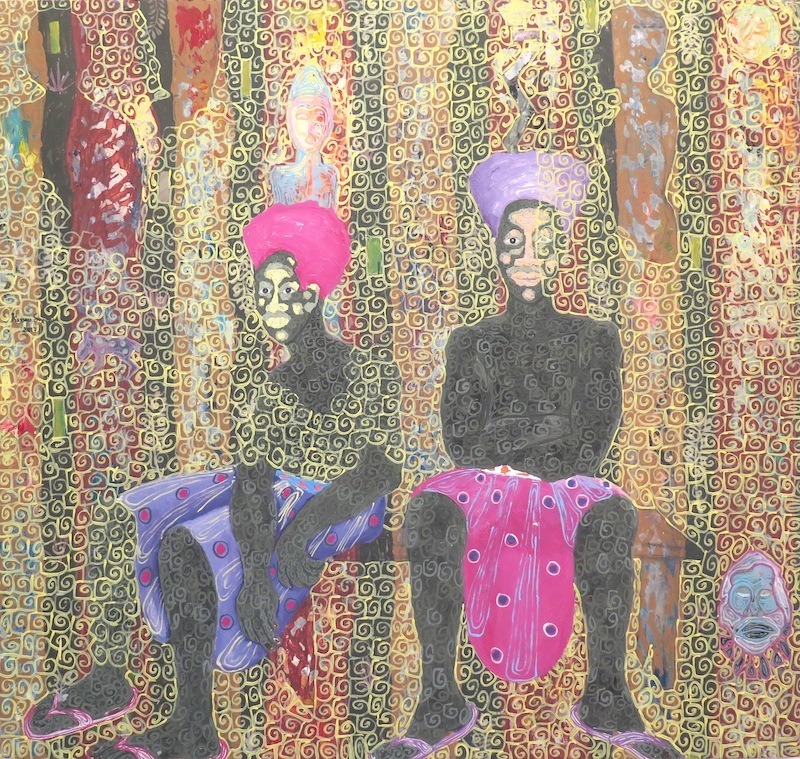
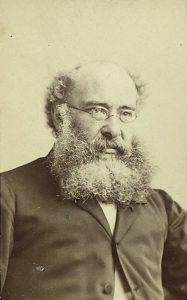 What do 21st century American college faculty and 19th century Church of England Clergyman have in common? A surprising amount. This is one reason I would heartily recommend the novels of Trollope, Austen, and others to my colleagues in academia.
 Since 2014, various student societies at the University of Edinburgh have but on musical performances commemorating the first world war. This article takes a look at one performance in particular. The content is neither highly original nor particularly radical; others have written more insightful and more sophisticated pieces. It constitutes merely an attempt to formulate and to clarify what is problematic with these particular performances, thereby hoping to understand something about the greater memorial tradition in the United Kingdom. In other words, by examining how a nationalistic, martial and oppressive Erinnerungskultur is reproduced in an amateur to semi-professional context – be it deliberately or not -, we may see how these values become normalised and why it matters that this takes place in this particular context.