by Ashutosh Jogalekar

The hour was late, but it was still hot. Frijoles Canyon loomed to my right, showcasing its surfeit of stratigraphic tuff and igneous ash layerings and ponderosa pines. I was about a hundred and fifty feet up on the mountain face in a reconstructed cave with a ceremonial kiva or well. The cave was accessible by climbing a series of narrow steps and four ladders inclined against the steep rocks: not recommended for those with a fear of heights. On this particular day I was alone there; it was a hot weekend, and not too many hikers and tourists had scattered themselves around Bandelier National Park where the cave’s located.
It’s tough not to fall in love with the American Southwest. There is no other part of the United States which combines so uniquely and generously Native American, Spanish and Anglo-American culture with spectacular desert and mountain expanses as far out as the eye can see. Our trip had started with the Grand Canyon, whose first display of infinite recesses and a blaze of colors is sufficient to stop almost any conversation for a few seconds. It had then continued through Indian reservations spread across three states – albeit still crammed into nooks and crannies relative to their original seemingly limitless expanse – which took us through the incredible towering structures of Monument Valley to New Mexico. Read more »
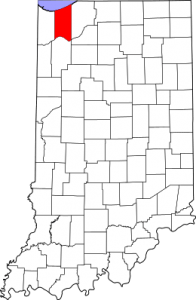 County, Indiana. Porter County is not exactly flyover country–we’re more of a hybrid flyover/northern city. We are tucked into the northwest corner of Indiana, a region filled with heavy industry and a few large cities on the shores of Lake Michigan. Our population, 166,000, is only 3% that of Chicago, and is 93% white.






 On May 11th, to mark the 100th anniversary of Richard Feynman’s birth, Caltech put on a truly dazzling evening of public talks. I heard that tickets sold-out online in four minutes; and this event was so popular that attendees started queueing up to enter the auditorium an hour before the program began. Held in Caltech’s
 30 years ago I moved from the UK to New York City and I gave up my car. I had mixed feelings about doing so at the time – I was only 21 and driving was still a novelty and an expression of independence. When I moved out of New York City to upstate 13 years later, I again became a car owner and regular driver. After my divorce, when I moved back to New York City, I once again gave up my car, this time happily. I would honestly be thrilled if I never had to get behind the wheel of a car again. I don’t enjoy driving, I’m not the most confident driver (I cannot reverse to save my life even after over 30 years of driving) and I generally would prefer to be driven. My transportation needs are now taken care of by a combination of public transport, ride sharing services and a boyfriend with a car who is very good about driving me around. And thanks to online shopping, the retail convenience of a car ownership has almost totally disappeared. As far as I’m concerned, this is a perfect state of affairs.
  The freer the market, the more people suffer.