by Dwight Furrow
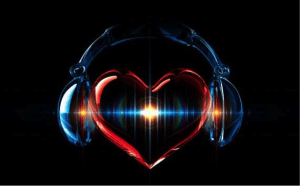 That music and emotion are somehow linked is one of the more widely accepted assumptions shared by philosophical aesthetics as well as the general public. It is also one of the most persistent problems in aesthetics to show how music and emotion are related. Where precisely are these emotions that are allegedly an intrinsic part of the musical experience? Three general answers to this question are possible. Either the emotion is in the musician—the composer or performer—in which case the music is expressing that emotion. Or the emotion is in the music itself, in which case the music somehow embodies the emotion. Or the emotion is in the listener, in which case the music arouses the emotion.
I suspect the most popular view among the public, since it draws on the romantic views of the self and creativity which is still very much with us, is that music expresses the emotional state of the artist. But this is implausible. I doubt that song writers when writing a sad song are in a state of sadness. At best the song could be expressing a composer’s understanding of sadness or perhaps a memory of a previous emotional state. But even if that were granted, we usually know little about the emotional states of composers, song writers, or musicians and so the listener is forced to somehow “read off” the emotion from the music itself. The emotional state of the artist just seems irrelevant to the process of determining the emotive content of the music. No doubt some composers and musicians are expressing their emotions in specific cases. But the only way to know that, short of inferring it from biographical details, is to infer it from the music itself, which seems to locate the emotion in the music. Read more »
 sickness was constantly diagnosed for the once powerful idea. And still, after the impressive Sanders campaign of 2016, the electoral success of Jeremy Corbyn in the 2017 general election, as well as the – for many – surprising victory of Alexandria Ocasio-Cortez in the democratic primary in New York, writers continue to assure us that the idea is, if not dead, having serious problems. In any case, the idea of socialism seemed until recently a relic of the industrial past with little to say about contemporary society.
 We (the readers of 3QD; I know there are many people who disagree) can take it as given that Alex Jones is a thoroughly evil person. Someone who spreads false statements that the parents of the children killed in the Sandy Hook shooting staged the whole thing deserves lots of bad things happening to him, e.g. lose all the money he has made from the web in a defamation suit that the parents have filed, have people boycott his dietary supplement hoax.


 Try it: try talking about the subject of reading without drifting off into how the Internet has changed the way we absorb information. I, along with the majority of people I know whose reading habits were formed long before the advent of digital magazines and newspapers, Google Books, blogs, RSS feeds, social media, and Kindle, usually feel I’m only really reading when it’s printed matter, under a reading lamp, with the screen and phone turned off. But the reality is that I do a vast amount of reading online.
 Polynesia could swallow up the entire north Atlantic Ocean. It’s that big.
  spanning George Boole to Claude Shannon. By some measures the works of these men combine to give us our modern, programmable computer.
 Will you know what to do when the atomic bomb drops?

 Even as we want to do the right thing, we may wonder if there is “really” a right thing to do. Through most of the twentieth-century most Anglo-American philosophers were some sort of subjectivist or other. Since they focused on language, the way that they tended to put it was something like this. Ethical statements look like straight-forward propositions that might be true or false, but in fact they are simply expressions or descriptions of our emotions or preferences. J.L. Mackie’s “error-theory” version, for example, implied that when I say ‘Donald Trump is a horrible person’ what I really mean is ‘I don’t like Donald Trump’. If we really believed that claims about what is right or wrong, good or bad, or just or unjust, were just subjective expressions of our own idiosyncratic emotions and desires, then our shared public discourse, and our shared public life, obviously, would look very different. One of Nietzsche’s “terrible truths” is that most of our thinking about right and wrong is just a hangover from Christianity that will eventually dissipate. We are like the cartoon character who has gone over a cliff but is not yet falling only because we haven’t looked down. Yet.
 Our first act of communication is to look in each other’s eyes, or not to. Many descriptors center subtly on the gaze: I might be shifty if I’m looking away from you too often and too purposefully, diffident if I cast downward when I ought to be looking you in the eyes, or unsettling if I never stop looking at you.