by Emrys Westacott
 Philosophers are supposed to ask Big Questions. The Big Questions is the title of a popular introduction to philosophy and of a long-running BBC programme in which people discuss their ethical and religious perspectives. But since we philosophers, following in the footsteps of Socrates, claim to practice critical thinking, it behooves us to ask whether Big Questions are a good idea.
It’s not easy to say precisely what makes a question big; but we can at least give a few examples form the history of philosophy so that we have some idea what we’re talking about:
- What is the meaning of life?
- What is the nature of ultimate reality?
- What is Being?
- Is there a god?
- Is there some sort of cosmic justice?
- What is the self ?
- Does a person’s self (mind, soul) persist after death?
- Do we have free will?
- Why be moral?
- What is the good life for a human being?
- What are the foundations of our knowledge?
- What are the limits to what we can know?
- What is truth?
- What is the good?
- What is justice?
- What is virtue?
- What is beauty?
- What is life?
- Why is there something rather than nothing?
In modern times such questions have met with various fates. The cultural ascendancy of natural science was accompanied by skepticism toward what Kant calls “speculative metaphysics.” Simply put, we can’t have knowledge of matters that lie beyond what we can possibly experience. So we can’t know if there is a god, or if we have immortal souls, or if there is cosmic justice. In his Critique of Pure Reason (1781) Kant claimed that in denying knowledge he was “making room for faith.” Inevitably, though, faith in God, the soul and the afterlife has declined dramatically since Kant’s time, especially among intellectuals. There are virtually no articles published in philosophy journals today that treat the existence of God or the immortality of the soul as live issues. Science does not explicitly teach us that there is no God and no heaven, any more than it teaches us that there are no fairies or vampires. But the default attitude of most professional philosophers today is that in such matters the absence of evidence amounts to evidence of absence. Read more »



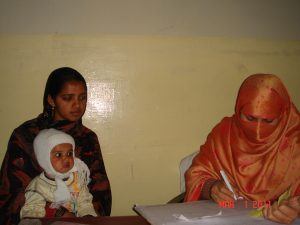 Mandra health center, outside Islamabad, on this spring morning, without the cacophony and confusion of health centers in the city, was the picture of serenity. An emaciated woman of indeterminate age sits coughing in the corridor, in a chair that bears the logo of the United States Agency for International Development, next to a little girl with dry shoulder length hair and yellow eyes, one bare foot resting upon the other. I make a provisional diagnosis—pulmonary tuberculosis for the woman, viral hepatitis for the girl, both diseases endemic in Pakistan.
 From its origins in Eurasia some 8,000 years ago, wine has spread to become a staple at dinner tables throughout the world. Yet wine is more than just a beverage. People devote a lifetime to its study, spend fortunes tracking down rare bottles, and give up respectable, lucrative careers to spend their days on a tractor or hosing out barrels, while incurring the risk of making a product utterly dependent on the uncertainties of nature. For them, wine is an object of love.
 Academics have a privileged epistemic position in society. They deserve to be listened to, their claims believed, and their recommendations considered seriously. What they say about their subject of expertise is more likely to be true than what anyone else has to say about it.
 The day before Thanksgiving I got this wonderfully understated text from a close friend:




 Our uniform was a shirt tucked into jeans. Sandi stretched the smallest size over well-proportioned breasts, her black bra peeking through a run of buttons. Mine hung long in the sleeves and fell over my waist.