by Thomas O’Dwyer
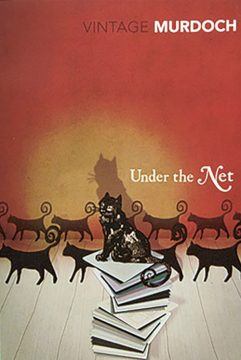 Mother’s friend departed after their weekly get-together for tea, cakes and gossip, but she forgot to take her book. It was a slim hardback with the blue and yellow banded cover of a subscription book club. It lay on the arm of the sofa for ten minutes and then, before anybody noticed, it vanished – relocated to my bedroom. I was fifteen, and this would be the first adult novel I had ever read. Its title was Under the Net by Iris Murdoch. Iris was my “first” – first adult novelist and first woman writer, and she has remained fixed in my affections over the decades. Under the Net was also Murdoch’s first novel, published in 1954. I was so naively charmed that I made a precocious promise to myself to reread it fifteen years later to see if its appeal lasted. I already knew that in the coming years I would not be rereading my previous favourites, my childhood book collections of Just William, Biggles, Billy Bunter and John Carter’s adventures on Mars. Unlike them, Under the Net had mysteries and ideas I did not yet fathom, but would need to discover.
Dame Iris Murdoch would be 100 years old this July 15 if she had lived to celebrate it, but her brilliant mind faded away in the fog of Alzheimer’s disease and she died twenty years ago in 1999. A recent article in The New York Times lamented that her reputation has also faded with time. “Distressingly, her posthumous reputation is in semi-shambles. Many of her novels are out of print. Young people tend not to have read her. She is seldom taught,” wrote Dwight Garner. Literary reputations are like the actors on Shakespeare’s stage of life, they have their exits and their entrances, but unlike the actors, they can be born again. It is difficult to say if Murdoch’s star is set to rise any time soon. Like many of her 20th-century contemporaries, her novels can seem as ancient as the Victorians. They live in a lifetime before digital watches, never mind computers and the rest of our electronic universe. Few of her characters in their whiteness, snobbery, and obtuseness are people we would find dominant in the streets or cafes of London today. Read more »
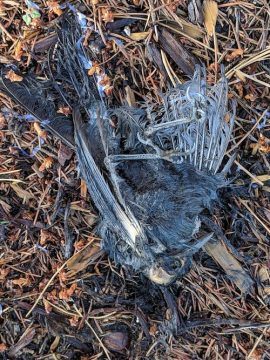
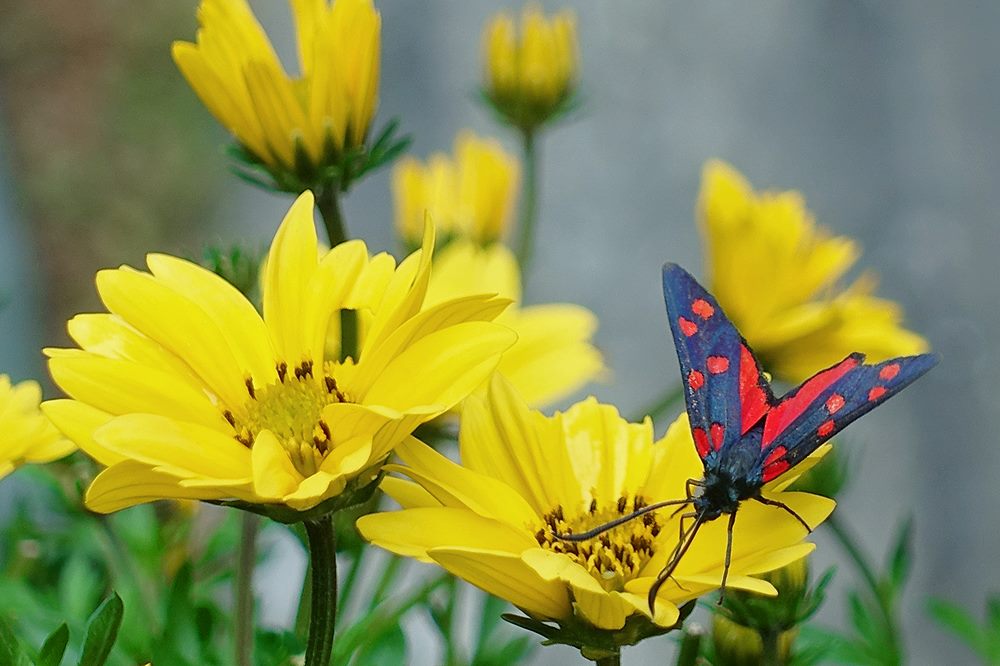
 Nature has filled the world with “endless forms most beautiful and most wonderful,” in the words of Charles Darwin. We humans, faced with this abundance and variety of creatures, have used our imagination to the full in giving them descriptive and often evocative names. Some animal names are fairly straightforward; the name big hairy armadillo lacks nuance, although it makes up in charm what it lacks in subtlety. In other cases, though, we’ve come up with epithets that would make a poet proud: the tawny-crowned greenlet, the sharp-shinned hawk, the pricklenape lizards.

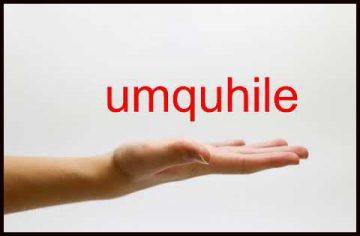 Whether we’re glancing through a play from high school before donating it or wandering through an antique shop, sometimes we see a word that doesn’t look quite right. Sometimes, misspelled words are a result of advertising campaigns, and other times they are alternate spellings in English. We all know English has some demented rules of orthography (even the word “orthography” can inspire chuckles; “proper writing” in English? Is that a joke?). You’re not alone if you have to remind yourself about “i before e except after c” and its numerous exceptions.


 Short Talk on Why Some People Find Trains Exciting / Anne Carson

 In giving an account of the aesthetic value of wine, the most important factor to keep in mind is that wine is an everyday affair. It is consumed by people in the course of their daily lives, and wine’s peculiar value and allure is that it infuses everyday life with an aura of mystery and consummate beauty. Wine is a “useless” passion that has a mysterious ability to gather people and create community. It serves no other purpose than to command us to slow down, take time, focus on the moment, and recognize that some things in life have intrinsic value. But it does so in situ where we live and play. Wine transforms the commonplace, providing a glimpse of the sacred in the profane. Wine’s appeal must be understood within that frame.