by Michael Liss
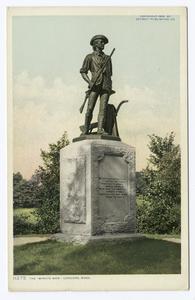 I don’t know a lot about guns.
I live in New York, which has comparatively restrictive gun laws, I don’t own any, I don’t hunt (and didn’t grow up hunting), and I wasn’t in the service. I don’t have the emotional bonds that others who grew up around them might. The entire sum of my personal experience was several years of summer-camp riflery practice: .22 caliber single-action rifles that might have been previously used in the Boer War. We marched them over to a “range” consisting of a shack with mattresses on the floor, a lot of tree-stumps, and a contraption with pulleys and clotheslines to move the targets, and competed for NRA sharpshooter patches.
That is just about my last firsthand memory of guns, so, to reiterate, I just don’t know very much about them. I also can’t tell you about makes, models, types; whether a particular firearm is an “assault weapon”; or which one (or six) John Wick would pick. As I can’t speak knowledgeably about guns themselves, I’m going to stay in my lane as a lawyer who writes about history and politics, and talk about guns and gun control in that context. In doing so, I expect to irritate virtually everyone who reads this.
First, the Second Amendment exists. It doesn’t matter whether you or I agree with it—it’s there. We can argue about what the Framers intent was when they wrote it, or the intent of the voters of the States that ratified it, but you can’t wish it away. This is not an endorsement of unlimited guns in every hand and every place, and it is certainly not a moral judgment. It is just a reflection of reality. When government acts restrictively on guns, it takes something from gun owners, and the entire legal analysis from that point forward hinges on whether it is taking too much. Read more »


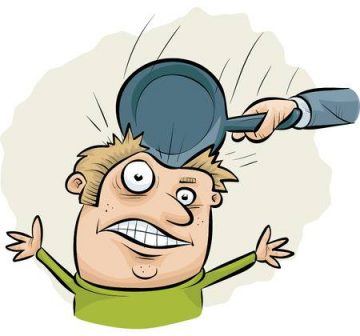 Smacked my head on the pavement while jogging across campus in the rain. Had my hands on my stomach, holding documents in place underneath my shirt to keep them dry. So when my foot went out after skipping over a puddle, I couldn’t get my front paws down in time to brace my fall as I corkscrewed through the air, landing on my hip and shoulder, and whiplashing my head downward. Consequently I don’t have the brain power to crank out 2,000 fresh words. So here’s a dated piece about Baby Boomer navel gazing and ressentiment.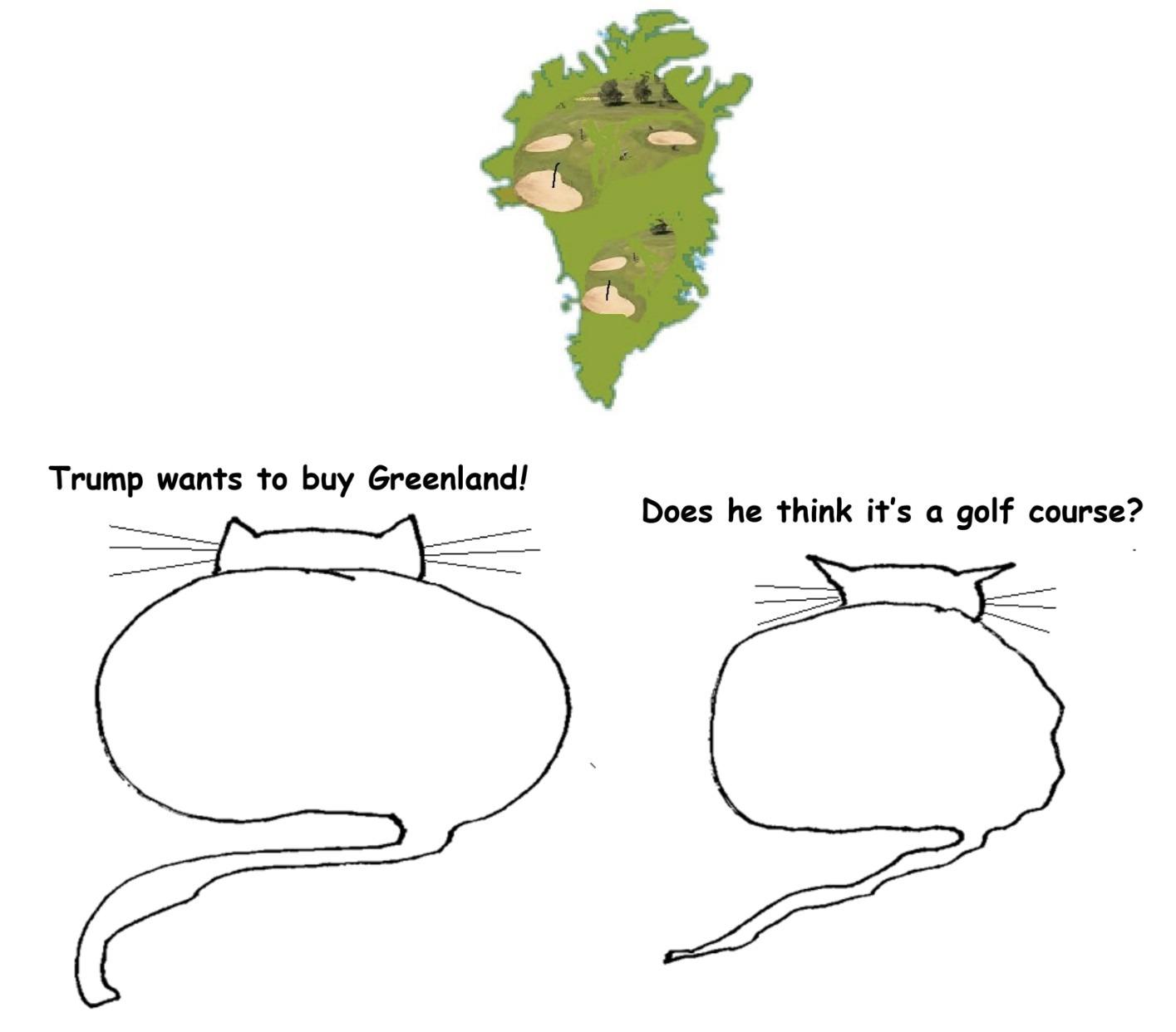
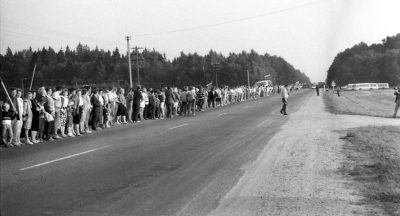 Thirty years ago this week two million people joined hands forming a human chain across 676 kilometers of Estonia, Latvia and Lithuania. Known as the
 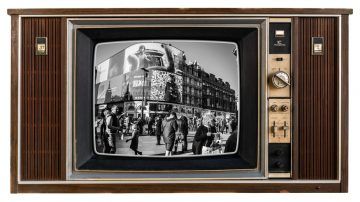 I’ve just come back from a lovely vacation in Ireland. We did a lot of driving and usually had the radio on, often to RTE, the state run station (the equivalent to the BBC in the UK). At least once an hour an advertisement would come on reminding people that they need to get a TV license, which costs 160 Euros, $177 a year. I grew up in the UK, where a license is 154.50 sterling, $187 a year, and remember the ads when I was a child that warned of the TV detector van coming around and catching people who hadn’t paid their license. Of course, that was in the days of very obvious exterior antennas on houses. When TV licenses were first issued in the UK after the second world war, they funded the single BBC channel. Even when I was a child, there were only 3 channels, then when I was a teen 4, and two of those were the BBC. In the UK today, a license is needed for any device that is
 The community of philosophers is mourning the loss of Barry Stroud, one of the great philosophers of the past half-century, who died on Friday, August 9 of brain cancer. Stroud earned his B.A. from the University of Toronto and his Ph.D. from Harvard University. From 1961 he taught at the University of California, Berkeley, where I knew him during my time as a graduate student there.

 I live and work in two different cities; on the commute, I continuously ask my phone for advice: When’s the next train? Must I take the bus, or can I afford to walk and still make the day’s first meeting? I let my phone direct me to places to eat and things to see, and I’ll admit that for almost any question, my first impulse is to ask the internet for advice.
 To follow the popular discourse about the gender wage gap in the United States is to confront perpetual confusion. It is a confusion created at least in part by pronouncements of the type many of us have heard: “Women are paid only 82 cents for every dollar men earn! It is high time for women to earn equal pay for equal work!” Two sentences, each true standing alone, but in juxtaposition creating the impression that the
  On occasions, while meandering the various English countryside and woodland paths, I have been pleasantly surprised to come across anglers. I have met fishermen dangling their lines in either a pond in some remote corner of the low-lying areas, or wading in water and casting a line down through the waters of a gently flowing river.