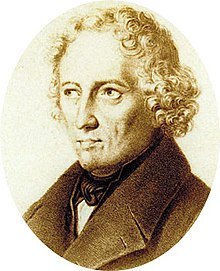
If you grew up in the Western Hemisphere, chances are good that you heard or read several fairytales by the Brothers Grimm as a child. Examples include “Cinderella,” “Rapunzel,” “Little Red Riding Hood,” “Hansel and Gretel,” and “The Emperor’s New Clothes.” Less well known, and for good reason, are stories of retribution, such as “St. Joseph in the Forest” or “King Thrushbeard,” or gratuitous violence, such as “The Louse and the Flea.”
These German purveyors of macabre moralism were not just busy horrifying children and their parents for countless generations; one of the brothers, Jacob Grimm (1785–1863), was also a linguist, or philologist, as the profession was known in the 19th century. Grimm’s concern was how the branches of the Indo-European languages tree led to the altered Germanic languages. (The original nine Indo-European language families are Indo-European, Armenian, Hellenic, Albanian, Italic/Romance, Balto-Slavic, Celtic, and Germanic, which includes English.)
Specifically, Grimm wanted to explain how consonants changed from Indo-European roots, recognized throughout those languages from Farsi to French, into Germanic languages. We’re going to get a little linguistic here, so bear with me. Read more »
I don’t know where exactly the blame lies for the United States’ relationship with work. Early disciples of capitalism, probably, or the first few factory owners of the industrial revolution. I could (and readily would) fill this essay pointing fingers at monopolists and wall-streeters and Reagan-era plutomaniacs, but it wouldn’t stop inquiring minds from demanding twenty-year plans from children. Every kid gets asked, and everyone asks it, but we don’t talk about what we’re really communicating. What do you want to be when you grow up? The language of it carries its own implication. Adults with even the very best intentions are telling the youth of this country that what you do is who you are. Your work will define you; it’s what you will be.
When I was very little, I wanted to be an astronaut, a firefighter, or a hairdresser. They were the most glamorous jobs I could fathom with what I imagined to be comparable levels of danger involved (here I spare the reader a lengthy digression on the psychology of fearing blowdryers). It wasn’t about the work of the position; I don’t remember ever contemplating the daily lives of these people. It was an idea of the kind of person I wanted to be. Bold and powerful and exciting. But because what we do and who we are get braided together from such a young age, I floundered around with my answers as I grew up. And it’s weird because you get to college and they reinforce what you’ve heard forever: choose wisely, this will define you. Your major will determine what you do and who you become for the rest of your life. It’s no wonder so many undergrads are in a state of perpetual panic.Read more »
This month marks the twentieth anniversary of the death of Hanoch Levin. Levin was Israel’s most important and prolific playwright. In addition to 56 plays, most of which he directed himself, he wrote poems, sketches, and prose, and is often compared to such giants of modernism and absurd theater as Chekhov, Artaud, Brecht, and Beckett. Levin died of cancer at the age of 55, after gaining a unique status as a theatrical superstar. His plays were extremely popular, and some of the most significant works of Israeli high-culture ever produced.
Levin was catapulted into fame (or notoriety) as a satirist in the late 1960s. His scathing political pieces lampooned Israel’s chauvinistic patriotism at a time when the young state was overwhelmingly euphoric from its triumph against three Arab nations in the Six Day War. After these controversial satires, he wrote mostly comedies. Featuring pathetic but endearing characters with hilarious, often made-up, names—Jonah Popoch, David Leidenthal, Pepchetz Schitz, to mention just a few whose names are not too hard to translate or transliterate—his comedies represented a specific kind of Israeli Jew of east-European descent. At the same time, these comic figures stand for a broader Israeliness (not ethnic-specific, that is), which Levin exposed in its provinciality, illusions of grandeur, and a bigoted us-against-them mentality. Read more »
thing shaped like a dish saucer moonspan wide in nightsky laden with milk for a cat a gesture of someone kind who is always more than this and ever less than that
sun up moon scats
have you noticed that in a miraculous way fully backed by science the eyes of truth will always stare you down in the dark regardless of how you may hate a fact
A recent article by Jane Mayer in The New Yorker, “The Case of Al Franken,”[1]should disturb anyone who places a high value on fairness and rationality. Franken, who first became famous as a comedian, was elected to the US senate from Minnesota in 2008 and soon became a leading and effective advocate of liberal causes. But he resigned from the senate in January, 2018 after being accused of sexual misconduct during his time as a comic actor and writer.
Franken was effectively forced to resign by his fellow Democrats in the senate. At the time, the Me Too movement had recently surged, and feminists everywhere had vociferously criticized Donald Trump’s blatant sexism as well as the revealed sexual misconduct of well-known men like Harvey Weinstein, Charlie Rose, and Louis C.K.. Franken’s colleagues, several of whom expressed profound regret over his resignation afterwards, appear to have believed that if they even acceded to his immediate request for a hearing before a Senate Ethics Committee, they would be open to charges of inconsistency and hypocrisy.
As Mayer’s article makes clear, Franken was largely stitched up by some of his enemies in the right-wing media. A proper hearing would have revealed, for instance, that:
His main accuser, Leeann Tweeden, was a close friend of the extreme right-wing talk show host Sean Hannity.
Many of her claims were demonstrably false (e.g. that he wrote a kissing scene especially so that he could kiss her; and that after he had kissed her once in that skit, she never let him near her again)
The release of Tweeden’s accusation was carefully plotted, with no attempt to fact check any of her claims or discuss them with Franken.
Alleged accusations by other women were either not corroborated or were extraordinarily thin (e.g. one woman said she once thought that Franken was planning to kiss her, and that made her feel “uneasy.”
The rush to judgement, the denial of any sort of due process, and the willingness to place perceived short-term political concerns ahead of principles of justice are all deeply disappointing in this case. But to my mind, the most disturbing item in Mayer’s article is a statement made by New York senator Kirsten Gillibrand, a friend of Franken who, nevertheless, called for his resignation. Referring to Franken’s accusers, Gillibrand said, “the women who came forward felt it was sexual harassment. So it was.” Read more »
“While listening to a concert you are normally seated in front of the choir, in traditional audience position. With this piece I want the audience to be able to experience a piece of music from the viewpoint of the singers. Every performer hears a unique mix of the piece of music. Enabling the audience to move throughout the space allows them to be intimately connected with the voices. It also reveals the piece of music as a changing construct. As well, I am interested in how sound may physically construct a space in a sculptural way and how a viewer may choose a path through this physical yet virtual space.”
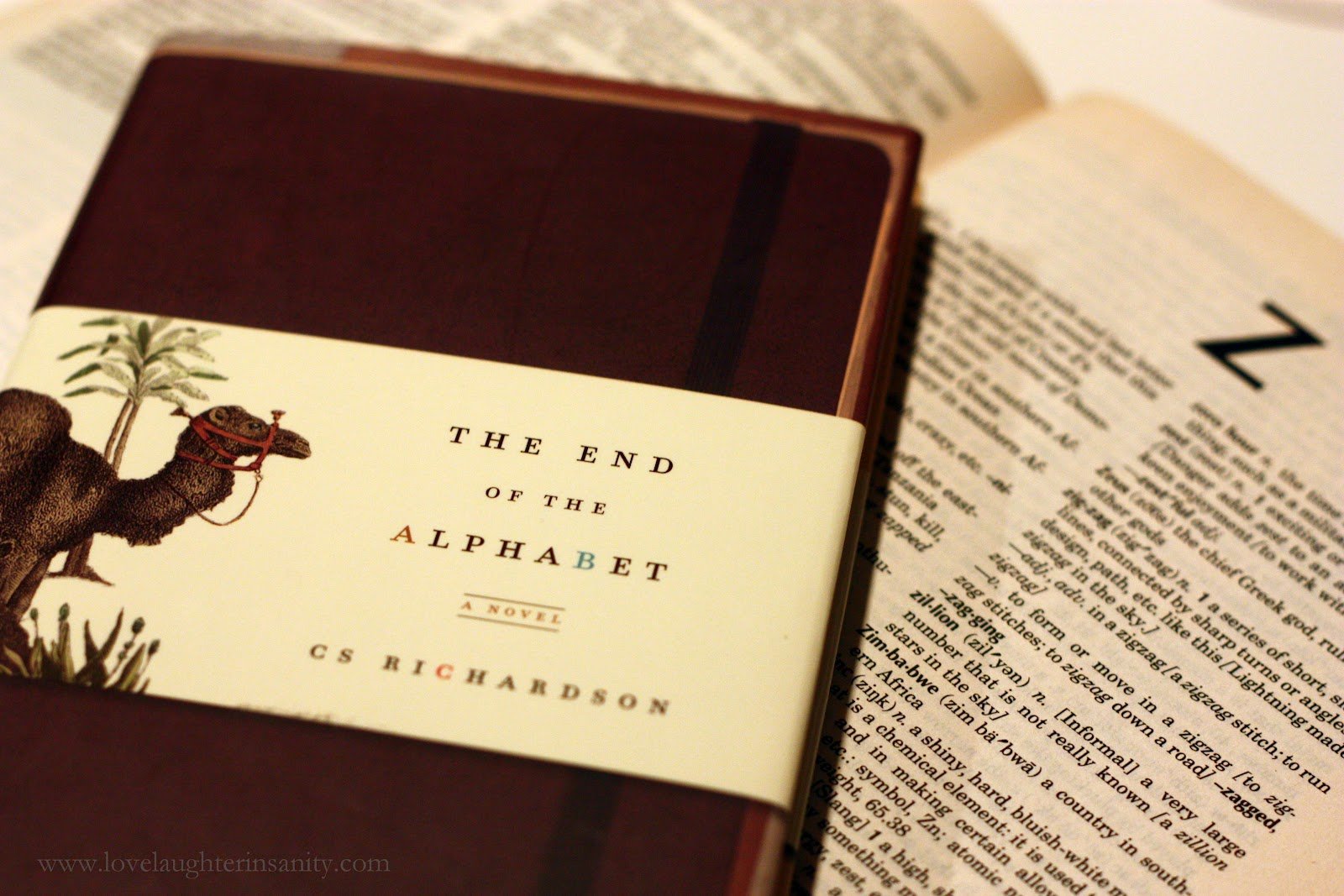
Ambrose finds out he has only weeks to live. How to spend that time is the premise of The End of the Alphabet (2007). It’s a condensed weepie in which Ambrose decides to visit a series of places with his wife that will take them through the alphabet. Somehow Richardson manages to stick to a minimalist elegance which probably saves the book from being schmaltzy book club fodder. And heck, you’d almost look forward to dying the way it’s put. Bucket list: die like this.
But then, there is real life. I’ve watched people who have been given a few weeks to live and it isn’t anything like art. My friend Richard found out in his mid-fifties. He’d complained about his stomach, been told there was nothing wrong, complained some more and was given the revised verdict. Pancreatic cancer, six weeks left. If it could be reassuring to be told this, he was advised that the first misdiagnosis didn’t matter. Richard spent what time he had left with his family: I felt guilt that we got to visit him for a precious hour. He was a Christian, maybe that inspired the serene and accepting way he set about his dying days.
I read The End of the Alphabet some years after Richard died. It didn’t give me any answers. How would I spend those last days of my life, should I be given that sentence? Perhaps it depends on the odds. Richard’s chances of survival were zero. What if you had ways of making that 1%? Would you take it? What would you be willing to pay to roll that dice? Read more »
Joseph R. Bertino, MD, is University Professor of medicine and pharmacology, UMDNJ-Robert Wood Johnson Medical School and has previously served as director of the Yale Cancer Center and chair of the Molecular Pharmacology and Therapeutics Program at Memorial Sloan-Kettering. He is the author and co-author of more than 400 scientific publications and the founding editor of the Journal of Clinical Oncology. His research is focused on curative treatments for leukemia and lymphoma and has helped shape optimal methotrexate administration schedules. Currently, his laboratory is studying gene therapy and stem cell research. He has received the Rosenthal Award from the American Association of Clinical Research, the Karnofsky Award from the American Society for Clinical Oncology, and the American Cancer Society Medal of Honor for his accomplishments in the field of research.
Azra Raza, author of the forthcoming book The First Cell: And the Human Costs of Pursuing Cancer to the Last, oncologist and professor of medicine at Columbia University, and 3QD editor, decided to speak to more than 20 leading cancer investigators and ask each of them the same five questions listed below. She videotaped the interviews and over the next months we will be posting them here one at a time each Monday. Please keep in mind that Azra and the rest of us at 3QD neither endorse nor oppose any of the answers given by the researchers as part of this project. Their views are their own. One can browse all previous interviews here.
1. We were treating acute myeloid leukemia (AML) with 7+3 (7 days of the drug cytosine arabinoside and 3 days of daunomycin) in 1977. We are still doing the same in 2019. What is the best way forward to change it by 2028?
2. There are 3.5 million papers on cancer, 135,000 in 2017 alone. There is a staggering disconnect between great scientific insights and translation to improved therapy. What are we doing wrong?
3. The fact that children respond to the same treatment better than adults seems to suggest that the cancer biology is different and also that the host is different. Since most cancers increase with age, even having good therapy may not matter as the host is decrepit. Solution?
4. You have great knowledge and experience in the field. If you were given limitless resources to plan a cure for cancer, what will you do?
5. Offering patients with advanced stage non-curable cancer, palliative but toxic treatments is a service or disservice in the current therapeutic landscape?
One of the masterful conceits of Socrates’s discussion of tyranny in Plato’s Republic is a surprising claim that Socrates makes at the outset of the dialogues, and one that serves as a guiding thread throughout. You would expect that if someone is going to criticize tyranny, they would do so because of the harms done to the victims of tyranny. But Socrates claims that he can show that tyranny actually harms the tyrant himself. In fact, Socrates even claims that the harms to the tyrant are greater than those done to his victims.
I thought of this brilliant rhetorical strategy as I read Daniel Markovits’s recent essay in the Atlantic Monthly, “Meritocracy’s Miserable Winners”.
Markovits deploys the Socratic maneuver from The Republic in service of a critique of meritocracy. The one side of the critique, that meritocracy harms those that it excludes from its gifts, is the one that you might expect. But the other side of the critique, that meritocracy harms its beneficiaries, those who reap enormous wealth and status from meritocratic institutions, is the one that might surprise you.
I want to get to the more original aspect of Markovits’s critique of meritocracy – his claim that it harms its beneficiaries – in a moment. But I first want to consider his critique of meritocracy on the basis of its harms to those excluded from its rewards.Read more »
I would like to beat down into the world too & make everything growing glisten.
…
What to Say to Sky After a Storm
It’s too late when the silver sun blinks awake we already learned how to live in our soft bodies in the wind & dream through the shadows of rain.
…
What to Say to Night
Thanks for the moon. You knew to leave a light on in the long hallway and I believe the shadow of the Earth that gouges it out is an accident.
…
What to Say to Write
There is nothing to say except the whole sky blossoms sometimes into billows & light & the wooden bowl of peaches on the oak table speaks to how something keeps on giving–we should say if we deserve this.
As a child, author and poet Annie Dillard would traipse through her neighborhood, searching for ideal places to stash pennies where others might find them. In her novel Pilgrim at Tinker Creek, a meditation on the natural world surrounding her home in a rural Virginia valley, she tells us she would nestle them “at the roots of a sycamore,” or perhaps “in a hole left by a chipped-off piece of sidewalk.” She would draw arrows pointing toward the penny in chalk, sometimes writing tantalizing promises down the block: “SURPRISE AHEAD” or “MONEY THIS WAY.”
She wanted to give innocent passersby “a free gift from the universe,” she says. In her six-year-old mind, these pennies were just that: potent and grand indicators of a larger existential goodness, near-divine symbols of worldly benevolence.
Reading about this childish endeavor is endearing, and even admirable. It’s hard to imagine many children go about their days attempting to introduce such undeserved and good-natured whimsy into the lives of complete strangers.
But I know I never would have picked up Dillard’s penny. If I had followed her arrows at all, I’m certain I’d have seen the penny and rolled my eyes, leaving my gift from the universe behind. Let some other crestfallen explorer settle for such a scant cosmic prize.
But this is precisely Dillard’s point: How many gifts do we elect to bypass simply because they are too small? The chapter in which she recounts this tale is called “Seeing,” which begs the question: How blind are we? How resistant to wonder have we made ourselves, and how unaccommodating of the universe’s gifts? As Dillard phrases it: “Who gets excited by a mere penny?”Read more »
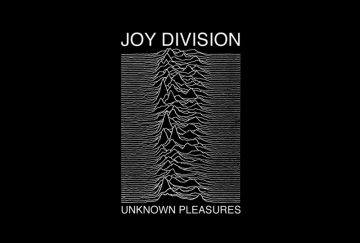
The iconic artwork for the album by graphic designer Peter Saville
Forty years ago, a band from Manchester recorded and released their first full length album. It arrived after a year or so of gigs, an EP, and several tracks on a sampler LP put out by their new (and newly created) label, Factory Records. Thanks to producer Martin Hannett, it sounded unlike anything else at the time, much to the chagrin of the band, who hoped to capture their manic live spirit to vinyl. They didn’t feel the album was quite punk enough. Instead, they made a postpunk masterpiece that still speaks to the modern listener 40 years on.
One can argue that much of the punk or postpunk music from the late 70s and early 80s has taken on a dated feel in terms of production, musical structure, lyrics, or all of the above. History has moved on, after all. That historical distance does not detract from the music or diminish its cultural and historical importance; it’s just that some of the bands are far more time-bound than others. Not Joy Division, though. All aspects of the album manage to be of their time and still relevant. At the risk of dancing about architecture, I will explore why this album both represents its historical moment AND speaks to us with a fresh voice today. Joy Division’s overall body of work reflects the nature of the second half of the twentieth century, the dark overtones of our hyperconsumerist age. This album sounds fresh 40 years on precisely because it represents historical processes that continue to work themselves out across time and space while giving emotional resonance to our Ballardian world.1Read more »
Why do we value successful art works, symphonies, and good bottles of wine? One answer is that they give us an experience that lesser works or merely useful objects cannot provide—an aesthetic experience. But how does an aesthetic experience differ from an ordinary experience? This is one of the central questions in philosophical aesthetics but one that has resisted a clear answer. Although we are all familiar with paradigm cases of aesthetic experience—being overwhelmed by beauty, music that thrills, waves of delight provoked by dialogue in a play, a wine that inspires awe—attempts to precisely define “aesthetic experience” by showing what all such experiences have in common have been less than successful.
The best-known definition of aesthetic experience remains Immanuel Kant’s view that a genuine, aesthetic experience requires disinterested attention, a suspension of any personal interest one might have in the aesthetic object so we might experience it free from the distractions of desire. But perhaps Kant’s view is so well known because of the fusillade of objections launched at it over the past several centuries. It is peculiar to argue that what is distinctive about aesthetic experience is the absence of any desire to find the object appealing or satisfying.
Others have tried to define aesthetic experience in terms of the kind of properties apprehended in such an experience such as beauty, elegance, or unity. But objects that lack such properties can induce an aesthetic experience. Furthermore, the apprehension of a property is not a sufficient condition for having an aesthetic experience. We can recognize beauty or unity in an object without having a moving or distinctive experience at all, especially if one is tired, bored or preoccupied with a task. In the contemporary art world, any kind of object can be a work of art. Thus, an infinitely disparate list of properties can at least potentially provoke an aesthetic experience. It is unlikely that a definition that appeals to such a list of properties would be successful. Read more »
I was about to board this Frecciargento fast train from Bozen to Verona last week when I noticed how nicely the shape of the train matched the shape of the mountain in the background.
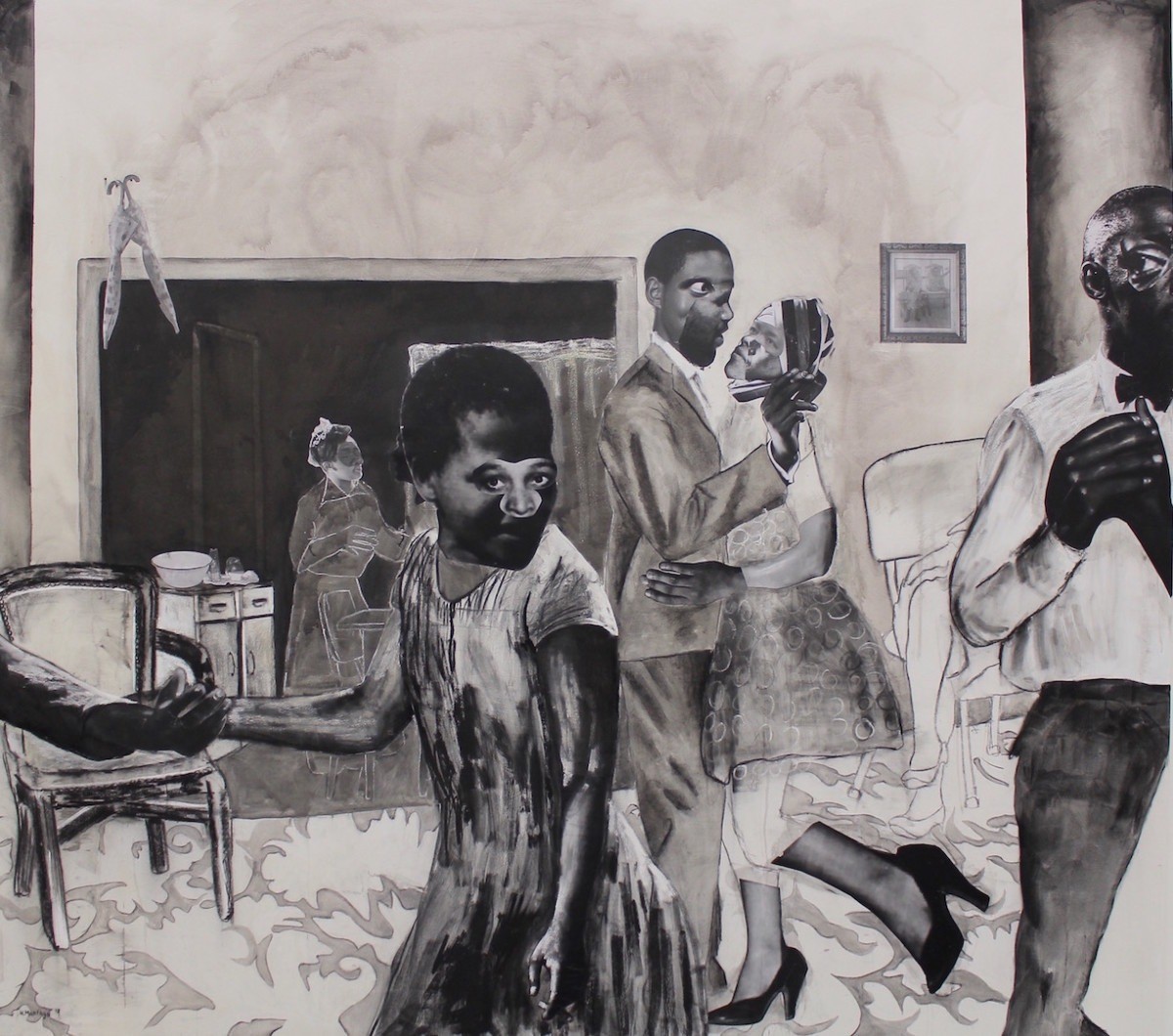
The apartment in West Harlem, five buildings down on the left. The apartment just past the pawn shop, across from the Rite-Aid, parallel to the barber’s where all the pretty boys hangout waiting to get a Friday night shave. The apartment past the deli were you get cheese and pickle sandwiches and the all-night liquor store and the ATM machine no one is dumb enough to use.
The apartment at the top of the stairs with the impossibly high ceilings and the blue bathroom door, the door you labor behind for twelve hours before going to the hospital, your body threatening to push another body out. The apartment where you bring him home, his pink baby body covered in muslin and sweat. The apartment with the wide cracked stoop where you rest with his father just long enough to catch your breath, to say holy shit, he’s beautiful.
The apartment you now stand in front of, seven years later, holding onto a box of birthday-wrapped legos and your son’s hand. The apartment at Broadway and 138th. The apartment on the way to the party. The apartment half-way down a steep hill, the hill you lug your grocery bags down, and the hill you climb with your luggage. The apartment with a broken oven but perfect sunlight and enough closets to hide things in. The apartment in an old brownstone next to other old brownstones, framed by planter boxes filled with tulips and beer cans and night club fliers. The apartment owned by an angry old man and his needy young wife, a man who is stretched so thin he could give two fucks when you tell him the heat is out. The apartment where you sleep in a pile for warmth, arms and legs wrapped around one another, the baby squished between across the two of you. Read more »
Pentecost Wall Hanging–Berlin, Museum Europäischer Kulturen. By Nightflyer – Own work, CC BY 4.0
Preachers at our Baptist church had to ask for an Amen. We weren’t just going to spontaneously let one loose. God can’t drive a parked car, my youth minister would say. Meaning you had to exert your own will as well in the pursuit of a righteous life. When it came to the Holy Spirit, we rarely even tried the ignition.
After the death of Christ, the apostles found themselves a pretty sorry lot. Scared and convinced they were the next candidates for execution, most went into hiding. What transformed them was not merely the appearance of the resurrected Jesus, but the gift of the Holy Spirit, and this gift came to them through the sound of a rushing wind and tongues of fire that descended from heaven and “came to rest on each of them” (Acts 2.3). The depiction of this event generally involves little candle flames hovering over the Apostles. As if that wasn’t cool enough, the first thing that happened for the Apostles was the ability to speak in languages they had never known. Which came in handy, because it just so happened Jews all over the world had gathered in Jerusalem for Pentecost, a derivation of a Greek word that means “fifty” and denoted the fiftieth day after Passover and the beginning of the next Jewish holiday Shavuot. Peter gave the first sermon on the need for repentance and baptism, the Christian church began, and the word Pentecost became associated with the Holy Spirit and speaking in tongues, which would eventually spawn a focus on such practices in Pentecostal churches. Read more »
I live in New York, which has comparatively restrictive gun laws, I don’t own any, I don’t hunt (and didn’t grow up hunting), and I wasn’t in the service. I don’t have the emotional bonds that others who grew up around them might. The entire sum of my personal experience was several years of summer-camp riflery practice: .22 caliber single-action rifles that might have been previously used in the Boer War. We marched them over to a “range” consisting of a shack with mattresses on the floor, a lot of tree-stumps, and a contraption with pulleys and clotheslines to move the targets, and competed for NRA sharpshooter patches.
That is just about my last firsthand memory of guns, so, to reiterate, I just don’t know very much about them. I also can’t tell you about makes, models, types; whether a particular firearm is an “assault weapon”; or which one (or six) John Wick would pick. As I can’t speak knowledgeably about guns themselves, I’m going to stay in my lane as a lawyer who writes about history and politics, and talk about guns and gun control in that context. In doing so, I expect to irritate virtually everyone who reads this.
First, the Second Amendment exists. It doesn’t matter whether you or I agree with it—it’s there. We can argue about what the Framers intent was when they wrote it, or the intent of the voters of the States that ratified it, but you can’t wish it away. This is not an endorsement of unlimited guns in every hand and every place, and it is certainly not a moral judgment. It is just a reflection of reality. When government acts restrictively on guns, it takes something from gun owners, and the entire legal analysis from that point forward hinges on whether it is taking too much. Read more »
I am employed two or three weekends a month as a minder or “Betreuer” at a treatment centre and halfway house for recovering drug addicts in Zurich. My duties include spending the night at the facility as the lone member of supervisory staff, eating meals with the clients, supervising their activities and accompanying their outings, taking urine samples and administering breathalyzer tests, distributing a variety of antidepressants and other prescription meds, and joining them for sessions of meditation and self-led group therapy.
Our clients typically come from the Swiss middle and working class, are predominantly white and “European”, and have in common with other addicts of my acquaintance a marked tendency to egocentrism and either a concomitant failure of empathy or, in reaction to the affective over-sensitivity that has come to be associated with addiction (particularly in the case of celebrity overdose victims such as Philip Seymour Hoffman), a self-protective closing of the border between self and other, whether by chemical, behavioral, or neurotic means.
Among my unspoken responsibilities as a minder, therefore, and in line with the principles of the self-help program that serve the center as an unofficial “philosophy”, is the performance of a living example: of empathy in action; of open-mindedness regarding others and their sensibilities or “struggles”; of humility and the will to serve, rather than simply to use, exploit, and consume. And as a consequence, the recovering addicts in my charge are, implicitly, to learn how to belong to a group rather than to go it alone, as they have been wont to do in active addiction. Read more »



 A recent article by Jane Mayer in The New Yorker, “The Case of Al Franken,”
 Ambrose finds out he has only weeks to live. How to spend that time is the premise of The End of the Alphabet (2007). It’s a condensed weepie in which Ambrose decides to visit a series of places with his wife that will take them through the alphabet. Somehow Richardson manages to stick to a minimalist elegance which probably saves the book from being schmaltzy book club fodder. And heck, you’d almost look forward to dying the way it’s put. Bucket list: die like this.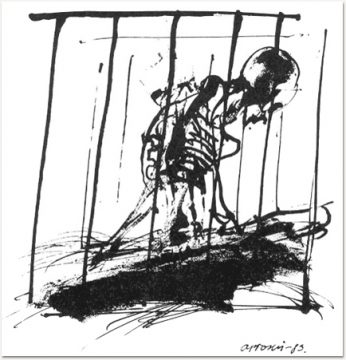
 As a child, author and poet Annie Dillard would traipse through her neighborhood, searching for ideal places to stash pennies where others might find them. In her novel
 Why do we value successful art works, symphonies, and good bottles of wine? One answer is that they give us an experience that lesser works or merely useful objects cannot provide—an aesthetic experience. But how does an aesthetic experience differ from an ordinary experience? This is one of the central questions in philosophical aesthetics but one that has resisted a clear answer. Although we are all familiar with paradigm cases of aesthetic experience—being overwhelmed by beauty, music that thrills, waves of delight provoked by dialogue in a play, a wine that inspires awe—attempts to precisely define “aesthetic experience” by showing what all such experiences have in common have been less than successful.
 The apartment in West Harlem, five buildings down on the left. The apartment just past the pawn shop, across from the Rite-Aid, parallel to the barber’s where all the pretty boys hangout waiting to get a Friday night shave. The apartment past the deli were you get cheese and pickle sandwiches and the all-night liquor store and the ATM machine no one is dumb enough to use.
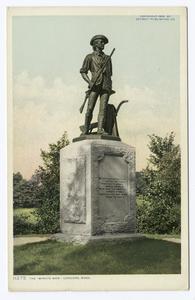 I don’t know a lot about guns.