by Joan Harvey
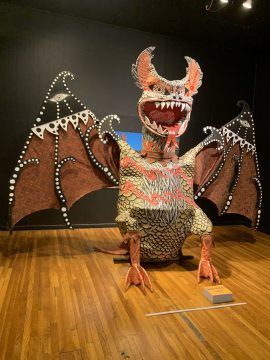
Nightfall. Outside a low elongated cave entrance a small group of humans sit waiting on stone ledges facing the dark aperture. Kestrels begin to soar close in the late evening sky. Snakes too are gathering below, we’re told, but they aren’t in view. This is Bracken Cave, 20 miles from San Antonio, where 20 million bats, females and their pups, literally hang out. We’ve come from Austin, through miles of pick-up truck dealerships and mini-malls. At first our driver couldn’t find the cave, which is not open to the public, but eventually, guided by people from Bat Conservation International, the nonprofit that owns and protects the cave, we arrived. At dinner we were filled with Texas barbecue and many bat facts, and now everyone is quiet. Waiting. A strong odor permeates the air. Slowly small dark beings emerge, then more and then more, thousands shooting off, darkening the sky. So many they can be seen on radar, and a nearby Air Force base has to shut down each evening as the bats would interfere with flights. We watch the procession very quietly, each feeling in their own way this strange life form that is connected to us and yet so different, familiar and yet unfamiliar, this webbed mammal, this flying thing that has so engaged our imaginations.
Bats are beings who go too high, shooting up into the air — the species from this cave, the Mexican free-tailed bat, can fly at altitudes over 10,000 feet— but also too low, swooping down to face level, or, when they return from their nocturnal hunt, diving like furry missiles into the low entry of the cave to avoid the waiting predators. They’re fast, faster than birds, holding the horizontal speed record at over 160 kilometers (99 miles) per hour. As mammals they’re more closely related to us than birds, and they live almost everywhere we live, yet we rarely see them, and most of us know almost nothing about them. They’re nocturnal, dusty, silent, though when they fly by us in the thousands we can hear a low rush of wings like the rumble of water over rocks. Read more »

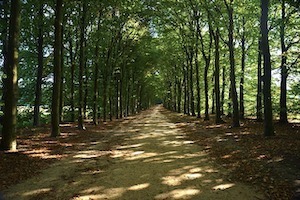 The roof of Notre-Dame de Paris, lost in the fire of April 15, 2019, was nicknamed The Forest because it used to be one. It contained the wood of around 1300 oaks, which would have covered more than 52 acres. They were felled from 1160 to 1170, when they were likely several hundred years old. It has been estimated that there is no similar stand of oak trees anywhere on the planet today.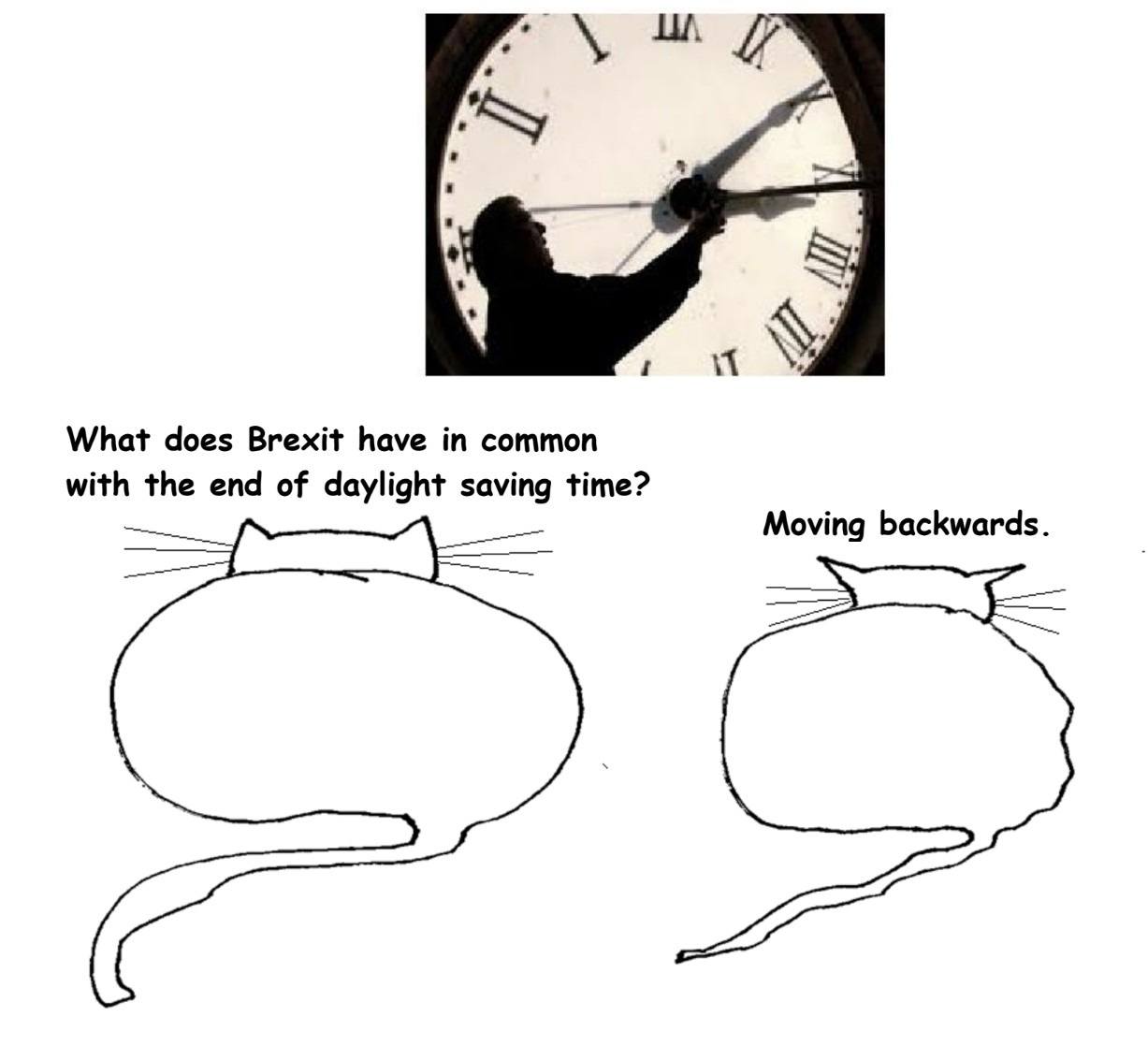


 This essay is about technology, probably. I waffle on the theme only because I think blaming existential panic on cell phones is stale, but I’m pretty sure it’s accurate! Let me make my case. I’ve opened Mario Kart Mobile Tour on my phone three times since starting to write this and I’m not yet on my third paragraph. And I’ve already raced all the races and gotten enough stars to pass each cup. And I still keep opening the app. This week it’s Mario Kart, but before that it was Love Island The Game and before that it was Tamagotchi (and Solitaire and Candy Crush and and and). I don’t have a Twitter and I rarely open Instagram so presumably the games are just the most enticing apps I have, but it’s still gross how long I spend with my shoulders tightened, neck tensed, and thumbs exercising. I feel like a loser. And I justify all the time, pretending like I’m having such deep thoughts in the background as I throw red turtle shells. I try to map life onto the racing track; I look for metaphors as I complete a lap and am satisfied with exercising the poetic side of my brain for the day.
 Fantasy politics starts from the expectation that wishes should come true, that the best outcome imaginable is not just possible but overwhelmingly likely. Brexit is classic fantasy politics, premised on the delightful optimism that if the UK were only freed of its shackles it would easily be able to negotiate the best deals imaginable.
 Baseball has always been a thinking person’s game. Like cricket, it seems able to offer an infinite variety of complicated situations demanding subtle analysis, and these are deliciously frozen for everyone to consider and reconsider during the tense, drawn out intervals between moments of active play. Moreover, although afficianados know the rules well, novel problems can always arise. One such puzzler, amusing and thought-provoking, arose in a 2018 game between
 I could not believe my luck when I woke up this morning. It had rained last night, but this morning the sky was blue the breeze gentle,and the wild grass along the smelly sluggish, open sewer that meanders through the swanky Defense Housing Authority—home to lush golf courses and palatial villas—past the gates of the elite Lahore University of Management Sciences, was audaciously green. The mango tree in the front yard of my mother’s house—quiet after a fertile summer of exuberant fruiting—balances the crow’s nest full of chattering chicks in its gently swaying branches. All God’s creations bask in the mellow sunshine. No more the snow and ice and cold of Eastern US. For these weeks, it’s going to be this bliss in Lahore. I was glad to be me, and to be alive. I say to myself “Thank God I am on this side of the earth, rather than under it.” What a beautiful world. So much to see and so much to do. I could live like this for a hundred years like William Hazlitt, who claimed to have spent his life “reading books, looking at pictures, going to plays, hearing, thinking, writing on what pleased me best.” I’ll add eating to that list, at the top of it, fried eggs and buttered toast.