by Joan Harvey
Everyone at every moment is guided by what he sees most clearly—compounded with what he sees least clearly. —Paul Valéry
And while this show is going in public, in the background, the wrecking crew is working. —Noam Chomsky

Health and Human Services Secretary Alex Azar is proposing a new nickname for his agency: the “Department of Life.” An agency, as Ilyse Hogue of NARAL has pointed out, that was a primary architect of putting children in cages at the border.
More frightening is Attorney General William Barr’s announcement of the “Presidential Commission on Law Enforcement and the Administration of Justice.” Under the guise of uncovering “opportunities for progress, improvement, and innovation,” the commission is a thinly veiled move toward increasing the power of the federal government to extend law enforcement and interfere with local decisions. An Executive Order recommends study of:
- The challenges to law enforcement associated with mental illness, homelessness, substance abuse, and other social factors that influence crime and strain criminal justice resources;
- The recruitment, hiring, training, and retention of law enforcement officers, including in rural and tribal communities;
- Refusals by State and local prosecutors to enforce laws or prosecute categories of crimes;
- The need to promote public confidence and respect for the law and law enforcement officers; and
- The effects of technological innovations on law enforcement and the criminal justice system, including the challenges and opportunities presented by such innovations.
Then we have the new travel ban. The first ban restricted travel from Iran, Libya, Syria, Yemen, and Somalia, as well as Venezuela and North Korea. Recently six more countries have been added: Eritrea, Sudan, Tanzania, Kyrgyzstan, Myanmar (where the Muslim population is fleeing genocide), and Nigeria. The ban bars a quarter of Africa’s population from applying for immigrant visas to the U.S. Recently Iranians, including American citizens, were singled out at the border in Blaine, Washington and subjected to questioning about their political and religious beliefs.
The Federal Election Commission is down to three members, not enough for a quorum, and so cannot enforce campaign finance violations.
Every member of Trump’s human rights commission is an anti –LGBTQ activist. Read more »
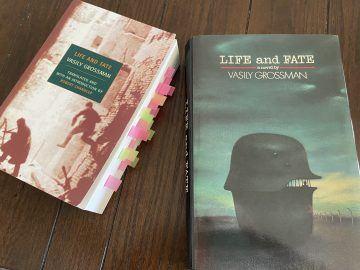 On June 22, 1941, Nazi Germany attacked the Soviet Union in a typhoon of steel and firepower without precedent in history. In spite of telltale signs and repeated warnings, Joseph Stalin who had indulged in wishful thinking was caught completely off guard. He was so stunned that he became almost catatonic, shutting himself in his dacha, not even coming out to make a formal announcement. It was days later that he regained his composure and spoke to the nation from the heart, awakening a decrepit albeit enormous war machine that would change the fate of tens of millions forever. By this time, the German juggernaut had advanced almost to the doors of Moscow, and the Soviet Union threw everything that it had to stop Hitler from breaking down the door and bringing the whole rotten structure on the Russian people’s heads, as the Führer had boasted of doing.


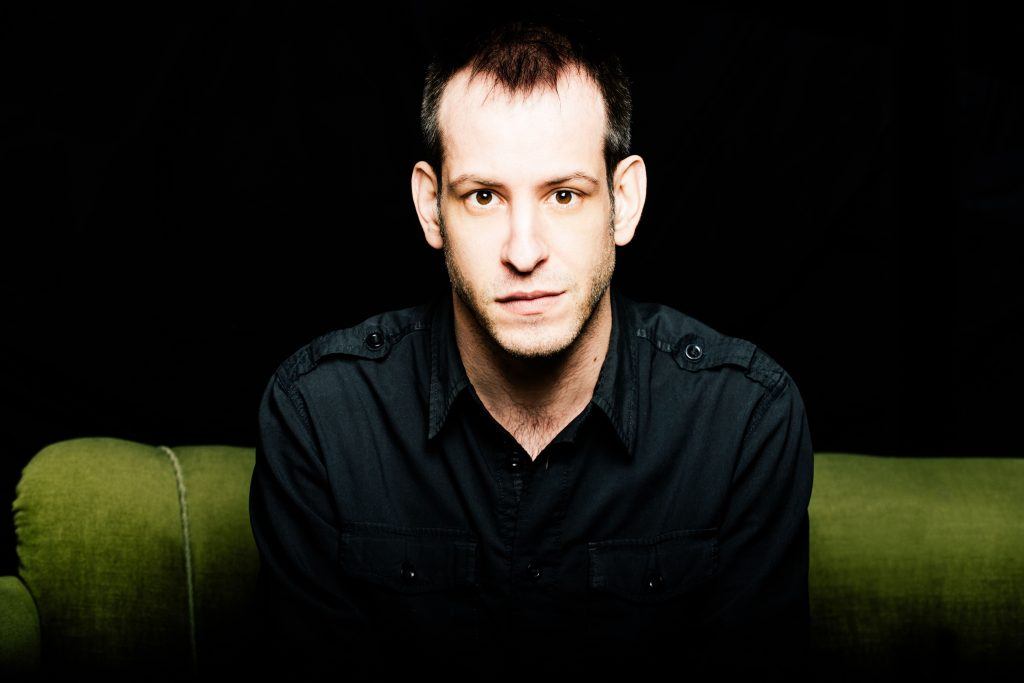 Ryan Ruby is a novelist, translator, critic, and poet who lives, as I do, in Berlin. Back in the summer of 2018, I attended an event at TOP, an art space in Neukölln, where along with journalist Ben Mauk and translator Anne Posten, his colleagues at the Berlin Writers’ Workshop, he was reading from work in progress. Ryan read from a project he called Context Collapse, which, if I remember correctly, he described as a “poem containing the history of poetry.” But to my ears, it sounded more like an academic paper than a poem, with jargon imported from disciplines such as media theory, economics, and literary criticism. It even contained statistics, citations from previous scholarship, and explanatory footnotes, written in blank verse, which were printed out, shuffled up, and distributed to the audience. Throughout the reading, Ryan would hold up a number on a sheet of paper corresponding to the footnote in the text, and a voice from the audience would read it aloud, creating a spatialized, polyvocal sonic environment as well as, to be perfectly honest, a feeling of information overload. Later, I asked him to send me the excerpt, so I could delve deeper into what he had written at a slower pace than readings typically afford—and I’ve been looking forward to seeing the finished project ever since. And now that it is, I am publishing the first suite of excerpts from Context Collapse at Statorec, where I am editor-in-chief.


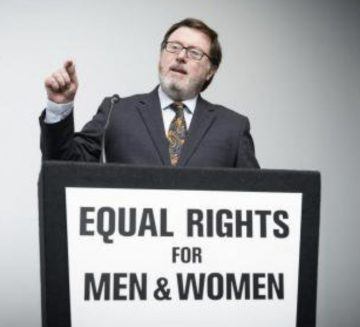 The case for men’s rights follows straightforwardly from the feminist critique of the structural injustice of gender rules and roles. Yes, these rules are wrong because they oppress women. But they are also wrong because they oppress men, whether by causing physical, emotional and moral suffering or callously neglecting them. Unfortunately the feminist movement has tended to neglect this, assuming that if women are the losers from a patriarchal social order, then men must be the winners.

 Some months ago, on a sunny Sunday afternoon, I went to my bank’s ATM in the main market close to where I live in the Defence Housing Authority, Lahore’s latest fancy suburb, which is organized and managed by the military.