by Thomas O’Dwyer
A statue of Canada’s first prime minister, Sir John MacDonald, has become the latest lump of kitsch concrete to hit the ground after protesters pulled it from a plinth in Montreal and cheered as the head broke off and bounced across the pavement. (MacDonald was linked to vicious policies that killed and displaced thousands of indigenous people in the late 19th century. His system forcibly removed at least 150,000 children from their homes and sent them to often abusive state boarding schools). That’s as good a reason as any to add this to the list of monuments being dethroned around the world.
Another good reason is that phrase “lump of kitsch.” Jonathan Jones recently lamented in The Guardian that the falling statues were being followed by a sterile conversation about who does and doesn’t “deserve” a statue. “This is because all statues are dumb. They cannot represent big or complex themes. All they can do is function as crude symbols. They reduce history to celebrity culture. So many Victorian statues survive in our cities because 19th-century historians believed ‘great men’ and their leadership created history,” Johnson wrote, adding that every dumbass general who ever won an obscure skirmish had a statue somewhere across the British empire. No heroic soldier ever did.
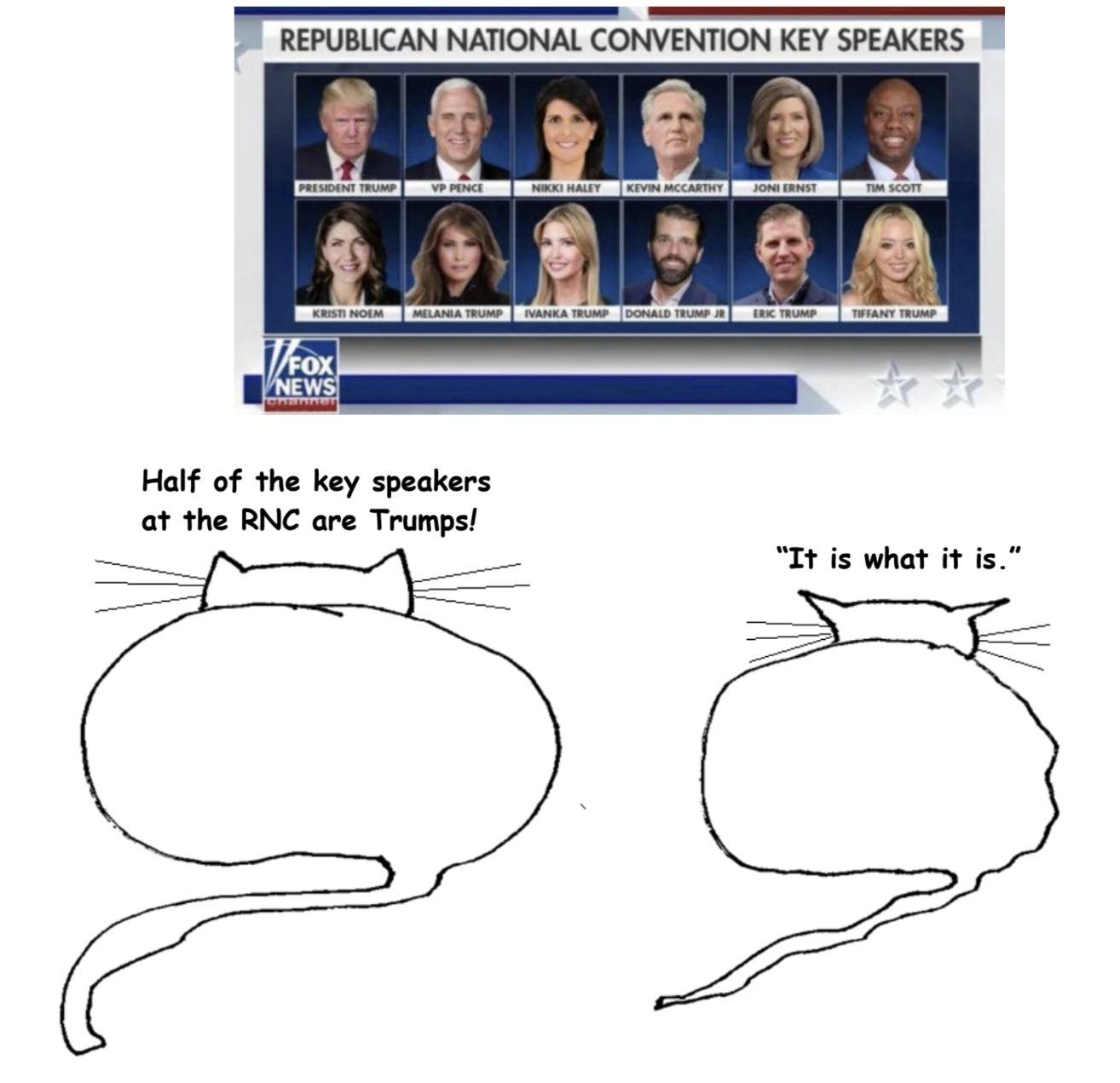
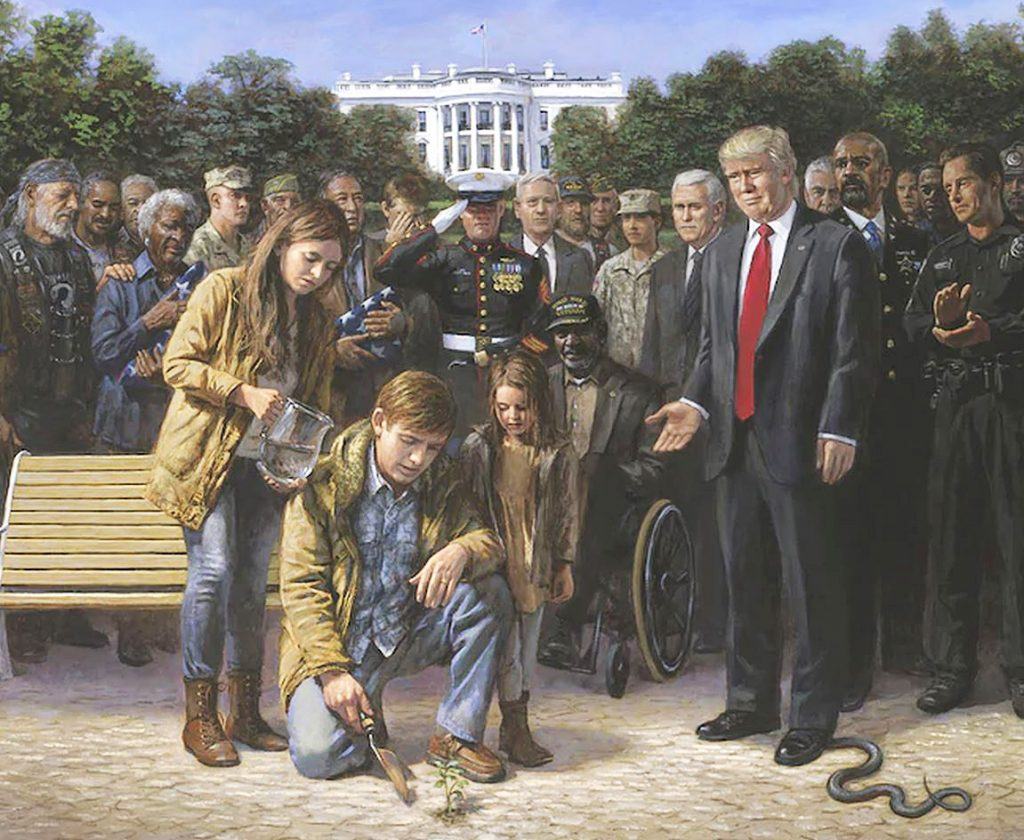
So, what a lineup of dumb statues one could craft from that display of Trump royalty at the recent Republican National Convention. The “great man” being honoured this time was “the bodyguard of Western civilization,” as Charlie Kirk, founder of the anti-liberal Turning Point USA, described the president. This, wrote The Washington Post, was “an image in keeping with painter John McNaughton’s kitsch paintings of Trump.” Read more »


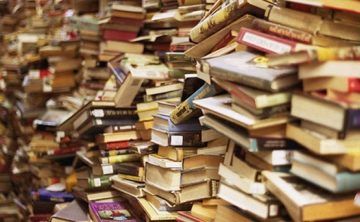 It is commonplace to observe just how marvelous books are. Some person, perhaps from long ago, makes inky marks onto processed pulp from old trees. The ensuing artifact is tossed from hand to hand, carrying its cargo of characters, plots, ideas, and poems across the rough seas of time, until it comes to you. And now you have the chance to share in a tradition of readers stretching back to the author, a transtemporal book club who communicate with one another only by terse comments scratched into the margins of this leather-bound vessel.
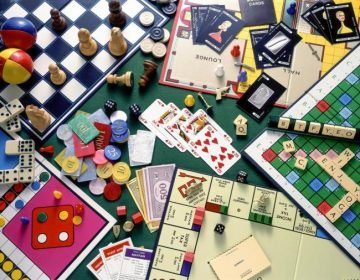 My mother believed that games were good for you. Her faith was unshaken by the occasions when my brothers and I returned from our outdoor games with a grievance between us, or by the times the Monopoly board was overturned in anger during the winter months. She considered that games were a preparation for life. I think she underestimated them.
 first their concerted honks—
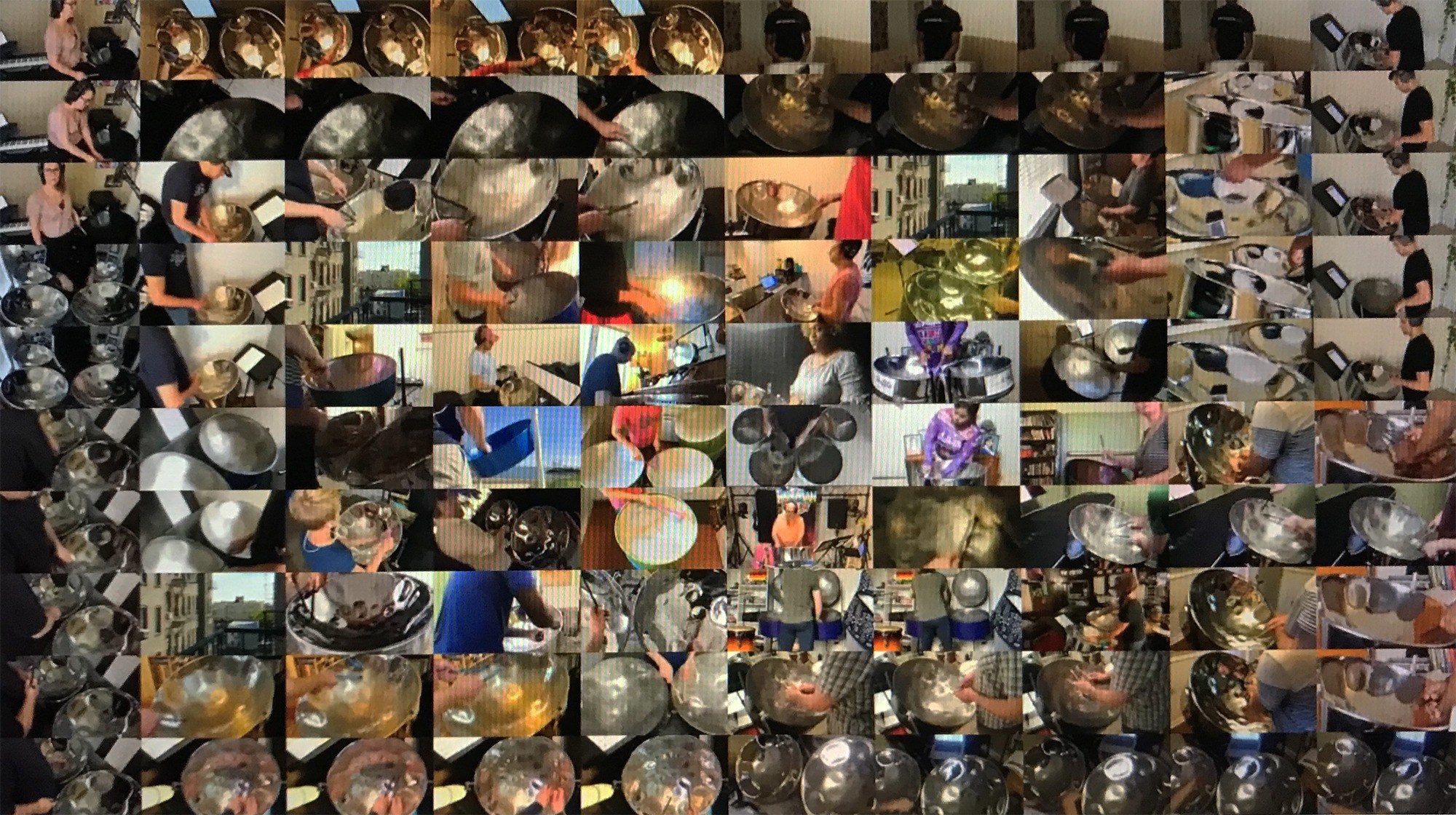

 The coronavirus pandemic has caused a great of suffering and has disrupted millions of lives. Few people welcome this kind of disruption; but as many have already observed, it can be the occasion for reflection, particularly on aspects of our lives that are called into question, appear in a new light, or that we were taking for granted but whose absence now makes us realize were very precious. For many people, work, which is so central to their lives, is one of the things that has been especially disrupted. The pandemic has affected how they do their job, how they experience it, or whether they even still have a job at all. For those who are working from home rather than commuting to a workplace shared with co-workers, the new situation is likely to bring a new awareness of the relation between work and time. So let us reflect on this.