
by Sabyn Javeri Jillani
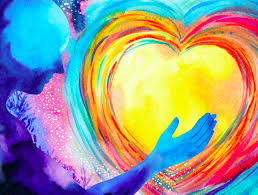
Sometimes it’s the anatomical heart, a muscle the size of a fist, pumping furiously to keep us alive, at other times it is the beating of the metaphorical heart that leads us astray. Fact or fiction, real or symbolic, the heart is central to the story of our lives. The heart is what connects us, what leads us, or misleads us. Heartbreaks, heartaches, heart to hearts, heartening and heartfelt, the heart is central to our emotions, and to our bodies. Although its bodily function is often underplayed in place of its emotional one, be it art, literature, cinema or even emojis. Like most people, I too had grown up associating the heart with recklessness, with spontaneity and intuition, and with love and sorrow rather than stability and strength.
And so when I recently went through a melancholic time in my life, I thought of myself as heartbroken. Little did I know that heartbreak could manifest itself medically too. For the last few days, every time I felt aggrieved, I felt my heart slam against my chest as if it was trying to break free of the hollow cavity that contained it. At other times when I felt anxious, my heart too felt overwhelmed as the world was closing in on me. Every time I thought of the anguish, I felt as if my heart was folding in on itself and sinking towards my stomach. At other times when the heartbreaking thought of losing someone I loved became too much to bear, I felt as if my heart was splitting in two, my pulse slowing down, my palms becoming cold. Read more »


 Irish-Canadian author
 In my earlier column, “


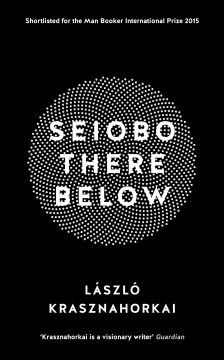 The stories in Seiobo There Below, if they can be called stories, begin with a bird, a snow-white heron that stands motionless in the shallow waters of the Kamo River in Kyoto with the world whirling noisily around it. Like the center of a vortex, the eye in a storm of unceasing, clamorous activity, it holds its curved neck still, impervious to the cars and buses and bicycles rushing past on the surrounding banks, an embodiment of grace and fortitude of concentration as it spies the water below and waits for its prey. We’ve only just begun reading this collection, and already László Krasznahorkai’s haunting prose has submerged us in the great panta rhei of life—Heraclitus’s aphorism that everything flows in a state of continuous change.
 by Callum Watts
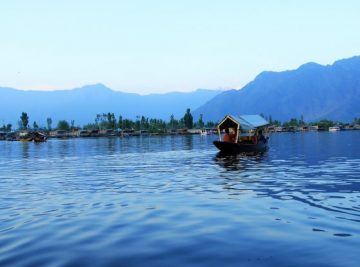 “Battle of Algiers”, a classic 1966 film directed by Gillo Pontecorvo, seized my imagination and of my classmates as well when it was shown three years later at the Palladium in Srinagar. A teenager wearing bell-bottoms, dancing the twist, I was a Senior at Sri Pratap College, named after Maharajah Pratap Singh, a Hindu Dogra ruler of Muslim majority Kashmir.
 I remember as a child watching the made-for-tv movie